

What if a hen’s scruffy appearance and an empty nest box are part of a normal seasonal change, not a sign that something is wrong? Finding feathers around the coop or seeing egg production slow can be unsettling, especially when your flock otherwise seems healthy. Knowing what to expect during chicken molting can help you recognize common signs and notice changes that deserve closer attention.
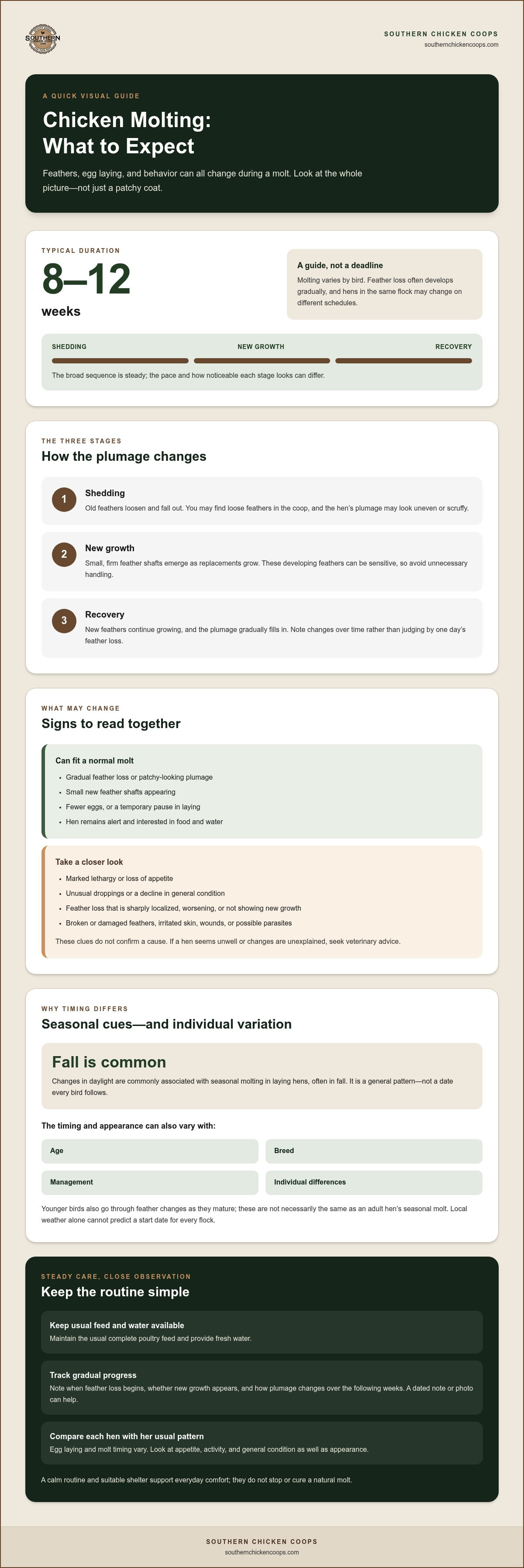
A typical molt often lasts 8 to 12 weeks, and feather loss usually develops gradually rather than all at once. Your hen may look patchy, lay fewer eggs or stop laying temporarily, yet remain alert and eat and drink as usual.
This guide covers common signs and stages of molting, why timing varies, and how to support your flock with steady everyday care. It also explains which changes, such as marked lethargy, loss of appetite or unusual droppings, call for closer observation or veterinary advice. With a little context, a surprising scatter of feathers can feel less worrying.
Key Takeaways
- Learn what to expect during chicken molting, from early feather changes to gradual plumage recovery.
- Use the pattern and location of feather loss to help distinguish a natural molt from pecking, parasites, injury, or illness.
- Keep care steady: observe your hens, maintain their usual complete poultry feed, and provide fresh water.
- Know which changes deserve closer attention, especially when feather loss comes with other signs of poor health.
- A calm routine and suitable shelter support everyday comfort, but they won’t stop or cure a natural molt.
What to Expect During Chicken Molting: The Normal Signs
Molting is the shedding and replacement of feathers. As old feathers fall out and new ones grow, you may find loose feathers in the coop or notice that a hen’s plumage looks uneven. The change can appear dramatic, but appearance alone can’t confirm that feather loss is a normal molt. Consider how she’s acting, whether she’s eating and drinking, and whether her condition is otherwise steady.
Quick answer: A normal molt involves old feathers falling out and new ones growing in. Loose feathers, patchy-looking plumage, and small emerging feather shafts can all occur, sometimes alongside reduced egg laying. These signs offer general guidance, not a diagnosis for an individual bird.
What does a chicken look like during a normal molt?
Feather loss may look gradual and patterned, but the amount and appearance vary with the bird and the intensity of her molt. One hen might look a little scruffy; another may have more noticeable bare-looking areas as old feathers drop before new ones fill in. Small, firm shafts emerging through the skin are new feathers growing. These developing feathers can be sensitive, so avoid unnecessary handling.
Check behavior as well as appearance. A hen going through a molt may look untidy while remaining alert, active, and interested in food and water. If she seems unwell or her condition changes, don’t assume the feathers explain everything. Molting is part of the process of molting seen across birds and other animals, but not every patch of missing plumage has the same cause.
Why can molting affect egg laying?
Feather regrowth and egg production can change at the same time. A hen may lay fewer eggs or pause laying while her body grows new feathers, though the change isn’t identical for every bird. There’s no universal schedule for how long a pause lasts or when laying will resume. Compare each hen with her usual pattern rather than expecting the whole flock to follow one calendar.
A drop in eggs can also have causes other than molting. Consider whether the feather loss and laying change began around the same time, and keep an eye on appetite, activity, and general condition. The key to what to expect during chicken molting is to treat appearance as one clue, not proof that everything is fine. If changes seem unexplained or your hen appears unwell, seek veterinary advice.
Chicken Molting Timeline: Triggers, Stages, and Variation
A molt doesn’t run by the calendar like clockwork. In laying hens, changes in daylight are commonly associated with seasonal molting, often in fall. That’s a general pattern, not a date every bird will follow. The Michigan State University Extension overview of chicken molting explains how seasonal cues relate to this natural process.
Age, breed, management, and individual differences can all affect what you see. Younger birds also go through feather changes as they mature, which aren’t necessarily the same as an adult hen’s seasonal molt. In Texas, don’t use local weather alone to predict a start date: a warm spell or a cool front won’t put every flock on the same schedule.
What are the main stages of a molt?
Rather than watching for a precise start or finish, look for changes unfolding over time. The broad sequence is:
- Shedding: Old feathers loosen and fall out, sometimes leaving a scattering in the coop.
- New growth: Small feather shafts emerge as replacement feathers begin to develop.
- Recovery: New feathers continue growing, and the bird’s plumage gradually fills in.
The order and pace can vary. One hen may show a noticeable change before another, even if they share a coop and routine. That variation is part of what to expect during chicken molting, so avoid judging the whole process by one day’s feather loss.
How long does chicken molting last?
There isn’t one duration that fits every bird. Some hens move through feather replacement more quickly, while others take longer to regain a full-looking coat. A handful of shed feathers won’t tell you how far along a hen is. Instead, note when you first see feather loss, whether new growth appears, and how her plumage changes over the following weeks.
A dated note or photo can make gradual progress easier to recognize. If feather loss keeps spreading without signs of new growth, looks unusually localized, or comes with a decline in general condition, don’t rely on the calendar to explain it. Suitable housing supports everyday flock comfort throughout the year. See handcrafted chicken coops as you plan a secure, comfortable home for your hens.
Normal Molting or Another Problem? How to Tell the Difference
Feather loss can look similar at first, whether a hen is molting or dealing with another issue. Gradual change with new feather growth may fit a molt, but ongoing or sharply localized loss deserves a closer look. No single patch, bare area, or skin change can identify the cause on its own. Consider the pattern, the bird’s behavior, and what’s happening elsewhere in the flock.
How can you distinguish molting from mites or feather pecking?
Take a calm look without pulling feathers or handling sensitive emerging growth. Note where feathers are missing, whether remaining feathers look broken or damaged, and whether you see skin irritation, wounds, or possible parasites. Observe flock interactions, too: repeated pecking or chasing may help explain damage. These clues can guide your next steps, but they don’t confirm a cause.
- Pattern and progress: Is loss changing gradually, or staying concentrated in one area or getting worse?
- Feather and skin condition: Are feathers simply shedding, or do you see damage, irritation, or a wound?
- Behavior: Is the hen acting and eating normally, or showing distress or a marked change?
Write down what you notice and when, then compare observations over time. A brief note or photo can help you describe changes clearly if you seek professional advice. Understanding what to expect during chicken molting provides context, but it shouldn’t replace an assessment when the signs don’t fit a typical gradual change.
When should feather loss concern you?
Seek veterinary advice if a hen has wounds, severe weakness, persistent distress, a marked behavior change, or symptoms that are worsening. Sudden or prolonged feather loss, especially without signs of regrowth, also merits attention. A poultry veterinarian can assess possible causes and advise on diagnosis and treatment.
Keep your check gentle and focused. Don’t pull at new feathers or cause the bird unnecessary stress while inspecting her. If you’re unsure whether the changes are part of a molt, or your hen seems generally unwell, record what you’ve observed and contact a poultry veterinarian for guidance. Careful observation helps you avoid both extremes: treating every loose feather as an emergency or dismissing a real concern as molting.
How to Care for Molting Chickens Without Overreacting
A natural molt usually calls for steady, attentive care rather than a sudden overhaul of your flock’s routine. Start with a simple sequence: observe each bird, keep familiar daily care in place, provide suitable feed and fresh water, then reassess how the hen is doing. This helps you notice meaningful changes without reacting to every loose feather.
- Observe: Note changes in plumage, activity, appetite, and drinking.
- Keep the routine: Maintain familiar feeding and flock-care habits where practical.
- Provide the basics: Make complete poultry feed and fresh water consistently available.
- Reassess: Watch for improvement or signs that call for veterinary advice.
What should you feed a molting chicken?
Keep the usual complete poultry feed as the foundation of your hen’s diet, unless a qualified professional advises a change. Follow the feed label and provide fresh water. Treats can be part of a flock’s routine, but too many may displace the balanced nutrition in complete feed. Avoid adding supplements or switching to a specialized diet based on feather loss alone. If you’re concerned about a bird’s diet or condition, ask a poultry veterinarian for guidance.
How can you keep a molting flock comfortable?
Make the coop a calm, clean place to rest. Keep bedding and the birds’ space dry, with suitable ventilation and access to shelter. Check coop conditions as the weather changes rather than relying on a fixed seasonal assumption. In Central Texas, respond to the weather you’re actually experiencing: provide shade and airflow during hot conditions, and keep the resting area dry when it’s wet.
Handle hens gently and only when needed. Emerging feathers can be tender, so avoid routinely picking up hens or touching those areas. A calm approach lets you monitor the flock without adding unnecessary stress. If you need to inspect a bird, keep the check brief and watch how she responds.
Good housing supports everyday flock comfort, but it won’t prevent or cure molting. What to expect during chicken molting can vary from hen to hen, so steady care and observation are more useful than drastic changes. For a secure, suitable home for your flock, explore custom chicken coops.
A Comfortable Coop and Calm Routine During the Molt
A suitable coop supports a hen’s everyday comfort, but it doesn’t stop or cure a natural molt. What to expect during chicken molting depends on each bird, not on a particular coop design. Good housing still matters: it gives the flock a secure place to rest, access to feed and water, and shelter from the weather while feathers grow back.
What does a molting hen need from her coop?
Keep the space clean, dry, and well ventilated, with comfortable shelter and room for hens to settle without unnecessary disturbance. Check that feed and fresh water remain easy to reach, and keep daily routines familiar. Practical housing needs depend on flock size and local conditions, so pay attention to how your birds use the space rather than assuming one setup suits every flock.
For more background on preparing a comfortable home for your birds, see our Backyard Chicken Coop Prep: A Texas Homestead Guide.
How can Texas keepers plan for seasonal flock care?
Let the weather outside guide your checks. During hot spells, make sure hens have access to shade and that air can move through the coop. After rain or damp conditions, check that their resting area stays dry. Conditions can shift, so adjust your routine to what the flock is experiencing instead of relying on a fixed seasonal calendar. For warm-weather planning, our guide to keeping chickens cool during Texas summers offers additional ideas.
A calm routine helps, too. Avoid unnecessary handling, especially if a hen has tender new feather growth, and keep an eye on whether she can rest, eat, and drink without disruption. These everyday comforts support the flock, but they don’t change the natural course or length of a molt.
Southern Chicken Coops builds handcrafted coops in McGregor, Texas, for backyard keepers and farmers. The signature Polka model is a 6'x12' coop, and semi-custom designs offer a personalized housing solution for your flock.
Care for Your Flock with Confidence
Molting can leave a hen looking ragged and may slow or pause egg laying, but the pattern and her overall condition matter. Feather loss that progresses gradually with new growth can fit a normal molt; wounds, marked behavior changes, or worsening signs call for closer attention and veterinary advice.
Keep care steady with complete poultry feed, fresh water, gentle handling, and a clean, comfortable coop. As you consider what to expect during chicken molting, remember that each hen’s timing can vary, so observe her over time rather than relying on one day’s appearance.
A comfortable home won’t change the natural molt, but it supports your hens through everyday life. Southern Chicken Coops handcrafts custom and semi-custom coops in McGregor, Texas, and provides delivery to a prepared, level lot. Explore our handcrafted chicken coops for your flock.
With steady care and a watchful eye, you can give your hens the support they need as fresh feathers grow in.
Frequently Asked Questions
What does a normal chicken molt look like?
A normal molt involves old feathers falling out and new feathers growing in, so a hen may look uneven or scruffy for a time. You might find loose feathers in the coop and see small new feather shafts emerging. The pattern and amount of feather loss vary between birds. Consider her appearance alongside her activity, appetite, and general condition; looks alone can’t confirm that feather loss is a normal molt.
How long does chicken molting usually last?
Chicken molting often lasts about 8 to 12 weeks, though the process can take less or more time depending on the bird. Treat that range as a guide, not a deadline for your flock. Some hens progress faster than others, and a single day’s feather loss won’t show how far along a bird is. Keeping dated notes or photos can help you see whether plumage is gradually recovering.
Do chickens stop laying eggs when they molt?
Some hens lay fewer eggs during a molt, and others pause laying altogether while their feathers regrow. The change and its duration vary, so there’s no fixed date when every hen will start laying again. A drop in egg production can also have causes unrelated to molting. Note the timing alongside other changes in your hen’s behavior and condition, and seek veterinary advice if she seems unwell or the cause is unclear.
What should I feed a chicken during molting?
Keep a suitable complete poultry feed as the foundation of your hen’s diet, and provide fresh water every day. Follow the feed label and avoid making a sudden diet change or adding supplements just because feathers are falling out. Treats should remain limited so they don’t displace nutritionally complete feed. If you’re concerned about your flock’s diet or a particular bird’s condition, ask a poultry veterinarian for tailored advice.
Can mites or feather pecking look like molting?
Yes. Parasites, feather pecking, injury, and illness can all cause feather loss that may be mistaken for a molt. Observe where feathers are missing, whether the remaining feathers look damaged, and whether you notice skin irritation or flockmates pecking. These clues can help guide what to watch, but none confirms the cause on its own. Record changes over time and seek qualified help if the pattern persists or remains unclear.
Should I handle a chicken with pin feathers?
Minimize handling, because emerging pin feathers can be tender and sensitive to touch. Avoid pulling or rubbing them, and don’t pick up a hen unless you have a good reason to do so. If you need to check her, move gently and keep the inspection brief, paying attention to her response. A calm, familiar routine lets you monitor her without adding unnecessary disturbance while new feathers grow.
When should I call a veterinarian about feather loss?
Contact a poultry veterinarian if feather loss comes with wounds, severe weakness, persistent distress, a marked behavior change, or worsening symptoms. Sudden, localized, or prolonged loss without signs of regrowth also deserves attention, especially if your hen seems generally unwell. Keep notes on when the changes began and what you’ve observed, such as appetite or activity. A veterinarian can assess possible causes and advise on diagnosis and treatment.


