
One common grow-out housing mistake is choosing a permanent coop before considering what adolescent birds need now. Once chicks leave the brooder, they need a safe, practical place to grow, but the right setup might be a separate pen, a coop, or a combination. When researching custom chicken coop builders Texas, start with your flock’s current stage and your longer-term housing plans.
Texas heat, storms, and predators all factor into the decision, as does whether feeding, cleaning, and checking on the birds will fit your routine. These practical concerns matter as much as size or appearance. A grow-out pen serves a different purpose from a permanent coop, so choosing one does not mean you have to commit to the other before you’re ready.
This guide explains how to compare these housing options, which design details to consider in Texas conditions, and what to plan before arranging a handcrafted structure and delivery. It also covers where a semi-custom coop may fit into your broader setup, so you can make a considered choice for the birds you have now and the flock you’re raising.
Key Takeaways
- Match housing to your birds’ growth stage, flock details, and daily care routine before comparing designs.
- Plan for Texas conditions by considering shade, airflow, secure latches, drainage, and convenient access.
- Compare a grow-out pen, adult coop, and combined setup by how each supports your flock now and later.
- Write down your flock’s needs and intended use to make evaluating housing options more straightforward.
- Learn how custom chicken coop builders Texas can tailor handcrafted coop designs to specific needs, and what to prepare for delivery.
What Is a Chicken Grow-Out Pen, and When Does a Texas Flock Need One?
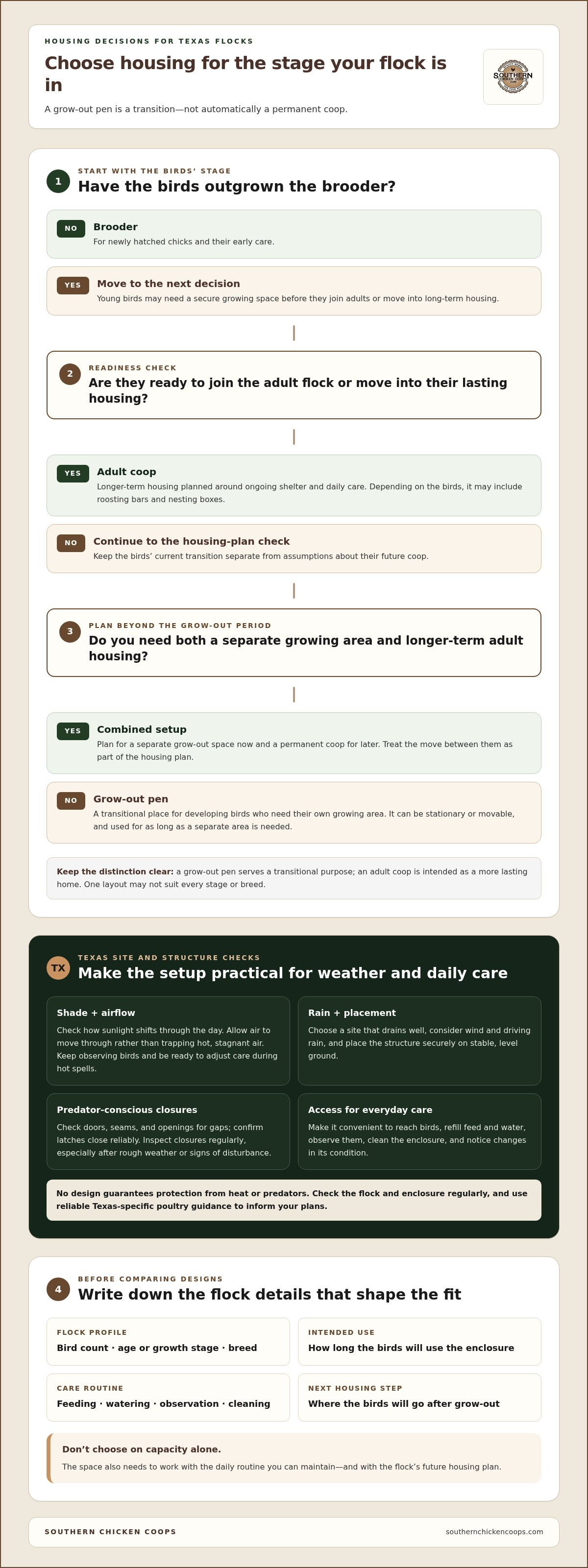
A chicken grow-out pen is a temporary, secure place for young birds that have outgrown the brooder but aren’t yet ready to join the adult flock or move into their long-term housing. It gives them room to grow while keeping daily feeding, watering, observation, and cleaning manageable. The term can describe different kinds of enclosures, so the right design depends on the birds and how you plan to care for them.
Some poultry systems use dedicated “grow-out houses” for meat birds; the overview of Poultry farming provides that broader context. A backyard grow-out pen serves a similar transitional purpose, but it is not automatically a permanent chicken coop. Distinguishing the two can help you decide whether your flock needs interim housing, long-term housing, or both.
How does a grow-out pen differ from a brooder or chicken coop?
Each setup serves a different stage, although the details vary by flock and management style. A brooder houses newly hatched chicks and supports their early care. A grow-out pen is for birds beyond that early stage, while an adult coop is intended as their more lasting home. Depending on the birds it will house, a coop may include features such as roosting bars and nesting boxes.
- Brooder: Early chick care, usually in a fixed, accessible location during that initial stage.
- Grow-out pen: A transitional space for developing birds. It may be stationary or movable, and is used for as long as the birds need a separate growing area.
- Adult coop: Longer-term housing, generally planned around the flock’s ongoing shelter and daily care.
Birds change as they grow, and their needs change with them. Don’t assume one layout will suit every stage or breed. A separate grow-out area can help when young birds need to stay apart from adults. A flock with different management needs may call for another arrangement.
Which flock details should shape a Texas grow-out setup?
Before comparing designs, write down your bird count, their age or growth stage, their breed, and how long you expect them to use the enclosure. Don’t choose based on a capacity claim alone. The space also needs to work with the routine you can maintain: reaching the birds for observation, refilling feed and water, and cleaning without making everyday care awkward.
Plan for what happens after the grow-out period, too. If the birds will move into a permanent coop, account for that transition rather than treating temporary housing as interchangeable with their future home. Sharing these flock details helps custom chicken coop builders Texas understand how a coop may fit into the wider housing plan. A semi-custom coop can be tailored to specific needs, but first identify which birds it will serve and when.
Which Texas Conditions Should a Chicken Grow-Out Pen Handle?
Plan a Texas grow-out enclosure for changing weather as well as daily care. Shade and airflow, secure openings, drainage, and convenient access all affect how practical the setup will be. Choose a location where you can check the birds easily and respond when conditions change, rather than putting off care until something seems wrong.
How should shade and ventilation factor into a Texas pen?
Watch how sunlight moves across the proposed site during the day. A spot that is shaded in the morning may be exposed later, so consider where birds can find shade as the sun shifts. Airflow matters as well: the enclosure should allow air to move through rather than trap hot, stagnant air. These features support thoughtful housing but cannot guarantee protection from heat. Keep observing the flock and be ready to adjust care during hot spells.
For Texas-specific poultry information, consult Texas poultry resources from Texas A&M AgriLife Extension Service. Breed and flock needs vary, so use reliable guidance to inform your plans instead of assuming one design suits every bird.
How can a grow-out pen address storms and predators?
Choose a site that drains well and will not leave the enclosure sitting in pooled water after rain. Consider exposure to wind and driving rain, and make sure the structure can sit securely on stable, level ground. Check doors, seams, and other openings for gaps, and confirm that latches close reliably. Predators are a general concern for poultry housing, and no design should be treated as guaranteed protection. Inspect the enclosure and its closures regularly, especially after rough weather or signs of disturbance.
Quick checklist: choose a site with useful shade and airflow, sound drainage, stable placement, secure openings, and convenient access for daily checks. Easy access is more than a convenience. It helps you reach feed and water, observe the birds, clean the enclosure, and spot changes in its condition.
When comparing options from custom chicken coop builders Texas, distinguish a grow-out pen’s temporary role from an adult coop’s longer-term purpose. Southern Chicken Coops handcrafts coops in McGregor, Texas, and offers semi-custom designs tailored to customer needs. A permanent coop may be part of your overall plan, but consider how young birds will use it before treating it as a grow-out pen. Explore handcrafted chicken coops as you plan for the housing your flock will need over time.
Grow-Out Pen, Chicken Coop, or Combined Setup: What Fits Your Flock?
There is no single best arrangement for every flock. A dedicated grow-out pen gives young birds a separate place to develop, a permanent coop supports longer-term housing, and a combined setup plans for both roles. Your choice depends on the birds’ stage, your property, and how easily you can manage feeding, observation, and cleaning in the space you have.
| Setup | Mobility | Daily access | Intended use | Future housing needs |
|---|---|---|---|---|
| Grow-out pen | May be movable or stationary | Should allow convenient feeding, watering, and checks | Temporary housing for growing birds | Plan where birds will go when they outgrow this stage |
| Permanent coop | Usually planned as a lasting structure | Access supports ongoing flock care and cleaning | Longer-term poultry housing | Consider how it fits the flock’s continuing needs |
| Combined setup | Depends on each structure | Arrange both spaces for practical daily care | Separate growing-bird and long-term housing roles | Plan a clear transition between spaces |
When is a dedicated grow-out pen the more practical choice?
A separate pen may suit your routine if growing birds need their own space before moving into longer-term housing. Consider its location in relation to feed storage, water, and the route you use for daily checks. If reaching the enclosure or cleaning it becomes a chore, even a suitable design may be harder to manage consistently. Choose based on your actual routine, not just the pen’s footprint.
When might a handcrafted chicken coop suit the longer-term plan?
A permanent coop serves a different purpose from temporary grow-out housing. It can anchor your flock’s longer-term plan, while young birds may still need a separate transition space. Southern Chicken Coops’ handcrafted 6' x 12' Polka is one example of a coop designed for durability and functionality in Texas conditions. The dimensions alone do not determine whether it suits your flock, so weigh the coop’s role alongside your birds’ needs and daily care routine.
For a closer look at permanent housing options, explore handcrafted custom chicken coops in Texas. The 6' x 12' chicken coop guide offers more context on the Polka. When comparing custom chicken coop builders Texas, explain whether your plan calls for lasting coop housing, a separate grow-out area, or both.
How to Evaluate a Grow-Out Pen Before Choosing One in Texas
A little planning makes it easier to compare housing based on practical needs instead of appearance alone. Before looking at designs, write down what the birds need now, where the enclosure will sit, and how you’ll care for them each day. This gives you a useful checklist for comparing ready-built options with tailored housing.
What should buyers assess about their flock and property first?
Start with these details, then separate must-haves from preferences such as appearance or mobility:
- Record the flock: Note the birds’ growth stage, number, and breed, along with how long you expect them to use the enclosure.
- Map the care routine: Consider where you’ll feed and water the birds, observe them, and clean the space. Make sure the route is convenient enough for regular use.
- Assess the site: Measure the available footprint and consider the ground surface, drainage, shade, and access. A level, well-prepared location can make placement more straightforward.
- Sort priorities: List essential features first, such as secure access and a workable location. Keep optional design preferences separate so they don’t overshadow flock needs.
If a permanent coop is part of your plan, the Texas backyard coop preparation guide can help you think through site readiness before delivery.
What questions help compare custom and ready-built housing?
Compare options by how they fit your lot, flock plan, and daily routine. Does the footprint work on the available ground? Can you reach the birds and enclosure comfortably? Does the construction suit the intended use and conditions at your site? How will delivery and placement fit into your preparation? These questions help clarify trade-offs without assuming one building approach is right for every keeper.
Southern Chicken Coops is a family-owned McGregor, Texas business that handcrafts coops one at a time. Its semi-custom designs are tailored to specific customer needs, and completed coops are professionally delivered to prepared, level lots. A handcrafted coop may suit a longer-term housing plan; use your flock notes to explain how it fits into the broader setup. A permanent coop does not automatically serve the same purpose as a temporary grow-out pen.
With your checklist in hand, explore Southern Chicken Coops’ handcrafted designs and consider how a semi-custom coop could fit your poultry-housing plan.
How Southern Chicken Coops Helps Texas Buyers Plan Handcrafted Poultry Housing
Choosing poultry housing is easier when the structure is planned around the birds and the place it will call home. Southern Chicken Coops is a family-owned business in McGregor, Texas, where coops are handcrafted one at a time. Its semi-custom approach lets buyers consider how a lasting coop fits into their broader flock plan, rather than treating every enclosure as interchangeable.
What does a handcrafted, semi-custom coop bring to a Texas property?
Handcrafting each coop one at a time reflects a deliberate building process, while semi-custom designs can be tailored to specific customer needs. Consider how the coop will fit your property and housing plans, including its location, access for daily care, and role as your flock grows. These details matter when comparing custom chicken coop builders Texas and looking for a structure suited to your setup.
The 6' x 12' Polka is one example of a handcrafted coop designed for durability and functionality in Texas conditions. It is a coop, not a named grow-out pen, and its dimensions alone do not establish how many birds it can house. Consider it as a possible part of a longer-term housing plan, then weigh its fit against your flock’s needs and the space available on your property.
How can buyers prepare for a delivered chicken coop?
Before delivery, prepare a level lot where the completed coop can be placed. Choose the intended location with everyday access in mind, and make sure the area is ready for the structure. Planning ahead helps organize delivery and gives the coop a prepared place on your property.
For more detail, read the Texas chicken coop delivery guide. Bring together your flock details, site plan, and priorities for a coop tailored to your needs. Explore handcrafted coop options when you’re ready to plan a lasting home for your flock.
Choose Housing That Grows With Your Flock
The right setup starts with your birds’ growth stage, flock details, and daily care routine. A grow-out pen serves a different purpose from a permanent coop, and your choice should also account for Texas conditions, practical placement, and secure access. Keep those needs in view as you compare housing options and the work of custom chicken coop builders Texas.
Southern Chicken Coops is a family-owned McGregor, Texas business that handcrafts coops one at a time. Its semi-custom designs can be tailored to customer needs, and the 6' x 12' Polka is one example of a handcrafted coop. Completed coops are professionally delivered to prepared, level lots, so preparing the site is an important part of your plan.
When you’re ready to plan a lasting home for your flock, explore handcrafted chicken coops from Southern Chicken Coops.
Frequently Asked Questions
What is a grow-out pen for chickens?
A grow-out pen is a separate enclosure for young birds that have moved beyond the brooder but aren’t yet ready for their long-term housing or the adult flock. It gives growing chickens a place to develop while you manage feeding, watering, observation, and cleaning. It is generally a transitional setup, not automatically a permanent coop. Plan its purpose and duration around your birds’ growth stage and your flock-care routine.
How much space does a grow-out pen need per chicken?
The space needed per chicken depends on factors such as age, breed, housing arrangement, and how long birds will stay in the pen. Don’t rely on a capacity estimate unless it applies to your flock and setup. Before choosing a design, record your bird count and growth stage, then consult current Texas A&M AgriLife Extension poultry guidance for applicable space recommendations. Also consider room for feeders, waterers, and practical daily access.
Can a chicken coop be used as a grow-out pen?
A chicken coop may serve as grow-out housing if its layout suits the young birds and the way you’ll care for them. But a permanent coop and a grow-out pen usually have different purposes, so they aren’t automatically interchangeable. Consider whether the coop allows convenient feeding, watering, observation, and cleaning, and whether you need to keep growing birds separate from other flock members. Plan their next housing stage, too.
What should a chicken grow-out pen have for Texas heat?
A Texas grow-out pen should allow airflow and give birds access to shade as sunlight shifts during the day. Consider placement carefully, since a site shaded in the morning may be exposed later. Convenient access also helps you observe the flock and tend to feed and water during hot spells. No design can guarantee protection from heat, so keep checking the birds and follow appropriate poultry-care guidance for your flock.
How do I protect a grow-out pen from predators and storms?
Start with stable placement, secure latches, and openings that close firmly, then check the enclosure regularly for gaps or damage. Choose ground with good drainage so rain doesn’t leave the pen sitting in pooled water, and consider how exposed the site is to wind and driving rain. No enclosure should be treated as predator-proof or maintenance-free. Regular checks, especially after rough weather, help you spot issues early.
Is a custom chicken coop the same as a grow-out pen?
No. A custom chicken coop is generally planned as longer-term housing, while a grow-out pen is intended as a transitional space for young birds. A coop might be part of your overall flock plan, but its size or custom design doesn’t automatically make it suitable for grow-out use. Custom chicken coop builders Texas can tailor coop designs to specific customer needs, helping buyers plan permanent housing around their property and care routine.
How should I prepare my property for a delivered chicken coop?
Prepare a level lot before the completed coop is delivered. Choose the intended location with daily access and the surrounding ground conditions in mind, then make sure the site is ready for placement. Southern Chicken Coops professionally delivers completed coops to prepared, level lots. Planning the location ahead of time can make delivery and settling the structure into your poultry setup more straightforward.


