

What if the greatest threat to your new flock isn't a hungry coyote, but a single afternoon of Texas rain? It sounds surprising, but without the right foundation, a heavy storm can turn a beautiful homestead dream into a muddy, shifting headache. We understand that preparing your backyard for a chicken coop is about more than just clearing a patch of grass; it's about creating a sanctuary that stands firm against our state's unique challenges. Whether you're dealing with the intense summer heat or the stubborn clay soil we often see here in Central Texas, we know you want to get this right the first time.
We've spent years honing our craft in McGregor, and we've seen how a well-prepared site protects your investment and your birds. In this guide, you'll learn exactly how to choose, level, and secure your backyard site to ensure your Texas flock stays safe, dry, and healthy for years to come. We will walk through the essentials of drainage, sun exposure, and predator-proofing so you can have total confidence that your coop won't sink or lean as the seasons change.
Key Takeaways
- Understand why a level, well-drained site is the foundation of your flock's health and prevents common respiratory issues caused by "soggy feet."
- Discover how to track the Texas sun and use natural windbreaks to keep your birds cool and protected during summer heat and sudden storms.
- Get a step-by-step approach to preparing your backyard for a chicken coop by identifying high points and clearing debris for a stable, permanent home.
- Master the "Apron" method of predator proofing to safeguard your investment from local threats like coyotes, raccoons, and neighborhood dogs.
- Prepare for a smooth delivery by ensuring a clear path and checking for low-hanging obstacles before your handcrafted coop arrives on your lot.
Why Site Preparation is the Foundation of a Healthy Texas Flock
Site preparation is the process of choosing and leveling a permanent location for your coop. It is much more than just a weekend chore; it is the marriage of geography and poultry health. When we build a handcrafted structure in McGregor, we're building for longevity and resilience. However, even the sturdiest cedar and heavy-duty hardware can't overcome a site that isn't properly readied. Preparing your backyard for a chicken coop means looking at your land with the eye of a steward, ensuring your flock stays high, dry, and protected from the elements.
When you begin the work of preparing your backyard for a chicken coop, you're designing a small-scale ecosystem. In various poultry farming systems, the immediate environment is the single biggest factor in animal welfare. In Texas, our heavy clay soil and sudden flash floods mean that a poorly placed coop can become a swamp in minutes. A well-prepared lot ensures that water moves away from the structure, preventing the "soggy feet" syndrome that leads to bumblefoot and respiratory distress in your hens. A level lot also ensures the structural integrity of your handcrafted coop over time, keeping the frame square and the roofline true.
The Risks of Skipping Backyard Prep
If you choose to skip the leveling process, you're inviting "coop lean." This occurs when a heavy structure settles into soft or uneven soil. It isn't just an aesthetic issue. It causes door hinges to bind, nesting box latches to misalign, and can even create small gaps that allow predators or drafts to enter. Standing water around an unlevel site also leads to rapid bacterial growth. This creates a toxic environment for your birds and a muddy mess for you. Fixing a site after the coop is delivered is ten times harder than doing it right the first time, as moving a heavy-duty model once it's set is a massive undertaking.
Thinking Long-Term for Your Homestead
We always encourage our neighbors to think about the future of their flock. You might be starting with four hens today, but many families find their passion grows, and they soon want to expand. Choosing a site that accommodates a larger footprint now saves you from a difficult relocation later. You must also balance aesthetic beauty with functional access. Your coop should be a centerpiece of your yard, but it needs to be easily accessible for your daily chores. Proper placement reduces your daily workload by making cleaning and feeding a simple, breezy task rather than a muddy trek across the yard.
Choosing the Right Spot: Sun, Shade, and Texas Wind
Finding the perfect spot for your flock is about more than just where the grass looks greenest. When you're preparing your backyard for a chicken coop, you have to think like a hen. In our neck of the woods, that means prioritizing protection from the relentless afternoon sun and the sudden, heavy gusts of a Central Texas thunderstorm. We've seen many folks place their coop in a spot that looks beautiful in April, only to realize by July that their birds are struggling in a heat trap. Taking the time to observe your yard's patterns now will save you a world of worry later.
Before we deliver one of our handcrafted structures, we always encourage our neighbors to check local setback requirements. Whether you're in McGregor, Waco, or a surrounding community, most cities have specific rules about how far an outbuilding must be from property lines or your neighbor's front door. Once you know your legal boundaries, you can find that "sweet spot" on your lot. You want the coop close enough for easy morning chores but far enough away that any natural farm scents don't drift into your kitchen window during a backyard barbecue.
The Importance of Summer Shade
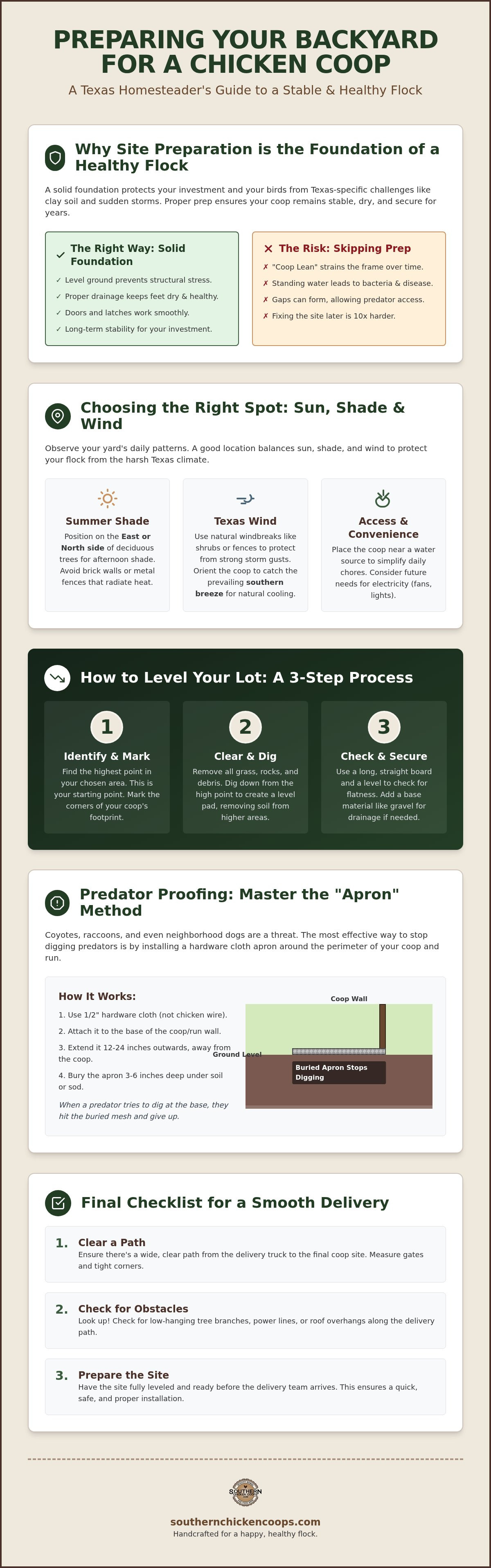
In Texas, afternoon shade is non-negotiable. We recommend positioning your coop on the eastern or northern side of large deciduous trees. These provide a thick canopy of cooling shade during our 100-degree summers but drop their leaves in the winter, allowing the weak sun to warm the coop when the birds need it most. Avoid placing the coop directly against brick walls or metal fences. These materials soak up the sun and radiate heat long into the night, creating a punishing environment for your hens. If you can, orient the coop to catch the prevailing southern breeze, which acts as a natural air conditioner for your flock.
Utility Access and Convenience
Don't underestimate the weight of a five-gallon water bucket. When you're planning your layout, consider your proximity to a reliable water source. Hauling water 100 yards in the middle of a July heatwave is a chore that gets old very quickly. You should also decide if you'll eventually want electricity for a circulation fan or a light to keep egg production up during the short winter days. Having a clear, wide path to the site is also essential for manure management. You'll want enough room to comfortably maneuver a wheelbarrow so that cleaning stays a simple, efficient part of your routine. If you're still weighing your options, looking at our custom chicken coops can help you visualize the footprint you'll need to clear.
How to Level Your Lot for a Handcrafted Coop
A heavy-duty coop is a beautiful addition to any homestead, but its weight requires a steady, unyielding base. When we deliver a handcrafted structure like our 6x12 Polka model, we're placing several thousand pounds of cedar and steel on your land. Preparing your backyard for a chicken coop effectively means ensuring that weight is distributed evenly so the frame stays square for decades. If the ground is even slightly off, you'll feel it every time you try to latch the door or slide a nesting box tray. It's a bit of sweat equity now that pays off in a lifetime of smooth operation.
The process starts with identifying the high and low points of your chosen footprint. We recommend using a simple set of stakes and string to mark out the corners. Once your area is defined, clear away all debris, large rocks, and thick brush. When you're preparing your backyard for a chicken coop, it's tempting to just pile dirt on the low side to make things even, but we strongly advise against it. Loose fill dirt will eventually settle or wash away, leaving your coop lopsided. Instead, always remove earth from the high side until it matches the low point. Use a long, straight 2x4 and a spirit level to check your progress frequently. A perfectly flat surface is your goal.
Dealing with Central Texas Clay
Many of our neighbors in McGregor and across the Blackland Prairie deal with heavy clay soil that acts like a sponge. It expands when it rains and shrinks during our dry spells, which can cause heavy structures to shift or sink. To counter this, we recommend a "floating" foundation. By excavating the footprint and backfilling it with crushed limestone or gravel, you create a stable pad that allows water to drain through rather than sitting against the wood. This simple step prevents the coop from sinking into the mud during a wet Texas spring.
Base Material Options
For a structure as substantial as the 6x12 Polka, a 4-inch deep gravel bed is the gold standard. We often suggest crushed granite over pea gravel; the jagged edges of crushed granite lock together under weight, providing a much firmer surface. While concrete pavers can be used under the corners to prevent direct contact with the soil, a full gravel pad offers superior drainage and makes cleaning the surrounding area much easier. Taking the time to build this solid foundation ensures your flock’s home remains as level and sturdy as the day we delivered it.
Predator Proofing and Perimeter Safety
Protecting your flock is a matter of heart and devotion. We know that these birds aren't just livestock; they're part of your homestead family. In Texas, we share our land with a variety of clever neighbors who would love to find their way into a coop. From the vocal coyotes and agile raccoons to quiet opossums and even the wandering neighborhood dog, the threats are real. When you're preparing your backyard for a chicken coop, you have to think like a predator to stay one step ahead. A beautiful home is only a sanctuary if it's truly secure against those who wish to enter uninvited.
One of the most effective ways to stop digging predators is the "Apron" method. This involves burying a skirt of hardware cloth around the entire perimeter of the structure. By extending this wire about 12 inches out and a few inches down, you create a barrier that stops a coyote or raccoon right where they start to dig. It's a simple addition during the site prep phase that provides immense peace of mind. You should also take a look at the "Launch Zone" around your site. If there are low-hanging tree branches nearby, agile predators can use them to jump onto the roof. Trimming these back ensures the only way in is through the front door, which we've already built to be heavy and secure. For more detailed strategies, see our full guide on chicken coop predator protection.
Securing the Perimeter
We always tell our neighbors that chicken wire is for keeping chickens in, not for keeping predators out. A determined raccoon can tear through standard chicken wire in seconds. Instead, we use heavy-duty hardware cloth for all our handcrafted runs. Installing a skirt of this same material around the base is your first line of defense. As a secondary deterrent, consider motion-activated lights. These are especially helpful for scaring off nighttime visitors who prefer to work in the shadows. It's about layering your defenses so your birds can sleep as soundly as you do.
Snake and Rodent Prevention
Smaller visitors like snakes and rats require a different approach. Keeping the grass short around the perimeter of the coop removes hiding spots and makes the area less attractive to slithering guests. You should also be mindful of feed spills, as leftover grain is a magnet for mice and rats. A level foundation prevents gaps where snakes can enter, ensuring the structure sits flush against your prepared base. By managing these small details, you create an environment where your hens can thrive without unwanted company. If you're ready to start your journey with a structure built for safety, explore our custom chicken coops today.
Final Checklist: Preparing for Your Southern Chicken Coop Delivery
The day your handcrafted coop arrives is an exciting milestone for any Texas homestead. After all the hard work of selecting the spot and leveling the ground, you're just one step away from welcoming your birds home. We want this process to be as smooth as a summer breeze, which is why a final walkthrough of your site is so important. Preparing your backyard for a chicken coop doesn't end with the shovel; it includes making sure our delivery team can reach your prepared lot without any hitches.
Before our truck pulls into your driveway, please verify these four essential points:
- Clear the Path: Our equipment requires a minimum 10-foot wide clear path to navigate through gates or between structures.
- Look Up: Check the route for low-hanging power lines or tree branches that might snag the roof of the coop.
- Final Level Check: Ensure the lot is level within 2 inches across the entire 6x12 footprint to prevent structural stress.
- Base Installation: Your gravel pad or crushed limestone should be fully installed and compacted before we arrive.
McGregor and Central Texas Delivery Logistics
We take great pride in our delivery process. We use a specialized "Mule" delivery system, which allows us to maneuver heavy structures into tight spots while protecting your turf from heavy truck ruts. It's a fascinating piece of equipment that keeps the impact on your yard to a minimum. If the site isn't ready when we arrive, it can lead to delays and rescheduling, so we always appreciate a quick double-check of your prep work. You can learn more about our chicken coop delivery Texas process to see exactly how we handle the heavy lifting for our neighbors.
The 'Polka' Model Specific Needs
If you've chosen our popular 6x12 Polka model, remember to visualize where the doors will swing open. You'll need extra clearance on those sides so you can comfortably enter for cleaning or egg collection without feeling cramped. This final walkthrough is the perfect time to check for overhead drainage runoff from nearby roofs that might swamp your new site during a downpour. Seeing everything come together is a joy, and it helps you visualize the final look of your custom chicken coops Texas. Once we set the coop on your level pad, you'll have a permanent, beautiful home for your flock that is built to last for generations.
Building Your Texas Sanctuary
Your journey toward a thriving homestead begins with a solid foundation. By taking the time for preparing your backyard for a chicken coop, you're doing more than just clearing land; you're acting as a devoted steward for your future flock. From managing the shifting Central Texas clay to positioning your structure for that vital afternoon shade, every small detail matters. These careful steps protect your birds from the elements and secure your handcrafted investment for many years to come.
We're a family-owned and operated team, and we take immense professional pride in every structure we build. Each coop is hand-built in McGregor, TX, with the resilience and quality needed for our unique regional climate. Once your site is level and ready, we'll handle the delivery to your prepared lot with the same care we'd use on our own land. Start your Texas homestead journey with a handcrafted Southern Chicken Coop today! We look forward to helping you build a beautiful, lasting legacy on your property and seeing your flock thrive in their new home.
Frequently Asked Questions
Do I need a concrete slab for my chicken coop?
No, you don't need a concrete slab for your coop, and we often find that a gravel pad is a much better choice for drainage. While concrete is stable, it holds onto the Texas heat and can be tough on a bird's legs over time. A well-compacted gravel base provides all the stability needed for our heavy, handcrafted structures while allowing rainwater to filter naturally into the soil.
Can I put my chicken coop directly on the grass?
You shouldn't place a permanent coop directly on the grass because the weight of the structure will eventually cause it to sink into the soil. Grass also holds moisture against the bottom of the wood, which can lead to premature rot. When you're preparing your backyard for a chicken coop, removing the turf and replacing it with crushed granite ensures the home stays level and dry for years.
How far away from my house should the chicken coop be?
We generally recommend placing your coop between 20 and 50 feet from your home, though you should always check your specific city ordinances first. For example, Dallas requires a 20-foot setback, while Fort Worth asks for 50 feet. This distance is the "sweet spot" that makes your morning chores convenient while ensuring that natural farm scents and sounds don't drift into your living room.
What is the best ground cover for a chicken run in Texas?
Coarse construction sand or a deep layer of wood chips are the most effective options for our regional climate. Sand is particularly helpful because it drains quickly during heavy spring rains and stays much cooler than bare dirt during a July heatwave. It's also very easy to clean with a sifter, which helps keep the environment healthy and fresh for your hens.
How do I level a chicken coop on a slope?
You should always level a sloped site by digging into the high side of the hill rather than trying to build up the low side with loose dirt. Excavating the uphill portion creates a "cut-in" pad that remains stable over time. If you simply pile dirt on the low side, that soil will eventually settle or wash away during a storm, leaving your coop lopsided and strained.
Should I put my coop in full sun or full shade?
In Texas, you should always prioritize afternoon shade to protect your flock from our intense summer heat. A location that receives morning sun but is fully shaded by 2:00 PM is the ideal setup for bird health. While some sun is good for keeping the coop dry, full sun in a Texas summer can be life-threatening for hens without adequate cooling and ventilation.
How do I stop predators from digging under the coop?
The most reliable defense is installing a hardware cloth "apron" that extends at least 12 inches out from the base of the coop. When a predator like a coyote or raccoon tries to dig at the edge of the run, they immediately hit the wire barrier and give up. This simple step is a vital part of preparing your backyard for a chicken coop and keeping your birds safe.
What should I do if my backyard has poor drainage?
If your yard tends to stay soggy, you should build a raised pad using 4 to 6 inches of compacted crushed limestone or gravel. This elevation lifts the coop out of the standing water and allows moisture to move through the base rather than pooling around the structure. Keeping the floor high and dry is the best way to prevent respiratory issues and keep your flock comfortable.


