

The best plant for a Texas chicken run may be the one your hens can’t destroy in a week. Choosing Texas native plants for chicken run areas takes more than finding a species suited to local weather. Check its safety around chickens, match it to your site, and consider whether it can withstand scratching and pecking while it grows.
Start with your specific conditions. Texas is a large state, and a plant that thrives in one region may struggle in another area’s heat, rainfall, soil, or shade. Even a well-matched plant may fail if hens can reach every new sprout. This guide explains how to assess plant candidates, check safety information, and choose planting spots that give vegetation a chance to establish.
You’ll also learn how to fit planting into the run’s overall layout. A little planning around the coop, shade, drainage, and flock movement can help you decide where plants might grow and where protection is needed.
Key Takeaways
- Choose Texas native plants for chicken run areas by checking regional range and matching each candidate to your site’s sun, moisture, drainage, and flock traffic.
- Native status alone doesn’t confirm a plant is safe for chickens. Look for reliable toxicity information and treat anecdotal reports or unknown effects with care.
- Observe the run before planting, then protect new roots with suitable barriers or guards while plants establish.
- Use coop position, shade, drainage, and hen movement to decide which areas are best for protected planting and which can handle more access.
- Compare plant candidates by growing conditions and verification status before settling on a planting plan for your flock.
What Makes a Plant a Good Fit for a Texas Chicken Run?
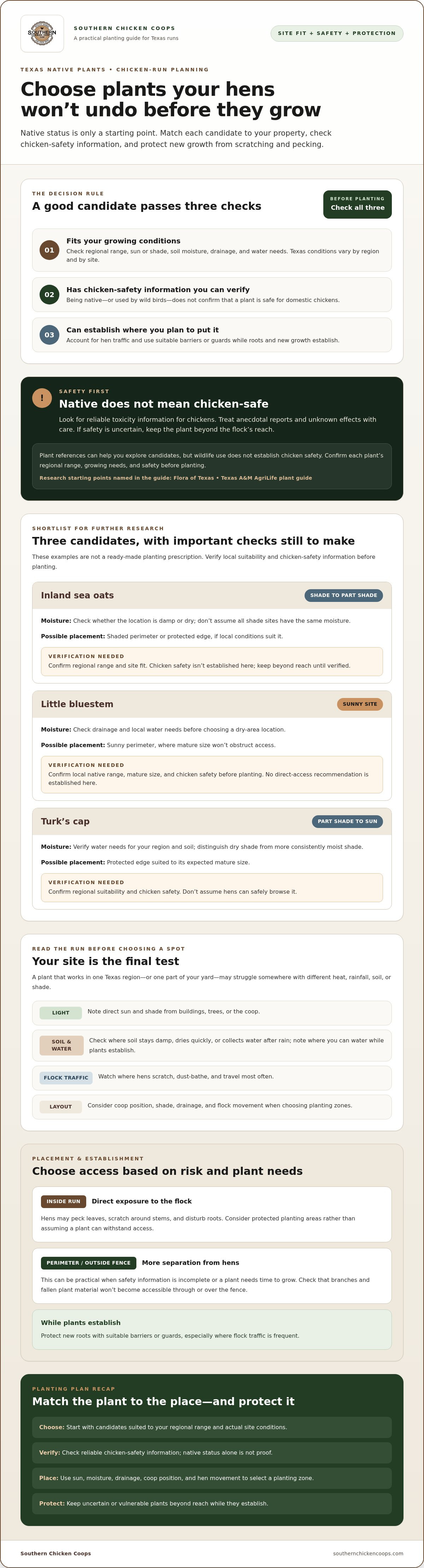
A good candidate meets three tests: it suits your property’s growing conditions, its safety around chickens can be checked, and it has a reasonable chance of surviving where you plan to put it. A Texas native plant occurs naturally in some part of the state, but that doesn’t mean it grows equally well everywhere. Native ranges and local conditions vary, so a plant suited to one region may not suit another.
That distinction matters when choosing Texas native plants for chicken run areas. Native status can help you identify regional candidates, but it doesn’t confirm chicken safety or guarantee that a plant will thrive in your yard. The Flora of Texas category can be a starting point for exploring plant names. Check each candidate’s range, growing needs, and safety information before planting.
How Texas regions and run conditions change plant choices
Central Texas may have different heat, rainfall, and soil conditions from East, West, or Gulf Coast Texas. Texas ecoregions provide useful context, but your run is the final test. Before selecting plants, observe the site and record:
- Sun and shade: Note which areas receive direct sun and which are shaded by buildings, trees, or the coop.
- Soil moisture and drainage: Check where soil stays damp, dries quickly, or collects water after rain.
- Irrigation: Identify which areas you can water while plants establish and which must rely on rainfall.
- Flock traffic: Watch where hens scratch, dust-bathe, and travel most often.
Use these observations to narrow your list to plants that suit both the site and the flock’s habits.
Inside the run or outside the fence?
Plants inside the enclosure are directly exposed to the flock. Hens may peck leaves, scratch around stems, and disturb roots, so even a plant suited to the light and soil may struggle in a high-traffic spot. Consider protected planting areas rather than assuming a candidate can withstand access.
Along the perimeter or outside the fence, plants can add greenery while staying beyond the hens’ reach. This may be practical when safety information is incomplete or a plant needs time to grow. Check that branches and fallen plant material won’t become accessible through or over the fence. Plan planting zones alongside coop position, shade, drainage, and flock movement. The Texas chicken coop preparation guide offers a related look at preparing the flock’s outdoor space.
A useful chicken-run planting plan combines plants suited to the site, verified safety information, and a realistic level of protection from chicken traffic.
Texas Native Plant Candidates for Sun, Shade, and Dry Conditions
Use the examples below as a shortlist for further research, not as a ready-made planting prescription. A plant’s native range and growing requirements can vary across Texas. Neither native status nor use by wild birds proves it’s safe for domestic chickens. Confirm local suitability and look for credible chicken-toxicity information before planting. If safety remains uncertain, keep the plant beyond the flock’s reach.
The Texas A&M AgriLife plant guide can help you explore plants used in Texas landscapes, but references to wildlife use don’t establish chicken safety. For each species, check its range, mature size, water needs, and fit for your site.
| Candidate | Light | Moisture | Likely placement | Verification status |
|---|---|---|---|---|
| Inland sea oats | Shade to part shade | Check whether the location is damp or dry; don’t assume all shade sites have the same moisture. | Shaded perimeter or protected edge, if local conditions suit it | Confirm regional range and site fit; chicken safety isn’t established here. Keep beyond reach until verified. |
| Little bluestem | Sunny site | Check drainage and local water needs before choosing a dry-area location. | Sunny perimeter, where mature size won’t obstruct access | Confirm local native range, mature size, and chicken safety before planting; no direct-access recommendation. |
| Turk’s cap | Part shade to sun, depending on site conditions | Verify water needs for your region and soil; distinguish dry shade from more consistently moist shade. | Protected edge suited to its expected mature size | Confirm regional suitability and chicken safety. Don’t assume hens can safely browse it. |
Shade-tolerant candidates for protected run edges
Inland sea oats may be worth investigating for a shaded spot, but first confirm that it occurs naturally in your part of Texas and suits the site’s moisture and drainage. Dry shade beneath a structure can differ from damp shade. A protected edge may limit access, but it won’t protect a plant from pecking or scratching if hens can still reach it.
Sun and drier-site candidates for Texas yards
Little bluestem and Turk’s cap are examples to research for brighter areas, not blanket recommendations for every yard. Texas includes different ecoregions, so a plant native to one area may not suit another. Check a trusted Texas reference for regional suitability, mature size, and water needs, then look for chicken-safety evidence. If you can’t verify safety, don’t include it in the accessible-run planting plan.
Once you’ve mapped the planting zones, consider how the coop and run layout shape shade, drainage, and flock movement. You can also explore handcrafted chicken coop options as part of planning the outdoor space.
Are Texas Native Plants Safe for Chickens? Check Before Planting
A plant’s native status does not establish that it’s safe for chickens. Native describes where a plant grows naturally, not how a hen may respond to its leaves, seeds, berries, or roots. For Texas native plants for chicken run areas, identify the exact species and check information about the parts chickens could reach. If you can’t confirm the plant’s identity or find reliable safety information, keep it inaccessible while you seek guidance.
Distinguish documented toxicity information from personal reports and unanswered questions. A keeper’s account that chickens ate a plant without an obvious problem is anecdotal, not proof of safety. A reference that doesn’t mention harm doesn’t necessarily establish that a plant is harmless. Don’t call a candidate chicken-safe without reliable confirmation specific to chickens.
How to verify a plant before it enters the run
Start with the botanical name, since a common name can refer to different plants. Compare the identification with credible veterinary or university extension references, and check whether the guidance addresses chickens or poultry. If the evidence is unclear, ask a qualified local plant expert to confirm the identification before deciding where to plant it.
- Save the nursery label or record the botanical name and where the plant came from.
- Check whether available guidance discusses the plant itself and the parts hens might reach.
- Keep unfamiliar plants behind a barrier or outside the enclosure until their identity and risk have been assessed.
These checks matter near a run, where browsing access may be difficult to control. A plant outside the fence could still be within reach if branches grow through it or fallen material lands inside.
What to do when a hen eats an unknown plant
If a hen eats a plant you can’t identify or verify, contact a veterinarian for case-specific advice. Don’t try to diagnose poisoning or choose a treatment based on a general gardening article. The plant, the amount eaten, and the bird’s condition all matter, and a veterinarian can advise you on what to do next.
Share clear details: photograph the plant, note which parts may have been eaten, estimate the amount if you can, and record when it happened. Describe any changes you observe without assuming they prove poisoning. Keep other hens away from the plant while you get advice. Checking before planting and seeking professional guidance if an unknown plant is eaten can help you make informed decisions for your flock.
How to Plant a Chicken Run for Texas Heat and Chicken Traffic
Plan the work in order: observe the site, verify the plant, choose its placement, protect new roots, and monitor how it responds. This turns a list of Texas native plants for chicken run areas into a plan suited to your yard and flock, rather than relying on a plant label alone.
Match planting zones to sun, soil, and water
Before buying or planting, map the run’s sunny, shaded, exposed, and sheltered spots. Note how light shifts during the day, where rainwater drains or pools, and which areas dry quickly. Texas yards vary, so check your soil and drainage rather than assuming a plant suited to a nearby property will thrive in yours.
Verify the species’ regional range and site needs through a local extension service or native-plant reference. Ask about suitable planting timing and establishment care for your area. Follow local guidance for watering as the plant settles in, since needs depend on the species, soil, weather, and site. If coop placement or ground preparation is still being considered, the guide to preparing a Texas backyard for a coop covers related planning considerations.
Protect young plants from scratching and pecking
New roots and tender growth can be damaged by scratching, pecking, and repeated foot traffic. A temporary barrier, plant guard, or suitable fencing can keep hens back while a plant establishes. Raised planters may also separate roots from scratching, but choose a stable, practical setup for your run.
Make sure protection allows safe access to the flock, clear visibility, and routine cleaning. Barriers shouldn’t block the paths you use to check on hens or maintain the run. If a plant is within reach, watch how the flock interacts with it instead of assuming it will be left alone.
- Observe: Map light, drainage, exposed areas, and flock traffic.
- Verify: Confirm plant identity, regional suitability, care needs, and safety information before planting.
- Place and protect: Choose a suitable zone and use barriers where roots or foliage need protection.
- Monitor: Check plant condition and adjust access if hens damage it or begin eating foliage.
Planting works best alongside a run layout that suits the flock’s daily movement. If you’re planning the housing as well as the planting zones, explore handcrafted chicken coop options as part of shaping the outdoor space.
Plan Native Planting Alongside a Safe, Well-Laid-Out Chicken Run
A sound planting plan comes down to three decisions: verify the plant, match it to your property, and decide whether it belongs somewhere protected or within reach of the hens. A plan for Texas native plants for chicken run areas should account for more than the planting bed. Coop position affects shade, drainage influences where water collects, and flock movement shows which parts of the run get the most scratching and foot traffic.
Create a practical planting and access map
Sketch the coop, run boundary, shaded and sunny areas, water access, and proposed planting spots. Mark where rainwater drains or lingers, along with well-traveled routes such as the paths between the coop, feeders, and other parts of the run.
Distinguish established vegetation from young plants that may need a temporary barrier. Keep plants with unconfirmed safety information outside the hens’ reach. Sun patterns and flock routines can change with the seasons, so revisit the map and adjust access or planting locations if a spot proves too exposed, wet, dry, or busy.
Connect the run plan to durable chicken housing
Planting and housing work best as parts of one outdoor-space plan. Consider how the coop’s position shapes shade and how the flock will move through the run. Leave practical access for daily care and cleaning, and avoid placing vegetation where it could obstruct those routines or interfere with drainage.
Southern Chicken Coops is a family-owned business based in McGregor, Texas, where Bill and Tina Drivdahl handcraft custom chicken coops. Its 6'x12' Polka model is one example, not a universal fit for every flock or property. To learn more about housing options, see this custom chicken coops in Texas overview.
With the coop and run in mind, you can make a planting map that serves the hens’ daily needs and the plants’ growing conditions. If you’re considering a handcrafted coop as part of that plan, explore custom chicken coop options.
Build a Run That Works for Plants and Hens
A thoughtful planting plan starts with the conditions on your property, not a one-size-fits-all list. Match each candidate to local light, soil moisture, and drainage, then verify its identity and chicken-safety information before planting. Decide whether it belongs within reach or needs protection while it establishes. These steps make choosing Texas native plants for chicken run areas more deliberate and help you plan for both plant survival and flock safety.
The coop and run layout matter, too. Shade, drainage, and hen traffic all influence where planting is practical, so consider the whole outdoor space as you make your plan.
If you’re also considering housing for your flock, Bill and Tina Drivdahl run Southern Chicken Coops, a family-owned business that handcrafts coops one at a time in McGregor, Texas. Completed coops are delivered to prepared, level lots. Explore Southern Chicken Coops’ handcrafted options as you plan housing and the surrounding run.
Frequently Asked Questions
Are Texas native plants safe for chickens?
No, native status alone doesn’t tell you whether a plant is safe for chickens. It describes where a plant grows naturally, not how a hen may respond to eating its leaves, seeds, berries, or roots. Confirm the exact plant identity and check credible veterinary or extension information. Treat personal stories as anecdotal, and keep a plant out of reach if its identity or potential risk is uncertain.
What plants can I grow around a chicken run in Texas?
You can research locally appropriate candidates such as inland sea oats for some shaded sites, or little bluestem and Turk’s cap for conditions they suit. These aren’t automatic recommendations for every Texas yard or for direct access by hens. Check each plant’s native range, mature size, light and moisture needs, and credible chicken-safety information. Perimeter planting can keep plants beyond the flock’s reach while they establish or while you verify their suitability.
Can chickens eat native grasses?
Don’t assume a native grass is safe to eat just because it’s native or because chickens might peck at it. Safety depends on the exact species and reliable information about its effects on poultry. Identify the grass by its botanical name, then check veterinary or extension references. If you can’t confirm its identity or safety, prevent access rather than testing it with your flock.
Which native plants grow in shade near a chicken run?
Inland sea oats is a candidate to research for some shaded Texas sites, but confirm that it’s appropriate for your region and conditions. Dry shade beneath a coop or structure can differ greatly from damp shade, so check soil moisture and drainage as well as light. Verify chicken-safety information before planting within reach. A protected spot outside the fence may be a more cautious choice while you check.
How do I keep chickens from scratching up new plants?
Use a temporary barrier, plant guard, or suitable fencing to keep hens away from young roots and tender growth while plants establish. A raised planter may also limit scratching, but make sure the setup is stable and practical for your run. Keep barriers compatible with flock access, visibility, and cleaning. Watch how your hens behave, and adjust the protection if they damage or start eating foliage.
What should I do if my chicken eats an unknown plant?
Contact a veterinarian for case-specific guidance rather than trying to diagnose poisoning or treat your hen from general gardening advice. If possible, photograph the plant and note its name, which parts may have been eaten, the approximate amount, and when it happened. Tell the veterinarian what changes you’ve observed. Keep the rest of the flock away from the plant while you seek advice.
Do Texas native plants need less watering once established?
Some plants suited to local conditions may need less supplemental watering after establishment, but “native” doesn’t mean “no water.” Needs depend on the species, soil, drainage, weather, and location, and Texas conditions vary by region. Follow local plant-care guidance for establishment watering and ongoing care. A plant adapted to your site may be a better fit than one chosen only because it’s native somewhere in Texas.


