

A single well-built coop isn’t automatically the right home for every bird. Chickens, ducks, turkeys, and quail differ in size, behavior, and shelter needs, so coop requirements for different poultry types can shape everything from the layout to whether a mixed flock needs separate spaces. In Texas, heat, severe weather, and predators around your property add more to consider.
Start planning with the birds themselves. This guide explains housing considerations for common poultry types and offers practical questions to help you match a setup to your flock, property, and daily routine.
Climate, predator protection, and local rules all factor into the plan. Check current agricultural or veterinary guidance for your species, and verify local requirements before building or bringing birds home. If your flock includes chickens, matching their housing to their needs is a useful foundation.
Key Takeaways
- Shared shelter principles don’t mean every bird needs the same layout. Compare the coop requirements for different poultry types before planning.
- For chickens, consider indoor shelter, outdoor access, roosting, nesting, and predator protection as distinct design needs.
- Account for ducks’ water-related behavior when planning drainage, bedding, and cleaning, and check current guidance for each species.
- Before combining birds, assess flock size and behavior. Plan separate zones if compatibility or access to resources calls for them.
- Use a practical planning checklist, then verify local rules and husbandry advice with trusted sources before choosing a setup.
Coop Requirements for Different Poultry Types: What Changes by Species?
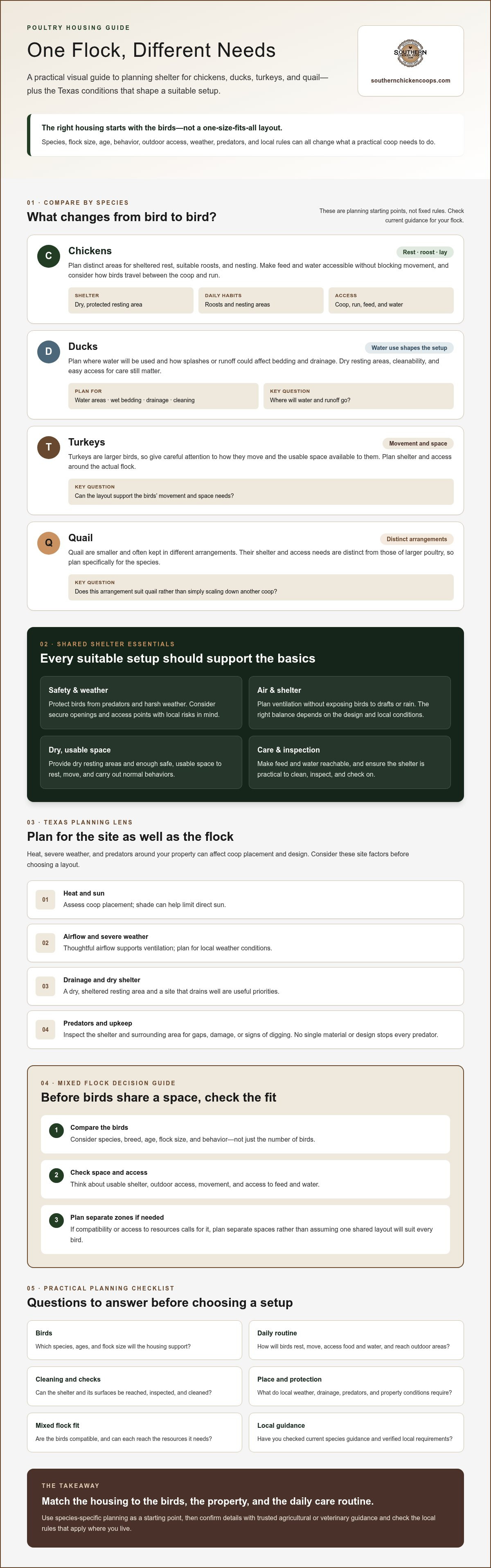
Secure shelter, weather protection, and access to clean water matter across a flock. But chickens, ducks, turkeys, and quail don’t necessarily thrive in the same layout. The coop requirements for different poultry types depend on how each bird moves, rests, uses water, and interacts with its surroundings.
Here, “coop requirements” means the shelter, space, access, and day-to-day management features birds need. Poultry farming provides a broad overview of commonly raised birds, but a backyard setup calls for species-specific planning. Check current agricultural or veterinary recommendations for your birds and flock.
Which poultry species need different housing?
Chickens typically need places to roost and lay. Ducks’ water-related habits affect how keepers manage wet areas and bedding. Turkeys are larger birds, so their movement and space needs deserve careful planning. Quail are smaller and often kept in different arrangements, making their shelter and access needs distinct from those of larger poultry. These are starting points, not fixed rules.
Breed, age, flock size, and outdoor access can all change the setup. Young birds may need different protection from adult birds, and flocks with limited outdoor access rely more on sheltered space. Texas weather and the conditions of your property matter, too. Check local rules before building or bringing birds home, since requirements can vary by location.
What a suitable coop needs to do
Species-appropriate housing gives each bird enough safe, usable space to rest, move, and carry out normal behaviors. Start with protection from predators and harsh weather. Then consider how the shelter will stay ventilated without exposing birds to drafts or rain. The right balance depends on the design and local conditions.
Plan dry resting areas, and consider whether surfaces and access points will be easy to inspect and clean. For ducks, decide where water will be used and how splashes or runoff could affect bedding and drainage. For any species, make sure you can reach feed and water, clean the shelter, and check on the flock without creating unnecessary stress.
There’s no single layout for every flock. Start with the birds you intend to keep, then account for their number, age, daily behavior, outdoor access, and the rules that apply where you live. For chicken keepers, a semi-custom design may help align housing with the flock and site. Confirm that any particular design meets your needs before choosing it.
Chicken Coop Requirements: Space, Roosts, Nesting, and Protection
Chickens need more than a roof and four walls. Their coop should support everyday habits, provide a safe place to rest and lay, and make care manageable. These chicken-specific details are one reason coop requirements for different poultry types shouldn’t be reduced to a single layout or a one-size-fits-all space estimate.
How should a chicken coop support daily behavior?
Think of the coop as a set of connected areas. Birds need a sheltered place to rest, suitable roosts, and nesting areas where hens can lay. They also need convenient access to feed and water, with equipment positioned so it doesn’t block movement or create crowded spots. Consider how birds will move between the coop and run, and whether they’ll have supervised access to a larger range.
Plan around your actual flock, not just the number of birds you hope to keep. Breed, age, time spent outdoors, and flock dynamics can affect how much usable room is appropriate. Penn State Extension’s guidance on poultry housing space requirements offers reference points for indoor and outdoor space, perches, and nesting. Check recommendations against current guidance for your flock before settling on dimensions.
What should Texas chicken keepers plan for?
In Texas, assess the coop’s placement and how it handles heat and severe weather. Shade can help limit direct sun, while thoughtful airflow supports ventilation. A dry, sheltered resting area and a site that drains well are also useful planning priorities. Consult trusted Texas chicken-keeping guidance alongside current agricultural or veterinary advice for climate-specific considerations.
Consider the predators present around your property. Secure openings and access points with local risks in mind, but don’t assume one material or design will stop every predator. Inspect the shelter and surrounding area regularly for gaps, damage, or signs of digging. Before choosing a site, review practical coop-preparation advice and check applicable local rules.
These details work together: a well-placed coop is easier to access, clean, and monitor, while a flock-appropriate layout supports daily care. If you’re comparing chicken housing options, you can explore custom chicken coop designs from Southern Chicken Coops, a family-owned builder in McGregor, Texas. Confirm that a particular design fits your flock and prepared site.
Duck, Turkey, and Quail Coop Requirements Compared
Ducks, turkeys, and quail bring different behaviors and body sizes to a housing plan. The comparison below is a starting point for identifying design questions, not a set of universal specifications. Breed, age, flock size, and use of outdoor space all matter. Verify detailed space and enclosure recommendations with current agricultural or veterinary guidance.
| Planning area | Ducks | Turkeys | Quail |
|---|---|---|---|
| Shelter | Provide a protected resting area sized for the flock and its routine. | Allow for larger bodies and comfortable movement in and out. | Plan shelter around the birds’ small size and their particular housing system. |
| Flooring | Consider how dampness affects bedding and the birds’ resting area. | Choose a surface that supports safe movement and can be kept clean. | Use flooring appropriate to the enclosure and easy to inspect. |
| Water management | Plan for splashing, drainage, and regular bedding care. | Keep water accessible without obstructing movement. | Place water where birds can reach it without compromising the enclosure. |
| Access | Provide practical routes between shelter, water, and outdoor space. | Ensure doors and paths accommodate the birds’ size and movement. | Design entry points carefully to limit escape opportunities. |
| Management | Expect to monitor wet areas and bedding condition. | Consider handling, flock behavior, and available space. | Check containment and access points often. |
How do duck housing needs differ from chicken housing?
Ducks’ water-related behavior can make a chicken-style layout harder to keep dry. Water use may contribute to wet bedding, so consider where water is placed, how runoff will drain, and how you’ll remove damp material during routine cleaning. Ducks’ needs don’t automatically call for a swimming pond or one particular piece of equipment. Choose water access and flooring based on the birds, your site, and reliable husbandry guidance.
What should turkey and quail keepers consider?
Turkeys’ larger size and movement can affect the space, doorways, and routes planned for shelter and outdoor access. Quail call for different considerations: their small size makes secure containment and carefully planned openings important. Don’t assume a chicken enclosure will suit either species simply because it provides basic shelter.
These distinctions are why coop requirements for different poultry types should guide planning rather than point to one all-purpose design. Before choosing a shared or separate setup, check current species-specific advice on space, flooring, water access, and enclosure details. Consider whether the layout will remain safe and workable as the flock grows or its needs change.
Planning a Mixed Flock in Texas: Space, Compatibility, and Site
A mixed flock needs a plan shaped around its individual birds, not just the total head count. Work through these steps before settling on a layout:
- Identify each species and check its shelter, water, and management needs.
- Count the birds you have now and consider whether the flock may change.
- Assess behavior, including differences in size, activity, and access to food or water.
- Plan zones for resting, feeding, watering, and outdoor access, allowing separation where needed.
- Verify local rules with your city or county and review any applicable property or HOA restrictions.
Can different poultry species share a coop?
Some birds may share parts of a setup, but compatibility shouldn’t be assumed. Differences in size and behavior can affect access to feed, water, and resting space. Birds may also have distinct housing or health-management needs. A shared yard isn’t the same as a shared sleeping enclosure: birds can use the same outdoor area while still needing separate, species-appropriate places to rest.
Before mixing species, research their care and health considerations, then watch how the flock behaves around shared resources. If you have concerns about compatibility, illness risk, or a particular group of birds, ask a poultry or veterinary expert for advice tailored to your flock.
How to assess a Texas coop site
Walk the property at different times of day before choosing a location. Look for shade and airflow, check whether rainwater drains away or collects, and consider exposure to severe weather. Make sure you can reach the shelter for feeding, cleaning, and flock checks. Assess likely predators on your property and plan secure boundaries with those risks in mind. No single design should be assumed to deter every predator.
Local poultry rules can differ from one Texas community to another, so don’t rely on general statewide assumptions. Confirm current requirements with the relevant local authority, and check private covenants if they apply to your property. Species-specific guidance and local rules together will help you make a more informed site and housing plan.
Careful planning may show that a mixed flock needs distinct zones or separate sleeping spaces rather than one shared enclosure. If your plan includes chickens, explore custom chicken coop options from Southern Chicken Coops, a family-owned builder in McGregor, Texas. Confirm that any chicken coop you consider fits your flock and prepared site. Don’t assume it’s designed for other poultry species.
Choose Housing That Fits Your Poultry, and Know When to Get Help
A sound housing choice begins with the birds you’re keeping and the conditions they’ll live in. Use this checklist before settling on a design:
- Species and flock: List each species, the number and age of birds, and whether you expect the flock to grow.
- Daily behavior: Consider where the birds rest, how they access food and water, and whether they need separate areas.
- Site and access: Confirm the location is prepared, level, easy to reach, and suitable for the planned structure and outdoor access.
- Care routine: Think through how you’ll clean the housing, refresh bedding, and check the birds.
- Local guidance: Verify applicable rules with local authorities and check husbandry recommendations against trusted agricultural or veterinary sources.
Questions to answer before choosing a coop
Write down the flock details, then compare them with the realities of your property. A setup that works for a small group of adult chickens may not suit growing birds, a larger flock, or a mix of species. Consider shade, drainage, weather exposure, and predator pressure alongside the space available. If you plan to keep different poultry, research each species separately rather than assuming one enclosure will meet all their needs.
Separate housing may be appropriate if birds have incompatible behaviors, different care needs, or difficulty accessing shared resources. There’s no universal rule for every flock. If you’re uncertain about species compatibility, health risks, or space recommendations, seek advice from a poultry or veterinary professional who can account for your particular birds and conditions.
When a handcrafted chicken coop may be a fit
For a flock made up of chickens, Southern Chicken Coops is a family-owned business in McGregor, Texas, that handcrafts coops one at a time and offers semi-custom designs. Its offerings include the 6'x12' Polka model. Confirm that a particular design suits your flock and site before choosing it. These chicken coops shouldn’t be assumed to accommodate ducks, turkeys, or quail.
Completed coops are delivered to a customer’s prepared, level lot. If you’re considering this option, discuss the design and site with the business before making a decision. You can explore Southern Chicken Coops’ options for a handcrafted home designed specifically for chickens while continuing to verify your flock’s housing needs with reliable agricultural guidance.
Build a Housing Plan That Works for Your Flock
The right shelter starts with the birds you keep. Chickens, ducks, turkeys, and quail have different behaviors and housing considerations, so coop requirements for different poultry types should guide your layout rather than a one-size-fits-all plan. Consider flock size, age, daily routines, and access to outdoor space, then verify species-specific recommendations with trusted agricultural or veterinary sources.
For a mixed flock, think carefully about compatibility and access to food, water, and resting areas. Separate zones or housing may be helpful for some birds. Texas site conditions, predators, and local rules also deserve attention before you settle on a location.
If your flock includes chickens, Southern Chicken Coops handcrafts coops one at a time in McGregor, Texas, and offers semi-custom options. Completed coops are delivered to a prepared, level lot. Explore our handcrafted chicken coop options and discuss your flock and prepared site with the business. With careful planning and reliable guidance, you can choose a practical home for your birds.
Frequently Asked Questions
Do different poultry types need different coops?
Yes, different species can have distinct behavioral and housing needs. Chickens, ducks, turkeys, and quail may differ in how they rest, move, use water, and need to be contained. Compare shelter, flooring, access, water management, and cleaning needs for the birds you plan to keep. Flock size, age, climate, and outdoor access matter, too. Check current agricultural or veterinary guidance before choosing a design.
Can chickens and ducks live in the same coop?
Some keepers manage mixed flocks, but a shared coop isn’t automatically suitable for every group. Ducks’ water use can make bedding damp and affect drainage, while chickens have different resting and nesting behaviors. Consider whether each species can access resources and rest comfortably, and whether you can manage separate areas if needed. Research health and care considerations, monitor the birds’ behavior, and ask a poultry or veterinary expert about flock-specific concerns.
How much space does each type of poultry need?
There isn’t one space figure that fits every species and flock. Recommendations can vary with bird type, age, size, housing arrangement, and access to outdoor areas. For coop requirements for different poultry types, consult current, reputable guidance for each species rather than applying a chicken recommendation to ducks, turkeys, or quail. Check local rules as well. If your flock or setup is unusual, ask an agricultural or veterinary expert for advice.
Do ducks need a pond in their coop?
No, a pond isn’t automatically required for every duck setup, but ducks do need appropriate water access as part of their care. Plan where water will be available and how you’ll manage splashing, damp bedding, drainage, and cleaning. The right arrangement depends on the birds and reliable husbandry recommendations, so don’t assume every flock needs the same equipment. Confirm water-access guidance with a trusted agricultural or veterinary source before building.
Can one coop house chickens, ducks, turkeys, and quail?
Don’t assume one enclosure will suit all four species. Differences in size, behavior, containment, and use of shelter and shared resources can make a single sleeping space impractical for a particular flock. A shared outdoor area also needs careful planning and isn’t the same as shared indoor housing. Research each species’ needs, assess compatibility, and get qualified advice before mixing birds or committing to one design.
What should I consider when placing a poultry coop in Texas?
Assess shade, airflow, drainage, storm exposure, routine access, and likely predators around your property. Conditions differ across Texas, so consider your specific site rather than relying on a generic layout. Check current local poultry rules with the appropriate city or county authority, and confirm husbandry recommendations for your birds with a trusted source. For chicken-specific summer planning, look for Texas-focused poultry guidance that addresses heat and severe weather.


