

Could the shade meant to cool your flock make the run feel stuffier instead? In Texas, direct summer sun can make an exposed run uncomfortable, but covering too much or placing shade poorly may restrict airflow. Choosing shade cloth for chicken run Texas summers takes a little planning: the goal is to block harsh sun while keeping the space open and secure.
Start by observing where sunlight reaches the run, then compare covering materials and decide how much area needs shade. The right placement can offer hens a shaded place to retreat without closing off breezes, access points, or your view of the flock. Secure attachment and routine inspections matter too, especially when wind or storms affect your site.
Shade planning works best alongside the coop and run layout. Southern Chicken Coops handcrafts custom and semi-custom chicken coops in McGregor, Texas, and thoughtful planning around the coop can help make the whole setup more practical. Use this guide to plan a shady, airy run that suits your flock and Texas weather.
Key Takeaways
- Choose shade that reduces direct sun while leaving clear paths for air to move through the run.
- Compare open-weave cloth and solid coverings by airflow, rain protection, and how you plan to use the shaded area.
- For shade cloth for chicken run Texas conditions, match coverage to the sun’s path, nearby trees, and existing structures.
- Plan sound attachment points, secure edges, and regular inspections to help keep shade in place in exposed weather.
- Coordinate shade placement with the coop and run layout, then check the setup as the seasons and weather change.
Why Texas chicken runs need shade that still allows airflow
Texas sunshine can make an exposed chicken run a harsh place to spend the day. Shade limits direct sun on part of the run, but a covering that blocks moving air can undermine that relief. The aim is a comfortable, open space, not a sealed enclosure.
Run shade cloth is overhead or side-mounted fabric that reduces direct sunlight while leaving open paths for air to move through the run. Hens need shaded places to retreat to, along with ventilation and dry areas. Shade cloth supports a thoughtful setup, but it does not replace suitable shelter, clean water, or attentive care. A run also gives birds outdoor access, a defining feature of free-range poultry systems.
How shade and ventilation work together in a chicken run
Overhead cloth can shade part of the ground while open sides let air move through. Side-mounted fabric may block low-angle sun, but covering every open side can reduce airflow. A solid covering can also hold warm air beneath it or make the run feel enclosed if it is poorly placed.
Plan shade and ventilation together. Keep air paths open, and make sure the coop provides appropriate shelter and ventilation. Birds should also have access to a dry place. Shade alone does not protect them from rain or replace a suitable resting area.
Where Texas sun and weather affect run-shade planning
Check the run throughout the day, not just at noon. Morning and afternoon sunlight can enter from different directions, and the sun’s path shifts across seasons. Note where trees or nearby structures already cast shade, then identify which parts of the run remain exposed during the hours you are most concerned about. Planning shade cloth for chicken run Texas weather starts with the conditions around your flock, not a one-size-fits-all layout.
In Central Texas, plan for strong sun, heat, and storms. Nearby buildings and trees may offer useful shade, but they can also affect how wind and rain reach the run. Check site-specific forecasts when severe weather is expected, and consult reliable animal-care guidance if conditions are extreme. A flexible, well-ventilated shaded area can be helpful, but it is not a substitute for responding to your flock’s needs as weather changes.
Choose chicken-run shade cloth for Texas sun, airflow, and durability
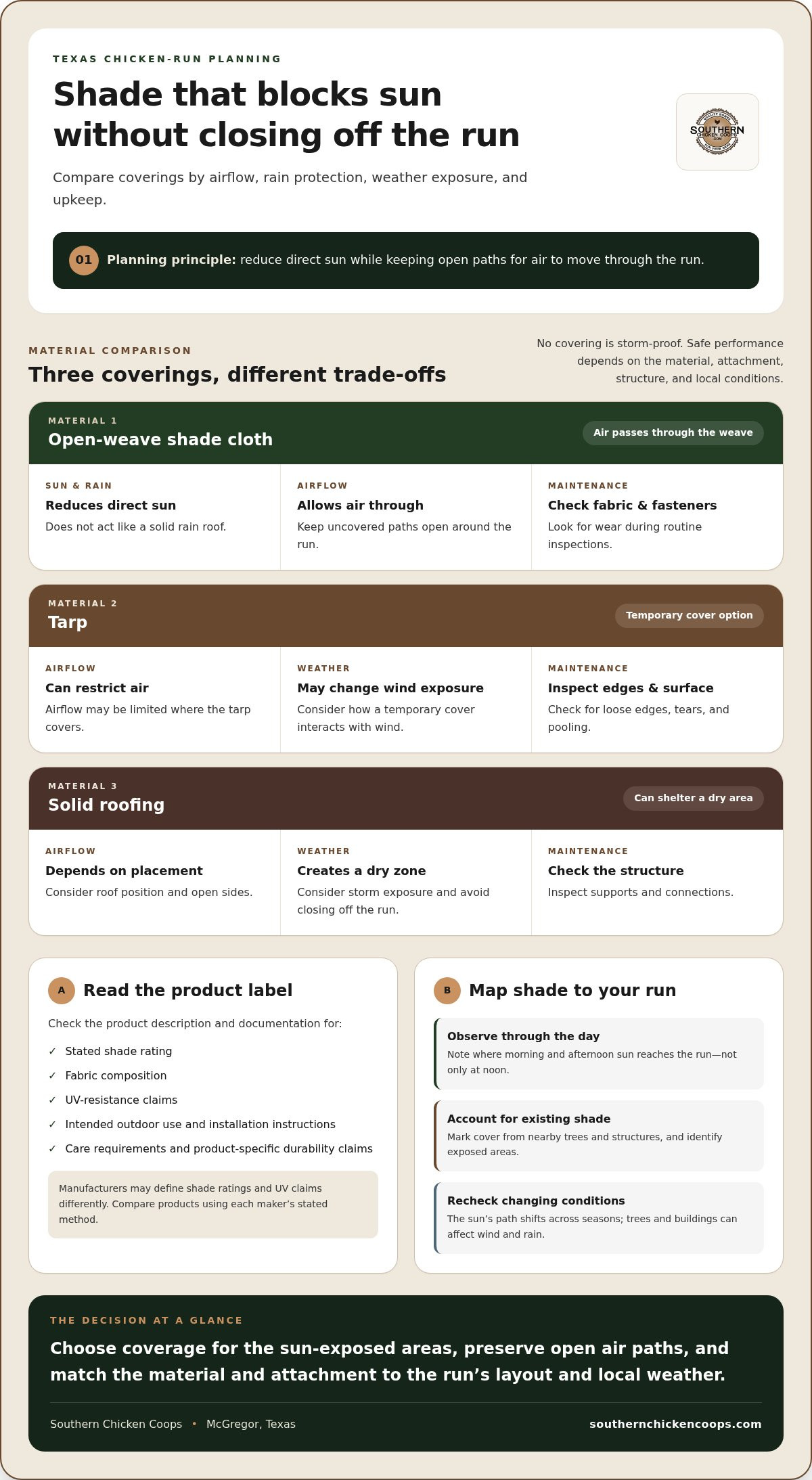
The right covering depends on what the run needs to do. Open-weave shade cloth can reduce direct sun while allowing air to pass through, but it generally will not provide the rain protection of a solid roof. Solid roofing can shelter a dry area, yet covering too much of an open-sided run may limit ventilation. For shade cloth for chicken run Texas conditions, consider sun exposure, run layout, and your flock’s access to airflow and shelter instead of choosing a shade rating without regard to the site.
University of Georgia Cooperative Extension explains the importance of ventilation and air movement in poultry housing. Keep that principle in mind when comparing coverings: shade should complement the run’s open-air design, not turn it into a closed space.
What to check on a shade-cloth product label
Read the product description and documentation closely. Look for the stated shade rating, fabric composition, UV-resistance claims, and intended outdoor use. Manufacturers may define shade ratings and UV claims differently, so compare products using each maker’s stated method rather than assuming every percentage means the same thing. Treat claims about service life or durability as product-specific, and review the conditions and care requirements in the documentation.
There is no universal shade percentage for every flock or run. A site with long hours of direct sun may need different coverage from one partly shaded by trees or buildings. Decide which areas need relief, then leave enough open space for air to move and birds to use the run comfortably. If you are comparing products, prioritize the stated outdoor use and installation instructions alongside the shade rating.
Shade cloth versus tarps and solid roofing
A tarp or solid roof may provide temporary cover or create a dry zone, but either can change ventilation and how wind interacts with the run. Open-weave cloth allows more airflow through the covered area, though it does not provide the same rain barrier as solid material. No covering is storm-proof. Safe performance depends on the material, attachment, structure, and local conditions.
| Material | Airflow | Weather considerations | Maintenance |
|---|---|---|---|
| Open-weave shade cloth | Allows air through the weave | Reduces direct sun; doesn’t act like a solid rain roof | Check fabric and fasteners for wear |
| Tarp | Can restrict airflow where it covers | Temporary cover may change wind exposure | Inspect for loose edges, tears, and pooling |
| Solid roofing | Airflow depends on roof placement and open sides | Can shelter a dry area; consider storm exposure | Inspect supports and connections |
Shade planning works best alongside the coop and run layout. Southern Chicken Coops handcrafts custom and semi-custom chicken coops in McGregor. Explore handcrafted chicken coops as you plan where shade will serve your flock.
Compare shade-cloth placement and coverage for a Texas chicken run
Where shade falls matters as much as how much fabric you use. Observe the run at different times of day. Note which areas get direct sun in the morning and afternoon, and where trees or buildings already provide cover. Repeat the check as seasons change, since the sun’s path shifts. This site check helps you place shade where it can be useful without closing off the run.
Decision rule: Prioritize the sunniest exposed area while keeping open air routes through the run. That gives your flock a shaded place to choose without covering every side or surface.
Overhead or side-mounted shade: which suits the run?
Overhead coverage can shade birds and ground while leaving the run’s sides open. It is often a straightforward way to add relief without blocking side-to-side airflow. Side panels may help with low-angle sun that slips beneath a roof or overhead cloth, but broad or continuous panels can restrict air movement. Before fastening anything permanently, observe where sunlight reaches at several times of day and adjust the planned position accordingly.
How trees, fences, and run orientation change coverage
Trees, fences, and buildings all affect sunlight and airflow. Sketch the run and mark where existing shade falls, then observe how direct sun moves around it. A tree may provide useful cover, but check for dead or overhanging branches and consider whether it creates an easy route for predators to approach or enter the run. Fences and walls can cast shade at certain hours while also sheltering the run from breezes, so assess the whole setting rather than treating shade as an isolated feature.
For shade cloth for chicken run Texas layouts, fixed and adjustable coverage each have tradeoffs. Fixed shade creates a consistent shaded zone and needs fewer day-to-day changes, but its placement may not suit every season or weather condition. Adjustable or movable shade can be repositioned as sunlight shifts, though it requires regular attention and secure handling. Choose based on the run’s exposure and how often you can inspect and adjust the setup.
Planning the coop and run as one space makes these choices easier. The Texas backyard coop preparation guide offers a starting point for thinking through the broader site before settling on shade placement.
Install chicken-run shade cloth securely for Texas wind and storms
A secure setup starts before the fabric goes up. Wind can pull at shade and its attachment points, so plan for your particular run, follow the fabric and hardware manufacturers’ instructions, and do not assume any covering is storm-proof. These steps can help you install shade cloth for chicken run Texas conditions with flock safety and routine access in mind.
- Assess the sun. Observe the run at different times of day and identify the exposed areas that need shade. Check that your planned coverage will not block ventilation, doors, or your usual route for caring for the flock.
- Select suitable fabric. Review the product’s intended use, material, shade rating, and any UV or durability claims. Use the manufacturer’s definitions and installation guidance rather than assuming a rating or fabric behaves the same across products.
- Plan the anchors. Inspect the run frame and decide where attachments can be distributed across sound support points. Confirm that the frame suits the chosen setup. Keep fasteners away from sharp edges, doors, and places where hens can peck at or become caught in loose material.
- Install with care. Attach the cloth according to the product instructions. Keep it evenly supported and secure, with no flapping or hanging edges, while avoiding excessive tension that conflicts with the manufacturer’s guidance. Check the product documentation for wind-load advice and fastening specifications, and consider the conditions at your site.
- Inspect the finished setup. Walk around the run and check the fabric, connections, frame, access points, and flock area. Make sure there are no sharp hardware ends or dangling loops that could cause injury or entanglement.
Plan attachment points before covering the run
Attachments need to work with the frame, not just hold the cloth in place on a calm day. Space them as the fabric maker directs, and check that the supports are sound. Keep doors, gates, and routine access clear. No load capacity or fastening detail fits every run, so base those decisions on the frame, product instructions, and local exposure rather than guessing at dimensions.
Inspect shade cloth after weather changes
After strong winds or storms, look for loosened fasteners, sagging fabric, frayed edges, and tears. Remove or adjust the shade if severe weather makes the arrangement unsafe. A seasonal check can include inspecting the cloth and its attachments, clearing nearby debris, and confirming that doors and open air routes remain unobstructed. Address signs of wear before relying on the setup again.
Thoughtful shade planning starts with a sound coop-and-run layout. If you are planning the broader chicken housing around your flock, explore custom chicken coop options from Southern Chicken Coops.
Plan run shade alongside a well-designed Texas chicken coop
Shade works best as part of the whole site plan, not as a last-minute cover added without regard for the coop. The coop’s position, run orientation, existing trees, and daily access all shape where shade will help most. A shaded stretch near the coop may offer a convenient retreat, while another exposed section may need coverage so birds have a choice as the sun moves.
Before settling on shade cloth for chicken run Texas conditions, walk the planned layout at different times of day. Consider how you will reach feeders and water, check on the flock, and keep the run ventilated. The aim is a practical space that supports daily care as well as comfort.
A quick shade-cloth checklist for Texas flock owners
- Observe the sun: Note which parts of the run receive direct sunlight and when, including shade from nearby structures or trees.
- Check the fabric: Review the stated outdoor use, shade rating, material, and care instructions, interpreting claims according to the manufacturer’s definitions.
- Preserve open routes: Make sure the covering does not obstruct ventilation, doors, routine access, or your view of the birds.
- Secure and inspect: Follow product guidance for installation, then check fabric and attachments routinely, especially after severe weather.
Connect run layout with long-term coop planning
Thinking through coop and run placement together helps avoid awkward compromises later. For example, a run that receives harsh afternoon sun may need shade in a different position from a site with substantial existing cover. Leave room for birds to move between sheltered and open areas, and keep everyday chores straightforward. A sound layout can make shade easier to position, inspect, and maintain.
For a broader look at site decisions, see our guide to handcrafted Texas chicken coops. Southern Chicken Coops handcrafts custom and semi-custom coops in McGregor, Texas, including the signature 6'x12' Polka model. Completed coops are delivered to prepared, level lots, so include site preparation in your planning. Consider shade cloth and the run arrangement as part of the full setup.
With the sun observed, airflow preserved, and attachments checked, you will have a thoughtful foundation for a comfortable run. Southern Chicken Coops’ handcrafted and semi-custom coops can be planned around your poultry housing needs.
Build a Shady, Airy Run Your Flock Can Enjoy
A thoughtful shade plan starts with observing where the sun reaches your run, then choosing coverage that keeps air moving and leaves your hens room to retreat. Check the fabric’s guidance, secure it with care, and inspect it after changing weather. The right setup for shade cloth for chicken run Texas conditions depends on your site, your run layout, and your flock’s needs.
Shade is one part of a well-planned chicken home. Coop placement and run design shape where cover will be most useful, so consider them together. Southern Chicken Coops is family-owned and operated by Bill and Tina Drivdahl. Each coop is handcrafted one at a time in McGregor, Texas, with semi-custom designs tailored to customer needs.
With careful planning and regular attention, you can create an inviting run that balances shade, airflow, and flock safety. To plan your Texas flock’s housing, explore Southern Chicken Coops’ handcrafted chicken coops.
Frequently Asked Questions
Does shade cloth help keep a chicken run cooler in Texas?
Shade cloth can reduce direct sunlight on parts of the run, which may make those shaded areas more comfortable for your flock. The result depends on the fabric, coverage, sun exposure, and airflow around the run, so do not count on a specific temperature change. Pair shade with open air routes, suitable shelter, and attentive care, especially during periods of intense Texas heat.
What percentage shade cloth should I use for a chicken run?
There is no single shade percentage that suits every run. Consider how many hours the area receives direct sun, whether trees or buildings already provide shade, and how much open space your flock has to move around. Read the manufacturer’s definition of its shade rating, since ratings may not be directly comparable. Aim for useful relief without covering so much of the run that airflow is reduced.
Can shade cloth block airflow in a chicken run?
Yes. Shade can restrict airflow if it covers too many sides or closes off open air paths. Overhead coverage can provide shade while leaving the sides open; broad side panels may block breezes as well as sunlight. Walk around the run and check that air can move through it. Shade cloth should supplement, not replace, suitable coop ventilation and shelter.
Should shade cloth go over the top or sides of a chicken run?
Overhead shade is often a practical starting point because it can shade birds and ground while keeping the run’s sides open. Side-mounted cloth may help block low-angle morning or afternoon sun, but too much side coverage can limit air movement. Observe the run at different times before deciding where to place fabric. The best arrangement depends on sun direction, existing shade, run orientation, and airflow.
How do I secure shade cloth to a chicken run in windy weather?
Follow the fabric manufacturer’s fastening instructions and attach the cloth to sound parts of the run frame. Plan attachment points across the fabric, keep edges from hanging loose, and avoid sharp hardware or anything hens can peck at or become caught in. Do not assume a setup is storm-proof; wind exposure and frame strength vary by site. Inspect connections after strong winds, and adjust or remove the cloth if severe weather makes it unsafe.
Can I use a tarp instead of shade cloth for a chicken run?
A tarp can provide temporary cover, but unlike open-weave cloth, it may restrict airflow where it covers the run. It can also change how wind interacts with the structure, so consider the frame, attachment method, and local weather before using one. A tarp may help create a dry area, but it should not close off the run or eliminate access to ventilation. Check it regularly for sagging, loose edges, or damage.
How often should I inspect chicken-run shade cloth?
Check the cloth and its fasteners as part of your regular flock-area routine, and inspect them again after strong winds or storms. Look for loosened attachments, sagging fabric, frayed or torn edges, and hardware that could create a sharp or entanglement hazard. A seasonal review is also useful: confirm the shade still suits the sun’s path, does not block access or airflow, and remains securely attached.


