

What if the kindest thing you can do for new hens is keep them apart from the flock at first? A 30-day quarantine is widely recommended to help protect established birds from disease. Planning for introducing new birds to flock safely also gives everyone time to adjust before sharing close quarters.
It’s natural to worry about pecking, chasing, or an introduction that moves too quickly. A steady routine helps you see how the birds respond and pause if you notice stress or injury.
This guide covers quarantine, housing preparation, a “see but don’t touch” period, and the gradual move into shared space. You’ll learn what signs suggest the flock is ready to progress, when to slow down, and how a thoughtful coop and run layout can give newcomers room to settle. A patient introduction supports flock health and gives peaceful habits a better chance to take hold.
Key Takeaways
- Plan introductions around each bird’s age and size, and give the process time rather than rushing first contact.
- Quarantine newcomers separately and follow current veterinary or extension guidance for the appropriate duration.
- Move from protected visual contact to supervised shared space only when the birds’ behavior suggests they’re ready.
- A few pecks can be normal boundary-setting; repeated attacks, trapped birds, or injuries are signs to step in and slow down.
- For introducing new birds to flock safely, prepare enough usable space, multiple resources, and a secure way to separate birds when needed.
Introducing New Birds to a Flock Safely Starts Before They Meet
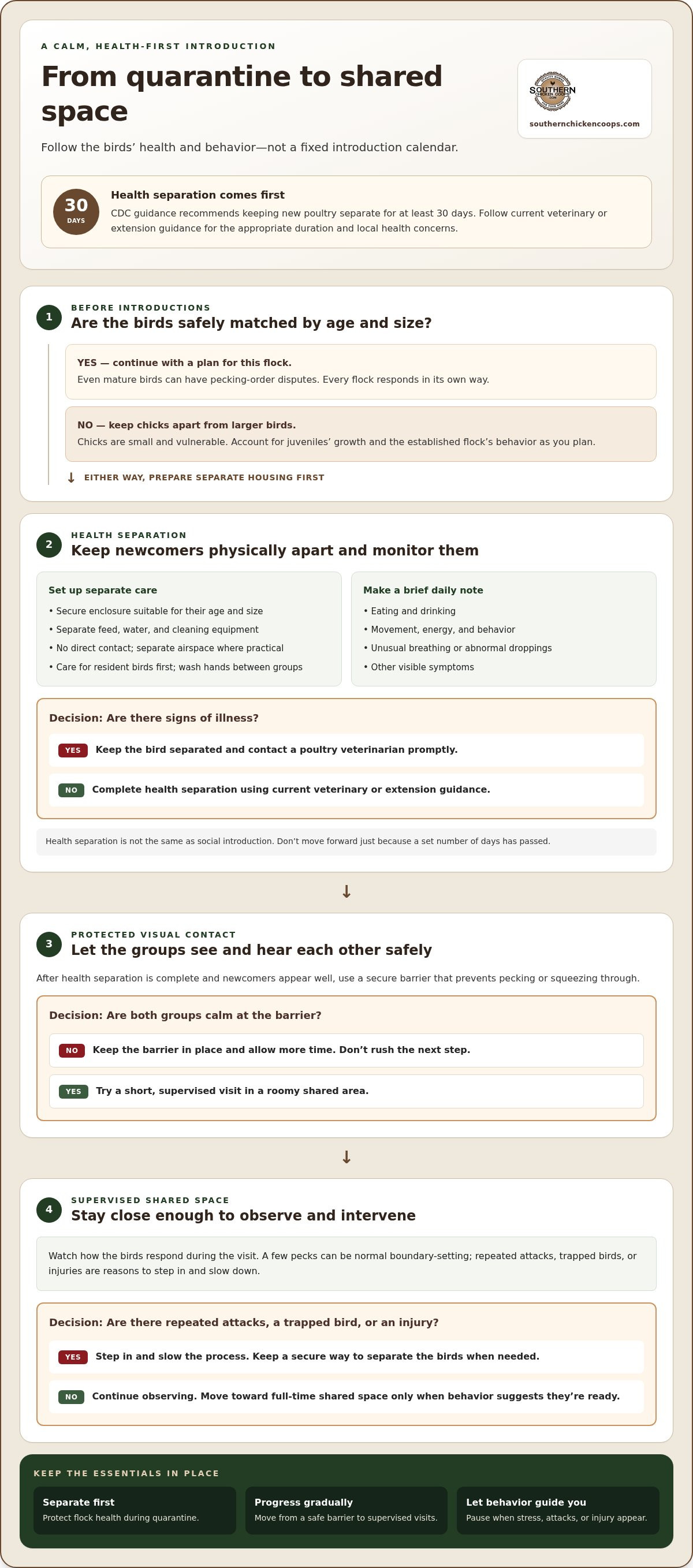
There’s no need to hurry a flock introduction. Preparation gives you time to protect the birds’ health, account for differences in age and size, and plan first contact. Quarantine and introduction are separate steps: quarantine is for health separation, while introduction is the gradual process of helping unfamiliar chickens share space.
Age and size matter. Chicks are small and vulnerable, so don’t place them with larger birds that could injure them. Juveniles may be closer in size to adult hens but still need a plan that accounts for their growth and the established flock’s behavior. Mature birds may be better matched physically, but they can still face pecking-order disputes. Chickens are social animals, and every flock responds in its own way, so there isn’t one calendar that fits every group.
A practical sequence is to keep newcomers separate while monitoring their health, then let the groups become familiar through protected visual contact. If both groups remain settled, move on to supervised time together and keep observing before they share space full-time. A 30-day quarantine is widely recommended for new birds, but follow current veterinary or extension guidance for the appropriate duration and local health concerns. Don’t move forward just because a set number of days has passed.
What can go wrong when new chickens join too quickly?
An abrupt meeting can unsettle both newcomers and established hens. Birds may chase or peck as they sort out social boundaries, and a smaller or less confident chicken can be injured if it has nowhere to retreat. There’s also a health risk: unfamiliar birds may carry illness even when they look healthy. Gradual steps give you a chance to notice concerns before the groups mingle and to slow down when behavior or health calls for it.
Prepare a separate space before the new birds arrive
Set up secure housing for newcomers before bringing them home. Provide separate feed and water, and use dedicated equipment so supplies aren’t shared during health separation. Choose a location that prevents direct contact and, where practical, limits shared air between the groups. These steps support careful monitoring, but they don’t replace veterinary guidance.
- Check that the enclosure is secure and suitable for the birds’ age and size.
- Keep food, water, and care equipment separate during quarantine.
- Plan how you’ll observe the birds without allowing contact with the resident flock.
For more on getting housing ready in a Texas setting, see our Texas backyard chicken coop preparation guide. A thoughtful layout can make separation and daily care easier, while health checks and a gradual process remain essential.
Quarantine New Chickens Before Flock Introductions
Quarantine means keeping newly arrived birds physically apart from your resident flock while watching for signs of illness. It’s a health precaution, not a test of whether the chickens will get along. Even birds that look well may carry an illness, so a careful separation period helps reduce the chance of bringing disease into the flock.
How long should new chickens stay in quarantine?
Follow current veterinary or extension guidance rather than relying on a one-size-fits-all calendar. The CDC guidance on quarantining new poultry recommends keeping new birds separate for at least 30 days. A poultry veterinarian or Texas A&M AgriLife Extension can help you apply current advice to your situation, since the birds’ history and local disease risks may affect the recommendation. Keep health separation distinct from later social introductions.
What should you monitor during separation?
Make a brief daily note of how each bird is eating, drinking, moving, and behaving. Watch for changes in appetite or energy, unusual breathing, abnormal droppings, or other visible symptoms. A simple record can help you spot changes and give a veterinarian a clearer picture if you need advice.
- Use separate feeders, drinkers, and cleaning tools for the isolated birds.
- Keep newcomers in separate airspace, with no direct contact with the established flock.
- Care for resident birds first, then tend to quarantined birds. Wash your hands between groups and avoid carrying equipment from one area to the other.
These routines reduce avoidable exposure, but they can’t guarantee that illness won’t occur. If a new bird shows signs of illness, keep it separated and contact a poultry veterinarian promptly for guidance. Check current Texas A&M AgriLife Extension or veterinary recommendations for updates, especially if you’re concerned about disease activity in your area.
Good housing makes it easier to keep groups apart and manage daily care. If you’re considering how coop layout can support your flock as it changes, explore custom chicken coop options. Thoughtful housing supports your management plan, while quarantine and health guidance remain essential to introducing new birds to flock safely.
Introduce Chickens Gradually: From Seeing Each Other to Sharing Space
Once the health-separation period is complete and the newcomers appear well, begin social introductions in stages. Let the birds’ behavior guide the pace, not a fixed calendar. Some flocks settle after brief, calm encounters; others need more time before they can share space comfortably.
- Health separation: Keep the groups apart while following veterinary or extension guidance and monitoring the newcomers.
- Protected visual contact: Let the birds see and hear each other through a secure barrier that prevents pecking or squeezing through.
- Supervised shared space: When behavior at the barrier is calm, try a short visit together in a roomy area, staying close enough to intervene.
- Continued observation: Watch how the flock behaves during and after each meeting before allowing more shared time.
How can chickens see each other safely first?
Use a sturdy fence or partition that lets the birds look at one another without reaching through to peck. Start with short sessions and observe both sides. Relaxed foraging and ordinary curiosity are encouraging; persistent attacks on the barrier or mounting distress are reasons to pause. Give the birds a break and try again later when they’re settled.
When is it safe to let the flock share space?
Choose a supervised area with room to move away and more than one route out of a tense encounter. Keep the first shared sessions manageable, and provide several feed and water access points so one bird can’t easily guard them all. Brief posturing or a peck may be part of sorting out boundaries. Sustained chasing, cornering, or any injury calls for immediate separation and a slower approach.
Texas weather belongs in the plan, too. Arrange introductions during cooler hours, with shade and clean water available. Heat can add strain to an unfamiliar situation, so watch for signs that birds are struggling and end the session if needed.
Move to the next stage when both groups can remain near one another without persistent attacks, escalating distress, or a bird being trapped or injured. That’s a useful guide, not a guarantee, so keep supervising as the birds spend more time together. Patience, clear escape routes, and accessible resources make introducing new birds to flock safely more manageable.
Recognize Bullying and Know When to Slow Down
A peck doesn’t automatically mean an introduction has failed. Chickens may posture, give a quick peck, or briefly assert boundaries as they work out their place in the flock. Watch what happens next: if the birds disengage and can move around freely, you may be seeing a short-lived interaction rather than an unsafe pattern.
Is pecking normal when chickens meet?
Look at the frequency and impact, not one isolated peck. Concern rises when one bird is targeted repeatedly, can’t get away, is kept from food or water, or has a visible wound. A smaller or younger chicken may be at greater risk around larger birds, and temperament and available space can affect how quickly a group settles. Don’t leave birds together to see whether serious aggression stops on its own.
What should you do if an introduction goes badly?
If a bird is being injured or trapped, calmly separate the group and give the vulnerable chicken a secure space of its own. Return to protected contact rather than abandoning the introduction altogether. Before trying again, review whether the shared area has enough room and escape routes, whether feed and water are accessible at multiple points, and whether differences in age or size call for a slower pace.
Use these observations to decide what to do next:
- Brief posturing, then calm movement: Continue supervising and keep the session manageable.
- Repeated targeting or blocked access to resources: Separate the birds and reassess the setup before another meeting.
- A trapped bird, visible injury, or worsening distress: End the interaction and keep the birds apart.
Don’t try to diagnose a wound or illness yourself. Contact a poultry veterinarian for guidance if a bird is injured, appears unwell, or shows distress that persists or worsens. Prompt advice can help you decide what care is needed and whether introductions should wait.
Taking a step back is a sound part of introducing new birds to flock safely, not a setback. Each flock has its own pace, and a well-planned layout makes it easier to separate birds and provide room to retreat. If your housing needs to adapt as your flock changes, explore custom chicken coop options as part of your planning.
Prepare Flock Housing for a Safer, More Settled Introduction
A thoughtful housing setup makes it easier to keep newcomers separate, supervise early meetings, and give each bird room to move away from tension. Before introductions begin, consider the space chickens can actually use, not just the coop’s overall footprint. Clear routes, secure barriers, and easy access to food and water help prevent crowding and make it easier to step in if a meeting becomes unsettled.
What housing details make introductions easier to manage?
Plan a separate holding area for newcomers and a secure barrier for protected contact. Check that birds can’t slip through or reach one another to peck, and keep feed and water available in more than one spot once they share space. In the shared area, avoid dead ends where a bird could be cornered. Match the setup to your flock’s size and the birds’ ages, and consider local conditions such as Texas heat when choosing where and when to manage introductions.
Coop design can support daily flock management, but it can’t replace health separation, careful observation, or supervision. For ideas on housing that suits a Texas backyard flock, explore our guide to custom chicken coops in Texas.
A calm introduction checklist
Use this checklist as a practical sequence, not a fixed calendar. Follow current veterinary or extension guidance, and let the birds’ health and behavior determine when to proceed.
- Before direct contact: Complete health separation and review current professional guidance for your birds and area.
- As contact begins: Arrange protected visual meetings, then try supervised shared space only when behavior is calm.
- During each session: Keep more than one food and water access point available, and make sure birds have room and routes to move away.
- Afterward: Note behavior, eating, drinking, and any concerns. Keep a safe separation option ready if tension or injury develops.
Handcrafted housing can be part of preparing a comfortable home for your flock. At Southern Chicken Coops, we build custom chicken coops one at a time in McGregor, Texas, with semi-custom designs tailored to customer needs. The 6'x12' Polka model is designed for durability and functionality in the Texas climate. A well-considered setup can support the practical steps involved in introducing new birds to flock safely, while the pace should always follow the birds’ needs. Explore Southern Chicken Coops’ custom coop options as you plan housing for your flock.
Give Your Flock Time and Room to Settle
A peaceful introduction begins with patience. Keep new chickens separate while monitoring their health, then move through protected contact and supervised time together at a pace that suits the birds. A few pecks may be ordinary boundary-setting, but repeated attacks, a trapped bird, or an injury are signs to pause and reassess.
Good housing supports the process: make room for birds to move away from conflict, provide multiple access points to food and water, and keep a secure separation option ready. Alongside current veterinary or extension guidance, these steps can make introducing new birds to flock safely more manageable.
At Southern Chicken Coops, Bill and Tina Drivdahl bring a family-owned approach to handcrafted chicken coops made in McGregor, Texas. Semi-custom designs can be tailored to your flock’s housing needs, and completed coops are delivered to a prepared, level lot. Explore handcrafted chicken coops for your flock.
Take introductions one calm step at a time. With a thoughtful setup and close observation, you can give your flock a better chance to settle together.
Frequently Asked Questions
How long should you quarantine new chickens before adding them to a flock?
Keep new chickens separate for at least 30 days, as recommended by the CDC, and follow current veterinary or extension guidance for advice that fits your flock and local disease concerns. Quarantine means keeping newcomers apart while you monitor their health, not letting them meet through a fence. Use separate equipment and care for your established birds before tending to the isolated newcomers.
Can you put new chickens straight in the coop with your flock?
No, don’t place new chickens directly in the coop with your established flock. They need a separate quarantine space first, since birds can carry illness without obvious symptoms. After health separation, start with protected visual contact, then try supervised time together if the birds remain calm. Make sure newcomers have a safe place to retreat and can reach food and water without being blocked.
How do you introduce new chickens to an existing flock?
Introduce them in stages: complete health separation, allow protected visual contact through a secure barrier, then try supervised visits in a spacious area. Provide several routes away from tension and multiple food and water access points. Watch how the birds behave, and progress only when interactions are manageable. There’s no single schedule for introducing new birds to flock safely, so pause or repeat a stage as needed.
What happens if chickens fight during an introduction?
If a bird is being injured, trapped, or kept from food and water, calmly separate the chickens and return to protected contact. Review the setup before trying again: consider usable space, escape routes, resource access, and differences in the birds’ size or age. Contact a poultry veterinarian for a wound, signs of illness, or distress that persists or worsens. Don’t assume serious aggression will resolve on its own.
Is pecking normal when introducing new birds to a flock?
A brief peck or short bout of posturing can happen as chickens establish social boundaries. Judge the pattern and severity, not one isolated peck. Repeated targeting, relentless chasing, cornering, visible wounds, or a bird unable to get away are reasons to separate them and slow down. Continue close supervision, since even behavior that starts mildly can become unsafe if one bird can’t retreat.
Can chicks be introduced to adult chickens?
Chicks can eventually join adult chickens, but don’t put small, vulnerable chicks directly with larger birds. Differences in size and maturity can make it hard for chicks to avoid pecking or reach resources. Keep them safely housed apart, and follow guidance from a poultry veterinarian or extension professional on when your particular birds are ready. Use protected contact first, then supervise any shared time closely.
How can I reduce bullying when adding new hens?
Give the birds room to move away, provide multiple feed and water points, and use a secure barrier for gradual visual contact before shared space. Supervise early meetings and separate a hen who is repeatedly targeted, trapped, or injured. Don’t expect every group to settle at the same pace: age, size, temperament, and the layout can all affect how introductions unfold. Slow down when the behavior calls for it.
Should new chickens be introduced differently in hot Texas weather?
Yes. In Texas heat, schedule supervised introductions during cooler hours and make sure shade and fresh water are available. Keep sessions manageable, and end them if a bird seems distressed or is struggling in the heat. Continue to use the same health-separation and gradual-contact steps; weather doesn’t replace quarantine or supervision. Follow current Texas A&M AgriLife Extension or veterinary guidance for local poultry-health advice.


