

The best roost for your hens is not necessarily the highest one. It is a perch they can reach, grip securely, and settle on comfortably. Choosing roosting bar height and material may seem like a small coop detail, but it affects how easily your birds perch and how simply you can keep their sleeping area clean.
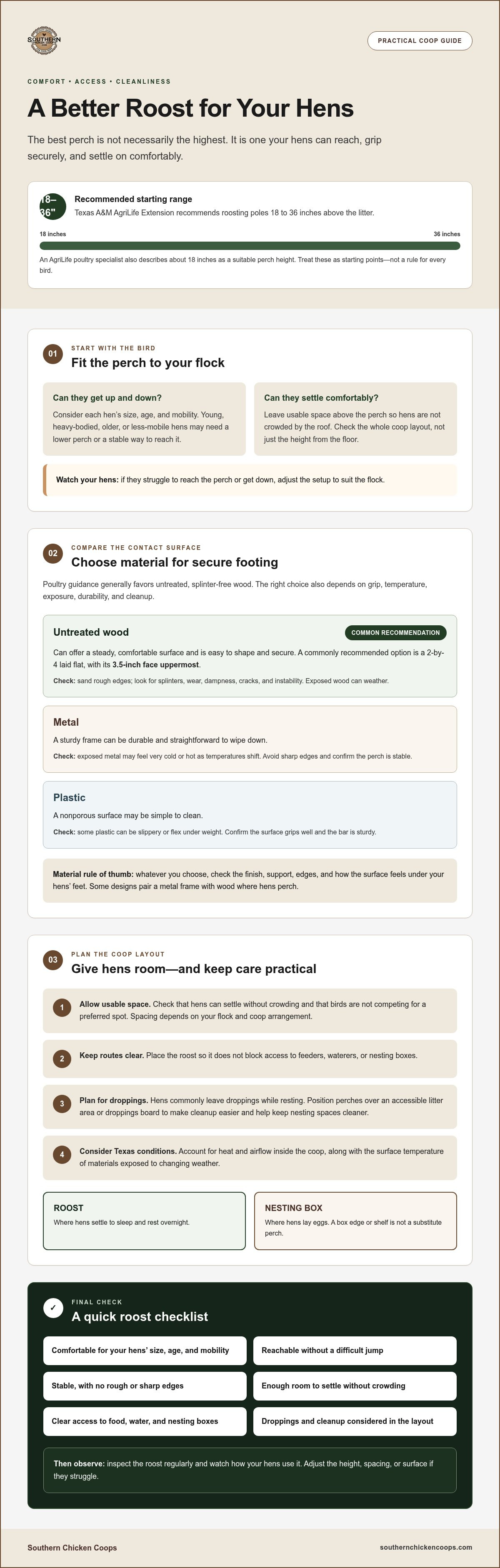
Access and foot comfort both matter. Texas A&M AgriLife Extension recommends placing roosting poles 18 to 36 inches above the litter, while poultry guidance generally favors untreated, splinter-free wood for a steady perch. Use those recommendations as starting points, then consider your flock, coop layout, and the heat and airflow inside your Texas coop.
This guide covers practical height and spacing, compares common roost materials, and explains how to make cleanup easier without overlooking durability. Use the checklist and your hens’ behavior to decide whether a perch works for your flock.
Key Takeaways
- Choose a perch your hens can reach comfortably, taking their size, age, and mobility into account.
- Compare roosting bar height and material for foot comfort, grip, temperature, durability, and ease of cleaning.
- Check spacing and flock dynamics so birds can settle without crowding or competing for a preferred spot.
- Inspect the roost for stability and rough edges, then watch your hens and adjust if they struggle.
- Plan for droppings management and airflow as part of a coop layout suited to Texas weather.
Roosting Bar Height and Material: What Makes a Perch Work?
A roosting bar is an elevated perch where hens settle to rest overnight. A sturdy bar gives birds a place to follow their natural instinct to perch together. Communal roosting describes this shared resting behavior across animal species. For your flock, the perch should feel secure underfoot and be reachable without a difficult jump.
Plan roosting bar height and material alongside the rest of the coop layout. A comfortable surface is not useful if a bird cannot reach it. Likewise, an easy-to-reach perch can create problems if it blocks feeders, waterers, or a clear path through the coop. Start with the hens you have and the space available, rather than choosing a measurement in isolation.
How high should a chicken roosting bar be?
Texas A&M AgriLife Extension recommends placing roosting poles 18 to 36 inches above the litter. An AgriLife poultry specialist also describes about 18 inches as a suitable perch height. Treat these as starting points, not a rule for every bird. Young, heavy-bodied, older, or less-mobile hens may need a lower perch or a stable way to reach it. Watch whether your flock can get up and down without struggling.
Height is only part of the fit. Leave usable space above the perch so hens can settle without crowding the roof. Keep enough clear space below for safe access and straightforward cleanup. Those clearances depend on the coop’s dimensions and the perch arrangement, so assess the whole area rather than measuring from the floor alone.
What makes a roost different from a nesting box?
A roost is where hens sleep; a nesting box is where they lay eggs. They have different purposes, so a box edge or shelf should not be treated as a substitute perch. Roost placement also affects cleanliness. Hens commonly leave droppings while resting, so positioning perches over an accessible litter area or droppings board can make cleanup easier and help keep nesting spaces cleaner.
When sketching the layout, make sure hens can reach the roost without blocking access to food, water, or nesting boxes. A well-planned coop brings these details together, giving birds a comfortable place to settle while keeping daily care practical.
Choose Roosting Bar Material for Comfortable Feet and Lasting Use
A roost needs to feel secure under a hen’s feet and stand up to daily use and coop conditions. The Alabama Cooperative Extension System describes roosting as one of the natural chicken behaviors that supports flock welfare. Poultry guidance generally favors untreated, splinter-free wood, but the right choice for your coop also depends on grip, temperature, exposure, and how you plan to clean it.
Is wood a good material for chicken roosts?
Wood provides a steady, nonmetal surface, and a flat-sided board gives hens room to rest their feet. A commonly recommended option is a 2-by-4 laid flat, with its 3.5-inch face uppermost. Sand rough edges and check for splinters. A sharp or damaged surface can be uncomfortable, while an overly smooth one may feel less secure. Exposed wood can weather, so inspect it regularly and replace it if it becomes cracked, rough, or unstable.
The table compares common options. These are practical trade-offs, not a claim that one material suits every coop.
| Material | Potential advantages | What to check |
|---|---|---|
| Untreated wood | Can provide a stable, comfortable surface; easy to shape and secure. | Splinters, wear, dampness, and whether the size and finish offer secure footing. |
| Metal | A sturdy frame can be durable and straightforward to wipe down. | Exposed metal may feel very cold or hot as temperatures shift; avoid sharp edges and check stability. |
| Plastic | Nonporous surfaces may be simple to clean. | Some plastic can be slippery or flex under weight; confirm that the surface grips well and the bar is sturdy. |
Should roosting bars be made from metal or plastic?
Metal and plastic are not automatically unsuitable, but check the surface your hens will touch. Exposed metal can conduct heat and cold, which may make it uncomfortable during a Texas summer or a cold spell. Plastic may be easy to clean, but a slick finish can make footing insecure. Before installing either, check for a suitable finish, firm support, and edges that will not catch or injure feet. Some roost designs use a metal frame with wood where hens perch, combining a cleanable structure with a more comfortable resting surface.
Consider the full roosting bar height and material plan together: a well-supported perch, a comfortable contact surface, and enough room to clean around it. If you are considering a handcrafted coop, explore custom chicken coops and ask about layout details suited to your flock.
Match Roost Height and Spacing to Your Hens and Coop
Plan for the birds you have, not only the coop dimensions. Young pullets may be less confident reaching a high perch, while heavy-bodied, older, or less-mobile hens may find repeated jumping difficult. Flock dynamics matter as well. A dominant hen may claim a favorite spot, leaving quieter birds crowded or pushed aside. Watch your flock at bedtime to see whether every bird can settle comfortably.
How much roosting space does each hen need?
Texas A&M AgriLife Extension recommends at least 8 inches of roost width per bird. Use that as general guidance, then consider more space if your hens are larger or your flock’s behavior calls for it. Birds need room to perch without pressing tightly against one another, though how they use the bar can vary. If hens jostle, displace one another, or leave some birds on the floor, reassess the usable length and placement.
For multiple bars, AgriLife recommends positioning roosting poles 14 inches apart. This gives you a starting point for planning, but the coop’s interior and the birds’ ability to move between levels matter too. Keep the route clear so hens can get on and off without being boxed in by walls or equipment.
Should roosting bars be on one level or several?
A single-level arrangement can make access straightforward, especially for birds that struggle to jump. Multiple levels may offer more perching options when space is limited, but hens often favor higher spots. That preference can invite competition, and birds on upper bars may soil those below. If you use tiers, arrange them thoughtfully and observe whether lower-ranking or less-mobile hens can reach a safe resting place without a scramble.
Consider the full coop layout before choosing an arrangement. The backyard chicken coop prep guide can help you think through broader planning, while the 6-by-12-foot coop guide offers another reference for considering roosts within a larger coop. The goal is not to add levels for their own sake. It is to give each hen a practical route to a comfortable spot.
Height and spacing work together with the perch surface, so keep your roosting bar height and material plan focused on what your hens can use. After making a change, check at dusk: are all birds perching, and can they settle without crowding or being displaced? Their behavior helps show whether the layout is working.
Plan Roosting Bars for Cleanliness, Safety, and Texas Weather
A well-planned roost should be easy for hens to use and straightforward for you to inspect and clean. Droppings tend to collect beneath resting birds, so perch placement can concentrate mess in an accessible area instead of above feeders, waterers, or nesting boxes. Good airflow around the roost matters too, particularly during hot Texas nights.
How can roost placement make coop cleaning easier?
Before choosing a location, consider where droppings will land and whether you can reach that area without moving essential coop equipment. A litter area beneath the perch or a removable droppings board can make cleanup more manageable. Choose an approach that suits your coop and routine. Leave enough clearance to clean beneath and around the bar, and make sure its supports stay firm under the birds’ weight.
Use this sequence when inspecting a roost:
- Height: Confirm the perch is accessible to your hens and leaves room for them to settle.
- Stability: Gently test the bar and supports for wobbling or looseness.
- Edges: Check for splinters, cracks, sharp corners, or rough spots that could hurt feet.
- Access: Make sure hens can get on and off without hitting walls or blocking access to food, water, and nesting boxes.
- Cleanability: Check that the area beneath the perch is easy to inspect and reach.
What should Texas chicken keepers consider?
Direct sun and high temperatures can affect how exposed surfaces feel, while rain or damp conditions can influence how materials hold up. Consider the roost’s location within the coop, not just the bar itself. Shade, weather protection, and ventilation are whole-coop design factors. In particular, airflow near roosting height can help move heat and reduce ammonia buildup. Do not assume every wood type or finish will respond the same way to local exposure. Inspect for wear and follow care guidance suited to the specific material.
For a broader look at climate-aware coop planning, see our Texas summer coop guide. Considering a new coop? Explore handcrafted chicken coops and plan roost placement alongside the rest of the layout. Thoughtful roosting bar height and material choices can support comfort, safe access, and simpler daily care.
Put Your Roosting Bar Plan Into a Well-Built Coop
A comfortable roost is one part of a practical coop layout. Bring the key decisions together: Can each bird reach the perch? Is the surface comfortable and stable? Is there enough usable space? Can you inspect and clean beneath it? Will the location and materials hold up to the coop’s exposure? A useful plan considers all of these questions instead of focusing on height alone.
Then watch how your hens use the setup. Observe them as they settle for the night and as they leave the perch in the morning. Repeated failed jumps, hesitation, crowding, or difficulty settling are reasons to reassess the arrangement. Young, older, larger, and less-mobile birds may need easier access or a different setup. If a hen has persistent foot discomfort or an injury, seek advice from a qualified poultry-care professional rather than relying on a perch adjustment alone.
When should you adapt a roosting-bar plan?
Make adjustments when the same birds consistently struggle to reach or use the roost, or when some are repeatedly pushed away from a spot. Check the route to the perch as well as its height. Nearby walls or equipment may make access awkward. After changing the layout, watch the flock again. Small, considered adjustments can help you find a setup that suits your birds and coop.
How can a coop builder help with layout planning?
A coop builder can discuss your flock’s needs and how you intend to use the coop, helping you consider roost placement alongside access to essentials and space for cleaning. Bring practical details to the conversation, such as whether your flock includes heavy-bodied or less-mobile hens and where you want the roost in relation to nesting boxes and feeders.
Southern Chicken Coops is a family-owned business in McGregor, Texas, that handcrafts custom and semi-custom coops. If you are planning a coop, share your flock’s needs and ask about layout details. You can explore handcrafted Texas coops and ask about delivery to a prepared, level lot. Roosting bar height and material matter, but they work best as part of a well-considered home for the whole flock.
Build a Roosting Plan Your Hens Can Settle Into
A good perch brings together comfortable footing, practical access, enough room, and a coop layout that is easy to keep clean. The right roosting bar height and material depend on your hens and their surroundings, so observe how they climb, perch, and settle. If a bird regularly struggles or shows ongoing foot discomfort, adjust the setup and seek qualified poultry-care advice when needed.
Roost planning is one part of creating a secure, functional home for your flock. Southern Chicken Coops is family-owned and operated by Bill and Tina Drivdahl, with coops handcrafted in McGregor, Texas, and delivered to a prepared, level lot. Explore our handcrafted chicken coops and ask us about planning your flock’s home.
With a perch suited to your birds and a well-considered coop around it, you can help your hens rest more comfortably and care for their home with confidence.
Frequently Asked Questions
What is the best material for a chicken roosting bar?
Untreated, sturdy wood with smooth, splinter-free edges is a widely recommended choice for the surface hens perch on. A 2-by-4 laid flat offers a broad resting surface, but inspect it for rough spots, cracks, and wear. No material suits every coop. Consider the local climate, exposure, cleaning needs, and your flock’s footing. Avoid finishes or treatments unless you have confirmed they are suitable for poultry use.
Should chicken roosting bars be round or flat?
A broad, flat surface is a sensible choice for many backyard flocks because it lets hens rest their feet on the perch. Texas A&M AgriLife Extension recommends 8 inches of roost width per bird, while poultry guidance commonly describes a flat 2-by-4 as a suitable perch. Round bars can vary in diameter and grip, so check the surface and watch whether your hens perch securely without slipping or struggling.
How much roosting space does each chicken need?
Texas A&M AgriLife Extension recommends 8 inches of roost width per bird. Treat this as general guidance and consider allowing additional room for larger breeds or birds that need more space to settle. Observe your flock at bedtime. Frequent jostling, birds pushing one another aside, or hens left without a perch may mean the available space or layout needs attention. The goal is comfortable access for the whole flock.
Are metal roosting bars safe for chickens?
Metal bars may be usable if they are stable, have smooth edges, and are comfortable for hens to grip, but exposed metal can become very hot or cold as temperatures change. That can make it an uncomfortable perch, especially in Texas weather. Check the surface at the birds’ roosting height and avoid sharp edges or slippery finishes. Some roost structures use metal for support while providing wood where hens actually perch.
Can roosting bars help keep a chicken coop cleaner?
Roosts can make droppings easier to manage when positioned over an accessible area that is simple to inspect and clean. Droppings tend to collect beneath resting birds, so avoid placing perches above feeders, waterers, or nesting boxes. A litter area or droppings board may help concentrate the mess, but the best arrangement depends on your coop. Leave enough clearance to reach beneath the bar without shifting essential equipment.
What should Texas chicken keepers consider when choosing roosting-bar material?
In Texas, consider direct sun, hot conditions, rain exposure, and airflow near the roost. Exposed metal may become uncomfortable in heat, while wood can weather differently depending on its type, finish, and protection. Inspect the surface regularly for wear, splinters, or instability, and check that the coop allows ventilation around roosting height. The right roosting bar height and material depend on both your hens and the conditions inside their coop.


