

What if the kindest introduction is one that keeps new chickens apart from the flock at first? If you’re integrating new chickens with your flock, that pause can feel cautious when you’re eager to see them settle in. But it gives you time to watch for signs of illness and lets both groups get used to one another before sharing space.
It’s natural to worry that established hens might chase, peck, or shut out newcomers. A steady plan can reduce those risks without expecting every bird to become friends overnight. This guide covers health checks, protected introductions, and the gradual move into shared space. It also explains what to watch for so you can decide when to continue, slow down, or separate the groups.
You’ll also learn how to arrange the coop and run so birds have room to retreat and can reach food and water without crowding. With patience and a prepared setup, the transition can feel more manageable and less stressful for your flock.
Key Takeaways
- Make health checks and separation the first steps when integrating new chickens with your flock, before unfamiliar birds share space.
- Move through protected introductions and supervised contact at a pace guided by the birds’ health and behavior, not a rigid calendar.
- Learn which brief pecking may be part of settling in and which signs call for a pause or separation.
- Set up the coop and run with room to retreat, more than one access point to food and water, and Texas heat in mind.
- Use calm contact, safe access to resources, and continued observation to judge when shared coop access is appropriate.
Before integrating new chickens with your flock, start with health and readiness
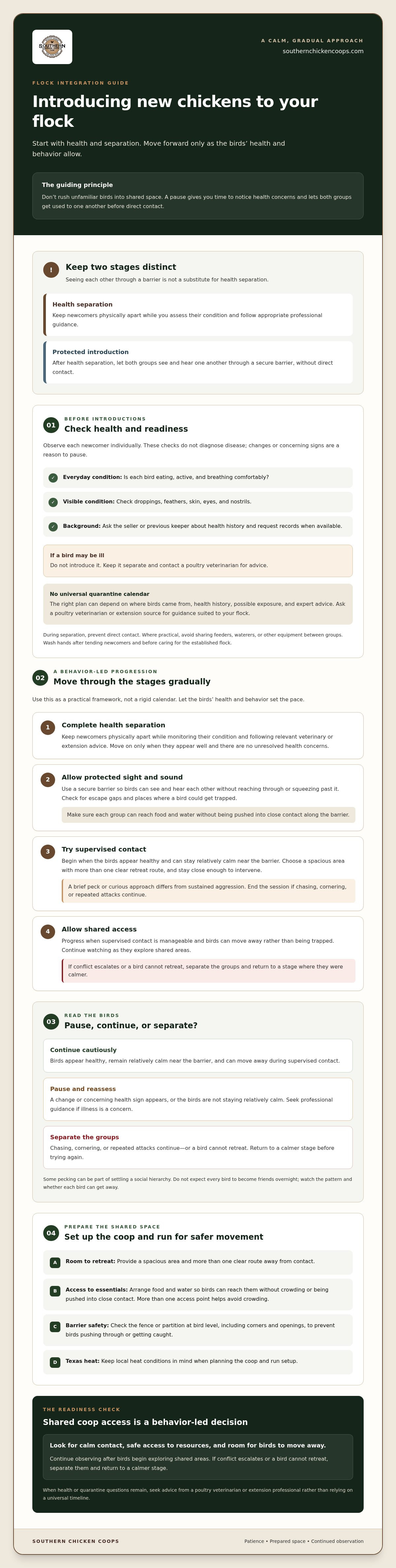
Flock integration is gradual. Placing unfamiliar birds together and hoping they work it out makes it harder to spot health concerns or intervene when conflict starts. Before introductions, check that the newcomers appear well and that you have a way to keep them safely separate while you assess them.
Quarantine separates newcomers to reduce the risk of disease exposure; a protected introduction lets birds see and hear one another through a barrier without direct contact. Seeing each other isn’t a substitute for health separation. Keep these stages distinct, and ask a poultry veterinarian or extension professional for guidance if you’re unsure about illness risks or the right protocol for your birds.
What should you check before adding new chickens?
Observe each bird, not just the group. Watch whether each newcomer is eating, active, and breathing comfortably. Check droppings and visible condition, including feathers, skin, eyes, and nostrils. These observations don’t diagnose disease, but a change or concerning sign is a reason to pause.
Ask the seller or previous keeper about the birds’ health history and request records when available. Don’t introduce a chicken showing signs of illness. Keep it separate and contact a poultry veterinarian for advice before moving ahead.
How long should new chickens be kept separate?
There isn’t one timeframe that fits every flock. Recommended quarantine protocols can depend on where the birds came from, their health history, possible exposure, and expert advice. Check with a poultry veterinarian or extension source for a plan suited to your situation rather than relying on a universal calendar.
During separation, prevent direct contact with resident birds. Where practical, don’t share feeders, waterers, or other equipment between groups. Wash your hands after tending to newcomers and before caring for the established flock. If you have concerns about illness, keep the birds apart and seek professional guidance.
Once health separation is complete and you’ve received appropriate guidance, protected visual introductions can begin. A barrier allows the flock to notice unfamiliar birds without immediate physical access. Observe how both groups respond before deciding whether to progress. Chickens establish a social hierarchy, often called a pecking order, so understanding that dynamic can help you interpret behavior in the next stages. For now, readiness means healthy-looking birds, a sensible separation plan, and a setup that lets you keep the groups apart if concerns arise.
How to integrate new chickens with your flock in gradual stages
Once health separation is complete, move forward in small steps. Gradual introductions give birds time to adjust to unfamiliar neighbors before sharing space, which can reduce abrupt competition and stress. Michigan State University Extension offers a useful step-by-step guide. Use the progression below as a practical framework, adjusting it to your birds rather than following a rigid calendar.
- 1. Complete health separation. Keep newcomers physically apart while you monitor their condition and follow any veterinary or extension advice relevant to their source and health history. Advance only when they appear well and you have no unresolved health concerns.
- 2. Allow protected sight and sound. Set up a secure barrier so the groups can see and hear each other without reaching through or squeezing past it. Check for gaps where a bird could escape or become trapped. Make sure both groups can reach food and water without being pushed into close contact along the barrier.
- 3. Try supervised contact. Begin when the birds appear healthy and can stay relatively calm near the barrier. Choose a spacious area with more than one clear retreat route, and stay close enough to intervene. A brief peck or curious approach differs from sustained aggression. End the session if chasing, cornering, or repeated attacks continue.
- 4. Allow shared access. Progress when supervised contact is manageable and birds can move away rather than being trapped. Keep watching as they explore shared areas. If conflict escalates or a bird cannot retreat, separate the groups and return to a stage where they were calmer.
How can chickens see each other safely before sharing space?
A sturdy fence or partition should prevent physical contact while allowing the birds to observe one another. Inspect it at bird level, including corners and openings, and make sure neither group can push through or get caught. Place food and water where each group can use them comfortably, rather than in a narrow spot that encourages crowding or guarding.
When should supervised time together begin?
Let behavior guide the next step. Calm interest, eating, and moving around near the barrier are encouraging. Frantic attempts to reach the other group or ongoing agitation suggest waiting. During the first shared sessions, keep the route back to each group’s separate area open. If the arrangement of your custom chicken coops and run needs reconsidering, check whether it gives every bird room to retreat before expanding access.
There’s no benefit to moving quickly. Advance when the birds’ health and behavior support it, repeat a stage when they need more time, and return to separation if safety becomes uncertain.
Pecking, bullying, and setbacks: what is normal during flock integration?
A brief peck, short chase, or moment of posturing may happen as chickens establish social relationships. Watch what follows. If the birds quickly move apart and each can reach food, water, and a safe place to retreat, you may be able to continue supervising. One tense interaction doesn’t prove the flock will never accept the newcomers. Look for repeated patterns, not a single moment.
During integrating new chickens with your flock, the key question is whether a bird can disengage and return to normal activity. Persistent pursuit, cornering, or preventing another chicken from reaching resources is different from a brief social correction. The British Hen Welfare Trust guide also offers practical advice on merging flocks and managing introductions.
Which flock behaviors call for a pause or separation?
Step in if a bird is injured, trapped, exhausted, or unable to eat or drink because others keep driving it away. Safely separate an injured chicken from the group and contact a veterinarian when wounds or other health concerns need attention. If the interaction is escalating, return the groups to protected contact rather than forcing the next stage.
- Repeated attacks or chasing that doesn’t stop when the target moves away
- Cornering, trapping, or blocking access to food and water
- Visible wounds, marked exhaustion, or a bird that cannot settle
After separating the birds, reassess the setup and their behavior before trying again. A pause is a useful management choice, not a failed introduction.
What common integration mistakes can make conflict worse?
Putting unfamiliar birds together without a health assessment or supervision makes it harder to spot problems early and intervene. Cramped areas can leave newcomers with nowhere to retreat, while a single feeder or drinker can become a point of competition. Give birds room to move away and make resources accessible without forcing them to crowd together.
Don’t punish chickens for pecking or other natural social behavior. Instead, focus on conditions you can change: separate birds when safety is at risk, add space or resource points where practical, and return to a calmer introduction stage. Progress only when you can supervise and each bird has a clear way to move away.
Prepare a safer Texas chicken run and coop for introducing new birds
A thoughtful setup makes introductions easier to supervise. Extra room gives birds more ways to move away from one another, while multiple food and water points reduce the chance that one chicken can guard every resource. Before allowing shared outdoor access, inspect the fencing, gates, and openings so birds can’t slip out or become trapped. Check that the run is secure against predators in your area, too.
Think about the space from a chicken’s point of view. A retreat route should lead somewhere safe, not into a narrow corner or dead end. Stable visual barriers can help birds step out of sight briefly, but avoid placing them where a bird could be trapped behind or beneath them. Review your backyard chicken-coop site-preparation guide as you plan the layout, especially if the run or coop area needs adjustments before the groups spend time together.
How should you arrange food, water, and hiding places?
Set out more than one feeding and watering point, spaced so a bird can use one without passing close to a flockmate guarding another. Keep each station easy to reach, then watch whether quieter or lower-ranking chickens actually get access. Add sturdy visual breaks while leaving clear paths around them. If a bird repeatedly gets cornered, change the layout before trying another introduction session.
How can Texas weather affect introduction sessions?
Texas heat calls for careful timing. Choose a shaded, well-ventilated area with fresh water available, and avoid prolonged handling or crowded sessions during dangerous heat. Supervise with the weather in mind, and end the session if conditions make it difficult to keep the birds comfortable. Local veterinary or extension professionals can advise on poultry care concerns during extreme weather.
Storms and wet ground matter, too. Choose a secure area that won’t become slippery or waterlogged, and postpone a session if weather limits your ability to watch the birds closely. A prepared, level lot and suitable housing can support a calmer setup, but the birds still need room to retreat and access to shade, airflow, and water.
For keepers planning a housing upgrade around integrating new chickens with your flock, Southern Chicken Coops makes handcrafted custom chicken coops in McGregor, Texas, and delivers completed coops to prepared, level lots. Explore custom chicken coop options as you consider the space your flock needs.
When the flock is ready to share a coop: next steps
Moving into shared overnight housing is a meaningful step, so base the decision on what you’ve observed rather than a target date. Before the first shared night, check that supervised contact has been calm repeatedly, every bird can reach food and water without being driven away, and no chicken is injured or being persistently chased. Confirm there’s enough usable coop space for the birds to settle without crowding, with accessible roosting space and a safe way to move around.
How do you know chickens are ready to share overnight housing?
Use this final check before changing the setup:
- Contact: The birds can spend supervised time together without ongoing attacks or cornering.
- Resources: Each chicken can reach food and water, including birds that tend to hang back.
- Safety: No injuries or signs that a bird is trapped, exhausted, or repeatedly excluded.
- Roosting: There’s accessible roosting space, and the coop doesn’t force birds into a tight bottleneck.
After shared access begins, keep observing, especially during feeding and when the flock settles to roost. If chasing resumes, an injury appears, or a bird can’t reach resources, separate the groups and return to a safer stage. A setback is a reason to adjust the pace or setup, not to abandon a gradual, welfare-focused introduction.
What coop features make flock management easier?
As you assess the housing, consider secure construction, usable space, practical access for cleaning, and placement that supports your flock’s daily care. A well-planned coop and prepared, level site can make it easier to supervise birds and maintain a steady routine. For more planning considerations, read our article about custom chicken coops in Texas. No single coop layout guarantees a peaceful transition, but suitable housing gives you a sound foundation for managing the flock.
Southern Chicken Coops handcrafts coops one at a time in McGregor, Texas, and delivers completed coops to prepared, level lots. If you’re considering a coop for your flock, explore our handcrafted chicken coops.
Take the Next Step Toward a Settled Flock
Successful flock integration isn’t a race. Start with health and separation, move through protected and supervised contact, and let the birds’ behavior guide each next step. Calm interactions, safe access to food and water, and room to retreat are better signs of readiness than a fixed timeline.
If conflict returns, pause and adjust the setup rather than pushing ahead. With patience and attentive observation, integrating new chickens with your flock can become a more manageable process that puts every bird’s well-being first.
A secure, thoughtfully planned coop can support that care. Southern Chicken Coops handcrafts coops one at a time in McGregor, Texas, and delivers completed coops to customers’ prepared, level lots. Explore our handcrafted chicken coops as you plan a comfortable home for your flock.
Take it one steady step at a time. Your chickens can adjust at their own pace, and you’ll be there to guide them safely.
Frequently Asked Questions
How long should you quarantine new chickens before introducing them to a flock?
A minimum 30-day quarantine is widely recommended, including by the Texas Animal Health Commission, but ask a poultry veterinarian or extension professional whether your birds’ source or health history calls for a different protocol. Keep newcomers physically separate from your established flock and avoid sharing equipment where practical. Monitor their health throughout this period. If you notice concerning signs, continue separation and seek veterinary guidance before starting introductions.
Can you put new chickens straight in the coop with your existing flock?
No. Putting unfamiliar chickens directly into a shared coop skips health separation and the chance to observe how the birds respond to one another. Start with quarantine, then use a secure barrier for protected sight and sound before trying supervised contact. This gradual approach lets you pause if health concerns or persistent aggression arise. Move to shared housing only when the birds can interact safely and access resources.
How do you introduce new chickens to an established flock?
Introduce them in stages: complete health separation, allow protected visual contact, try supervised time together, then progress to shared access. Use a secure barrier that prevents physical contact, and provide enough room, retreat routes, and accessible food and water during meetings. Advance based on the birds’ health and behavior, not a fixed calendar. When integrating new chickens with your flock, pause or return to separation if safety concerns appear.
Is pecking normal when introducing chickens?
Brief pecking or posturing can occur as chickens establish social relationships, but the whole interaction matters. If a bird backs away and can continue eating, drinking, and moving freely, keep observing closely. Persistent chasing, cornering, repeated attacks, injuries, or blocked access to resources call for intervention. Separate birds if one is hurt or trapped. A single peck doesn’t determine whether the flock will eventually settle together.
What happens if my chickens keep fighting after several introduction sessions?
Stop the session and separate the birds if fighting continues, a chicken is cornered, or anyone is injured. Before trying again, check whether the introduction area is cramped or resources are easy to guard. Return to protected contact and resume supervised sessions only when it’s safe to do so. If aggression persists or an injury needs attention, consult a poultry veterinarian or extension professional rather than forcing shared access.
Can chicks be integrated with adult chickens?
Chicks can sometimes join an adult flock, but they’re vulnerable to injury and may be unable to compete for food, water, or safe space. Don’t place them straight into the coop with mature birds. Get advice from a poultry veterinarian or extension professional about readiness for your chicks’ age, size, and health. When introductions begin, use a secure barrier and close supervision, and ensure chicks can retreat and reach resources.
How can I reduce bullying when integrating chickens in hot Texas weather?
Choose a cooler part of the day and a shaded, well-ventilated area with fresh water available. Avoid prolonged or crowded sessions during dangerous heat, since heat stress can add risk while you’re managing flock behavior. Provide multiple resource points and clear retreat routes to reduce competition, and supervise closely. If weather makes it hard to keep birds comfortable or observe them safely, postpone the session and ask a local poultry professional for care guidance.


