

What if the safest way to keep quail and chickens on one Texas homestead is to share the yard, not the housing? If you’re considering raising quail and chickens together in Texas, it’s a fair question: both can suit a small-flock lifestyle, and keeping them nearby may seem simpler. But sharing a coop or run can increase disease exposure, while differences in size and behavior can put quail at risk of injury. Separate, species-appropriate enclosures are usually the safer plan.
You don’t necessarily have to choose between the two flocks. With thoughtful separation, sound biosecurity, and shelter suited to each species, you may keep both on the same property. This guide explains the risks of mixing them, how to plan convenient but distinct housing for Central Texas heat and predators, and what to ask a veterinarian before bringing birds together. It also covers why local city or county ordinances and HOA rules matter, since requirements can vary from one community to another. Planning ahead helps protect both flocks and gives you a clearer path to a workable homestead setup.
Key Takeaways
- Keeping quail and chickens on the same property is different from housing them together. Plan separate enclosures suited to each species.
- For raising quail and chickens together in Texas, check city and county ordinances and any HOA rules before bringing birds home.
- Compare each flock’s needs for housing, feed, handling, and predator protection, then confirm care questions with an avian veterinarian.
- Prepare for Central Texas conditions with shade, ventilation, drainage, storm protection, and dependable water access.
- Use separate, secure pens and monitor both flocks regularly so you can spot concerns early and adjust your setup.
Can You Raise Quail and Chickens Together in Texas?
Yes, both species may live on the same property, but that doesn’t mean they should share a coop or run. For raising quail and chickens together in Texas, separate, species-appropriate enclosures are the prudent default. Disease and injury risks depend on the species, flock health, and how the birds are managed. Discuss your plans with an avian or poultry veterinarian before introducing birds or allowing contact.
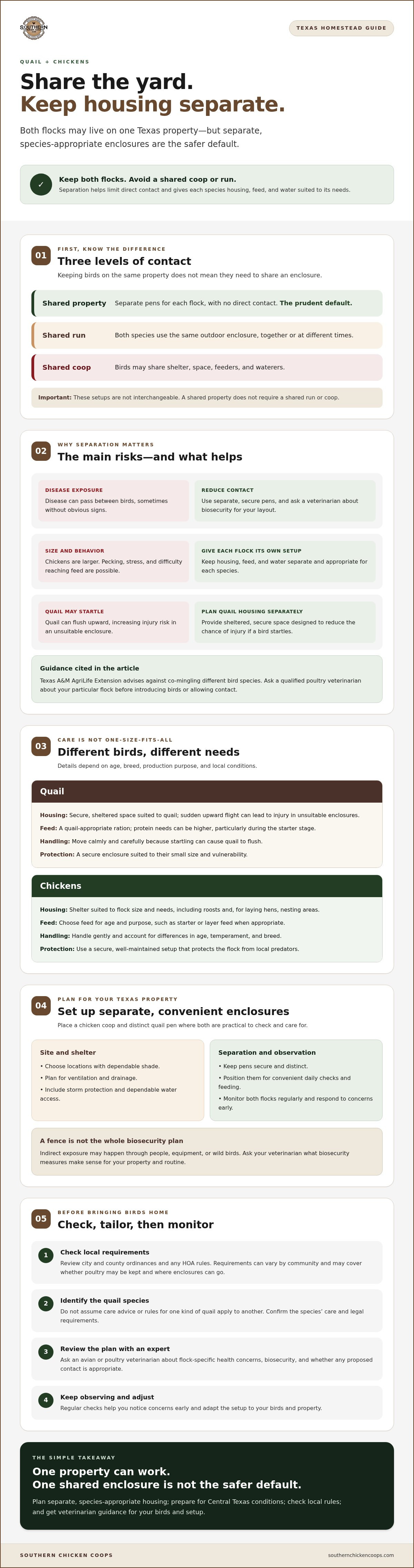
It helps to distinguish three levels of contact. A shared property has separate pens for each flock, with no direct contact. A shared run lets both species use the same outdoor enclosure, together or at different times. A shared coop puts them in the same shelter, potentially sharing space, feeders, and waterers. These setups aren’t interchangeable: keeping both flocks on one property doesn’t require a shared enclosure.
Can quail and chickens share a coop or run?
A single enclosure can create challenges because chickens are larger and the species differ in behavior and housing needs. Pecking, stress, and difficulty accessing feed are possible, though not inevitable. Quail may startle and flush upward, increasing their chance of injury in an unsuitable enclosure. Disease can also pass between birds, sometimes without obvious signs. Texas A&M AgriLife Extension advises against co-mingling different bird species. Unless a qualified poultry veterinarian advises otherwise for your particular flock, give each species its own secure housing, feed, and water.
What does keeping both species on one Texas property mean?
Separate enclosures let you keep both flocks on one homestead while limiting direct contact. For example, you might place a chicken coop and a distinct quail pen in different parts of the yard, with both positioned for convenient daily checks and feeding. Choose locations based on available space, household routines, drainage, and dependable shade. A fence between pens doesn’t necessarily prevent indirect exposure through people, equipment, or wild birds, so ask your veterinarian about practical biosecurity for your layout.
Texas is home to native quail such as the Northern Bobwhite, but don’t assume advice or rules for one kind of quail apply to another. Identify the species you intend to keep and confirm its care and legal requirements. Before acquiring birds, check your city and county rules and any HOA restrictions. Local requirements can address whether poultry may be kept and where enclosures can go.
Start with separation, then tailor the arrangement to your birds and property. A veterinarian can help assess flock-specific health concerns and whether any proposed contact is appropriate.
How Quail and Chickens Differ in Housing, Feeding, and Daily Care
Separate housing is only part of a sound setup. Quail and chickens also differ in how they use shelter, what they eat, and how they respond to handling. The right details depend on age, breed, production purpose, and local conditions. Use species-specific guidance and ask a poultry veterinarian or qualified poultry expert to review your plan.
One feeding and housing setup may not suit both species. Quail can startle and flush upward, their feed needs can differ by life stage, and chickens may need roosts and nest areas that quail don’t use in the same way.
| Care area | Quail | Chickens |
|---|---|---|
| Housing | Provide secure, sheltered space designed for quail. Sudden upward flight can lead to injury in unsuitable enclosures. | Plan shelter around the flock’s size and needs, including suitable roosting and, for laying hens, nesting areas. |
| Feed | Use a quail-appropriate ration. Protein needs can be higher, particularly during the starter stage. | Choose feed for the birds’ age and purpose, such as starter or layer feed when appropriate. |
| Handling | Move calmly and carefully, since startling can cause quail to flush. | Handle gently and account for differences in age, temperament, and breed. |
| Predator protection | Use a secure enclosure suited to the birds’ small size and vulnerability. | Protect the flock and shelter from local predators with a secure, well-maintained setup. |
Why quail housing should be planned separately
Quail need an enclosure that offers shelter and security while reducing the chance of injury if a bird startles. A space intended for chickens may not be appropriate for quail, and a shared setting can add stress or make it harder to observe each bird. Avoid relying on a general space-per-bird figure without guidance that fits your species, age, and enclosure. Ask a poultry veterinarian or extension specialist to help assess the design.
How chicken care differs from quail care
Chicken housing often includes roosting space and, for laying birds, nesting areas. Quail have different routines and may need a different enclosure layout. Feed should also match species and life stage: quail generally need higher-protein feed, especially as starters, so don’t assume chicken feed is suitable. Use separate feeders and waterers to limit competition and make it easier to notice changes in each flock’s intake.
Build biosecurity into the daily routine, too. The University of Missouri Extension’s disease prevention program offers poultry-focused guidance to help reduce disease risks. If you’re planning a chicken shelter, Southern Chicken Coops’ custom chicken coop designs may be a resource to consider. Confirm that any configuration suits your chicken flock and intended use. A chicken coop isn’t a substitute for species-specific quail housing.
The Biggest Risks of Mixing Quail and Chickens, and What Actually Helps
Keeping both flocks in one yard doesn’t mean they need to share a coop. Separate pens let you raise both species on the same property while reducing direct contact and making it easier to manage their different needs. The trade-off is practical: you’ll need room, equipment, and routines for two flocks. For many keepers, that added work is worthwhile because it supports closer observation and more controlled care.
Separate housing simplifies observation, feeding, and flock management, so you can notice changes in each group and respond without guessing which birds are affected.
Disease, parasites, and biosecurity between flocks
Diseases and parasites vary, and the possibility of transmission doesn’t mean every pathogen passes between quail and chickens. Still, Texas A&M AgriLife Extension recommends against co-mingling birds of different species, and the Texas Animal Health Commission emphasizes biosecurity to limit disease introduction and spread. Keep dedicated footwear and equipment for each pen where practical, wash your hands between groups, and promptly separate birds that appear sick while seeking veterinary guidance.
Ask a poultry veterinarian which disease concerns are relevant in your area and what vaccination plan fits each flock. A veterinarian can also advise you on new birds, shared tools, and suspected exposure. Don’t diagnose illness or choose vaccines based on assumptions that care for one species applies to the other.
Pecking, stress, predators, and Texas weather
Size differences, crowding, and competition around food or water may contribute to stress or injury in a shared space, though outcomes depend on the birds and their management. Quail can also startle and flush, so a setting that works for chickens may not be safe for them. Separate barriers help prevent direct flock contact, but they should be sturdy enough to contain birds and limit predator access.
Predators differ by location. Ask a local veterinarian, county extension office, or experienced poultry keepers which threats are common near your property, then assess whether each enclosure is secure against them. Texas weather adds another consideration: provide shade, ventilation, and reliable fresh water during hot spells, and check that shelter and drainage are ready for heavy rain or sudden storms. Observe the birds during changing conditions rather than assuming one setup will suit every season.
For raising quail and chickens together in Texas, a shared homestead can offer the convenience of keeping both flocks nearby, but it doesn’t guarantee they’ll thrive together or make shared housing a good fit. Separate enclosures create a manageable middle ground: close enough for daily care, with fewer opportunities for direct conflict and a clearer view of each flock’s health.
How to Set Up Separate Quail and Chicken Enclosures in Texas
A well-planned homestead makes daily care easier without putting both flocks in the same space. Before choosing locations or building, work through the rules, site conditions, and routines in order. For more on preparing a chicken area, see our Texas backyard chicken coop preparation guide. Quail still need their own species-appropriate enclosure.
- Check rules for your exact address. Contact your city or county to ask about poultry ordinances, zoning, setbacks, flock limits, and enclosure placement. Check HOA rules and deed restrictions separately. Requirements can differ between communities, so don’t assume a rule that applies elsewhere in Texas applies to your property.
- Map the layout before building. Mark distinct areas for the chicken coop and quail enclosure, along with feed storage, cleaning access, and a practical route for daily checks. Plan how you’ll tend each flock without carrying dirty tools or footwear from one pen to the other.
- Choose sites with drainage and weather in mind. Look for ground that drains well and consider where shade will fall during the hottest part of the day. Plan protection from wind and sudden storms, and make sure each enclosure can be ventilated while still offering shelter. The best placement depends on your property’s slope, trees, exposure, and local weather.
- Build for containment and local predators. Use sturdy enclosures and secure boundaries suited to the birds and threats in your area. Ask nearby poultry keepers or a local expert which predators are common, then check that doors, edges, and other possible entry points are addressed. Avoid assuming one barrier or design fits every property.
- Set up separate supplies. Give each flock its own feeders and waterers, and store feed where it stays dry and protected from pests. Use dedicated tools when practical; otherwise, clean equipment between pens. Keep reliable fresh water available and easy to check, especially during hot weather.
- Walk the setup before birds arrive, then observe daily. Check gates, barriers, shade, drainage, shelter, and water access. Once the birds are settled, watch their behavior and appetite, and check the enclosures after storms or hot spells.
For region-specific husbandry questions, consult a local veterinarian or Texas A&M AgriLife Extension. If you’re planning the chicken side of the setup, you can explore custom chicken coop options and confirm that a configuration fits your flock and intended use. Don’t assume a chicken coop will suit quail.
A Safer Next Step for Your Texas Quail-and-Chicken Homestead
Before bringing birds home, make the housing decision first: plan separate enclosures designed for the needs of quail and chickens. That gives you time to check local rules, prepare the site, and ensure each flock has secure shelter, appropriate feed, and dependable water. Raising quail and chickens together in Texas can mean keeping both on one property, not asking them to share housing.
When a handcrafted chicken coop may fit your plan
A chicken coop may be one part of your setup once you’ve considered flock size, site access, and intended use. Southern Chicken Coops is a family-owned, McGregor-based builder of handcrafted chicken coops, including its 6'x12' Polka model and semi-custom designs. The business does not advertise quail housing, so plan the quail enclosure separately and don’t assume a chicken coop is suitable for quail. For help thinking through the chicken-area site, read this Central Texas 6x12 chicken coop guide.
What to confirm before choosing a coop or adding birds
Before choosing a chicken coop, discuss your flock and intended setup with the builder rather than assuming a particular configuration will fit. Southern Chicken Coops provides professional delivery of completed coops to a prepared, level lot; confirm that your site is ready for delivery. Separately, ask a poultry veterinarian about species-specific health concerns and care, and verify city or county requirements and any HOA restrictions for your property.
Use this final checklist to make sure the essentials are in place:
- Rules: Have you checked local poultry requirements and HOA or deed restrictions?
- Veterinary advice: Have you asked a poultry veterinarian about health, biosecurity, and care for both species?
- Secure pens: Are the quail and chicken enclosures separate, sheltered, and suited to their occupants?
- Daily supplies: Does each flock have appropriate feed and its own clean water access?
- Texas conditions: Have you planned for shade, airflow, drainage, and shelter from storms?
- Ongoing observation: Can you check both flocks regularly for changes in behavior, appetite, or health?
A careful plan is a kindness to the birds and a steadier start for your homestead. Once you’ve assessed the chicken flock’s needs and prepared a suitable site, explore handcrafted chicken coop options from our McGregor team. Confirm the intended use, configuration, and delivery details directly with the business before choosing.
Give Both Flocks a Safer Start
Raising quail and chickens together in Texas can work best when “together” means sharing a homestead, not a coop. Separate, species-appropriate enclosures help limit direct contact and make it easier to manage each flock’s feed, observe its health, and prepare for Texas weather. Before bringing birds home, check local and HOA rules, consult a poultry veterinarian, and make sure each pen has secure shelter, shade, and reliable water.
For the chicken side of your plan, Southern Chicken Coops is a family-owned business operated by Bill and Tina Drivdahl. They handcraft chicken coops in McGregor, Texas, including the 6'x12' Polka model and semi-custom designs. Professional delivery is available to a prepared, level lot. A chicken coop isn’t quail housing, so discuss your flock’s needs and intended setup with the builder before choosing a configuration.
If a handcrafted chicken coop may fit your plans, explore handcrafted chicken coop options from our McGregor team. With thoughtful preparation and separate homes for each species, you can build a safer, more manageable start for both flocks.
Frequently Asked Questions
Can quail and chickens live in the same coop?
It’s safer to house quail and chickens separately, even if they live on the same property. They differ in size, behavior, and housing needs, and sharing shelter can create opportunities for stress, injury, competition, or disease exposure. Texas A&M AgriLife Extension advises against co-mingling different bird species. Ask a poultry veterinarian about your flock, but plan separate, species-appropriate enclosures as the prudent default.
Can quail and chickens share the same run?
A shared run isn’t the recommended default. Chickens may compete with smaller quail for space or access to food and water, and a startled quail can flush upward in an unsuitable enclosure. These outcomes aren’t guaranteed, but separate runs make it easier to manage each flock and reduce direct contact. If you’re considering shared access, first discuss the specific birds and setup with a qualified poultry veterinarian.
Will chickens hurt or kill quail?
They can, but it isn’t inevitable. A chicken’s larger size and pecking behavior may injure a quail, particularly if birds are crowded or competing for resources. Quail may also be stressed or injured if they startle in an unsuitable shared enclosure. Don’t rely on birds to “work it out.” Separate, secure housing helps prevent direct conflict, and any concerning injury or behavior change warrants prompt veterinary advice.
Can quail and chickens eat the same feed?
Don’t assume one ration meets both species’ needs. Quail generally need higher-protein feed, especially during the starter stage, while chicken feed should match the birds’ age and purpose, such as starter or layer needs. Use separate feeders so each flock can access appropriate feed and you can monitor intake. Ask a poultry veterinarian or qualified poultry nutrition expert to confirm feed choices for your birds’ life stages.
Can quail and chickens spread disease to each other?
Some pathogens may affect more than one bird species, but disease and parasite risks vary. It’s not accurate to assume every illness passes between quail and chickens. Still, Texas A&M AgriLife Extension recommends against co-mingling different bird species. Keep equipment clean, wash hands between flocks, use dedicated footwear when practical, and isolate sick birds promptly while contacting a poultry veterinarian about diagnosis, local risks, and vaccination plans.
How do you protect quail and chickens from Texas heat?
Provide shade, good airflow, and reliable fresh water that’s easy to check and refill. Make sure each enclosure offers shelter while allowing ventilation, and monitor the birds during hot weather for changes in behavior or signs of distress. Texas conditions can also bring sudden storms, so plan for secure shelter and drainage. A local veterinarian or Texas A&M AgriLife Extension can offer guidance suited to your region and flock.
Do Texas cities allow quail and chickens in a backyard?
It depends on the city, county, property, and any HOA or deed restrictions. Local rules may regulate “fowl,” bird numbers, enclosure placement, or whether backyard birds are allowed at all, so check requirements for your exact address before acquiring a flock. Domesticated Coturnix quail and native game birds such as Northern Bobwhite may also have different state-level requirements. Confirm species-specific rules with the relevant authorities.


