

The quietest chicken breeds for neighborhoods are often described as calm, but no breed is silent. Roosters are usually the main source of loud chicken noise. Hens tend to make softer clucks, though calls around egg-laying and alarm sounds can carry across a yard.
Before bringing hens home, consider your neighbors as well as the birds. Temperament, flock management, and coop placement all affect the sounds people nearby may hear. This guide compares breeds often described as calm, explains which sounds are normal, and outlines practical ways to plan a considerate backyard flock.
In Texas, start by checking current city or county rules and any HOA covenants that apply to your address. Requirements can vary, and an HOA may have its own restrictions. Thoughtful planning helps you choose a flock and housing that suit your home, your birds, and the people who share your street.
Key Takeaways
- The quietest chicken breeds for neighborhoods are better understood as breeds with calmer tendencies, not a promise of silent birds.
- Compare Orpingtons, Australorps, Wyandottes, Brahmas, and Cochins alongside their temperament, size, climate needs, and care requirements.
- Individual temperament, flock composition, available space, and daily routine can all influence noise.
- Before choosing a flock in Texas, check current city, county, property, and HOA requirements that may apply to your address.
- Plan coop size, placement, climate suitability, and access around your intended flock to support responsible care.
What Makes a Chicken Breed Suitable for a Quiet Neighborhood?
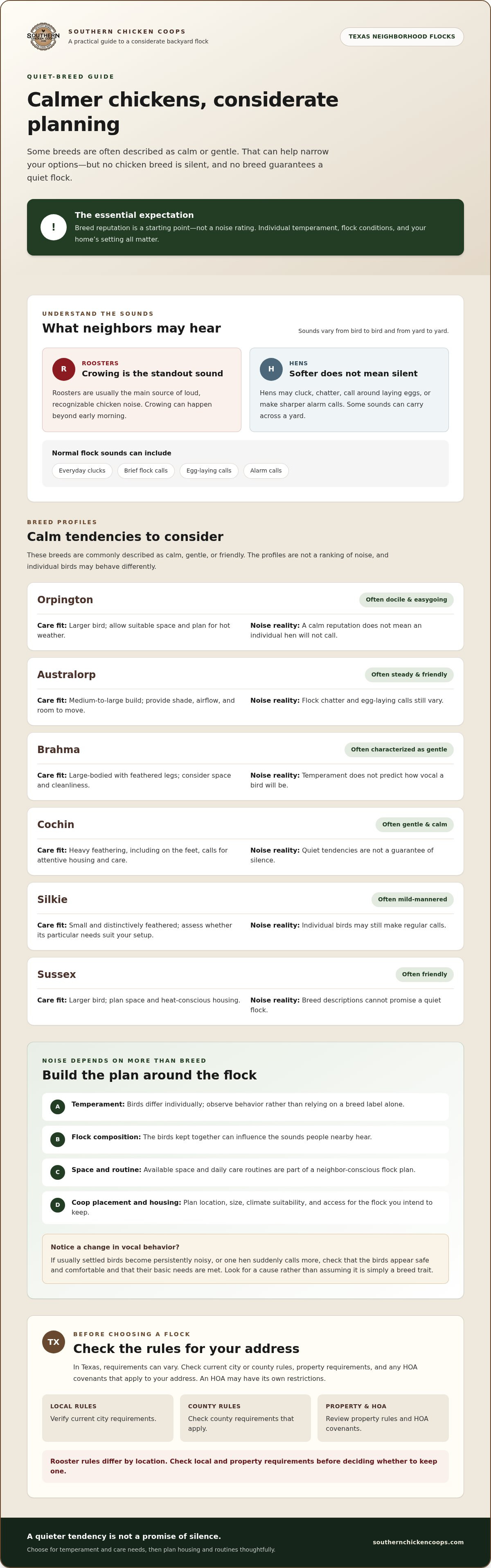
A “quiet breed” is not a silent breed. The term describes a tendency: some breeds are often considered calmer or less vocal, but individual hens still make sounds, and temperament varies from bird to bird. A quieter breed may be less prone to frequent noise, but no breed can guarantee a quiet flock.
If you’re researching the quietest chicken breeds for neighborhoods, treat breed reputation as one consideration, not a noise rating. A broad list of chicken breeds can help you explore breed variety, but it does not rank birds by sound. Consider each bird’s behavior alongside flock conditions and the setting of your home.
Which Chicken Sounds Are Normal in a Backyard Flock?
Hens commonly cluck or make brief calls as they move around, communicate with flockmates, or react to something they notice. Some vocalize around laying an egg, while others are quieter. Alarm calls may sound sharper or more urgent when a bird senses a disturbance. These sounds are part of flock life, although how noticeable they are varies between birds and yards.
Watch for changes in your flock’s usual behavior. If usually settled birds become persistently noisy, or one hen suddenly calls more than usual, check that the birds appear safe and comfortable and that their basic needs are met. A change may point to stress or another welfare concern, so look for a cause rather than assuming it is simply a breed trait.
Are Roosters Louder Than Hens?
Roosters are usually the main source of the loud, recognizable crowing associated with chickens. Crowing can happen beyond early morning, so a rooster may be noticeable at other times of day. Hens do not typically crow like roosters, but they can cluck, chatter, make alarm calls, or vocalize around laying eggs. An all-hen flock may be quieter, but it will not be silent.
Before deciding whether to keep a rooster, check current requirements with your city or county and review any applicable property or HOA rules. Local restrictions differ, and another household’s experience may not reflect what is allowed at your address.
Set realistic expectations from the start. Choose birds for their overall temperament, learn how your flock normally behaves, and investigate changes in its vocal patterns. A breed label can guide your search, but attentive care and suitable housing matter too.
Quiet Chicken Breeds to Consider for a Neighborhood Flock
There is no scientifically guaranteed ranking of the quietest chicken breeds for neighborhoods. The breeds below are commonly described as calm or gentle, but noise depends on individual birds and their surroundings. Use these profiles to narrow your options, then check breed-specific care guidance and consider whether each bird’s size, feathering, and needs suit your household and the Texas climate.
| Breed | General temperament | Practical fit | Noise caveat |
|---|---|---|---|
| Orpington | Often described as docile and easygoing | A larger bird; allow suitable space and plan for hot weather | A calm reputation doesn’t mean an individual hen won’t call |
| Australorp | Commonly regarded as steady and friendly | Medium-to-large build; provide shade, airflow, and room to move | Flock chatter and egg-laying calls still vary |
| Brahma | Often characterized as gentle | Large-bodied with feathered legs; consider space and cleanliness | Temperament doesn’t predict how vocal a bird will be |
| Cochin | Frequently described as gentle and calm | Heavy feathering, including on the feet, calls for attentive housing and care | Quiet tendencies aren’t a guarantee of silence |
| Silkie | Often considered mild-mannered | Small and distinctively feathered; assess whether its particular needs suit your setup | Individual birds may still make regular calls |
| Sussex | Often described as friendly, though individual activity levels differ | A larger bird; plan space and heat-conscious housing | Breed descriptions can’t promise a quiet flock |
Calm, Larger Breeds: Orpingtons, Australorps, and Brahmas
Orpingtons, Australorps, and Brahmas are often considered for their calm temperaments, but their size makes space planning important. In Texas, plan for shade and good airflow, and consider how the coop and run will remain comfortable during hot weather. Brahmas and Cochins have feathered legs, so account for the care and housing those features require. A gentle reputation is a useful starting point, not a prediction of each bird’s vocal behavior.
Other Gentle Options: Cochins, Silkies, and Sussex
Cochins and Silkies are commonly described as gentle, while Sussex are often presented as friendly birds. Their sizes and feathering differ, so compare care requirements instead of choosing by temperament alone. For practical guidance on housing and flock care, consult the University of Minnesota Extension’s backyard chicken care resource, then confirm breed-specific details with a reliable poultry reference.
Once you have narrowed your breed choices, match the housing to the birds you plan to keep. A well-planned coop supports responsible care, but it cannot make a flock silent. Texas readers considering a handcrafted setup can explore custom chicken coop options as one part of their planning.
How to Compare Quiet Chicken Breeds Without Expecting Silence
Breed descriptions can help narrow your choices, but they cannot predict exactly how much a particular flock will call. Individual personality, flock dynamics, available space, and daily routine all affect what you hear. Even a usually calm bird may sound an alarm, join flock chatter, or vocalize around laying an egg.
Breed is one factor in flock noise. Individual behavior, living conditions, and routine matter too. Rather than looking for a promise of silence, consider whether normal chicken sounds are likely to suit your household and neighborhood.
What Matters More Than a Breed’s Quiet Reputation?
Birds of the same breed can have different temperaments, and flockmates may influence one another. If you have a chance, observe how the birds respond to people and activity. Keep in mind that behavior can change as they settle in. Also check that your planned housing offers suitable room and that you can provide a predictable care routine. These choices support well-being, but they will not eliminate normal calls.
Crowding, stress, a nearby predator, or a sudden change in routine may prompt more frequent or urgent vocalizing. Occasional clucks differ from a persistent change in the flock’s usual pattern. If noise rises suddenly, look for a possible cause and check that the birds are safe and comfortable before assuming the change is a breed trait.
Should You Choose Pullets, Hens, or a Mixed Flock?
Pullets are young female chickens; hens are mature females. These terms describe age or maturity, not temperament or a guarantee of quiet behavior. A mixed flock may mean birds of different ages or a flock that includes both sexes, so ask a seller what they mean and clarify which birds you are considering.
Ask a reputable seller about the birds’ ages, how confident they are in sexing them, and any behavior they have observed. Sexing young birds can be uncertain, so do not treat an early identification as infallible. Before acquiring birds, check current rules for your city or county and any property or HOA requirements that apply, especially if a rooster might be included.
Compare the birds you can realistically care for, not just their breed labels. Think through flock size and composition, the space and routine you can provide, and how you will respond if vocal behavior changes. That fuller picture gives you a sounder basis for choosing than a “quiet breed” label alone.
How to Keep a Backyard Flock More Neighbor-Friendly in Texas
A considerate flock plan starts before the birds arrive. Breed tendencies can inform your choice, but rules, housing, daily care, and attention to the flock’s behavior matter as well. Use this sequence to prepare without expecting any setup to prevent every chicken sound.
- 1. Check the rules. Confirm current poultry, rooster, coop-placement, and nuisance-noise requirements with your city or county. Review property restrictions and HOA covenants where applicable. Requirements can vary, so do not rely on a neighbor’s experience or an outdated online summary.
- 2. Plan the flock. Choose birds that suit your household, available space, and care routine. If your plan includes a rooster, verify that one is permitted before acquiring birds. Allow for ordinary clucking and calls as part of keeping chickens.
- 3. Prepare the housing. Choose a practical location with the birds’ needs and nearby homes in mind. Consider property boundaries, household activity, access for daily care, and Texas heat. Suitable housing supports flock welfare; it is not soundproofing.
- 4. Observe and adjust. Once the flock is settled, learn its usual vocal patterns. Consistent care can make daily routines more predictable, but normal calls will continue. Investigate persistent or sudden changes, especially alarm calls or signs of distress.
Check Local Rules Before Choosing Your Flock
Requirements for poultry, roosters, coop location, or noise may differ between jurisdictions. Contact the relevant local authorities to confirm current rules for your address, and read applicable property documents and HOA rules. Resolve uncertainties before choosing birds or making building plans. For a Texas-specific preparation checklist, see our Texas backyard chicken coop preparation guide.
Plan Housing and Daily Care Around Your Neighbors
Consider where the coop and run could sit in relation to property boundaries and neighboring homes, while keeping the flock accessible for regular care. In warm Texas conditions, include shade and airflow in your housing plan. These choices support comfort and responsible management, but no coop placement can promise quiet.
A steady routine helps you learn what is normal for your flock and notice changes sooner. If unusual alarm calls or signs of distress persist, check the birds and their surroundings promptly. A friendly conversation with neighbors before the flock arrives can also set expectations and give them a respectful way to raise concerns.
After checking the rules and planning for your flock’s needs, consider custom chicken coop options as you plan suitable housing for your Texas backyard.
Choose a Suitable Coop After You Choose Your Neighborhood Flock
Choosing among the quietest chicken breeds for neighborhoods is one part of a considerate flock plan. Breed tendencies and individual birds matter, as do local rules, attentive daily care, and housing suited to the flock you intend to keep. A well-planned coop supports the birds’ welfare and makes routine care more manageable, but it cannot control every sound they make.
What to Consider When Housing a Neighborhood Flock
Start with the flock, then plan the housing around its needs. Use reliable poultry or animal-welfare guidance to determine appropriate capacity rather than assuming that a coop that fits physically will provide enough room. Consider these practical elements:
- Capacity: Match the coop and outdoor space to the number and size of birds you plan to keep.
- Texas weather: Account for ventilation and shade when planning a comfortable setting through hot weather.
- Placement: Consider nearby homes, property boundaries, secure positioning, and access for regular care.
- Routine: Make sure you can reach the birds and their housing easily for consistent observation and care.
These considerations are separate, and one does not replace another. A well-ventilated coop still needs thoughtful placement, while a convenient location does not make undersized housing suitable. Good housing helps you care for the flock; it is not soundproofing, and normal clucking or other calls may still carry.
Explore Handcrafted Coop Options in Central Texas
Once you have settled on a flock and considered its housing needs, compare options with your plans in mind. Southern Chicken Coops is a family-owned business in McGregor, Texas, where coops are handcrafted one at a time. The signature Polka model is a 6'x12' coop, and semi-custom designs are available for customers with specific needs. Completed coops are delivered to prepared, level lots.
For more considerations when planning a backyard setup, read about custom chicken coops in Texas. Compare any housing option with your flock’s size, local requirements, climate needs, and the space available at home. The right choice supports responsible care and suits your setting, without promising silence.
Plan a Peaceful, Considerate Backyard Flock
The quietest chicken breeds for neighborhoods can be a helpful starting point, but no breed promises silence. Individual hens, flock conditions, and everyday care all influence what you hear. Choose birds whose temperament and needs suit your home, prepare appropriate housing, and check current local and HOA rules before bringing them home.
A thoughtful coop plan supports flock comfort and makes daily care easier, though it cannot prevent normal clucking or calls. Consider capacity, placement, Texas weather, and practical access together. Then observe your birds so you can respond if their behavior changes.
Southern Chicken Coops is a family-owned and operated business run by Bill and Tina Drivdahl, handcrafting coops in McGregor, Texas. Completed coops are professionally delivered to prepared, level lots. With careful planning and neighborly consideration, you can give your hens a suitable home and start your backyard flock thoughtfully.
When you’re ready to plan housing for your flock, explore handcrafted chicken coop options from Southern Chicken Coops.
Frequently Asked Questions
What are the quietest chicken breeds for neighborhoods?
Orpingtons, Australorps, Wyandottes, Brahmas, and Cochins are often described as relatively calm choices for a neighborhood flock. These reputations are a starting point, not a guaranteed ranking or promise of silence. Individual birds differ, and hens still cluck, chatter, or call. Compare temperament with adult size, care needs, and suitability for your Texas setup before choosing.
Are hens quiet enough to keep in a residential backyard?
Hens are generally quieter than roosters, but they are not silent. You may hear ordinary clucking, flock chatter, alarm calls, or vocalizing around egg-laying. Whether that is suitable for your yard depends on the flock, housing, placement, and your neighbors’ expectations. Before getting birds, check current city or county rules and any property or HOA restrictions that apply to your Texas address.
Do quiet chicken breeds still make noise when they lay eggs?
Yes. A hen from a breed considered calm may still vocalize around laying an egg. How often or loudly she calls varies by individual, so a breed label cannot tell you exactly what to expect. Some hens make brief calls; others are more noticeable. Learn your flock’s normal behavior and pay attention if vocalizing changes suddenly or becomes persistent.
Are roosters too loud for a neighborhood?
Roosters can be a substantial noise consideration because crowing may happen beyond early morning. Whether one is suitable depends on your neighbors and the rules for your specific property. Do not assume a rooster is permitted because chickens are allowed nearby. Confirm current city or county requirements and review applicable HOA covenants before acquiring one. An all-hen flock avoids rooster crowing, but hens still make sounds.
Can the right chicken coop make a flock quieter?
No coop can guarantee a quiet flock or prevent normal chicken sounds. Suitable housing can support flock welfare and make daily care easier, but noise also depends on individual birds, flock dynamics, and what is happening around them. Choose housing that fits your planned flock and Texas conditions, with thoughtful placement and practical access. If calls suddenly become frequent or distressed, check the birds and their surroundings.
How can I keep backyard chickens from bothering my neighbors?
Start by checking local poultry, rooster, placement, and nuisance-noise requirements, along with any property or HOA rules. Choose a flock that fits your space and care routine, then place suitable housing thoughtfully in relation to nearby homes. Keep a consistent routine, observe the birds, and investigate unusual or persistent calls. A friendly conversation with neighbors before the flock arrives can help set clear, considerate expectations.
Are quiet chicken breeds suitable for the Texas climate?
Some breeds commonly described as calm may suit a Texas backyard, but temperament alone does not determine climate fit. Consider each breed’s size, feathering, and care needs, then plan housing with shade and ventilation for hot weather. Check breed-specific guidance before choosing, and make sure you can provide appropriate care through changing conditions. A suitable coop supports comfort, but it cannot make birds silent.


