

What if the biggest threat to your new birds isn't a hungry coyote, but the relentless 105-degree August sun? We know that the dream of walking out to your backyard for fresh, golden-yolked eggs is exciting, but it often comes with a side of worry. You might be staring at your fence line wondering if the HOA will send a letter, or if starting a backyard flock Texas style is even possible in this heat. We have felt those same concerns, and we're here to help you move past them with neighborly sincerity.
This guide is designed to replace that anxiety with confidence. We'll show you exactly how raising chickens can be a rewarding, lifelong journey when you have a clear roadmap. We are going to walk through the latest 2026 regulations, the best heat-hardy breeds for our climate, and how to provide a home for your birds that stands up to both predators and the elements. From the first chick to the first egg, we'll be right here with you as you build something beautiful for your family.
Key Takeaways
- Navigate the 2026 legal landscape by learning how to verify both municipal ordinances and private HOA covenants before your birds arrive.
- Identify the specific physical traits, such as comb size and body mass, that make certain breeds naturally suited for the Texas heat.
- Prioritize high-flow ventilation and a durable 6x12 footprint to create a safe, predator-proof sanctuary for your flock.
- Follow a proven roadmap for starting a backyard flock Texas neighbors can be proud of, moving smoothly from the brooder to the nesting box.
- Choose the longevity of a handcrafted, move-in-ready coop over the recurring costs and safety risks of a standard store-bought kit.
Navigating Texas Chicken Laws and Local Ordinances
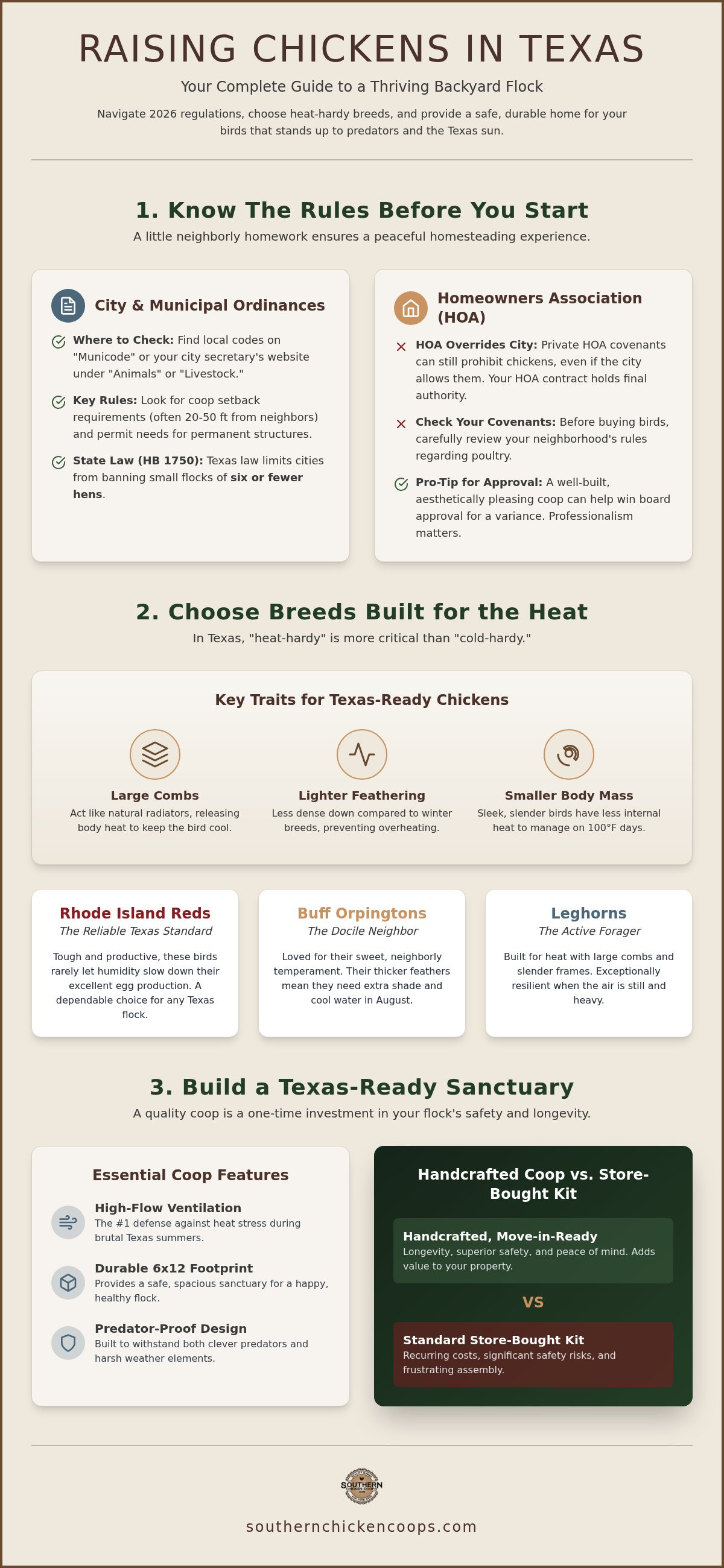
Starting a backyard flock Texas style is a journey that begins with a little bit of neighborly homework. Before you pick out your favorite breeds or choose a spot for the coop, you need to understand the rules of the road. We believe that being a good steward of your land includes being a good member of your community. While the state has made strides in protecting your right to raise food, local details still matter deeply for a peaceful homesteading experience.
Where to Find Your Local Codes
Most folks in Central Texas cities like Waco, Temple, or McGregor can find their specific poultry ordinances through a platform called Municode or by visiting their city secretary’s website. You'll want to look specifically for sections regarding "Animals" or "Livestock." These codes usually outline exactly how many birds you can keep and where the coop must be placed. For instance, many cities require a setback of 20 to 50 feet from your neighbor's house. It's also vital to check if you need a permit for a permanent structure. While we build our coops to last for decades, some cities view them as outbuildings that require a quick registration. We always suggest a friendly chat with your neighbors before the birds arrive. Sharing a list of chicken breeds you're considering can be a great way to bond over the process and reassure them that your flock will be a quiet, clean addition to the block.
HOA vs. City: Who Wins?
This is a common point of confusion for many new keepers. As of 2026, even though Texas state law (HB 1750) limits cities from banning small flocks of six or fewer hens, those protections don't always extend to private Homeowners Associations. Because the 2025 legislature didn't pass bills to limit HOA power over poultry, your local association's covenants still hold weight. If your HOA says no chickens, the city's permission won't override that contract. However, don't lose heart if the rules seem strict. Many boards are willing to grant variances if they see that your setup is professional and aesthetically pleasing. We've found that our handcrafted Polka model often helps ease these conversations. When a board sees a well-built, beautiful structure rather than a cluttered DIY project, they're much more likely to agree that your flock adds value to the neighborhood. Once you've secured your permissions, your next step is preparing your backyard for a chicken coop to ensure a level, safe foundation for your new charges.
Choosing Heat-Hardy Breeds for the Texas Climate
When starting a backyard flock Texas families often worry about the winter, but our real challenge is the relentless summer sun. In the South, being "heat-hardy" is far more critical than being "cold-hardy." While most birds can fluff their feathers to stay warm, they have a much harder time cooling down when the thermometer climbs into the triple digits. Choosing the right breeds from the start is an act of stewardship that protects your birds from heat exhaustion and keeps your egg baskets full all year long.
Traits to Look For
For Texas poultry owners, a heat-hardy bird is one with physical traits and behaviors that allow it to shed excess body heat and maintain a stable internal temperature during extreme weather. Look for birds with large, single combs. These fleshy crests act like natural radiators, circulating blood close to the skin to release heat into the air. You should also favor breeds with lighter feathering rather than the dense, heavy down found on winter-focused birds. A smaller body mass also helps; a sleek bird has less internal heat to manage than a heavy breed designed for northern climates.
Top Breeds for 100-Degree Days
There are several wonderful breeds that can handle our climate, including Rhode Island Reds, Orpingtons, Easter Eggers, Leghorns, and even the unique Naked Neck. Each brings a different personality to your backyard.
- Rhode Island Reds: These are the reliable Texas standard. They're tough, productive, and rarely let the humidity slow down their egg production.
- Buff Orpingtons: We love these for their docile, neighborly temperament. They do have thicker feathers, so they'll need extra shade and a cool breeze to stay happy during August.
- Leghorns: These active foragers are built for the heat. Their large combs and slender frames make them exceptionally resilient when the air is still and heavy.
When you're ready to source your birds, you can find healthy chicks at local hatcheries or reputable family farms near Waco and Temple. Always keep Texas chicken laws in mind to ensure your flock size stays within your city's legal limits as you browse. Whether you buy day-old chicks or young pullets, look for active birds from sources that practice strong biosecurity. Once your birds arrive, they deserve a home that's as resilient as they are. We've spent years perfecting custom chicken coops that offer the high-flow ventilation these breeds need to thrive when starting a backyard flock Texas style.
Essential Features of a Texas-Ready Chicken Coop
We often tell our neighbors that a coop in Texas has to do two things perfectly: it must breathe in the summer and stand firm during a sudden spring "Blue Norther." When you are starting a backyard flock Texas style, you quickly realize that the flimsy plastic or thin metal kits from big-box stores just aren't built for our environment. They can bake like an oven in July and rattle apart when the wind picks up across the plains. We believe in building something that lasts. Handcrafted wood offers a natural thermal mass that keeps the interior cooler than synthetic materials, making it the bedrock of a well-crafted home.
Our signature Polka model uses a 6x12 footprint because we've found this to be the gold standard for a healthy backyard flock. This size provides the ideal balance of space and safety for 10-12 hens. It gives them enough room to spread their wings and move comfortably without the stress of overcrowding, which is especially important during the high-stress summer months. By choosing a durable, spacious design, you are investing in the long-term well-being of your birds from the very first day.
Ventilation and Airflow Secrets
High-flow ventilation is the soul of a healthy Texas coop. Because heat rises and chickens have high natural body temperatures, stagnant air is a silent threat to their health. We design our coops with strategic window placement to catch those cooling Central Texas breezes. Every opening is covered with sturdy hardware cloth and topped with ridge vents to let hot air escape constantly. When positioning your coop, try to face the largest openings away from the direct afternoon sun. This simple step, combined with the science-based advice in the Texas A&M AgriLife Extension guide for beginners, creates a sanctuary where your birds can thrive even when the heat index hits triple digits.
Predator Proofing for Texas Wildlife
A beautiful coop is only successful if it's a fortress. Texas is home to clever raccoons, persistent opossums, and the occasional bobcat. All of these animals see your flock as a quick meal. Effective chicken coop predator protection starts with 1/2-inch hardware cloth. Never use traditional chicken wire for security. It's meant to keep chickens in, not keep predators out, and coyotes or neighborhood dogs can tear through it in seconds. We also recommend securing the perimeter of the run with a buried hardware cloth apron. This prevents digging predators from tunneling under the frame. By investing in these durable features now, you're acting as a true protector of your animals for years to come.
Brooding and Raising Your First Texas Chicks
There is nothing quite like the sound of peeping chicks to signal the start of your homesteading journey. It's a season of deep stewardship that requires patience and a watchful eye. When starting a backyard flock Texas weather is your biggest variable. While it might be 80 degrees outside, a week-old chick still needs consistent, focused warmth. Setting up your brooder in a secure area like a garage or barn protects them from drafts and predators while they grow their first real feathers.
The Brooder Setup
We recommend using radiant heat plates instead of traditional heat lamps. Heat plates are safer. They mimic the natural warmth of a mother hen and allow chicks to move in and out as they please. For bedding, stick with large-flake kiln-dried pine shavings. Avoid cedar. The oils in cedar can be hard on their tiny respiratory systems. The best way to tell if your birds are comfortable is to watch their behavior. If they're all huddling directly under the heat, they're too cold. If they're pushed against the far corners of the brooder, they're likely too hot. A happy chick is one that is active, chirping softly, and exploring its space.
Start with the "95-degree rule." Keep the brooder at 95 degrees for the first week and reduce it by 5 degrees every week after that. Along with warmth, your chicks need high-quality chick starter feed and fresh water. We often add electrolytes to their water for the first few days to help them recover from the stress of travel. Cleanliness is an act of devotion. Refreshing their water twice a day prevents the spread of illness and keeps your future layers strong.
Outdoor Transition
When you are starting a backyard flock Texas style, the move to the outdoors is a big milestone. Generally, chicks are ready to move when they are fully feathered, usually around six to eight weeks of age. However, you must watch the Texas sky. A sudden "Blue Norther" can drop temperatures by 40 degrees in a matter of hours. This can be fatal for young birds. We suggest "hardening them off" by letting them spend a few hours in their run during the day before they move permanently into their farm chicken coop in Texas. This gradual introduction helps them adjust to the sights and sounds of the backyard while knowing they have a secure, handcrafted home waiting for them. If you're ready to provide that permanent sanctuary, we'd be honored to help you choose one of our custom chicken coops to complete your setup.
The Long-Term Investment: Quality Over Convenience
We believe that building a homestead is about more than just the birds. It is about the legacy you create in your own backyard. Many folks start by looking at the cheapest option available in a catalog or at a big-box store. However, we've seen too many neighbors heartbroken when a flimsy kit coop falls apart after a single Texas thunderstorm. When you're starting a backyard flock Texas, you are making a choice between a temporary hobby and a long-term lifestyle. Investing in quality from the start ensures that your birds remain safe and your property stays beautiful for years to come.
Choosing quality over convenience means looking past the initial price tag to see the true value of craftsmanship. A handcrafted home for your birds is a protector against the elements. It stands firm when the wind howls and stays cool when the sun beats down. This is the "buy once, cry once" philosophy in action. You save money in the long run by avoiding the cycle of constant repairs and replacements that come with mass-produced alternatives. We take professional pride in building structures that don't just house animals but enhance the landscape of your home.
Why Handcrafted Matters
We use materials that are specifically chosen to withstand our local climate. While store-bought kits often use thin, untreated wood that warps in the humidity or rots in the rain, our coops are built with the same care as a family home. They feature heavy-duty hardware and weather-resistant finishes that handle the transition from wet springs to scorched summers. A 6x12 chicken coop for sale from our workshop is the best investment for a growing flock because it provides the structural integrity and space needed for a healthy, decades-long journey. It isn't just a shed; it's a piece of functional art that adds real value to your property.
Final Steps to Your First Egg
Maintenance doesn't have to be a chore when your setup is designed correctly. A well-built coop makes daily tasks simple and efficient. We suggest a quick morning check for eggs and water, along with a weekly refreshing of the bedding. This rhythm becomes a peaceful part of your day. Because we offer professional delivery to level lots, you don't have to worry about the stress of assembly or missing parts. Your coop arrives move-in ready. This allows you to focus on the joy of your birds rather than the frustration of a DIY project. We're proud to be part of the Central Texas homesteading community. We are here to support you as you take the first steps in starting a backyard flock Texas families can be proud of. Start your legacy flock today and feel the peace of mind that comes with true craftsmanship.
Begin Your Texas Homesteading Legacy Today
Watching your birds forage in the late afternoon sun is more than just a way to get fresh eggs. It's a return to a simpler, more grounded way of living. We've walked through the essentials of starting a backyard flock Texas style, from navigating local ordinances to choosing breeds that can actually handle our intense August heat. You now have the roadmap to move from those first chirping chicks to a mature, productive flock. Remember that the foundation of your success is a safe, well-ventilated home that protects your investment from predators and the elements alike.
Our family is here to support you in this journey. We take professional pride in every structure we create, hand-building each one at a time in McGregor, Texas. Our coops are specifically designed for the unique demands of our climate, ensuring your birds stay cool and secure for years to come. We believe in providing personal, neighborly service that treats your homestead with the same respect we give our own. Explore our handcrafted Polka coops and start your Texas flock today! We can't wait to see the beautiful home you build for your birds.
Frequently Asked Questions
Do I need a permit to raise chickens in Texas?
Whether you need a permit depends on your specific city ordinance and HOA rules. While Texas state law prevents cities from banning small flocks on residential lots, some municipalities like El Paso still require an annual permit. Always check with your city secretary or HOA board before your birds arrive. Being a good neighbor means following the local guidelines that ensure everyone in the community enjoys a peaceful environment.
How many chickens should a beginner start with in Texas?
We recommend beginners start with a small flock of 4 to 6 hens. This number provides a steady supply of eggs for a typical family while remaining manageable for someone new to poultry care. Since chickens are social creatures, you should never keep fewer than three. Starting with a smaller group allows you to learn the rhythms of starting a backyard flock Texas style without feeling overwhelmed by maintenance or space requirements.
What is the best month to start a backyard flock in Texas?
February and March are the best months to start your flock in Central Texas. This timing allows your chicks to grow their feathers during the mild spring weather before the intense summer heat arrives. By starting in early spring, your pullets will likely begin laying their first eggs by late summer or early fall. This schedule works with the natural Texas seasons to give your young birds the strongest start possible.
How do I keep chickens cool during a 100-degree Texas summer?
Providing deep shade and high-flow ventilation is the most effective way to keep your birds safe during a 100-degree day. You can also offer frozen treats like watermelon or place shallow pans of water for them to stand in. Ensure their water is refreshed multiple times a day. A well-designed coop with ridge vents and hardware cloth openings allows hot air to escape, preventing the interior from becoming a dangerous heat trap for your flock.
Can chickens survive a Texas winter in a handcrafted coop?
Your chickens can absolutely survive a Texas winter in a handcrafted wood coop. While our winters are usually mild, we do face sudden "Blue Northers" that bring freezing temperatures and biting winds. A sturdy wood structure provides natural insulation that keeps the interior warmer than plastic or metal. As long as your coop is draft-free but still ventilated to prevent moisture buildup, your birds will stay cozy and protected during our coldest nights.
What predators should I worry about in Central Texas?
You should primarily worry about raccoons, opossums, hawks, and neighborhood dogs. In more rural parts of Central Texas, bobcats and coyotes are also significant threats. Raccoons are particularly clever and can open simple latches, while hawks can strike from above during the day. This is why we emphasize using 1/2-inch hardware cloth and secure locking mechanisms to act as a protective shield for your birds against these local predators.
Is it cheaper to buy eggs or raise your own chickens in 2026?
In 2026, buying commercial eggs is typically cheaper when you factor in the initial cost of a quality coop and feed. However, many families choose to raise their own for the unmatched food security and superior egg quality. You aren't just paying for eggs; you're investing in a sustainable lifestyle and the peace of mind that comes from knowing exactly how your food was produced. For many, that self-sufficiency is worth every penny.
How much space do chickens need in a backyard flock?
Chickens generally need at least 3 to 4 square feet of space inside the coop and 10 square feet in an outdoor run. Overcrowding leads to stress and health issues, especially during a hot Texas summer. Our 6x12 Polka model provides a generous footprint that ensures your birds have plenty of room to move, forage, and maintain their social hierarchy comfortably. Giving them ample space is a key part of responsible stewardship.


