

Imagine walking out to your backyard on a July morning, coffee in hand, only to find your "bargain" coop has warped in the heat, leaving your flock vulnerable to a clever predator. It’s a heartbreaking scene we’ve seen too many times. We know you want more for your girls than a flimsy kit that rots after just two seasons. When you consider the long term cost of a chicken coop Texas weather and wildlife will inevitably test, you realize that true value isn't found in a cheap box, but in a structure built to last.
We believe that choosing a home for your flock is an act of stewardship, not just a transaction. In this guide, we’ll show you exactly what makes a structure survive the local elements while providing lasting value for your homestead. We’ll walk through the vital importance of airflow, the strength of professional craftsmanship, and how a well-built coop like our Polka model can offer you peace of mind for the next ten years. You’ll discover how to create a safe, cool sanctuary that adds beauty to your property without the constant frustration of repairs or the fear of losing your hens.
Key Takeaways
- Learn why standard space requirements are just the beginning and how vertical design is the secret to keeping Texas hens comfortable.
- Discover how to position your coop to capture the South wind and protect your flock from the life-threatening intensity of a Texas summer.
- Identify the most common local predators and why switching to hardware cloth is the single most important step for your flock's safety.
- Understand how choosing durable, handcrafted materials significantly reduces the long term cost of a chicken coop Texas sun and rain would otherwise rot.
- See why working with local McGregor artisans ensures your coop starts on a level foundation and provides a lifetime of homesteading joy.
Essential Space and Sizing: Finding the Right Fit for Your Flock
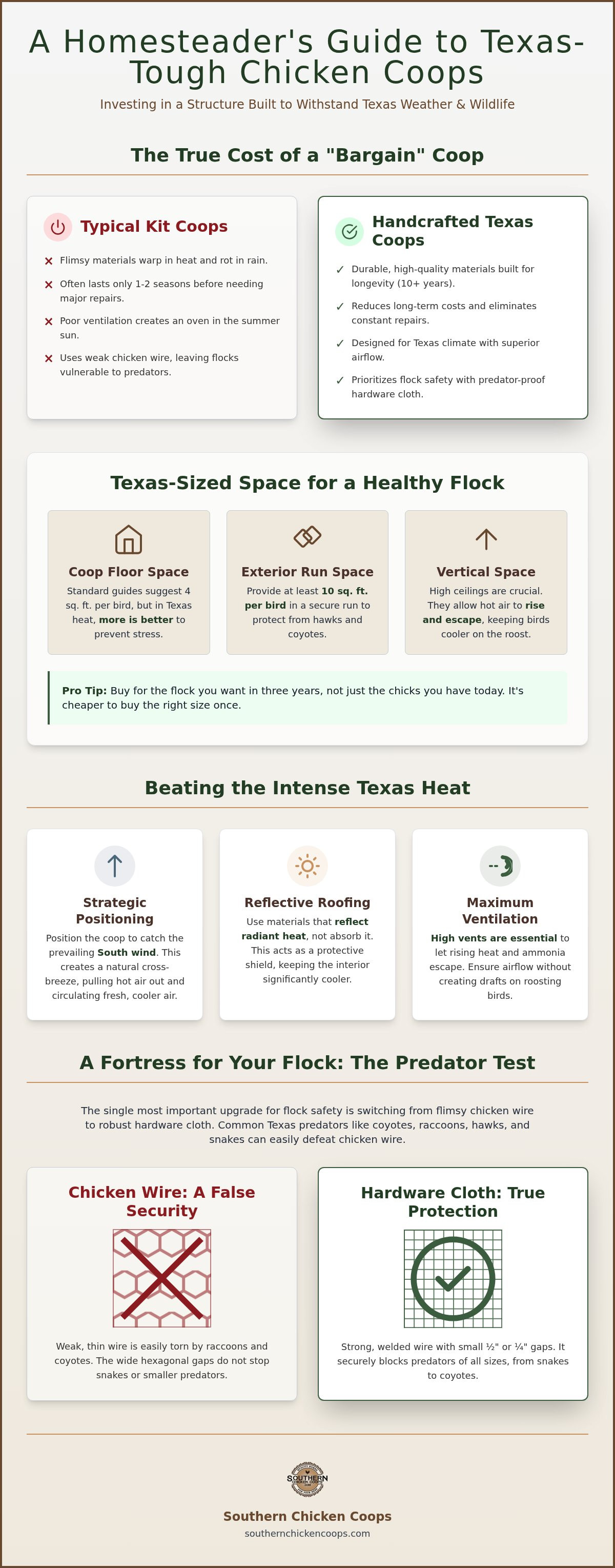
We've spent many hours talking with neighbors about their first flocks, and the conversation usually starts with a simple question: "How big does it need to be?" While many online guides suggest a standard four square feet of floor space per bird, we've found that Texas hens need a bit more breathing room. In our climate, tight spaces lead to trapped heat and stressed birds. When you're calculating the long term cost of a chicken coop Texas sun can punish, you have to factor in the health of your hens. A coop that's too small isn't just uncomfortable; it's a liability.
Our 6x12 Polka model is a favorite here in McGregor because it provides a generous footprint for 10-12 birds. It isn't just about the floor, though. We build with a focus on vertical space. Higher ceilings allow hot air to rise above the roosting bars, keeping your girls cooler during those triple-digit August nights. Considering the long term cost of a chicken coop Texas families often face, choosing a larger footprint now prevents expensive upgrades later. We always encourage folks to buy for the flock they want to have in three years, not just the few chicks they're bringing home today. It's much cheaper to buy the right size once than to realize you've outgrown a small kit in six months.
Calculating Interior vs. Exterior Space
Understanding the difference between the "coop" and the "run" is vital for a happy homestead. The coop is the enclosed, raised area where your hens sleep and lay eggs. The run is the fenced-in daytime area where they can scratch and stretch. Following poultry farming best practices, we recommend providing at least 10 square feet of run space per bird if they don't have daily access to a pasture. In Central Texas, integrated runs are the safest choice. They keep your flock protected from overhead hawks and ground-level coyotes while ensuring they stay off the scorched summer dirt.
Nesting Box and Roosting Bar Requirements
Inside the coop, the layout matters as much as the size. We generally provide one nesting box for every three to four hens. They don't all lay at once, and you'll often find them favoring one specific "lucky" box anyway. We place our roosting bars higher than the nesting boxes to discourage hens from sleeping in their laying areas. Proper roost height also keeps them safely away from the floor, where snakes or smaller pests might try to sneak in. This thoughtful design keeps maintenance low and your flock's environment pristine for years to come.
Climate-Specific Design: Battling the Intense Texas Heat
While an occasional winter freeze might sweep through Central Texas, our biggest battle as stewards of a flock is always the summer sun. A chicken's body temperature naturally sits around 106 degrees, which means they have very little margin for error when the thermometer hits triple digits in McGregor. If a structure isn't designed for constant airflow, it quickly becomes an oven. When you calculate the long term cost of a chicken coop Texas weather demands, you have to account for the potential loss of your birds. A cheap, poorly ventilated kit might save a few dollars today, but it's a dangerous gamble with your flock's lives over time.
We build our coops to work in harmony with the environment. In our region, that means positioning the structure to catch the prevailing South wind. This creates a natural cross-breeze that pulls hot air out and brings cooler air in. We also select roofing materials that reflect radiant heat rather than absorbing it. Instead of soaking up the sun's energy and radiating it down onto your hens, these materials act as a protective shield. According to the Texas A&M guide to backyard chickens, providing adequate shade and cooling is a non-negotiable part of responsible poultry ownership in our state. By investing in a structure that uses its own shadow and orientation to stay cool, you're ensuring your girls stay productive and healthy through the harshest months.
Ventilation vs. Drafts: Getting the Balance Right
One common mistake we see is confusing high-level ventilation with floor-level drafts. High vents are essential because they allow rising heat and ammonia to escape. However, you don't want a harsh wind blowing directly on your birds while they're on the roosting bars, especially during a sudden spring storm. We build with adjustable airflow options that keep the air moving without making the birds feel exposed. In Waco and McGregor, we truly believe more is more when it comes to vents. You can always close a window during a blue norther, but you can't easily add ventilation to a flimsy prefab kit once the heat sets in.
Protecting Against Humidity and Moisture
Texas isn't just hot; it's often humid, and that moisture can lead to respiratory issues if the interior stays damp. We use high-quality siding that resists rot and keeps the inside dry even during a heavy downpour. Our raised coop designs are another critical feature for our climate. By lifting the floor off the ground, we ensure proper drainage and prevent the wood from soaking up ground moisture. If you're looking for a home for your flock that is built for our unique climate, we invite you to explore our custom chicken coops designed right here in Central Texas.
Predator-Proofing Your Backyard Investment
Nothing steals the joy of homesteading faster than a predator breach. In our corner of Central Texas, from McGregor to the outskirts of Waco, we aren't just raising chickens; we're providing a sanctuary against some of the cleverest hunters in the wild. Coyotes and bobcats might try to muscle their way in, but it's the raccoons and snakes that usually find the smallest oversight in a coop's design. When we talk about the long term cost of a chicken coop Texas residents need to understand that a single night of poor security can wipe out years of effort and investment. Replacing a flock isn't just a financial burden; it's an emotional one that we want to help you avoid.
A common mistake we see is the use of standard chicken wire. While the name suggests it's for chickens, it's actually only meant to keep them in a specific area. It's thin and flexible enough for a raccoon to tear through or for a snake to slip through the gaps. We advocate for the 'Hardware Cloth' rule. By using a heavy-duty, galvanized mesh, you create a barrier that resists teeth, claws, and slithering intruders. Following Texas A&M coop design and spacing guidelines ensures that your flock remains healthy and safe from these external threats. This level of protection is a cornerstone of the long term cost of a chicken coop Texas families should prioritize, as it prevents the heartbreak and financial loss of a decimated flock.
Reinforcing Windows and Doors
Every opening in your coop is a potential invitation. We secure all windows and ventilation gaps with 1/2-inch hardware cloth, fastened firmly to the frame. But a strong screen is only half the battle. Raccoons have incredibly dexterous paws, almost like little hands, and they can easily slide a simple bolt latch. We recommend using heavy-duty latches paired with locking carabiners. It's a small extra step each evening, but it's the difference between a secure home and a tragedy. The door to your run needs this same level of attention; if a predator gets into the run, they have all night to work on getting into the sleeping quarters.
Floor Security: Stopping the Diggers
Predators don't just come from the sides; many, like skunks and rats, prefer to dig their way in. A dirt floor might seem natural, but it offers zero resistance to a burrowing animal. We build our coops with solid, structural bases that sit on a level foundation. Professional delivery to a prepared lot ensures there are no gaps between the ground and the coop frame where an animal could get a foothold. This solid-base approach is far superior to digging in hardware cloth guards, which can rust or shift over time. Starting with a level, secure foundation is the best way to ensure your backyard investment stays standing and safe for the next decade.
Material Quality and the Long-Term Cost of Ownership
We've all seen those $500 kits at the big box stores. They look charming in the photos, but they aren't built for the relentless McGregor sun or the soaking spring rains we get here in Central Texas. We call this the "Cheap Coop Trap." When you look at the long term cost of a chicken coop Texas families often overlook, that bargain starts to look very expensive. Within two or three years, thin cedar panels often warp, roof felt begins to peel, and the entire structure can become a liability. You might spend another $500 on lumber just to keep it standing, or worse, you'll have to replace the entire unit when it finally rots through.
Durability matters because your coop is a working building. It has to withstand high winds, heavy birds, and the occasional curious coyote. We've found that using high-quality siding and pressure-treated framing isn't just about looks; it's about structural integrity. A sturdy coop keeps your flock's environment consistent, which directly impacts their health and egg production. When hens feel safe and dry, they stay productive. If you're wondering how this fits into your overall budget, you might ask, Is a Chicken Coop Worth the Investment? We believe it is, provided the materials are chosen for our specific climate.
Handcrafted vs. Mass-Produced Coops
The difference between a handcrafted coop and a mass-produced kit often comes down to the fasteners. Most kits are held together by thin staples that pull out as the wood expands and contracts in the Texas heat. We use heavy-duty screws and professional joinery to ensure every connection is solid. Our Polka model is built one at a time right here in McGregor, designed to withstand the same winds that rattle our own farmhouse. This level of craftsmanship ensures your investment doesn't literally blow away during a spring storm. If you're tired of flimsy kits, we invite you to look at our custom chicken coops built for real Texas life.
Calculating Your 10-Year Cost
To find the true long term cost of a chicken coop Texas weather won't destroy, you have to look a decade down the road. A high-quality initial purchase acts as a form of "homestead insurance" against predator losses and frequent repairs. While a handcrafted coop requires a larger upfront commitment, it saves you the thousands of dollars you'd spend replacing three or four cheap kits over that same ten-year period. You'll also save countless hours of frustration spent patching leaks or reinforcing weak doors. Long-term value is the intersection of bird safety and structural lifespan.
Finding Your Perfect Handcrafted Texas Coop
Choosing a home for your flock is a big decision, and we believe it’s one that’s best made close to home. When you work with us in McGregor, you aren’t just ordering a product from a catalog; you’re partnering with neighbors who understand the specific challenges of Central Texas acreage. Nationwide shipping often means receiving a flat-packed box of thin, fragile wood that won't last three seasons. By contrast, our coops arrive fully assembled and built to handle real life. When you weigh the long term cost of a chicken coop Texas sun can't easily break down, the value of local, handcrafted work becomes clear. We aren't just selling structures; we are building a foundation for your family's homesteading journey.
We take great pride in our semi-custom designs because we know no two homesteads are exactly alike. Whether you have a small backyard in Waco or a sprawling property near Temple, we can adjust features to suit your specific terrain and flock size. This personal touch ensures that your coop isn't just a utility building, but a beautiful addition to your landscape that reflects the values of hard work and integrity we hold dear in our community. We build every coop one at a time, ensuring that the joinery and finish meet our high standards before it ever leaves our shop.
The Polka Model: Our Signature Texas Solution
Our 6'x12' Polka model has become the gold standard for many of our neighbors. It’s designed specifically to balance interior comfort with a secure, integrated run, making it the perfect fit for 10-12 hens. We’ve poured everything we know about heat management and predator-proofing into this layout. It features the high-gauge hardware cloth and heavy-duty roofing we discussed earlier, ensuring your birds stay cool and safe year-round. If you're ready to see this craftsmanship for yourself, take a look at our 6x12 Chicken Coop for Sale: Handcrafted Quality in Central Texas (2026).
Next Steps for Your Texas Homestead
Once you’ve chosen your model, the next step is preparing your land. We provide professional coop delivery to ensure your structure starts its life on a level foundation, which is the key to keeping the doors square and the predators out. We’ll work with you to find the best spot on your lot, considering the sun’s path and the prevailing winds. Joining the Southern Chicken Coops family means we’re with you for the long haul, rooting for the success of your flock. To help you get started, we recommend reading our Handcrafted Chicken Coops: Central Texas Buying Guide 2026 for more local insights on the long term cost of a chicken coop Texas homesteaders should expect.
Investing in Your Homestead's Future
Building a homestead is about more than just having fresh eggs; it's about creating a legacy of self-sufficiency and care. We've seen how the right ventilation and heavy-duty materials transform a simple backyard project into a decade-long sanctuary for your flock. When you prioritize structural integrity over a low sticker price, the long term cost of a chicken coop Texas families truly experience becomes a story of savings and peace of mind. You won't be spending your weekends patching rot or mourning birds lost to the summer heat.
As a family-owned and operated team, we pour our heart into every structure we build. Our coops are handcrafted right here in McGregor, specifically designed to withstand the unique intensity of the Texas climate. We invite you to browse our handcrafted coops and find the perfect home for your flock today. Let’s work together to build something that adds beauty to your land and provides the protection your hens deserve. We're honored to be part of your journey and can't wait to see your homestead thrive.
Frequently Asked Questions
What is the #1 thing to look for in a Texas chicken coop?
Ventilation is the most critical feature because heat is the primary threat to Texas flocks. While many focus on winter insulation, our triple-digit summers require constant airflow to prevent heatstroke. Look for coops with high vents and positioned windows that catch the South wind. This design choice directly impacts the long term cost of a chicken coop Texas owners face by keeping birds healthy and productive year after year.
Can I just use a garden shed as a chicken coop in Texas?
You can, but you'll need to make significant modifications to ensure it's safe for your birds. Garden sheds are usually built to keep heat in, which is dangerous for hens in July. You must add hardware cloth windows, high-level vents, and secure nesting boxes. Without these changes, the interior temperature will skyrocket. It often costs more to retro-fit a shed properly than to invest in a purpose-built structure from the start.
How much ventilation does a chicken coop really need in summer?
A coop needs enough ventilation to ensure the air inside is never stagnant. We recommend at least one square foot of vent space for every ten square feet of floor space, specifically designed for cross-airflow. High-placed vents are essential to let the rising hot air escape while cooler air enters from below. This keeps the ammonia levels low and prevents moisture buildup, which is vital for respiratory health during our humid McGregor springs.
Is it cheaper to build my own coop or buy one pre-built in Texas?
Building your own can save money on labor if you have the tools and time. However, if you're buying all new, high-quality materials like pressure-treated lumber and hardware cloth, the costs are often comparable to professional builds. When you factor in the long term cost of a chicken coop Texas weather tests, a professional build ensures structural integrity that DIY projects might lack. Our handcrafted coops are designed to last decades, not just seasons.
What kind of wood is best for a long-lasting Texas chicken coop?
We recommend using pressure-treated lumber for the structural frame and any parts touching the ground. For siding, high-quality materials like rot-resistant cedar or treated engineered wood are excellent choices for our region. These materials resist the intense UV rays and heavy humidity that cause cheaper woods to warp and rot. Investing in these durable materials upfront prevents the frustration of frequent repairs and ensures your coop remains a beautiful part of your property.
How do I keep snakes out of my chicken coop in McGregor?
The best defense against snakes is using 1/2-inch hardware cloth on every opening, including vents and windows. Snakes can squeeze through the smallest gaps in chicken wire, but they can't get through the tight weave of hardware cloth. Additionally, keeping the area around the coop clear of tall grass and debris removes hiding spots. A solid, raised floor also makes it much harder for them to find a way inside your flock's sanctuary.
What size coop do I need for 12 chickens?
For a flock of 12, we suggest a structure like our 6x12 Polka model. This provides ample room for roosting and nesting while giving them a secure integrated run for daytime scratching. While standard rules offer a starting point, giving them extra space reduces stress and pecking behaviors. In our heat, more room means better airflow around each bird, which is essential for their comfort and safety during the hottest months of the year.
Does a chicken coop need a floor if it has a run?
We strongly recommend a solid floor for the sleeping and nesting area. A floor keeps your hens dry and provides a critical barrier against burrowing predators like rats or skunks. It also makes cleaning much easier, as you can manage waste effectively without it soaking into the ground. While the run area should have access to the dirt, the coop itself needs the security and insulation that only a sturdy, handcrafted floor can provide.


