

When a sudden blue norther sweeps across Texas and drops temperatures forty degrees in an afternoon, it's natural to wonder: do chickens need heat in a Texas winter? As fellow flock keepers who care deeply for our birds, we know that late-night ache of worry when frost coats the pasture. You want your hens safe and comfortable, so reaching for an extension cord and a heat lamp often feels like an act of good stewardship.
Yet, supplemental heat in the coop introduces far more danger than cold weather ever could. With an average internal body temperature of roughly 106°F, healthy hens are remarkably cold-hardy creatures. In this guide, you'll discover why sound carpentry and proper ventilation protect your flock naturally, keeping coop fire hazards completely out of the equation. We'll also walk through practical steps to winterize your shelter, prevent frozen drinking water, and shield delicate combs whenever winter weather settles across the state.
Key Takeaways
- Understanding whether do chickens need heat in a Texas winter begins with avian biology, as healthy adult hens maintain a high internal body temperature that insulates them naturally through sudden freezes.
- Trapped overnight moisture and direct roost-level drafts present a far greater threat of frostbite and respiratory illness than cold ambient temperatures ever will.
- Practical seasonal steps, such as refreshing deep dry bedding, securing unfrozen drinking water, and leaving high-level ventilation open, keep birds safe without introducing fire hazards.
- Purpose-built coop carpentry using heavy-duty timber provides natural microclimate moderation, keeping your flock comfortable through harsh cold snaps as well as extreme summer swelter.
Do Chickens Need Supplemental Heat in a Texas Winter?
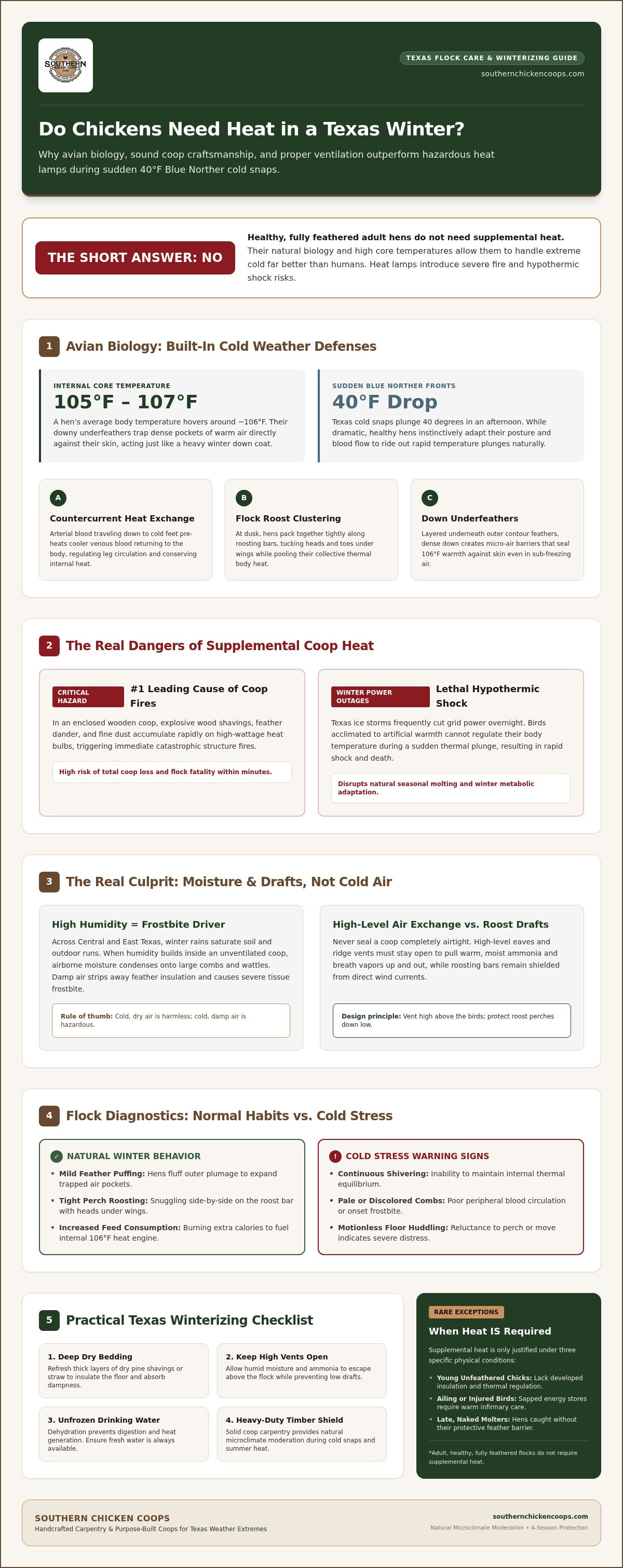
The short, definitive answer is no. Healthy, fully feathered adult chickens do not need artificial heat to survive a Texas winter. While generic homesteading guides often plan for steady, sub-zero northern snowpacks, our state presents a completely different challenge: rapid temperature swings. A sudden Blue Norther can plunge temperatures down forty degrees in an afternoon. Even during these sharp drops, the biological design and general characteristics of chickens equip them to thrive naturally. A hen's internal core temperature hovers between 105°F and 107°F. Her downy underfeathers trap pockets of warm air directly against her skin, operating much like a heavy down coat. When folks ask us if do chickens need heat in a Texas winter, our answer is simple: adult birds handle the cold far better than we do. The only exceptions are young unfeathered chicks, ailing birds, or hens caught in an unusually late, naked molt.
Avian Physiology and Natural Cold Weather Defense
Hens carry an exceptional internal defense system against cold snaps. Their legs regulate blood flow through a countercurrent heat exchange, meaning warm arterial blood pre-heats cooler blood returning from their feet. At dusk, flock members naturally cluster along the roosting bar, tucking their heads and toes under their wings while pooling their collective body heat. Adding artificial heat into the coop confuses this seasonal cycle. It disrupts their natural molting schedule and prevents their metabolism from adjusting to regional seasonal patterns.
The Danger of False Warmth: Why Heat Lamps Are Unsafe
Introducing electrical heating elements into a backyard coop presents catastrophic risks. Hanging heat lamps remain the leading cause of backyard coop fires across rural communities. Inside a tight wooden coop, explosive dust, dander, and dry shavings quickly gather on blazing bulbs, creating an immediate fire hazard. There is another hidden danger: Texas winter power outages. If an ice storm cuts your electricity overnight, birds conditioned to an artificial heat lamp cannot handle the sudden plunge. That rapid thermal drop frequently causes lethal hypothermic shock, turning an intended kindness into tragedy.
How Texas Winter Weather Affects Your Backyard Flock
Texas winter isn't a single weather pattern. Up in the Panhandle, blizzards can coat the high plains in ice, while along the Gulf Coast, heavy humidity hangs in the chilly air. Here across Central Texas, open pastures leave backyard coops exposed to piercing north winds that whip across open acreage without a tree line to break them. When homesteaders ask whether do chickens need heat in a Texas winter, geography and local terrain play a huge role. A gradual, predictable descent into freezing temperatures gives birds time to adjust their feed intake and feather density. Our state rarely grants that courtesy. Instead, we face wild 24-hour temperature plunges that test your coop's craftsmanship. Taking time for thorough backyard chicken coop prep keeps your flock safe from these sudden shifts long before the first storm hits.
High Humidity vs. Dry Cold in Texas Winters
Damp, cold air poses a far greater threat to chickens than crisp, dry snow. Across Central and East Texas, winter rainfall frequently saturates the soil, turning outdoor runs into muddy ground. When humidity spikes inside an enclosed coop, moisture settles onto delicate wattles and large combs, which is the true driver of winter frostbite. Wet air also penetrates feathers, stripping away trapped warmth. Prioritizing proper air exchange for moisture control pulls that wet air up and out of the shelter while keeping the lower roosting zone completely dry and draft-free.
Navigating Sudden Freezes and Blue Northers
A Texas Blue Norther brings an aggressive cold front that can drop the thermometer forty degrees before sundown. These dramatic pressure drops and howling gusts demand proactive preparation rather than late-night emergency scrambles. Keep an eye on flock behavior when an Arctic front rolls across the prairie. While mild feather puffing is completely natural, continuous shivering, pale combs, or birds remaining huddled motionless on the floor indicate cold stress. Choosing well-built custom chicken coops crafted specifically for regional weather extremes gives your hens a snug haven that deflects fierce pasture winds year after year.
The Real Winter Culprit: Moisture and Drafts, Not Cold Temperatures
When flock owners reconsider whether do chickens need heat in a Texas winter, we gently steer their focus away from heaters and toward air quality. Chickens handle dry sub-freezing air with ease, but humidity paired with freezing temperatures quickly turns hazardous. Every night, a roosting flock exhales moisture and produces damp droppings. In a sealed coop, this water vapor rises, settles on single combs and wattles, and freezes into ice crystals, which causes true frostbite. Sound flock stewardship means giving that moisture an escape route while keeping howling pasture winds off their roosts. Many experienced keepers also use the deep litter method during cooler months. By spreading six to eight inches of clean pine shavings and allowing beneficial microbes to break down organic matter, the coop floor generates gentle, natural floor warmth safely. Aligning your setup with Texas A&M AgriLife Extension guidance on flock shelter ensures your coop works with nature rather than against it.
Ventilation Design: High Air Exchange Without Low Drafts
A winter coop should never be sealed tight like a submarine. The golden rule of coop airflow is simple: ventilate high, insulate low. Vents must sit well above roost level so warm, humid air rises up and exits through ridge gaps or roof eaves. Closing bottom windows blocks penetrating wind gusts, while leaving upper gable openings clear prevents the damp, ammonia-heavy air that triggers respiratory sickness.
Roosting Mechanics and Comb Care During Freezes
Proper roost architecture keeps toes protected all night long. We always recommend building roost bars from smooth 2x4 lumber with the wide four-inch side turned upward. This flat surface allows hens to sit fully over their feet, covering their toes and foot pads beneath warm breast feathers. For breeds with prominent, upright combs, a light coating of organic beeswax or balm provides a water-resistant barrier against lingering dampness during sharp overnight drops.
Practical Texas Coop Winterizing Checklist
Preparing your homestead for freezing weather doesn't mean running dangerous extension cords out to the pen. When asking yourself if do chickens need heat in a Texas winter, remember that small physical preparations make a far greater difference to flock vitality. Here is a practical checklist to work through whenever freezing temperatures are predicted:
- Layer clean, deep bedding: Spread four to six inches of fresh pine shavings or dry straw over the coop floor to insulate the ground beneath their feet.
- Install run windbreaks: Fasten heavy clear tarps or thick burlap along the north and west sides of the outdoor run to cut biting gusts while letting daylight through.
- Secure clean water: Move waterers outside the roosting quarters so spilled water never raises internal coop humidity overnight.
- Boost late-day rations: Scatter energy-dense grains thirty minutes before dusk to fuel nighttime internal metabolic heat.
Keeping Water Liquid Without Unsafe Electrical Wiring
Chickens cannot eat ice, and dehydration during freezing weather quickly leads to kidney stress and reduced egg production. Heavy black rubber feed pans make the best unheated waterers because they flex easily when stepped on, letting you pop out ice blocks in seconds without cracking the basin. If your coop site has outdoor-rated outlets, you can use an insulated, thermostatically controlled submersible de-icer inside an outdoor metal font. Never keep water containers inside the enclosed roosting house; hens inevitably splash, creating damp floor conditions that invite respiratory problems.
Nutrition and Energy Supplements for Frigid Nights
A chicken's digestive system acts as an internal heater. Providing a handful of cracked corn or black oil sunflower seeds right before roosting forces the gizzard to work through the night, releasing steady caloric heat as they sleep. Keep high-protein layer ration available as their primary feed to maintain strength after fall molting, and offer warm water in the morning to encourage birds to hydrate promptly after cold nights.
Windbreaks and Predator Fortifications
Winter winds sap body heat much faster than still air. Wrapping exposed fence wire on the north and west runs creates a sheltered sun pocket where birds can scratch comfortably during daylight hours. Cold weather also makes regional predators bolder; hungry raccoons and coyotes regularly test run perimeters when natural food grows scarce. Check heavy-duty barrel bolts and wire latches on every door. To see how these rugged protective elements are built directly into our handcrafted housing, review our custom chicken coops Texas guide, or visit Southern Chicken Coops to explore shelters built specifically for Texas weather extremes.
Why Purpose-Built Texas Coops Excel Across All Four Seasons
Many backyard keepers struggle with the question of do chickens need heat in a Texas winter simply because their housing wasn't built for local conditions. Flimsy mass-market kit coops, constructed from thin softwood panels, fail on two fronts. During July, they trap sweltering afternoon heat like miniature ovens; come January, their warped joints let freezing drafts whistle directly across the roosts. True peace of mind begins with substantial framing lumber and deliberate architectural airflow. Solid timber acts as a natural thermal mass, blunting the impact of sharp cold snaps while moderating the flock's interior microclimate through 105°F summer stretches. Handcrafted construction solves winter challenges naturally, eliminating the need to introduce hazardous supplemental heating elements.
Handcrafted Construction vs. Prefabricated Thin-Walled Kits
Heavy structural timber provides dependable insulative value without sealing in toxic respiratory humidity. Our signature 6'x12' Polka model is engineered specifically around these environmental demands, pairing an elevated, snug roosting quarter with an expansive covered run. Heavy-gauge hardware cloth completely encloses the run perimeter, shielding birds from curious nocturnal predators while preserving broad daytime airflow. To understand the structural framing, rooflines, and layout of this design, review the full layout breakdown in our 6x12 chicken coop for sale guide.
Built in McGregor: Honest Stewardship for Your Flock
Out in our McGregor workshop, Bill and Tina Drivdahl view coop carpentry as a stewardship calling rather than a factory assembly line. We build every coop by hand to endure shifting blackland soil and volatile regional storms. Because proper placement is half the battle in weathering a winter freeze, we provide full turnkey delivery across the state, setting your completed home perfectly level on your prepared acreage so it is immediately ready for flock occupancy. For an in-depth look at regional durability standards, explore our Texas chicken coops guide. When you build with lasting craftsmanship, your flock stays safe, comfortable, and productive through every season Texas delivers.
Give Your Texas Flock a Safe, Natural Haven
Caring for hens through sudden cold snaps comes down to thoughtful preparation rather than risky electrical gadgets. By trusting your birds' natural biological defenses, maintaining deep dry bedding, and keeping high-level ventilation open to release damp air, you can rest easy on freezing nights. Sound shelter design settles the question of whether do chickens need heat in a Texas winter once and for all.
At Southern Chicken Coops, we handcraft each home one at a time in McGregor, Texas, purposefully engineered to endure scorching summer heat and sudden winter freezes alike. With professional turnkey direct delivery to your prepared lot, giving your flock secure shelter is simple and stress-free. Explore our handcrafted Texas chicken coops built to shelter your flock through every season, and give your birds a beautiful haven where they can thrive through every front the prairie brings.
Frequently Asked Questions
Can Texas chickens freeze to death in their coop during a winter storm?
Chickens rarely freeze to death from low temperatures alone; losses almost always stem from driving wind drafts, soaked feathers, or trapped dampness. When sheltered from biting north winds in dry, clean bedding, healthy adult birds tolerate sub-freezing Texas storms comfortably. Risk spikes when birds get wet or roost in drafty, uninsulated conditions where they cannot preserve body heat. Maintaining draft-free roosting and dry floors ensures your hens wake up safe and active.
At what temperature do chickens actually get cold?
Most adult chickens begin feeling the chill around 32°F, but they do not experience physical cold distress until ambient temperatures drop well below zero. Because a hen's internal furnace runs at roughly 106°F, temperatures in the teens and twenties are easily manageable. When owners ask do chickens need heat in a Texas winter, we remind them that cold-hardy breeds with full feathering comfortably withstand typical southern freezes without shivering or suffering stress.
Should I close my chicken coop door and windows in the winter?
You should close low windows and the main pop door at night, but leave high-level gable vents open. Closing windows positioned near roost height prevents direct, biting cross drafts from chilling your birds while they sleep. However, sealing the coop completely traps respiratory humidity, which condenses onto combs and triggers frostbite. Keep elevated roofline and eave vents unblocked all winter long to allow moist, warm air to escape harmlessly overhead.
Is it safe to use a ceramic heat emitter or radiant panel in a coop?
Flat radiant panels are significantly safer than traditional lamps, but healthy adult Texas flocks still do not require them. Radiant panels warm surfaces directly rather than blasting open air, operating at much lower surface temperatures with minimal fire danger. Ceramic emitters, however, still get scorching hot and accumulate combustible coop dust. If you face extreme conditions, a mounted flat radiant panel is the safest alternative, though sound carpentry usually makes artificial warmth unnecessary.
How do I prevent my chickens' water from freezing without electricity?
Using flexible black rubber feed pans and refreshing water twice daily is the simplest non-electrical solution. Black rubber absorbs ambient solar heat during clear winter days and flexes without cracking, letting you stomp out solid ice blocks in seconds each morning. Floating clean ping-pong balls or salt-filled plastic bottles in the pan can also delay surface ice formation by keeping surface water moving in pasture breezes. Never leave open water pans inside the sleeping coop overnight.
Does vaseline on chicken combs really prevent frostbite during a freeze?
Yes, petroleum jelly or organic beeswax balms provide a helpful water-resistant shield, but proper coop airflow matters far more. Coating large single combs and wattles creates a protective moisture barrier that stops overnight humidity from freezing directly against sensitive skin. However, balms only treat the symptom. If your coop ventilation is inadequate and damp air pools around the roosts, ointments won't stop frostbite. Pair comb protection with open roofline ventilation for reliable winter flock safety.
Why shouldn't I put a heat lamp in my chicken coop?
You should avoid heat lamps because they are the leading cause of disastrous coop fires and prevent birds from acclimating naturally. Dry wood shavings, feathers, and dander ignite instantly if a hanging lamp falls or gets knocked by a flapping hen. In addition, when determining do chickens need heat in a Texas winter, remember that artificial heat lamps prevent hens from developing thick winter down. If a winter storm cuts power, heat-dependent birds can perish quickly from hypothermic shock.


