

The thick, cozy bedding that protects your flock through a winter freeze might actually be baking your hens alive when July rolls around. Decomposing organic matter can quickly heat a coop floor to over 100 degrees, turning evening roosting into a dangerous endurance test. Choosing the best bedding for chickens in Texas summer isn't about softness or insulation; it is strictly about pulling heat away from your birds, controlling humidity, and allowing night breezes to circulate freely.
We know firsthand how heartbreaking it feels to step out at twilight and see your girls panting heavily in the sweltering Central Texas heat. You love your flock, and keeping them safe is always the top priority. In this guide, you'll discover which bedding materials keep coop floor temperatures lowest, how to eliminate ammonia fumes and flies without harsh chemicals, and the practical summer routines we rely on to protect our hens all season long.
Key Takeaways
- Compare the cooling properties, absorbency, and pest resistance of coarse sand, pine shavings, and hemp to pick the best bedding for chickens in Texas summer.
- Learn why continuing the winter deep litter method into July turns coop floors into natural furnaces, and how shifting to a thin layer protects your roosting birds.
- Adopt a quick daily scooping and sifting routine that halts ammonia buildup and keeps biting flies from bothering your flock.
- Discover why even the coolest floor materials must be paired with thoughtful cross-ventilation and durable shelter to truly beat the heat.
Why Summer Coop Bedding Matters in the Extreme Texas Climate
Most backyard poultry guides come straight from northern climates where winters are harsh and summers stay mild. In those regions, stacking deep layers of carbon on the floor keeps birds toasty. Down here in Central Texas, that same approach can become deadly. When our summer temperatures consistently blow past 100 degrees, finding the best bedding for chickens in Texas summer comes down to thermal release, humidity control, and keeping nighttime roosting zones survivable.
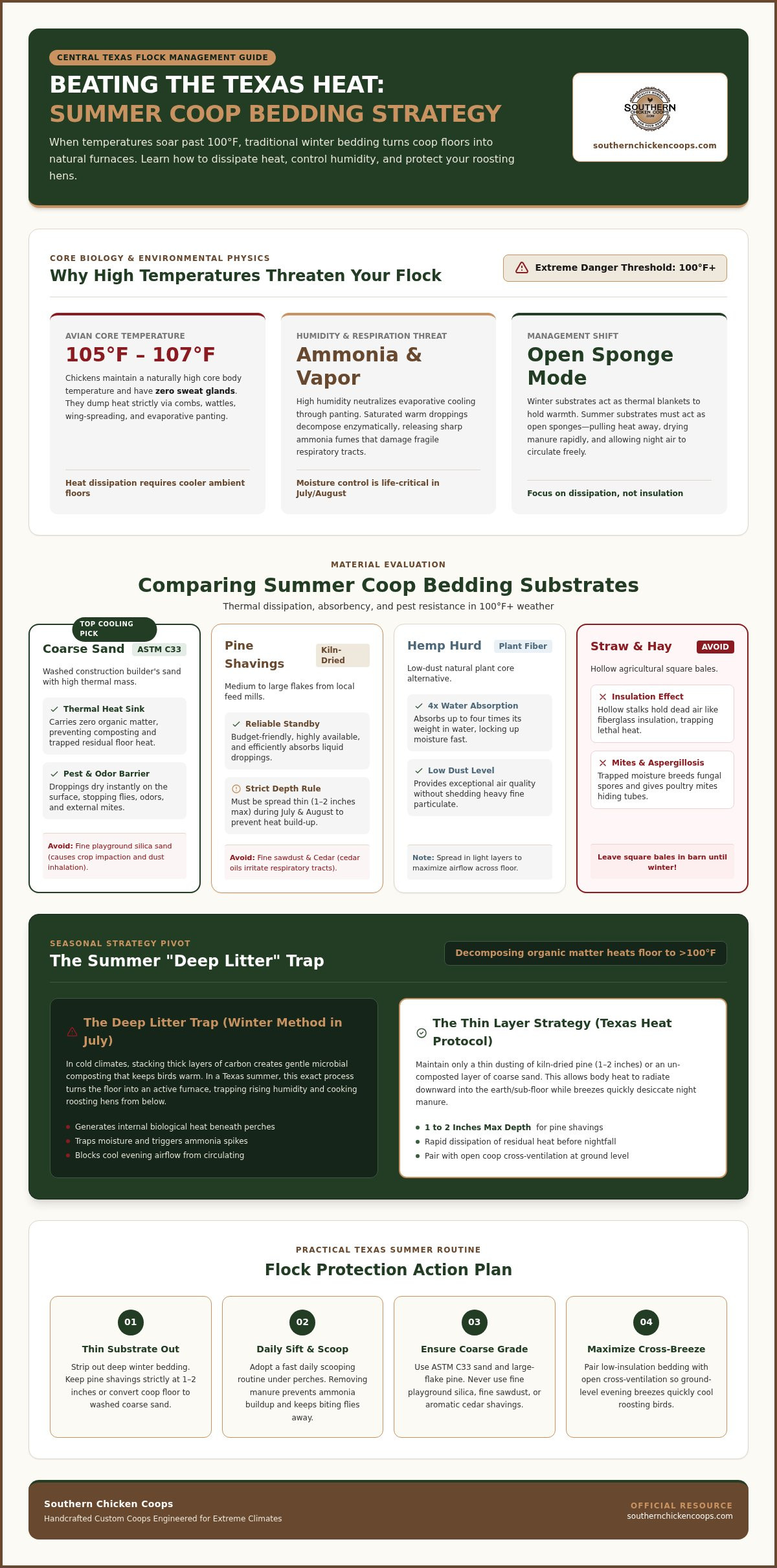
Chickens don't have sweat glands. A bird's normal core body temperature sits between 105°F and 107°F. To dump excess heat, hens rely on radiating warmth through their combs and wattles, spreading their wings, and panting to evaporate moisture from their lungs. If your coop floor traps radiant heat or holds dampness, your hens simply cannot cool down before morning.
The Threat of Heat Stress and Trapped Moisture
Panting works wonders in dry air, but high humidity neutralizes that evaporative defense. Wet manure under the roost breaks down fast under extreme heat. In standard poultry bedding and litter materials, this rapid enzymatic breakdown pumps sharp ammonia vapor right up into your flock's breathing space. Inhaled ammonia damages fragile respiratory tracts, leaving birds unable to shed internal heat effectively. Saturated floor substrates also invite unwanted pests like red mites and biting flies, adding severe physical stress during an already taxing season.
Insulation vs. Heat Dissipation in Central Texas
Managing a coop through a Texas heatwave requires flipping traditional northern advice entirely upside down:
- Winter substrates insulate: Cold-weather systems capture ground warmth and hold it beneath the flock.
- Summer substrates must breathe: Choosing the best bedding for chickens in Texas summer means selecting materials that quickly pull heat away and allow it to dissipate into the sub-floor or earth.
- Airflow across the floor is vital: Ground-level breezes dry out night droppings before fermentation starts, breaking the cycle of heat generation and ammonia fumes.
Treat your warm-weather coop floor like an open moisture sponge rather than a thermal blanket. Keeping bedding thin, dry, and breathable gives your hens the nighttime cooling window they desperately need to recover from the brutal afternoon sun.
Comparing the Best Bedding for Chickens in Texas Summer
Walk down the aisles of any local feed store and you will see dozens of bedding bags piled high. Finding the best bedding for chickens in Texas summer means weighing heat dissipation, moisture absorption, and daily maintenance when afternoon temperatures soar.
Coarse Construction Sand: The Cooling Powerhouse
Washed ASTM C33 construction sand acts as a natural heat sink. Because it carries high thermal mass without organic matter, it doesn't compost or trap residual heat once shaded. Droppings dry out rapidly on the coarse surface, stopping flies and foul odors before they start. Hens also love dusting in it during the heat of the day to deter external parasites. Always avoid fine playground silica sand; you need coarse, washed builder's sand to prevent dust inhalation and crop impaction.
Kiln-Dried Pine Shavings: The Practical Classic
Medium to large flake kiln-dried pine shavings remain a dependable standby across Lone Star coops. They are budget-friendly, widely available at local feed mills, and absorb moisture efficiently. The secret during July and August is spreading them thin, about one to two inches at most. Avoid fine pine sawdust, and never use cedar shavings, since aromatic cedar oils irritate delicate avian airways. If you prefer alternative plant fibers, industrial hemp hurd absorbs up to four times its weight in water with minimal dust, making it an exceptional alternative.
Why Straw and Hay Fail in Southern Summer Heat
We strongly urge flock owners to leave square bales in the barn until winter. Hollow straw stalks hold pockets of dead air, functioning exactly like fiberglass insulation in an attic. When manure mixes with moisture in that trapped heat, fungal spores thrive and invite respiratory illness like aspergillosis. Tiny poultry mites also hide inside hollow stems, multiplying into massive infestations during long heatwaves. Extension specialists studying managing backyard chickens during extreme summer temperatures stress that dry, non-insulating floors protect flocks best.
Whether you choose coarse sand or a light dusting of pine flakes, the bedding only performs if your coop breathes. Pairing proper floor substrates with airy, well-ventilated handcrafted custom chicken coops ensures continuous ground breezes that keep your flock thriving through the toughest heatwaves.
The Deep Litter Trap: Why Summer Demands a Thin Layer Strategy
Many homesteaders swear by the deep litter method, and for good reason during northern winters. Layering six to eight inches of carbon-rich bedding creates natural, self-heating insulation that keeps waterers from freezing. Down here in the Brazos Valley, however, that very same biological engine turns into an underfloor furnace. Finding the best bedding for chickens in Texas summer means knowing when a brilliant winter management tool becomes a warm-weather hazard.
How Deep Litter Composting Generates Unwanted Heat
Microbes don't stop working just because the sun is blazing. When nitrogen-rich droppings blend with organic carbon, active composting pushes core litter temperatures between 105°F and 140°F. That thermal energy radiates directly upward toward your roost bars. When ambient evening temperatures already hover near 85°F, this composting heat pushes air temperatures straight into the danger zone. Specialists outlining hot weather poultry management guidelines warn that poultry quickly succumb to heat prostration when deprived of nighttime cooling. We always clear winter bedding out by late April, moving that rich organic matter to the garden compost pile before June arrives.
The One-to-Two Inch Summer Rule
From late spring through late September, we strictly recommend a thin-layer strategy. Spread just one to two inches of your chosen substrate across the floor. This provides enough depth to catch nightly droppings without trapping thermal energy or igniting a composting cycle.
A shallow base lets your coop floor dissipate heat directly toward the ground. It also makes morning maintenance painless; a quick rake or scoop clears out fresh manure before bacteria begin multiplying. If you are currently laying out your flock's home, check out our guide on preparing your backyard for a chicken coop to ensure your setup catches prevailing southern breezes. Pairing thin bedding with proper ground ventilation ensures your choice of the best bedding for chickens in Texas summer keeps your girls rested and safe.
How to Manage and Refresh Coop Bedding During 100°F Heatwaves
Selecting the best bedding for chickens in Texas summer solves half the heat battle, but consistent upkeep seals the victory. When the afternoon sun beats down without mercy, neglecting droppings for even forty-eight hours turns clean bedding into a breeding ground for flies, biting pests, and sharp ammonia. A brief, disciplined routine protects your flock's health while keeping chores manageable in the heat.
Daily and Weekly Summer Maintenance Routines
Do your chores at daybreak before the sun climbs high. Chickens leave the bulk of their daily manure directly beneath the roosting bars overnight. If you use washed construction sand, grab a deep-mesh ergonomic kitty litter scoop or modified stall fork; sifting out droppings takes about three minutes. If you use pine shavings or hemp, rake out soiled clumps each morning and lay down a light sprinkle of fresh shavings to keep the depth steady at that critical one-to-two inch threshold.
Check your watering systems every Saturday morning. A slow nipple leak or dripping hose connection will soak wood floors beneath the substrate. If you discover a wet patch, shovel it out immediately down to the wood or concrete, let the bare floor dry out, and refill it with clean material. Whatever you do, never mist or hose down dry coop floor bedding during humid weather; trapped water quickly evaporates into the air, raising coop humidity and suffocating panting birds.
Controlling Odor and Pests Naturally
Hot, still air often invites pests, but you can control them without harsh chemicals:
- Food-grade diatomaceous earth: Dust a light layer over the dry floor and around roost crevices to slice through the exoskeletons of poultry mites.
- Aromatic garden herbs: Toss dried lavender, crushed spearmint, or rosemary sprigs directly into nest boxes and resting corners to confuse flies.
- Dry nest box linings: Swap out nest box bedding at the first sign of cracked eggs or manure so laying hens never sit on sour, damp litter.
Caring for your flock through harsh Texas weather should bring joy, not daily exhaustion. If your current coop makes reaching roosts and sifting bedding a backbreaking chore, consider upgrading to an open, walk-in layout. You can explore our custom chicken coops to find designs handcrafted with full-sized cleanout doors and predator-proof airflow built specifically for Texas conditions.
Cool Bedding Needs Cool Coops: Handcrafted Texas Protection
Even the best bedding for chickens in Texas summer cannot protect your flock if your coop traps hot air like a closed wooden box. Mass-market prefabricated kits bought online often feature thin, untreated paneling and tiny decorative vents. Under an unforgiving July sun, these structures bake from the outside in, turning roosting quarters into stifling ovens long after sundown.
The Role of Superior Cross-Ventilation
True heat protection requires deliberate architectural airflow. As body heat rises off your roosting birds, high vents must draw that warmth out while fresh evening breezes sweep in across the floor. Covering large window openings with heavy-duty half-inch hardware cloth keeps out raccoons, snakes, and owls while letting every whisper of wind reach your hens. Generous 12- to 18-inch roof overhangs shield these openings from direct midday rays, throwing cool shade across the bedding substrate below.
The Polka and Semi-Custom Coops by Southern Chicken Coops
We build our coops specifically to meet the brutal demands of Texas summers. Our signature 6x12 chicken coop for sale, known as the Polka model, provides generous shaded run space and expansive hardware-cloth ventilation panels to ensure continuous diurnal cooling.
Every coop we build is handcrafted one at a time right here in McGregor, Texas, using sturdy framing and premium American lumber designed to endure decades of sun and wind. We never offer flimsy flat-pack kits. Instead, we provide full-service delivery of completely built structures directly onto your prepared, level site anywhere within our Texas service area. When you combine high-airflow design with thin, breathable substrate, your flock gets the safe, peaceful refuge they deserve. Browse our complete lineup of custom chicken coops in Texas to give your flock a secure home built to beat the heat.
Keep Your Texas Flock Safe, Cool, and Thriving
Managing triple-digit heat doesn't have to be overwhelming when you work with nature instead of fighting it. Shifting away from deep litter, maintaining a thin layer of washed sand or kiln-dried flakes, and doing a quick morning scoop protects your hens from dangerous underfloor composting. Choosing the best bedding for chickens in Texas summer gives your birds the breathable foundation they need to rest peacefully each evening.
Floor management is only one part of good stewardship. Handcrafted right down the road in McGregor, Texas, our coops are built specifically for Central Texas heat, offering heavy-duty predator defense and shaded airflow. Whether you choose our signature Polka 6x12 or a semi-custom build, we provide full-service delivery directly to your prepared, level homestead. Take the next step in protecting your flock and discover handcrafted coops built to keep Texas hens cool at Southern Chicken Coops. Your hens will thank you with calm spirits and full nesting boxes all season long.
Frequently Asked Questions
What is the single best bedding material for chickens in a Texas summer?
Coarse, washed construction sand is widely considered the single best bedding for chickens in Texas summer because it dissipates thermal energy rather than trapping it. Unlike organic plant materials, sand acts like a cool stone floor that quickly draws heat away from your birds. For raised coops where sand might be too heavy, thin kiln-dried pine shavings or absorbent hemp hurd serve as dependable, highly breathable alternatives.
Can you use straw in a chicken coop during hot summer weather?
We strongly advise against using straw inside your coop during the summer months. Hollow straw stalks hold pockets of dead air, acting like household insulation that radiates heat back onto your roosting hens. In humid Texas weather, damp straw also breeds fungal mold spores and provides cozy hiding tunnels for biting red mites. Save your straw bales for composting or winter windbreaks.
Why is the deep litter method risky during southern summers?
The deep litter method is dangerous in southern summers because decomposing manure actively generates intense biological heat. Microbes break down carbon and nitrogen, pushing core bedding temperatures between 105°F and 140°F. While that natural furnace keeps flocks warm during winter freezes, it creates an unbearable underfloor sauna during Texas heatwaves, preventing birds from cooling down at night and triggering rapid heat exhaustion.
How deep should chicken coop bedding be in July and August?
Keep your organic bedding at a depth of just one to two inches throughout July and August. If you manage a sand floor, two to three inches provides plenty of cushion and sifting depth. A shallow layer catches nighttime droppings effectively without building an insulating blanket over the subfloor. This thin layer also makes spot-cleaning faster, ensuring you remove warm manure before it ferments.
Is sand bedding safe for chickens during humid Texas heatwaves?
Washed construction sand is completely safe and remarkably effective during humid weather because it doesn't hold moisture or fuel bacterial decomposition. Never use fine playground sand or pulverized silica, as fine dust damages avian lungs and causes crop impaction. Coarse builder's sand dries wet manure within hours, stops fly larvae from developing, and gives hens a cool, natural dust bath during the hottest afternoon hours.
How often should I clean out summer coop bedding to prevent flies?
Plan on a quick daily spot-clean beneath the roosting bars early each morning. Removing overnight droppings takes only a few minutes with a mesh sifter or small rake, but it halts the fly life cycle in its tracks. In triple-digit heat, fresh manure ferments into foul-smelling ammonia within 24 hours. A brief daily scoop keeps pests away and protects your flock's delicate airways.
Can I mist or spray water on coop bedding to cool down my hens?
Never spray water directly onto interior coop bedding. Wet bedding in a hot room rapidly spikes indoor humidity, which shuts down your chickens' ability to cool themselves through evaporative panting. That added moisture also spurs mold growth and bacterial outbreaks. If you want to use cooling misters, place them outdoors in a breezy corner of the chicken run where humidity dissipates freely.


