

A standard mail-order coop simply isn't built to survive a single July afternoon in the Lone Star State. When you're searching for the right chicken coop for Texas climate conditions, you quickly learn that thin cedar panels and lightweight wire mesh are no match for blistering heat, sudden winter freezes, and persistent predators.
We know how much you care for your birds, and we share that familiar worry when hens begin panting in oppressive triple-digit humidity. You shouldn't have to watch cheap wood warp after one rainy spring or wonder if raccoons will breach a flimsy latch overnight. In this guide, you'll discover how to choose and design a rugged coop engineered to protect your flock through relentless droughts, bitter northers, and local wildlife threats. We'll walk you through crucial cross-ventilation techniques, heavy framing methods, and site planning so your investment shelters your flock faithfully for decades.
Key Takeaways
- Learn how extreme heat impacts poultry health and why continuous cross-ventilation serves as the single most critical survival feature in southern coops.
- Discover why choosing a durable chicken coop for Texas climate conditions requires heavy timber framing rather than thin, mass-produced kit panels that rot and warp.
- Master coop orientation strategies to capture refreshing summer breezes while shielding your flock from driving rains and bitter winter northers.
- Explore how handcrafted housing, including the signature 6'x12' Polka model, provides dependable predator defense and lasting resilience directly on your prepared lot.
Why the Texas Climate Destroys Standard Chicken Coops
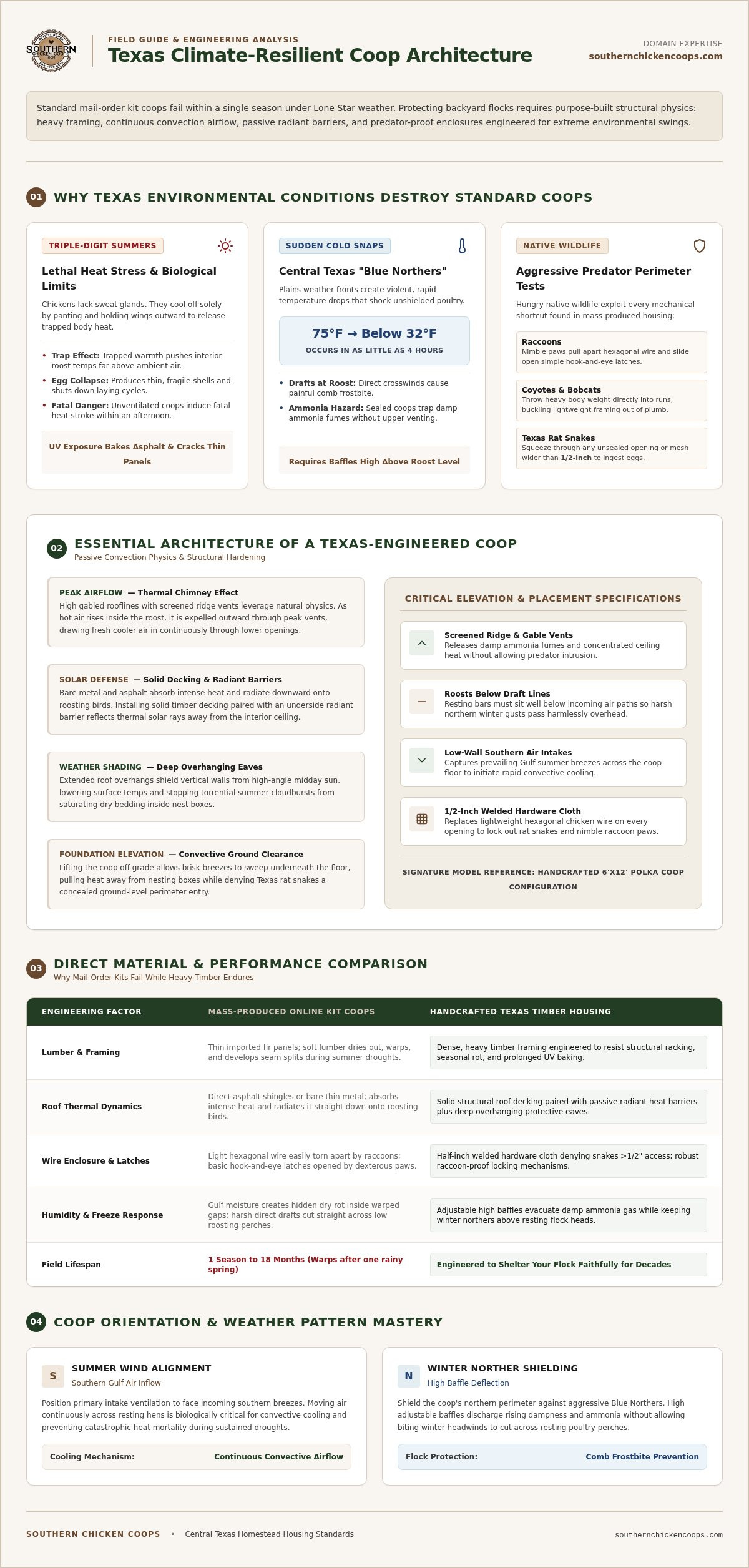
Most commercial coops sold online are designed for mild, predictable weather. Put one in Central Texas, and our environment exposes every shortcut within a single season. The combination of intense ultraviolet radiation, baking summer droughts, and high humidity takes an enormous toll on cheap materials. In commercial poultry housing systems, environmental control is managed with industrial fans and evaporative pads. Backyard keepers, however, rely entirely on physical coop architecture to keep birds alive when the heat index climbs past safe biological limits.
Direct solar radiation bakes asphalt shingles and cracks thin imported fir panels. Prolonged summer dry spells leach natural moisture from soft lumber, leading to warping and seam splits. Once humid Gulf air rolls in, moisture enters those opened gaps, creating hidden pockets of mold and structural dry rot. A standard chicken coop for Texas climate conditions simply won't hold up unless it is framed with dense, climate-resilient lumber.
Triple-Digit Summer Heat and Lethal Poultry Heat Stress
Chickens cannot sweat. They regulate body temperature by panting and holding their wings away from their bodies to release warmth. When an enclosed roost lacks substantial airflow, trapped body heat pushes interior temperatures well past outdoor ambient levels. Sustained heat causes severe stress, collapses daily egg production, and causes thin, fragile shells. Without constant breeze, fatal heat stroke can wipe out a flock in an afternoon.
Sudden Blue Northers and Central Texas Winter Freezes
Texas winters bring drastic swings. A sunny 75-degree afternoon can plunge below freezing in four hours when a Blue Norther roars across the plains. Drafts cutting directly across roost level cause painful comb frostbite. A resilient coop requires adjustable airflow baffles positioned high above roosting bars. This lets damp ammonia fumes escape freely while blocking harsh northern winds from chilling your resting hens.
Aggressive Regional Predators Exploiting Flimsy Materials
Extreme weather isn't the only local threat testing your coop's perimeter. Hungry wildlife will relentlessly test every connection point:
- Raccoons: Nimble paws easily pull apart standard hexagonal chicken wire and open basic hook-and-eye latches.
- Coyotes and bobcats: Heavier predators throw their weight against light runs, bending thin framing out of plumb.
- Texas rat snakes: Slim serpents slip through any gap wider than a half-inch to steal fresh eggs.
Investing in an authentic, heavy-timber chicken coop for Texas climate realities protects your flock from brutal weather extremes and determined native predators alike.
Essential Architecture of a Climate-Resilient Texas Chicken Coop
Keeping a flock healthy across punishing southern summers comes down to architectural physics. While northern coops prioritize heat retention, a purpose-built chicken coop for Texas climate survival must prioritize shade and continuous airflow. University research on summer weather preparedness for coops demonstrates that moving air across birds is vital for convective cooling and preventing heat mortality. Elevating the housing structure off the ground is a fundamental design principle here; lifting the floor allows cooler air to sweep underneath, naturally pulling heat away from nesting boxes while denying snakes a hidden, ground-level entry point.
Continuous Cross-Ventilation and High Gable Airflow
Heat naturally rises, making upper-level venting essential. Gabled rooflines with open, screened ridge vents create a thermal chimney effect, drawing stale, warm air up and out through the peak. Lower wall openings capture prevailing southern breezes, pulling fresh oxygen across the floor. To keep your hens comfortable during winter cold snaps, position resting roost bars safely below these incoming draft lines so winter winds pass overhead without chilling their feet.
Radiant Heat Barriers and Deep Overhanging Rooflines
Bare metal or asphalt roofing absorbs searing thermal energy and radiates it straight down onto roosting birds. Installing solid decking paired with a radiant heat barrier beneath the metal reflects blistering solar rays away from the ceiling. Pair that reflective barrier with deep, extended eaves. Wide roof overhangs provide crucial midday shade across outer walls and keep sudden summer downpours from soaking clean bedding inside.
Heavy-Gauge Hardware Cloth and Raccoon-Proof Latches
Providing massive ventilation areas means nothing if those openings invite nighttime predators. Every open window, vent, and run wall must be secured with durable materials:
- Welded hardware cloth: Half-inch, heavy-gauge galvanized steel mesh stops reach-through attacks and completely keeps out small egg-thieving snakes.
- Anti-burrow aprons: Extending wire mesh flat along the soil perimeter blunts digging attempts by coyotes and stray dogs.
- Two-step latches: Spring-loaded carabiners or complex slide bolts stop nimble raccoon paws from sliding access doors open.
Blending these protective elements into a handsome, handcrafted shelter takes deliberate planning. If you want structural protection tailored to our regional weather patterns, exploring master-built custom chicken coops offers total peace of mind from day one.
Mass-Produced Kit Coops vs. Handcrafted Texas Lumber Coops
Flat-pack mail-order coops look charming in catalog photographs, but opening the cardboard boxes reveals their true nature. Wafer-thin panels, soft imported fir, and light staples make up the bulk of mass-market builds. Placing one of these delicate structures into a Central Texas pasture invites heartbreak. A dependable chicken coop for Texas climate survival requires substantial structural mass, rot-resistant framing, and the weight needed to anchor firmly against fierce prairie winds.
Thermal Performance and Structural Breakdown in Flimsy Kits
Thin wood panels lack real thermal mass. When afternoon sunlight beats down, heat transfers straight through wafer-thin siding, turning the interior into a stifling bake oven. Synthetic glues holding composite wood together quickly degrade under ultraviolet exposure. In addition, double-walled molded plastic alternatives often trap humid, stale air overnight like a sealed cooler. Cheap components warp, split, and gap after only a few severe weather cycles.
Heavy Timber Framing and Long-Term Weather Resistance
Handcrafted coops utilize dimensional framing lumber that stands up to rugged country conditions. Thick, solid lumber provides natural thermal insulation, blunting rapid outdoor temperature swings between sweltering afternoons and sudden evening chills. During turbulent spring squalls, heavy framing prevents dangerous tipping when straight-line winds batter the run. You can learn more about these foundational building techniques in our detailed guide on custom chicken coops in Texas.
Homestead Value and Return on Investment
Buying a budget coop usually means buying another one two years down the road. The constant cycle of patching warped trim, reinforcing wobbly wire, and replacing rotted floorboards drains your wallet and stresses your flock. Investing in true artisan construction provides tangible, lasting benefits:
- Decades of durability: Heavy timbers and exterior-grade fasteners eliminate recurring replacement costs.
- Superior structural security: Sturdy walls and framed doors stand firm against aggressive predators year after year.
- Timeless homestead beauty: Purpose-built timber housing adds architectural character and genuine value to your property.
Choosing an authentic, master-built chicken coop for Texas climate longevity protects both your financial investment and the lives of your birds. To see how generational woodworking standards shield your flock, explore our complete Texas chicken coops guide.
Siting and Orienting Your Coop for Texas Weather Patterns
Even a masterfully constructed chicken coop for Texas climate resilience can struggle if placed in the wrong spot on your acreage. Siting is about working hand in hand with nature. By studying sun angles, topography, and seasonal wind patterns, you create a natural buffer that keeps your flock comfortable through every season.
Catching Prevailing Gulf Breezes While Blocking Winter Storms
In Texas, summer winds reliably sweep in from the south and southeast. Facing open, screened roost windows toward the south draws that cooling Gulf air straight through the living quarters. Conversely, building a solid wall along the north side shields roosting hens when bitter Blue Northers rush in. Avoid tucking the coop into tight corners against privacy fences or tall equipment sheds, as these dead air zones trap oppressive heat and stall airflow.
Natural Canopy Shading and Solar Management
Deciduous trees like pecans, post oaks, and cedar elms serve as exceptional climate allies for your flock. Their broad summer canopies block harsh, high-angle sunshine, keeping the ground cool. Come winter, they drop their foliage to allow low seasonal sun to naturally warm the coop. Aim to capture gentle eastern morning light to dry damp run soil, while avoiding low swales where heavy rains cause standing puddles.
Foundation and Lot Preparation on Reactive Soils
Central Texas is notorious for shifting Blackland Prairie clay, which expands when saturated and contracts deeply during dry summers. Placing heavy structures directly on raw soil leads to door jams and frame stress over time. Preparing a level, well-draining footprint protects your investment:
- Crushed limestone base: A tamped gravel pad promotes fast drainage and deters burrowing predators from digging underneath.
- Concrete support blocks: Elevating the bottom skid framing off damp soil stops moisture transfer and prevents wood rot.
- Graded runoff channels: Directing roof rainwater away from the run keeps interior bedding dry and healthy.
Taking time to grade your pad properly pays dividends for decades. Walk through our detailed guide on backyard chicken coop preparation to get your site ready. When your pad is complete, order your custom coop from Southern Chicken Coops to have handcrafted housing delivered directly to your prepared lot.
Handcrafted Poultry Housing Engineered for Central Texas Homesteads
Down-home stewardship means building shelter that honors the animals entrusted to our care. In McGregor, Texas, Bill and Tina Drivdahl build each coop one at a time, pouring regional woodworking knowledge and neighborly pride into every structural joint. Rather than adapting an out-of-state blueprint to fit our territory, we handcraft custom chicken coops specifically engineered to endure the severe weather swings of the Lone Star State. When you invest in a genuine chicken coop for Texas climate survival, you give your laying flock a permanent, protective home built to last generations.
The Polka 6'x12' Model: Space and Airflow Harmonized
Our signature Polka model provides a thoughtful layout that balances breezy, secure run territory with protected elevated roosting quarters. Built with generous walk-in ceiling height, it eliminates uncomfortable stooping during daily chores like gathering eggs, refreshing clean water, and inspecting birds. The spacious footprint gives active hens plenty of shaded ground space to spread their wings comfortably during triple-digit afternoons. Explore complete dimensional details in our walkthrough of the 6x12 chicken coop for sale.
Semi-Custom Adaptations for Rural Acreage and City Backyards
Every homestead carries unique property constraints, flock sizes, and environmental pressures. We work alongside fellow chicken keepers to tailor functional details to their specific needs:
- Custom door and latch placement: Arrange human access gates and chicken pop-doors to suit your specific garden paths.
- Reinforced perimeter protection: Choose added hardware cloth barriers matched to your local predator density.
- Aesthetic harmony: Select classic paint finishes and trim profiles that complement your rural farmhouse or suburban garden landscape.
Professional Delivery Direct to Your Prepared Lot
Assembling a complicated flat-pack kit with vague instructions quickly ruins a weekend, and pieced-together panels never offer true structural rigidity. We handle the heavy lifting by providing professional, turnkey coop delivery across Texas directly to your leveled pad. Your shelter arrives fully framed, solid, and ready for birds immediately upon placement. Check out our Texas chicken coop delivery guide to see how we bring your custom build home.
Give Your Flock the Lasting Shelter They Deserve
Caring for backyard hens in our state requires housing that respects our rugged environment. When you prioritize continuous cross-ventilation, heavy timber framing, and thoughtful yard orientation, you eliminate the daily heartbreak of heat stress, seasonal rot, and persistent predators. Your hens give you fresh eggs and daily joy; giving them a secure, cool sanctuary is simply faithful stewardship.
Selecting the right chicken coop for Texas climate extremes is an investment in long-term peace of mind. We handcraft each coop one at a time in McGregor, Texas, purpose-built for southern heat with maximum cross-ventilation and heavy-duty predator protection. With direct turnkey delivery to your prepared lot across Texas, you can skip the frustration of flimsy flat-pack kits entirely. Explore our handcrafted Texas coops and discover The Polka to provide your birds with a beautiful, dependable home built to shelter your flock for decades to come.
Frequently Asked Questions
How much ventilation does a chicken coop need in the Texas summer?
A coop in the South needs roughly one square foot of permanent ventilation per bird, which is about double northern recommendations. Open gables and wide, screened sidewalls promote natural convective cooling. Without extensive airflow, trapped body heat pushes interior temperatures into lethal territory during humid summer nights.
Can chickens survive Texas heat inside a wooden chicken coop?
Yes, chickens thrive inside wooden coops if the structure incorporates thick lumber and continuous cross-breezes. Solid framing timber provides natural thermal moderation, keeping interiors significantly cooler than thin-walled prefabs. Elevated floors and radiant barriers reflect intense sun, ensuring a reliable chicken coop for Texas climate conditions protects birds during heatwaves.
Why is hardware cloth better than traditional chicken wire in Texas?
Traditional chicken wire is designed only to contain chickens, not keep determined wildlife out. Clever raccoons easily twist open weak poultry wire, while native rat snakes slip right through hexagonal openings. Welded half-inch steel hardware cloth forms an impenetrable barrier against reach-through trauma and persistent burrowing predators across Central Texas.
What size chicken coop is ideal for a backyard flock in Texas?
A 6'x12' footprint serves as an ideal baseline for typical backyard flocks of six to twelve hens. Southern heat requires generous run elbow room to reduce crowding stress and territorial feather picking. Our signature Polka model balances elevated roosting shelter with plenty of breezy, shaded run space for active daily scratching.
Do chicken coops in Texas need insulation for winter freezes?
Coops do not require heavy synthetic wall insulation, which often harbors destructive moisture and red mites. Instead, chickens need thick timber walls that block direct drafts while maintaining continuous high gable airflow. As long as damp ammonia fumes vent freely overhead, dry hens stay warm down on their roosts during sudden winter freezes.
How does Southern Chicken Coops deliver coops to my property?
We provide turnkey delivery of fully built coops directly to your prepared, level site across Texas. Our team maneuvers the finished build right into position on your crushed stone or concrete block footprint. This eliminates the headache of unboxing flat-pack kits, so your housing is immediately ready for your birds.
Can a chicken coop withstand Central Texas storm winds?
A properly engineered chicken coop for Texas climate extremes readily withstands severe spring squalls when built with substantial timber framing. Flimsy retail coops easily tip or buckle under fifty-mile-per-hour gusts. The significant physical weight of full-dimension lumber and anchored skid bases keeps handcrafted structures firmly planted through heavy rain and high prairie winds.


