

The deep litter method in Texas heat takes more than piling on bedding and waiting. It may work for some flocks, but only when the litter stays manageable and you regularly check for moisture, odors, and compacted areas. Texas weather can shift from hot and dry to humid or stormy, so your routine needs to respond to what is happening in the coop. Your flock’s comfort comes first.
This guide explains how the method works, what Texas heat and humidity can change, and which signs mean the litter needs attention. You’ll learn how to check moisture, manage airflow, and decide whether a shallower summer layer or a seasonal cleanout is more practical for your coop.
The goal isn’t to follow a rigid schedule. It’s to catch trouble early and make bedding changes before a small wet spot becomes a larger problem. A coop that’s easy to access can make regular checks and cleanouts simpler, too.
Key Takeaways
- Deep litter is managed bedding accumulation, not a reason to postpone every cleanout. In Texas heat, moisture checks are especially important.
- Damp litter can disrupt healthy breakdown. Watch for wet patches, compacted areas, and sharp odors.
- The deep litter method in Texas heat may suit some flocks, but its success depends on attentive upkeep and coop conditions.
- Build a summer routine around dry bedding, regular inspections, and adjustments when the weather changes.
- Plan coop access so checking, turning, and removing bedding is manageable for your flock and maintenance routine.
What the Deep Litter Method Means for a Chicken Coop in Texas Heat
Before building up bedding in a Texas summer, consider whether your coop can keep it dry. Heat may help bedding dry in a breezy, protected space, while humidity, rain blown inside, shade, or poor airflow can leave it damp. The useful question isn’t simply whether deep litter works in Texas. It’s whether your coop’s floor and daily conditions allow you to manage the bedding safely.
Deep litter is a managed layer of bedding that accumulates and breaks down over time. You inspect it regularly and adjust it as needed, rather than routinely replacing the entire layer. That doesn’t mean adding fresh material while ignoring what’s underneath. A deep litter system may involve several inches of bedding, but depth alone doesn’t make it healthy or well managed.
How deep litter differs from ordinary coop bedding
With ordinary bedding, you remove and replace material more frequently. Deep litter keeps older bedding in place while you add fresh, dry material when needed. The method depends on observation: check for dampness, compacted patches, and sharp odors, then respond to what you find. Don’t assume that adding another layer will solve a problem, or that deep litter will mean fewer cleanouts in every coop.
Deep litter is an in-coop approach, not a way to manage every surface your chickens use. An outdoor run has different exposure to rain, mud, and droppings, so it needs separate attention. Don’t expect coop litter to keep a dirt run clean or dry. Remove soiled material from outdoor areas as needed, and consider how drainage, shade, and foot traffic affect the ground.
Why Texas heat and humidity change the decision
Drying depends on conditions around the bedding, not just the state on a map. Good airflow and protection from rain can help a coop stay drier. Humid air, water spills, and rain entering through an opening can work against that. Across Central Texas, one coop might sit in a breezy, open spot while another is shaded and sheltered. The litter can behave very differently in each.
The Deep Litter Method on Wikipedia gives broader context on the method’s history and use, including microbial activity. For a Texas flock, focus on what you can observe: inspect the floor after rain, check whether bedding dries between wet periods, and look for damp spots around waterers and beneath roosts. A method that suits one coop or season may need adjusting in another.
Judge the deep litter method in Texas heat by the litter’s condition, the coop’s airflow, and how readily moisture clears. The goal is managed bedding, not a particular depth or a promise that you’ll never need a full cleanout. If the litter stays damp or the coop is difficult to inspect, a simpler bedding routine may be more practical for your flock.
How Deep Litter Breaks Down, and What Hot, Humid Weather Changes
Healthy litter depends on balance, not warmth alone. In the deep litter method in Texas heat, dry bedding absorbs some moisture from droppings and helps keep the floor workable. Microorganisms gradually break down organic material, while chickens’ scratching can loosen and mix the surface. The process still needs attention. Decomposition doesn’t replace checking the flock, cleaning waterers, or responding to wet or dirty areas.
The role of bedding, droppings, and moisture
Bedding provides carbon-rich material that absorbs moisture and gives droppings something to mix into. Pine shavings are a common choice. Bedding material and particle size can affect how it absorbs water, stays loose, or packs down. The amount and distribution matter, too. A thin layer in one area won’t correct a saturated patch beneath a leaking drinker.
Some moisture is part of decomposition, but too much can throw the litter out of balance. Wet bedding clumps and compresses, restricting airflow through it. That can slow breakdown and create unpleasant odors or sanitation concerns. Healthy decomposition shouldn’t look like a soggy mat or smell sharply foul. Investigate the moisture source and remove or replace affected material as needed instead of covering it with more bedding.
Litter condition depends on moisture balance and airflow, not on the season alone. Even in hot weather, a shaded, poorly ventilated coop can stay damp. A well-ventilated space can still develop wet spots if rain blows inside or a waterer spills.
How Texas weather can change litter conditions
Heat, humid spells, and rain each change what to watch for. Warm air may help some bedding dry, but humid air can slow moisture loss. Wind-driven rain may wet the floor near openings, while a shaded corner may dry more slowly than an exposed area. Conditions vary across Texas and within a single coop, so inspect the litter instead of assuming the weather will manage it for you.
During a humid stretch or after a storm, check corners, areas beneath roosts, and the ground around waterers. Notice whether bedding stays loose or forms damp, compacted patches. If a sharp odor appears, address the conditions causing it and remove material that’s too wet to recover through ordinary upkeep. Keep an eye on your birds, too. Litter management is only one part of their care.
For broader guidance on protecting poultry during hot weather, including the role of ventilation, consult Penn State Extension on Hot Weather Poultry Management and current local poultry guidance. Coop layout can also make routine inspection easier. If you’re planning a space around your flock and upkeep habits, explore custom chicken coop options designed for Texas conditions.
Deep Litter in Texas Heat: Weigh the Benefits Against the Risks
Deep litter can make bedding management more gradual, but it isn’t automatically less work or the right fit for every Texas coop. Its practicality depends on the litter’s condition, how the coop handles moisture, how many birds use it, and whether you can keep up with inspections. Treat it as a management choice to reassess, not a seasonal promise.
- Potential benefits: You manage bedding over time instead of routinely removing and replacing it in full. After further breakdown, the material may be useful as compost.
- Trade-offs: You need to monitor moisture, odor, and compacted patches, and deal with wet or spoiled bedding instead of covering it up.
- Labor reality: Some coops may need full replacement less often, but any time saved depends on attentive upkeep and actual conditions.
When deep litter may fit a Texas coop
Deep litter may suit a setup where you can reach the floor to inspect it, loosen bedding if needed, and remove problem areas. Consider flock size and how heavily birds use the coop, along with rain exposure, shade, airflow, and the time you can reliably set aside for checks. What you observe over time is more useful than the calendar or the fact that it’s summer.
Ask yourself whether you can catch a developing problem early and act on it. If your routine allows you to inspect the floor and manage wet spots, deep litter may be workable. If the coop is hard to access or you can’t check it regularly, a simpler bedding approach may be easier to maintain consistently. Either way, the priority is a clean, healthy environment for your flock.
When to pause, reset, or choose another approach
Reassess the method if dampness persists, bedding cakes into dense patches, or a strong ammonia-like odor remains. These signs mean the litter needs attention. Adding fresh bedding may help with a small, localized issue, but it won’t fix a leaking waterer, rain entering the coop, or poor drying conditions. Find and address the source, then remove or replace material that remains wet or foul.
- Persistent wetness: Locate water spills, leaks, or rain entry, and remove bedding that won’t dry out.
- Caking or compaction: Break up or remove affected areas as appropriate. Don’t assume fresh bedding on top will restore them.
- Strong odor or flock concerns: Take corrective action promptly and seek current expert guidance.
If birds show signs of illness or possible respiratory irritation, don’t rely on bedding changes alone. Consult Texas A&M AgriLife Extension or a poultry-health professional for advice suited to your flock. Continue the deep litter method in Texas heat only while you can keep coop conditions under control. Pausing the method or resetting the bedding is sensible whenever the flock’s comfort or the litter’s condition calls for a change.
A Practical Deep Litter Routine for Hot Texas Weather
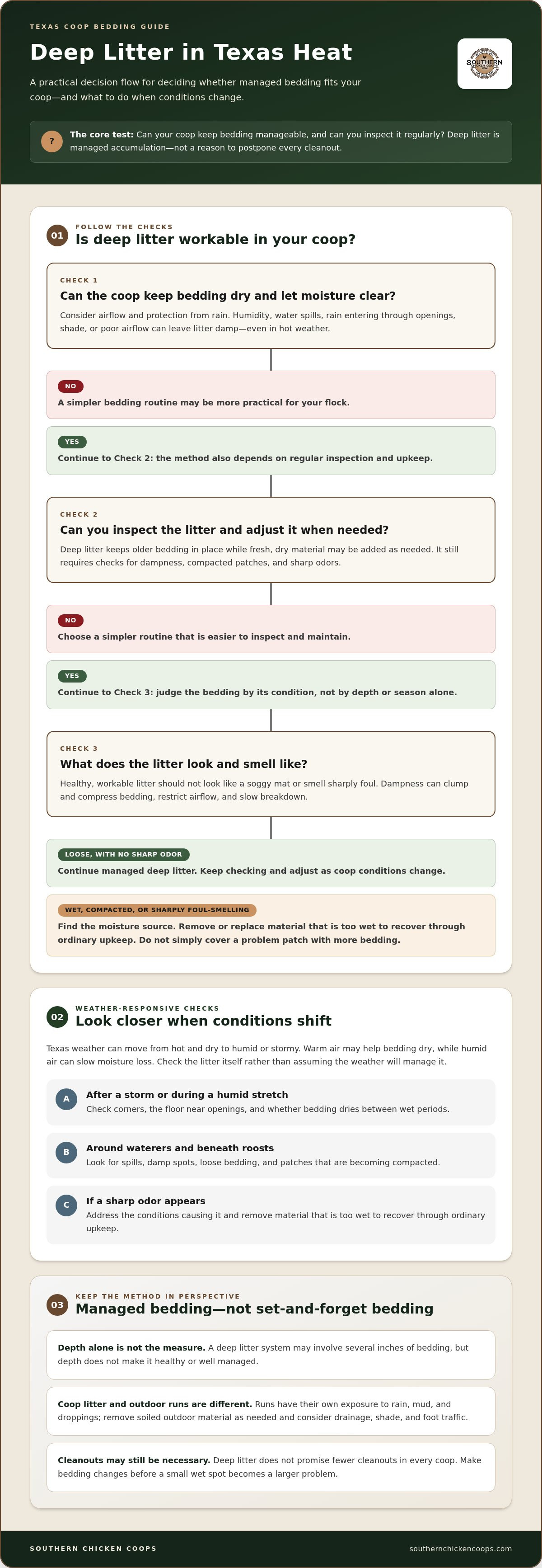
A steady routine helps you catch changes before damp bedding becomes a larger problem. With the deep litter method in Texas heat, let the litter’s condition guide your actions instead of relying on a fixed turning or cleanout schedule. Check often enough to notice changes, especially after rain, humid spells, or a shift in how heavily your flock is using the coop.
Starting and maintaining the bedding layer
- Prepare a dry floor. Start with a clean, dry coop floor. Check for water leaks and places where rain can blow inside before adding fresh bedding.
- Add suitable bedding. Use clean, dry material such as pine shavings. Spread it evenly so droppings and moisture don’t collect in bare or thin spots.
- Inspect the surface and below it. Look for damp patches, caking, and areas that remain wet beneath a dry-looking top layer. Pay particular attention around waterers and under roosts.
- Loosen only where needed. If bedding is compacted but not saturated, gently turn or loosen that area to help prevent matting. Turning isn’t a task for the same days every week. Respond to what you find.
- Add bedding when conditions call for it. A fresh layer can replenish material that’s soiled or thinning, but don’t use it to hide persistent dampness or a strong odor.
- Keep a simple record. Note what the litter looked and smelled like, any changes you made, and what happened after a storm, humid spell, or change in flock use. The notes can reveal recurring trouble spots.
A brief note is especially useful when conditions shift. Your observations help you decide whether the routine is keeping pace with the coop, rather than expecting one schedule to suit every season and flock.
Responding to dampness, odor, and run conditions
Routine inspection and immediate fixes are different tasks. If you find a fresh wet patch or notice a strong ammonia-like odor, look for the cause right away: a leaking drinker, spilled water, rain entry, or water collecting near the coop. Correct the source, then remove or replace bedding that’s wet, foul-smelling, or tightly caked. Don’t bury the problem under fresh shavings. If the odor persists or birds seem unwell, seek current poultry-health guidance.
Manage the outdoor run separately. Rain, muddy traffic, and drainage affect outdoor ground differently from coop bedding, so deep litter indoors isn’t a substitute for dealing with wet or heavily soiled run areas.
Quick condition checklist
- The floor and bedding are dry, with no fresh leaks or rain entry.
- There are no persistent wet patches or dense, caked areas.
- There’s no strong ammonia-like odor.
- Waterers and the run aren’t creating unmanaged wet spots.
- Recent weather or flock-use changes are noted, and the routine is adjusted if needed.
A coop designed around easy access can make these checks and bedding changes more manageable. Explore custom chicken coops designed with your flock and practical upkeep in mind.
Plan a Texas Chicken Coop Around Bedding Checks and Easy Upkeep
A bedding routine works best when the coop makes it practical to follow. If you’re considering the deep litter method in Texas heat, think beyond where the coop will sit. Picture checking the floor, reaching the corners, loosening a compacted patch, and removing used bedding on a hot or rainy day. A layout that suits your flock and your upkeep routine can make these small but important tasks easier to manage.
What to consider when planning coop access
Before settling on a coop setup, picture the work from start to finish. Can you see and reach areas where bedding may collect or get wet? Is there room to carry in fresh material and take used bedding out without awkwardly working around the flock? Consider the route from the coop to where you’ll manage removed bedding, as well as the space available on your property.
- Reach: Plan how you’ll inspect floor areas, including corners and spots beneath roosts.
- Room to work: Allow space to loosen bedding and remove problem areas as needed.
- Access outside: Plan a practical path for bringing bedding in and carrying used material out.
These considerations matter whether you maintain a deep bedding layer or use a simpler routine. For broader site-preparation considerations, the Texas chicken coop preparation guide can help you think through the setting before a coop arrives.
A handcrafted coop for a considered Texas setup
Coop design should support your climate, flock, and maintenance habits. There isn’t one layout or bedding method that suits every property, so consider how your daily care routine will fit the space. Being able to inspect and manage bedding is one part of the larger plan, alongside your birds’ needs and the conditions where the coop will stand.
Southern Chicken Coops is a family-owned business in McGregor, Texas, that handcrafts coops one at a time. The 6'x12' Polka model is designed for durability and functionality in the Texas climate, and semi-custom coops can be tailored to your needs. Consider how you’ll reach the floor and remove bedding as part of choosing a coop that fits the way you care for your flock.
Explore handcrafted chicken coops from Southern Chicken Coops to plan a setup for your Texas flock.
Make Your Coop Plan Work for the Long Texas Summer
Picture an ordinary day in your coop and consider how its layout will support your flock and the care you can realistically provide. A setup that feels manageable in spring should still make sense during a humid stretch or after heavy rain. The deep litter method in Texas heat is only one part of the decision. The coop should also fit your property, birds, and daily routine.
Southern Chicken Coops handcrafts coops one at a time in McGregor, Texas. Semi-custom designs can be tailored to your needs, and completed coops are professionally delivered to a prepared, level lot. You can plan the site and the path you’ll use to inspect or remove bedding before delivery.
Ready to plan a coop for your Texas flock? Explore handcrafted chicken coops for Texas flocks from Southern Chicken Coops.
Frequently Asked Questions
Is deep litter the same as composting?
No. Deep litter isn’t automatically the same as managed composting. It’s a coop-bedding approach in which litter may decompose as bedding and droppings accumulate. That process doesn’t guarantee a consistent, finished compost product. Check the material’s condition and follow reliable poultry and garden guidance before handling or using it. A layer that looks dark or crumbly isn’t proof that it’s ready for garden beds.
Can I use deep litter in an outdoor chicken run?
Don’t assume the coop method will work the same way outdoors. A sheltered coop floor and an exposed run face different conditions: rain, drainage, and soil can change the run quickly, especially after a Texas storm. Watch for ground that stays muddy or wet underfoot, and take steps to keep the run from remaining saturated. Local poultry-extension guidance can help you choose sanitation practices suited to your soil and site.
What happens if deep litter smells like ammonia?
A strong ammonia-like smell is a warning to investigate, not something to cover with another layer of bedding. Check for dampness, poor airflow, or waste buildup, including under roosts and around water containers. Improve the underlying conditions and remove problem material if needed. If your chickens show coughing, unusual breathing, eye irritation, or other signs of illness, seek prompt advice from a poultry-health professional.
Can I use straw for the deep litter method in Texas?
Yes, straw can be used, but it may behave differently from other bedding materials. Check whether it stays loose and absorbs moisture in your coop instead of assuming it will suit every flock or Texas climate. Look beneath the surface during use, especially in sheltered areas. If straw remains wet, cakes together, or develops a persistent odor, change the material or routine and follow trusted poultry-extension guidance.
How should I handle deep litter after a heavy Texas rainstorm?
After a heavy rain, inspect the coop for roof leaks, rain splashing or blowing inside, and wet areas near entrances. Remove or replace soaked litter, and address how the water got in instead of burying the wet section under fresh bedding. Check the outdoor run separately: standing water or saturated soil points to a drainage issue that coop-floor bedding won’t resolve. Recheck the affected areas after the next rainfall.
Is deep litter appropriate for chicks?
Not automatically. Chicks have different husbandry needs from an established flock, so don’t assume an adult-hen litter routine is right for a brooder. Keep their bedding, access to food and water, and overall condition under close observation. For age-appropriate brooding and bedding choices, use current poultry-extension or veterinary guidance. If chicks seem unwell or their bedding becomes damp or soiled, address the conditions promptly.
Can used deep litter go straight onto a vegetable garden?
Don’t assume used litter is ready for direct garden use. Poultry bedding and manure may need further composting, and readiness depends on the materials, how they were managed, and how you plan to apply them. Appearance alone can’t establish that it’s finished or suitable for edible crops. Follow current agricultural-extension guidance on composting poultry manure and using it safely in a vegetable garden.


