

A brand-new coop isn’t a guarantee against mites or lice. Parasites can arrive with new birds, wild visitors, rodents, or contaminated equipment, so preventing mites and lice in a new coop takes more than fresh bedding and clean walls. Prepare the space, check incoming birds and equipment, and keep up a simple inspection routine once your flock settles in.
A few practical habits can lower the risk of an infestation taking hold. This guide covers preparing the coop and run, checking new chickens, and setting up regular inspections and cleaning. You’ll also learn what to look for on birds and around roosts, and when to ask a poultry veterinarian for treatment guidance rather than guess.
A well-planned coop can make regular care more manageable, but prevention depends on how you welcome and look after your flock. Start with a routine you can sustain, and you’ll know what to check and when to seek expert help.
Key Takeaways
- Prepare the coop and run before hens arrive, then check incoming birds and equipment. Clean, new housing alone isn’t enough.
- Preventing mites and lice in a new coop depends on steady habits, including observing birds and inspecting their feathers and housing.
- Learn where different parasites may be found so you can describe what you see before deciding on a response.
- Build a routine for daily observation and regular bird and coop checks, adjusting it to your flock and conditions.
- A manageable coop setup can make routine care easier. Ask a poultry veterinarian for guidance if you find possible signs of parasites or need treatment advice.
Prevent mites and lice before hens move into a new coop
Preparing for your first hens can feel like a long list of jobs, but parasite prevention doesn’t require a one-time treatment or a complicated routine. Start with a clean, easy-to-check space, introduce birds carefully, and keep observing them. A new coop gives you a fresh start, not a guarantee: mites and lice can still arrive on birds, used equipment, or contaminated materials.
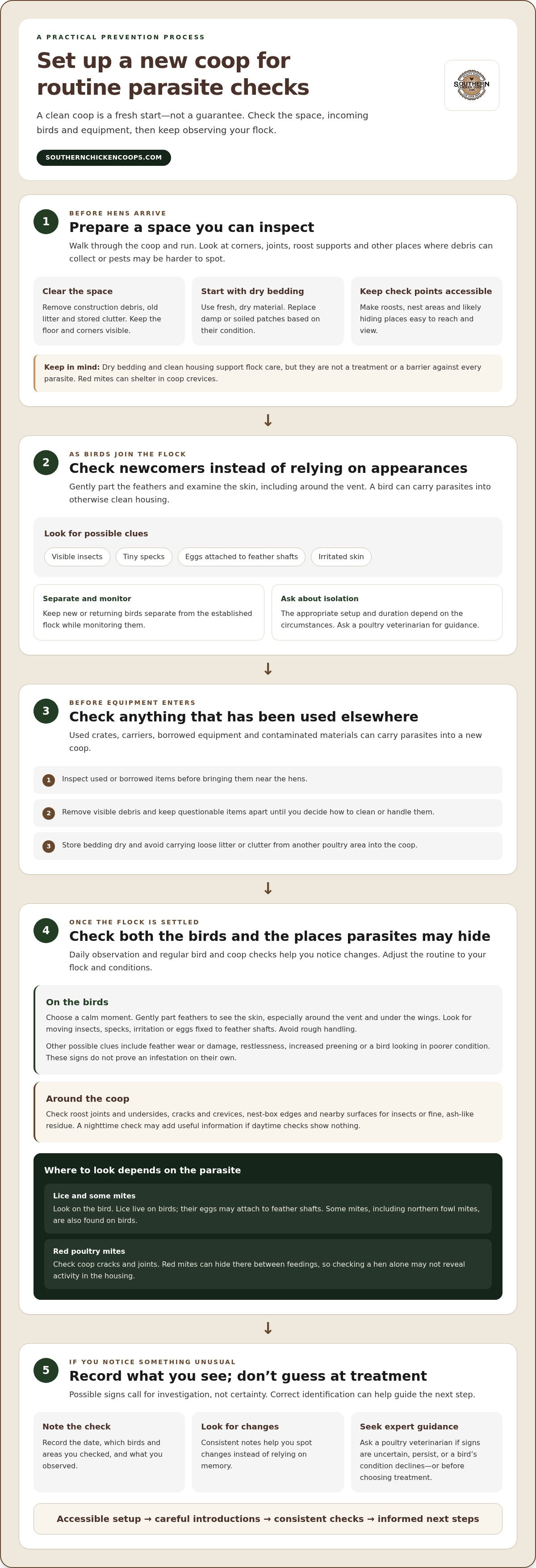
Before the flock arrives, walk through the coop and run. Look at corners, joints, roost supports, and other places where debris can collect or pests may be harder to spot. Think about how you’ll reach these areas and get a clear view when you check the birds and housing later.
What to prepare before chickens enter the coop
Work through these steps before the hens move in:
- Clear the space. Remove construction debris, old litter, and stored clutter. An unobstructed floor and visible corners make it easier to notice changes during future inspections.
- Lay clean, dry bedding. Start with fresh material and plan how you’ll remove damp or soiled patches. Replace bedding based on its condition rather than a fixed schedule that may not suit your flock or the weather.
- Make inspection part of the setup. Keep roosts, nest areas, and likely hiding places accessible. If checking them means moving supplies or dismantling stored items, you may be less likely to do it consistently.
Dry bedding and an orderly coop support good flock care, but they aren’t a treatment or a barrier against every parasite. The red mite, Dermanyssus gallinae (Red Mite), can shelter in coop crevices. Keeping inspection areas accessible is useful even in new housing.
How new birds and equipment can affect parasite risk
Birds can carry parasites into an otherwise clean space. Before adding newcomers, gently part the feathers and examine the skin, including around the vent. Look for anything unusual, such as visible insects, specks, or eggs attached to feather shafts. A careful check is more useful than assuming a bird is clear because it looks healthy from a distance.
Keep new or returning birds separate from the established flock while you monitor them. The appropriate isolation setup and duration depend on the circumstances, so ask a poultry veterinarian for guidance that fits your flock. If you find suspicious signs, describe what you’ve seen and get advice before choosing a response.
Inspect used crates, carriers, and borrowed equipment before bringing them near your hens. Remove visible debris and keep questionable items apart until you’ve decided how to clean or handle them. Store bedding dry, and avoid carrying loose litter or clutter from another poultry area into the coop.
These habits lower risk without promising a parasite-free flock. A thoughtfully planned custom coop can support a practical, cleanable setup, but prevention still depends on checking birds, equipment, and bedding as part of everyday care.
How chicken mites and lice differ, and where to look in a new coop
Mites and lice are small parasites, but they don’t all spend their time in the same place. Lice live on birds, where their eggs may be attached to feather shafts. Some mites, including northern fowl mites, are also found on birds. Red poultry mites, by contrast, can hide in coop cracks and joints between feedings, then come out to feed. That difference matters: checking a hen alone may not reveal activity in the housing.
A practical starting point is: “Check the bird for lice and bird-dwelling mites; check the coop’s cracks and roosts for hiding red mites.” This isn’t a way to identify every parasite with certainty. Correct identification helps guide the next step, so ask a poultry veterinarian to assess uncertain signs before choosing treatment. The Alabama Cooperative Extension System also describes red mite hiding places in its guide to Preventing and Treating Poultry Red Mites.
Signs that may suggest lice or mites
Possible clues include feather wear or damage, irritated skin, visible insects, tiny dark specks, or pale egg clusters attached to feathers. None proves an infestation on its own. A bird may also seem restless, preen more than usual, or look in poorer condition. Check more than one hen and inspect relevant coop areas. If signs persist or a bird’s condition declines, contact a poultry veterinarian for guidance.
Inspection points in birds and coop spaces
Choose a calm moment and use a flashlight. Gently part the feathers to see the skin, paying close attention around the vent and under the wings. Look for moving insects, specks, irritation, or eggs fixed to feather shafts. Avoid rough handling. If a bird is difficult to examine or you’re unsure what you’re seeing, pause and seek experienced help.
Then inspect areas a quick glance can miss. Check roost joints and undersides, cracks and crevices, nest-box edges, and nearby surfaces for insects or fine, ash-like residue. Red mites may be easier to spot after dark, so a nighttime check can add useful information if daytime inspections show nothing. Note the date, which birds and areas you checked, and what you observed. Consistent notes help you spot changes instead of relying on memory.
When preventing mites and lice in a new coop, visible signs call for investigation, not guesswork. A coop designed around your flock and care routine can make regular checks easier. Explore custom chicken coop options as you plan a setup that suits your birds and the way you’ll care for them.
Does a brand-new coop prevent mites and lice by itself?
No. Fresh, clean housing can make routine care easier, but it can’t prevent parasites from arriving on a bird, carrier, or other equipment. A new coop is a starting point, not a guarantee: “Clean housing gives you a sound place to begin, but regular flock checks help you notice trouble.”
Prevention means lowering risk through sensible husbandry and observation. Treatment means responding to a suspected or confirmed infestation with an appropriate plan. A dust bath, clean bedding, or newly built structure shouldn’t be treated as a cure, and no single setup can promise a parasite-free flock for a set period.
Why clean bedding and dust baths are helpful but not guarantees
Dry, tidy housing supports flock care by making damp or soiled areas easier to spot and giving you a clearer view during inspections. It doesn’t prove parasites are absent or eradicate ones already present. A suitable place for hens to dust-bathe is useful, but it isn’t a stand-alone treatment for mites or lice.
Be cautious with diatomaceous earth and other powders. Dust can irritate the respiratory system, so don’t scatter a product casually around birds or create airborne clouds. If you’re considering any dust or spray, follow its label exactly, including directions about where and how it may be used. Wear a mask and gloves to reduce exposure while handling dusty products. Don’t assume a product described as natural is automatically risk-free or appropriate for poultry.
Use similar care with ash, herbs, and other home-mixed additives. Advice passed between keepers may not account for the bird’s condition, the parasite involved, or safe use around poultry. Avoid relying on an unverified remedy for prevention or treatment; follow a poultry veterinarian’s guidance and product-label directions instead.
When signs call for expert advice instead of home remedies
Seek prompt veterinary guidance if you find insects or eggs, see worsening irritation or feather damage, notice a change in a hen’s behavior or condition, or can’t tell what you’re looking at. Describe where you found signs and which birds are affected. Don’t wait for a home remedy to work if a bird appears unwell.
Never apply a pesticide or medication contrary to its label, or use a product on poultry when its directions don’t support that use. The right response depends on the suspected parasite and the product’s instructions, including any precautions for eggs or meat. A veterinarian can help guide identification and treatment choices, especially when signs are uncertain.
Good flock care is steady rather than dramatic: keep the space manageable, observe the hens, and respond thoughtfully to changes. These habits can reduce risk, but they can’t replace a professional assessment when you suspect an infestation.
A simple weekly routine for preventing mites and lice in a new coop
A reliable routine doesn’t need to take over your day. Brief observations, regular hands-on checks, and a more thorough coop review help you notice changes. Use the schedule below as a starting framework, not a rigid rule. Flock size, weather, bedding condition, and your poultry veterinarian’s advice may call for adjustments.
As you prepare the coop site, consider how its placement and surroundings affect access, drainage, and daily care. Texas weather can shift between dry spells and heavy rain, so check bedding after wet weather and keep ventilation appropriate for conditions. Address damp patches, while allowing air to move through the coop without creating drafts where hens roost.
- Observe the flock during daily visits. As you feed or collect eggs, notice appetite, activity, feather condition, and unusual scratching or preening. You’re more likely to catch small changes when you know each bird’s usual behavior. Remove spilled feed rather than letting it build up.
- Set aside time each week for closer checks. Gently examine a few birds, rotating through the flock so each hen receives regular attention. Part the feathers to check the skin, especially around the vent and under the wings. If you spot concerning signs, examine affected birds and seek veterinary advice instead of waiting for the next scheduled check.
- Check bedding and visible coop areas weekly, and after wet weather. Remove wet or heavily soiled bedding as needed. Look over roosts, nest areas, and accessible joints for signs of activity or accumulating debris. Adjust your schedule when conditions change; a damp week or bedding change may make an extra check sensible.
- Do a more thorough coop review monthly. Inspect roost connections, nest-box edges, and crevices closely. Record which areas and birds you checked, what you observed, and any cleaning or bedding changes. Brief notes can reveal patterns that are hard to remember from one week to the next.
Don’t let the calendar override what you see. If a hen’s condition worsens, you find possible parasite signs, or you’re unsure what they indicate, ask a poultry veterinarian for guidance. Identify the suspected parasite before choosing treatment, and use any product according to its label and veterinary direction.
This steady approach makes preventing mites and lice in a new coop part of ordinary flock care rather than a last-minute scramble. For more help planning a Texas setup around your coop, the site-preparation advice in Backyard Chicken Coop Prep: A Texas Homestead Guide can complement your inspection routine. If you’re planning a manageable home for your flock, explore custom chicken coop options suited to your setup and care routine.
Choose a coop setup that makes ongoing flock checks easier
A beautifully made coop can still be awkward to care for if routine checks feel like a chore. Picture the tasks you’ll repeat: looking over roosting and nesting areas, changing bedding, and getting a clear view of the hens. Accessible spaces and a manageable cleaning routine support consistent observation. They don’t make a coop parasite-proof, but they can make it easier to notice changes.
Start with your flock and your habits. Think about how many birds you expect to keep, how often you can tend the coop, and where you’ll store clean bedding and keep tools ready. Consider where used bedding and other waste will go, too. A setup that fits your property and routine is more likely to stay orderly than one that depends on steps you can’t comfortably keep up with.
What to consider when planning a coop for easier care
Before settling on a layout, consider whether you can reach the areas you’ll need to inspect and clean without repeatedly shifting supplies or disturbing the flock. Plan practical places for bedding, tools, and waste management, and think about access around the coop as well as inside it. On a Texas property, account for the prepared site and local weather, including how you’ll handle rain, damp bedding, and ventilation. These planning choices help with care, but they don’t guarantee protection from parasites.
How Southern Chicken Coops can fit into the planning process
At Southern Chicken Coops, we handcraft custom chicken coops one at a time in McGregor, Texas. Our options include the 6'x12' Polka model and semi-custom designs built with Texas weather in mind. As you plan, consider how the size and layout will work with your flock, your property, and the care routine you intend to follow. Practical planning can make regular checks feel like a natural part of keeping hens.
We deliver completed coops to a prepared, level lot, so preparing the location is part of the process. Consider access to the site and how the coop will fit into the way you use your property. The goal is a home that suits your setting and is manageable for the people caring for the flock.
Thoughtful coop planning can support preventing mites and lice in a new coop by making observation and routine care easier, but it can’t replace flock checks or veterinary guidance when concerns arise. If you’re planning a new home for your hens, explore handcrafted chicken coop options as part of your broader flock-care plan.
Make your next flock-care step a thoughtful one
Good flock care comes from small choices you can keep making, not a single perfect setup. Think about the routine you want to sustain and the space that will make it manageable. A coop should fit the rhythm of your property and help you care for your hens, while regular observation and veterinary guidance remain part of responsible ownership.
That’s the heart of preventing mites and lice in a new coop: create a practical foundation, stay attentive, and respond calmly when something seems wrong. You don’t need to have every detail figured out on the first day. A considered next step can help you build a home that works for both your flock and your everyday life.
Southern Chicken Coops handcrafts custom coops in McGregor, Texas, including the 6'x12' Polka model and semi-custom designs. Explore handcrafted chicken coop options and plan a welcoming home for your hens.
Frequently Asked Questions
Can mites or lice appear in a brand-new chicken coop?
Yes. A parasite-free-looking coop can still have mites or lice introduced by a chicken or contaminated equipment. New construction doesn’t prevent a bird from carrying parasites in, and a clean appearance isn’t proof that every surface is clear. Watch closely after introducing birds or bringing in used poultry gear. There’s no guaranteed period when the flock is safe from infestation.
How often should I check chickens for mites and lice?
Observe your flock during daily visits, then set aside time for a closer hands-on check at least weekly. If you’re introducing birds, notice unusual scratching, or find possible signs, check more often and ask a poultry veterinarian how to monitor your flock. During Texas rainy spells, look at bedding and coop conditions after wet weather, since damp areas may need attention.
Can diatomaceous earth prevent mites and lice in a chicken coop?
Diatomaceous earth shouldn’t be relied on as a guarantee against mites or lice or as a substitute for checking birds and housing. Fine dust can irritate the respiratory system, so avoid creating airborne clouds around chickens. If you’re considering a product, use it only as its label directs, including precautions for handling and application. Ask a poultry veterinarian before using it to address suspected parasites.
What should I do before bringing new chickens into a coop?
Examine each bird gently, including the feathers and skin around the vent, and keep newcomers separate while you monitor them. A common biosecurity recommendation is to quarantine new birds for at least 30 days, but ask a poultry veterinarian to tailor the isolation plan to your flock. Check crates and carriers, too, and avoid sharing equipment between separated birds unless it has been handled appropriately.
Can chicken mites live in coop cracks and roosts?
Yes. Red poultry mites can hide in cracks, roost joints, and other narrow spaces in the coop, then emerge to feed. A daytime check of the birds may not reveal every problem. If you suspect mites, inspect roost connections and crevices carefully, and consider checking after dark. A clean-looking roost or quiet daytime inspection doesn’t prove mites are absent.
When should I call a veterinarian about chicken mites or lice?
Call a poultry veterinarian if you find possible insects or eggs, several birds show concerning signs, a hen’s condition worsens, or you’re unsure what parasite you’ve found. Share which birds are affected and where you noticed signs. Getting advice before choosing a treatment helps avoid an unsuitable product or incorrect use. Follow product labels and veterinary directions, including any guidance about eggs or meat.


