

Imagine walking out to your coop on a July afternoon in Central Texas only to find your favorite hen struggling for air while the wood framing of your two-year-old store-bought coop literally crumbles under your touch. We’ve seen this happen too often to our neighbors, and it’s why we’re so passionate about choosing the best materials for a Texas chicken coop. It truly breaks our hearts when a family’s investment fails because it wasn't built to withstand our unique blend of blistering sun and heavy humidity. We believe that building a home for your flock is a form of stewardship, and you deserve a structure that reflects that devotion.
You want a sanctuary for your birds that is as sturdy and reliable as your own home. We promise to show you how to choose components that prioritize safety and longevity over a quick sale. In this 2026 guide, we’ll share the specific wood, roofing, and security materials we use at our shop in McGregor to ensure your hens thrive for a decade or more. We will walk through everything from rot-resistant framing and high-airflow designs to the specific gauge of hardware cloth needed to keep out clever raccoons and stubborn coyotes.
Key Takeaways
- Understand why the "Texas Trifecta" of extreme heat, high humidity, and aggressive predators causes standard big-box coops to fail within just two years.
- Learn how to identify the best materials for a Texas chicken coop, focusing on rot-resistant lumber and UV-stable components that won't crumble under the summer sun.
- Discover the cooling benefits of metal roofing and radiant barriers, which are essential for preventing heat exhaustion in your flock during a Central Texas July.
- Secure your birds with professional-grade 1/2-inch hardware cloth that stops local predators like raccoons, snakes, and coyotes from breaching your sanctuary.
- Gain the confidence of a master artisan by choosing a design built to last a decade, handcrafted with a deep respect for our regional climate and your birds' safety.
The Texas Climate Challenge: Why Material Choice is Critical
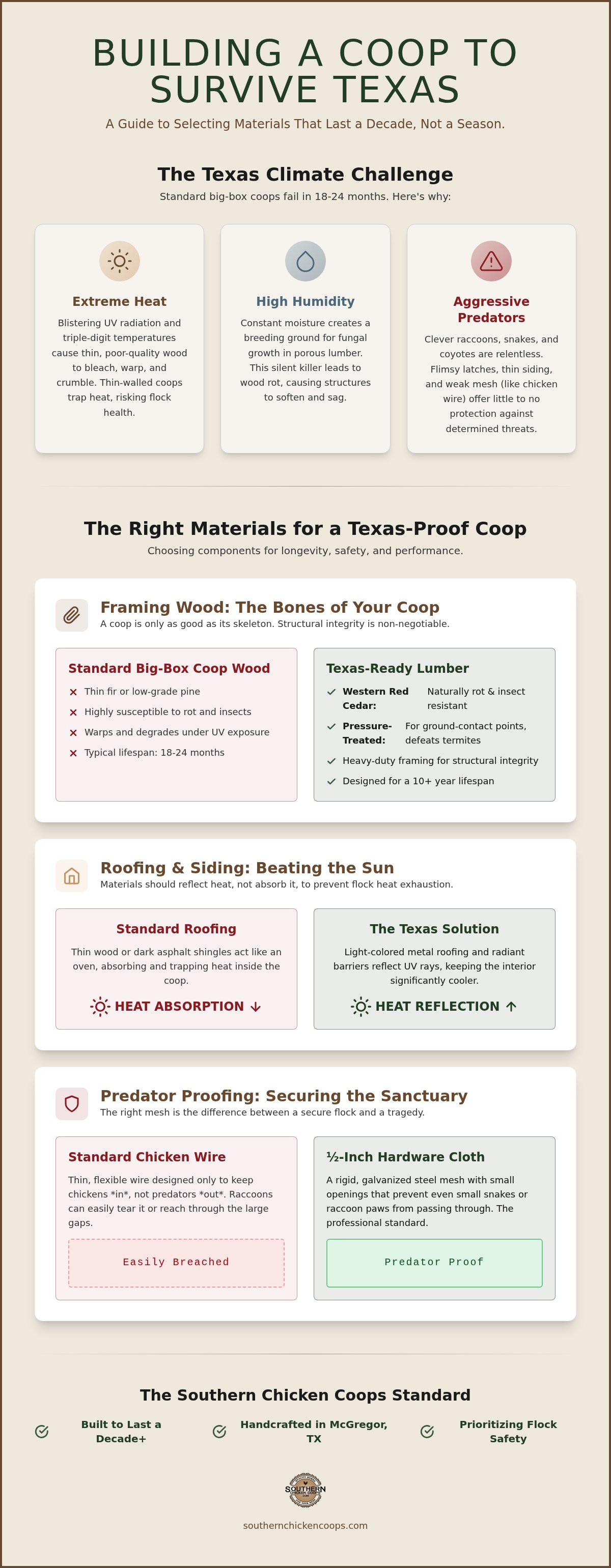
Living in Central Texas means we deal with a unique set of challenges that folks up north just don't have to worry about. We call it the "Texas Trifecta": triple-digit heat that lasts for months, thick humidity that never seems to lift, and a local predator population that is as determined as they come. When you're searching for the best materials for a Texas chicken coop, you aren't just looking for a building; you're looking for a fortress that can survive the elements. A quick poultry farming overview will tell you that shelter is the foundation of bird health, but in Texas, that shelter has to be exceptionally tough. Many families in Waco find that the "off-the-shelf" coops from big-box stores look charming on the showroom floor, but they often fall apart within 18 to 24 months. The thin fir wood and plastic components simply aren't built for our environment. Our philosophy here in McGregor is different. We build for generational longevity. We want your coop to be a legacy, not a temporary fix.
Humidity and the Rot Cycle in Central Texas
Humidity in our region isn't just uncomfortable. It's a silent wood-killer. When moisture gets trapped in poor-quality, porous lumber, it creates a breeding ground for fungal growth. This rot cycle moves quickly. Ground moisture seeps into coop floors and framing, causing the wood to swell and eventually soften. We've seen coops literally sag under their own weight because the base wasn't protected. Breathability is just as important as water resistance. You need materials that allow moisture to escape rather than locking it inside the grain. This is why we are so selective about our framing lumber. We feel a deep sense of stewardship for the animals in our care, and that starts with a foundation that won't rot out from under them.
Thermal Regulation: Materials as Insulation
Then there's the sun. UV radiation in Central Texas is intense enough to bleach and brittle thin wood in a single season. Materials act as either insulators or ovens. Thin-walled coops made of cedar-look-alike softwoods often trap heat inside the nesting area. This creates a dangerous situation during McGregor summers. We focus on materials that reflect heat rather than absorbing it. If you're worried about your birds' safety during those long August stretches, you might find our guide on housing chickens in Texas heat helpful for understanding the finer points of flock cooling. Understanding the best materials for a Texas chicken coop means looking past the price tag and seeing the long-term health of your birds. Choosing the right materials is the first step toward a healthy, happy flock.
The Best Wood for a Texas Coop: Cedar vs. Treated Lumber
When we're in the shop, we often tell folks that a coop is only as good as its bones. Choosing the right skeleton for your structure is the most important decision you'll make for your flock's safety. In Central Texas, our windstorms can be fierce. If your coop is built with thin, pre-fabricated panels, a single spring storm can turn your investment into a pile of scrap. We prioritize heavy-duty framing because we know that structural integrity is what keeps your birds safe when the weather turns sour. When we sit down to discuss the best materials for a Texas chicken coop, we're usually comparing Western Red Cedar and pressure-treated lumber for their specific roles in the build.
Cedar: The Natural Choice for Longevity
Western Red Cedar is often called nature's perfect building material for our region. It contains natural oils that act as a built-in defense system against Texas insects and moisture rot. You might see debates online claiming cedar is toxic to chickens, but there is a vital distinction to make. While aromatic cedar shavings should be avoided as bedding due to respiratory concerns, structural Western Red Cedar lumber is perfectly safe. As highlighted in this Small Scale Poultry Housing guide, selecting durable materials that resist the elements is essential for a healthy environment. Cedar weathers beautifully in our intense sun, shifting to a graceful silver-gray patina that looks right at home on a Texas homestead.
Pressure-Treated Wood and Soil Contact
For any part of the coop that touches the earth, we insist on pressure-treated wood rated for ground contact. Texas termites are relentless; untreated wood won't last two seasons in our soil. We use modern ACQ (Alkaline Copper Quaternary) treated lumber, which is much safer for your flock than the older, arsenic-based chemicals used decades ago. This ensures the foundation stays rock-solid for years without leaching harmful toxins into the run. If you want to see how we combine these premium woods into a sanctuary for your birds, you can explore our custom chicken coops to see our craftsmanship in action. We believe the base of your coop should outlast the flock, giving you peace of mind every time you head out to collect eggs. By using the best materials for a Texas chicken coop, we ensure your investment stands tall against both the termites and the wind.
Roofing and Siding: Managing the Texas Sun
We've spent many long afternoons in McGregor watching the sun beat down on our workshop, so we know exactly what that heat does to a structure. When you're choosing the best materials for a Texas chicken coop, the roof is your first line of defense. Many builders suggest standard asphalt shingles because they're cheap and easy to find, but we've found they act like a giant heat sponge. Shingles have high thermal mass, meaning they soak up the sun all day and continue to radiate that heat down onto your hens long after the sun sets. Light-colored roofs are mandatory for Texas coops to ensure your hens don't suffer under the weight of absorbed solar heat. To keep your flock comfortable, you need a roof that reflects energy rather than storing it.
We also emphasize the importance of radiant barriers and intentional ventilation gaps right at the roofline. It isn't enough to just slap a roof on top; you have to create a path for hot air to escape. By leaving specific gaps and using reflective materials, we ensure that the coop stays significantly cooler than the ambient air outside. This attention to detail is part of our commitment to the safety and well-being of the animals you've been called to protect.
Metal Roofing: The Gold Standard for Heat
In our experience, galvanized or painted metal is the only way to go for a Texas coop. These panels can reflect up to 70% of solar radiation, which is a game-changer during a July heatwave. Metal also stands up to our legendary Texas hail storms far better than brittle asphalt or thin plastic. We take care during installation to use solid sheathing underneath the metal. This prevents the "rain noise" that can stress your hens during a thunderstorm and stops condensation from dripping onto your clean bedding. It's a more durable, thoughtful approach that pays off in bird health and structural longevity.
Siding Materials for Airflow and Strength
Siding isn't just about looks; it's about protecting the interior from predators while managing the internal temperature. We prefer using high-quality materials like LP SmartSide or thick exterior plywood over the flimsy plastic siding found on big-box models. Plastic tends to warp and crack in our 100-degree summers, creating gaps that snakes or mice can exploit. Thicker siding provides better thermal mass protection, helping to stabilize the temperature inside the coop during those rapid Texas weather shifts. Choosing the right siding is a core part of a durable chicken coop design for hot climates. When your siding is sturdy enough to resist warping in our high humidity, you can rest easy knowing your investment will remain predator-proof for years to come.
Predator-Proofing: Choosing the Right Mesh and Hardware
Protecting your flock from the local wildlife is a sacred duty for any chicken keeper in Central Texas. While we love the beauty of our rural landscape, we know that raccoons, coyotes, and bobcats are always watching. When people ask us about the best materials for a Texas chicken coop, security is usually their biggest concern. We always start the conversation with hardware cloth. Unlike thin wire, hardware cloth is a galvanized steel mesh that provides a true predator barrier. It’s the difference between a secure sanctuary and a structure that invites trouble. We believe every bird deserves a home where they can sleep peacefully, and that starts with the right mesh.
Hardware Cloth vs. Chicken Wire: A Safety Breakdown
There is a common myth that "chicken wire" is meant to protect your birds. In reality, chicken wire is only strong enough to keep chickens in a specific area. A hungry raccoon can pull it apart with its paws, and a coyote can bite through it with ease. Hardware cloth has a much higher tensile strength, making it nearly impossible for predators to tear. We use 1/2-inch mesh as our standard because it’s small enough to prevent snakes and rodents from squeezing through while remaining tough enough to stop larger animals. If you're planning your layout, don't forget the ground. You can learn more in our predator proof chicken coop floor guide about securing the perimeter of your run.
Fasteners and Hinges: The Weakest Link
Predators are often smarter than we give them credit for. Raccoons are notorious for their ability to manipulate simple latches and pry open loose corners. This is why we never use simple staples to attach our mesh. Instead, we use heavy-duty screws and wide fender washers. This creates a "sandwich" effect that makes it impossible for a predator to rip the wire away from the wood. We also avoid simple slide-bolts that a clever paw can nudge open. We prefer locking carabiners or spring-loaded latches that require opposing force to operate. Our handcrafted assembly ensures there are no "pry points" or gaps where a predator can get leverage. If you’re ready to invest in a sanctuary that’s truly secure, take a look at our custom chicken coops built right here in McGregor. Choosing the best materials for a Texas chicken coop means thinking like a predator so your hens don't have to.
The Southern Chicken Coops Standard: Built in McGregor
When we step into our shop in McGregor, we don't just see stacks of lumber and rolls of wire; we see the future sanctuary for your family’s flock. Choosing the best materials for a Texas chicken coop is a responsibility we take to heart. Every board and screw is hand-selected by Bill and Tina Drivdahl to ensure it meets our standards for straightness and strength. We know the Central Texas sun is unforgiving, so we don't cut corners with mass-produced staples or flimsy fasteners. Instead, we use a building process rooted in integrity, ensuring that every joint and seam is tight enough to withstand years of shifting weather and curious predators.
Inside the Polka Model's Material Specs
Our Polka model is a testament to what happens when you combine premium materials with regional expertise. These 6x12 chicken coops for sale are specifically engineered to maximize airflow, which is the most critical factor for bird health in our high humidity. We use structural-grade framing and black PVC-coated hardware cloth that is as beautiful as it is strong. Unlike factory-built units that rely on thin panels, our handcrafted joints provide a level of rigidity that keeps the structure square and the doors swinging perfectly for a decade or more. We believe that a well-crafted home should be as beautiful as the lifestyle it supports.
Investing in Quality Over DIY Kits
It’s tempting to look at a cheap kit or a set of national DIY plans and think you’re saving money. However, those designs rarely account for the specific labor and tool costs required to work with professional-grade Texas materials. When you consider the cost of a custom chicken coop in Texas, you have to look at the "buy it twice" trap. If a store-bought coop rots or fails in two years, you haven't saved anything; you've just delayed the inevitable investment in quality. We've seen too many neighbors lose their birds to heat or predators because of a budget-first decision.
We also provide professional delivery to prepared, level lots because we know that a coop is only as strong as its foundation. If a structure isn't level, the frame twists and the doors won't latch properly, creating gaps that predators love to exploit. We want to be more than just your builder; we want to be your neighbors and trusted guides in this journey. We invite you to reach out and discuss your custom needs with us. Whether you’re just starting your homestead or looking to upgrade to the best materials for a Texas chicken coop, we’re here to serve you with the same devotion we give to our own birds.
Building a Legacy for Your Texas Flock
Choosing the right sanctuary for your birds is a journey of stewardship and love. We've explored why rot-resistant lumber, heat-reflecting metal roofing, and 1/2-inch hardware cloth are the best materials for a Texas chicken coop. These choices aren't just about construction; they're about ensuring your hens stay safe and comfortable when the McGregor sun pushes past 100°F. By prioritizing quality over temporary fixes, you protect your investment and provide a beautiful, lasting home for your animals.
At Southern Chicken Coops, our family-owned shop is dedicated to this same sense of devotion. Every structure we build is handcrafted in McGregor, Texas, and specifically engineered to handle our intense summers and local predators. We'd be honored to help you create a secure haven that stands the test of time. Explore our Texas-tough custom chicken coops to see how we put these principles into practice. We look forward to being a neighborly resource for your homesteading journey. Your birds deserve a home built with integrity and heart.
Common Questions About Texas Chicken Coop Materials
What is the most durable wood for a chicken coop in Texas?
Western Red Cedar is the most resilient natural choice for the body of your coop because it handles our humidity without warping. For any parts touching the dirt, you must use pressure-treated lumber rated for ground contact to stop termites. Combining these two creates the best materials for a Texas chicken coop, ensuring the structure remains straight and sturdy through decades of unpredictable weather and heavy spring rains.
Is metal or shingle roofing better for Texas heat?
Metal roofing is far superior for managing the intense Central Texas sun. While asphalt shingles absorb and hold thermal energy, light-colored metal reflects the majority of solar radiation away from your birds. This keeps the interior temperature significantly lower during our triple-digit August afternoons. Metal also provides better protection against the large hail we often see during spring storms, making it a much more durable long-term investment.
Can I use pressure-treated wood for my chicken coop frame?
You can and should use pressure-treated wood for the base of your frame where it meets the ground. Modern ACQ treatment is safe for poultry and provides the necessary defense against rot and wood-destroying insects. We recommend using untreated Western Red Cedar for the upper framing and nesting areas to take advantage of its natural pest-repellent properties while keeping the interior environment as natural as possible for your hens.
Why is chicken wire considered unsafe for Texas predators?
Chicken wire is designed only to contain chickens, not to keep predators out. The thin gauge of the wire is easily torn by the strong paws of a raccoon or bitten through by a coyote. In Texas, we have aggressive predators that can exploit the large openings in standard chicken wire. It offers no protection against snakes or rodents, which can slip through the gaps to steal eggs or harm your flock.
What gauge of hardware cloth do I need for a predator-proof coop?
We recommend using professional-grade galvanized hardware cloth, typically 19-gauge or 23-gauge. A 1/2-inch mesh size is the gold standard for Texas because it is tight enough to stop snakes while remaining thick enough to resist the teeth and claws of larger predators. Ensuring the mesh is securely fastened with screws and washers rather than staples is just as important as the thickness of the steel itself.
Do I need to paint or stain my Texas chicken coop for protection?
Applying a high-quality exterior stain or paint is essential for protecting your coop from UV damage. Even naturally durable woods like cedar will eventually grey and develop surface cracks under the relentless Texas sun. A protective coating acts as a sunscreen, preventing moisture from seeping into the grain during our humid spells. We suggest choosing light colors to help reflect heat and keep the coop cooler for your birds.
What is the best material for a chicken coop floor in a humid climate?
A pressure-treated plywood floor covered with a durable moisture barrier, such as heavy-duty linoleum, is ideal for our humid climate. This combination prevents the wood from soaking up moisture and waste, which can lead to rot and ammonia buildup. It also makes the coop much easier to clean. Ensure your design allows for plenty of airflow underneath the floor to prevent dampness from being trapped against the wood.
How often should I inspect the materials of my coop for wear?
You should perform a thorough inspection of your coop materials at least once every three months. Check for any signs of wood softening near the ground, loose hardware cloth, or gaps caused by natural wood expansion. Pay close attention after heavy storms or rapid temperature shifts. Regular maintenance, like tightening latches and clearing debris from the roof, ensures that your sanctuary remains safe and functional for the long haul.


