

You step outside at 4:00 PM on a July afternoon in Central Texas, and the air feels less like a breeze and more like a physical weight. We have all stood there, checking the waterers for the third time and worrying if our hens can handle another record-breaking forecast. Finding a durable chicken coop hot climate birds can actually thrive in is often the difference between a healthy backyard flock and a heartbreaking summer. We understand that deep sense of responsibility you feel for your girls, and we know how frustrating it is to see a cheap coop warp or rot after just one season in our intense humidity.
We believe your flock deserves a sanctuary that works with the Texas environment rather than fighting against it. In this guide, we will show you how to achieve true peace of mind with a housing solution that stays cool and remains maintenance-free for years. You'll discover the essential design features and high-quality materials that keep hens productive even when the sun is at its most brutal. We are going to walk through the architectural secrets we use in our McGregor workshop to ensure every home we build is a safe, breezy, and permanent haven for your birds.
Key Takeaways
- Understand why standard pre-fab kits often struggle in our Texas sun and how to prevent the "oven effect" from endangering your flock.
- See how architectural features like passive cooling and 360-degree airflow create a durable chicken coop hot climate birds can actually thrive in.
- Identify the premium materials that resist rot and high thermal temperatures, ensuring your coop stands strong for years without warping.
- Learn the best strategies for siting your coop to capture natural wind currents and utilize seasonal shade for maximum cooling.
- Discover why a handcrafted approach in McGregor ensures every vent and joint is perfectly positioned for your hens' safety and comfort.
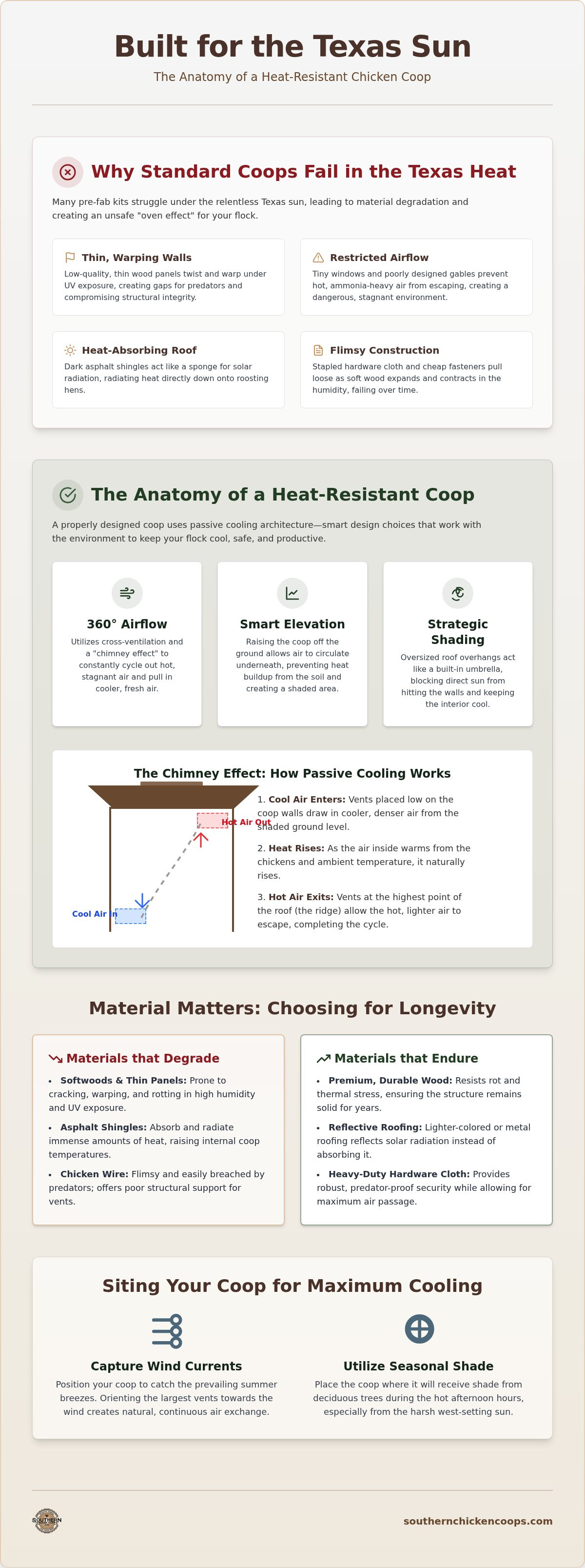
Why 'Standard' Chicken Coops Fail in the Texas Heat
Many folks start their backyard journey with a pre-packaged kit from a big-box store. It looks charming in the catalog, but our Central Texas sun is a harsh judge of craftsmanship. These kits often use thin, "disposable" wood that begins to warp and pull away from the frame after just a few weeks of triple-digit temperatures. We believe a coop shouldn't be a seasonal purchase you replace every two years; it should be a permanent, faithful fixture on your land. To build a truly durable chicken coop hot climate birds can stay safe in, you have to look past the "weather-resistant" label on a box and focus on how materials react to our unique environment.
When we talk about coop failure, we aren't just talking about the wood. We are talking about the safety of your girls. Standard designs often prioritize shipping convenience over animal welfare, leading to several common points of failure in the Texas heat:
- Thin wall panels that twist under UV exposure, creating gaps where predators can slip through.
- Restricted gables that prevent hot air from escaping the highest point of the roof.
- Dark asphalt shingles that absorb solar radiation and radiate heat directly onto the roosting hens.
- Stapled hardware cloth that pulls loose as the soft wood expands and contracts.
The 'Oven Effect' in Low-Quality Coops
Heat naturally rises. In a standard coop with tiny windows and restricted gables, that hot air has nowhere to go. It gets trapped right at the peak, turning the roosting area into a literal oven while your hens are trying to rest. This stagnant air is often heavy with ammonia from the bedding, which can damage a hen's sensitive respiratory system. Breathability isn't just a luxury; it's the first line of defense for a healthy flock. Without constant airflow, even the best-fed hens will struggle to stay productive during a McGregor summer.
Material Degradation in High-UV Environments
Our UV index in Texas is relentless. Cheap stains and softwoods simply aren't built for this level of exposure. They crack under the pressure, creating tiny fissures where moisture from our high humidity can settle. Once that moisture gets in, rot follows quickly, even if the wood looked fine a month prior. We've seen many coops that appear sturdy but are structurally failing at the joints. Being "Texas-durable" means choosing materials that reflect solar radiation rather than soaking it up like a sponge, ensuring the home remains a sanctuary for years to come.
The Anatomy of a Heat-Resistant Coop Design
Creating a sanctuary for your flock in Central Texas requires more than just adding a few windows to a standard shed. A truly heat-resistant coop is designed from the ground up to utilize passive cooling, which is the practice of using architectural features to lower internal temperatures without relying on electricity. When we think about building a durable chicken coop hot climate birds can actually enjoy, we focus on three pillars: 360-degree airflow, elevation, and strategic shading. These elements work together to ensure that even when the McGregor sun is at its peak, your hens have a breezy, shaded retreat.
One of the most overlooked features in standard designs is the roof overhang. We build our coops with oversized overhangs that act as built-in umbrellas. These extensions provide deep shade for the run and prevent the afternoon sun from hitting the coop walls directly. We also replace traditional chicken wire with heavy-duty hardware cloth. While chicken wire is flimsy, hardware cloth provides a rigid structure that allows for maximum air passage while keeping out the smallest predators. You can see these cooling features in action on our 6x12 chicken coop for sale, where every detail is tuned for the Texas environment.
Passive Airflow and Cross-Ventilation
The science of cooling a coop relies on the movement of air. We position our vents to catch the prevailing breezes that typically move through our region. By placing vents at both the floor level and the ridge of the roof, we create a chimney effect. Cool air is pulled in from the bottom, and as it warms up inside the coop, it naturally rises and escapes through the top. It is vital to distinguish between a draft and ventilation. In the summer, we want high-volume air exchange that moves stagnant heat out of the building. This constant cycle of fresh air is the most effective way to keep your hens' core temperatures within a safe range.
Elevation and Ground Cooling
Raising the coop off the ground is a game-changer for temperature control. An elevated floor allows air to circulate underneath the entire structure, preventing the floorboards from soaking up the heat of the earth. This space beneath the coop becomes a favorite spot for hens to take dust baths in the cool, shaded dirt. It also serves as a protective barrier against local wildlife. By keeping the structure high, you make it much harder for rattlesnakes or raccoons to find a hidden corner to nest. If you're looking for a housing solution that prioritizes this kind of stewardship, we invite you to explore our handcrafted models designed specifically for our local climate.
Material Matters: Choosing Wood and Roofing for Longevity
We've walked through the importance of airflow and elevation, but even the most clever design will eventually fail if the materials aren't up to the task. In our McGregor workshop, we've seen how the relentless Texas sun can turn standard lumber into a twisted mess in a single season. Building a durable chicken coop hot climate families can rely on means looking at every board and screw through the lens of longevity. We don't just want your coop to look good on delivery day; we want it to be a sanctuary for your flock a decade from now. This commitment to quality is why we choose materials that stand up to our toughest weather cycles, from ice storms to 110-degree droughts.
While many pre-fab options use thin pine or cedar pickets, we prioritize materials with high thermal stability and rot resistance. One of our core choices is LP SmartSide. LP SmartSide is a treated engineered wood designed for extreme exterior exposure. Unlike traditional pine, which tends to warp and crack as it breathes in our high humidity, this material stays true and square. This stability is vital for maintaining the integrity of your doors and vents, ensuring they never stick or sag when you need them most. To complement this, we insist on using 19-gauge hardware cloth or better. Standard chicken wire is too easily breached by a determined raccoon or dog, and thinner mesh can actually restrict the very airflow we've worked so hard to create. By using a heavier gauge, we provide a fortress that remains open to every passing breeze.
Reflective vs. Absorptive Roofing
Your choice of roofing is perhaps the most critical factor in controlling internal coop temperatures. In the 100-degree Texas heat, asphalt shingles act like a thermal battery, soaking up solar radiation and radiating it back down onto your roosting hens all night long. We prefer metal roofing installed with a small air gap. This setup reflects a vast majority of the sun's rays away from the structure. Additionally, a steep roof pitch is essential; it doesn't just help shed our sudden spring downpours, but it also creates a larger internal volume of air, making it harder for the sun to heat up the entire space.
Fasteners and Hardware That Won't Rust
It's the small details that often fail first. Central Texas humidity can be brutal on cheap hinges and latches, leading to rust that eventually binds or breaks. We use galvanized screws and heavy-duty hardware to prevent this degradation. In our workshop, we avoid the staples and glue found in mass-produced kits. Instead, we rely on structural joinery and mechanical fasteners. This ensures that the coop stays rigid over years of use, preventing the "sagging" that often makes older coops difficult to secure against predators.
Strategic Placement: How to Site Your Coop for Maximum Cooling
Even the most meticulously crafted structure needs a thoughtful home on your property. If you have lived in Central Texas for any length of time, you know that the sun moves with a relentless intensity that can turn a backyard into a kiln by mid-afternoon. To ensure you have a durable chicken coop hot climate birds can actually thrive in, placement is just as vital as the wood and screws we use in our workshop. We always tell our neighbors that the best coop in the world will struggle to keep hens cool if it is tucked into a sun-baked corner where the air never moves. We recommend orienting your coop to face the Southeast. This specific angle captures the prevailing Gulf breezes that sweep across our region, providing a natural, cooling current through your vents all day long.
Beyond wind direction, the foundation of your coop determines its long-term health. Central Texas is known for its "black gumbo" clay soil, which expands and contracts violently with our weather cycles. A level, prepared lot prevents the frame from twisting over time, which ensures that your doors and nesting boxes always latch perfectly. If you are starting to plan your space, our chicken coop delivery Texas guide offers practical advice on preparing your site for a heavy, permanent structure.
Utilizing Deciduous Shade
Nature provides the most effective cooling system available. Deciduous trees, such as our native Pecans or Live Oaks, are the gold standard for backyard stewardship. During the peak of summer, their thick leaf canopy can reduce the ambient temperature inside a coop by 10 to 15 degrees compared to a structure sitting in full sun. This "natural AC" is a gift that keeps giving; when the leaves drop in the winter, they allow the gentle sun to warm the coop during our occasional freezes. Just be sure to manage leaf litter on the roof and trim any heavy branches that could pose a hazard during a spring thunderstorm.
Site Prep and Drainage
Proper drainage is the secret to a fresh-smelling and healthy backyard. A "swampy" run doesn't just create a muddy mess; it increases the humidity around your hens, making it much harder for them to regulate their body temperatures. We suggest creating a pad of crushed granite or gravel for the coop to sit on. This prevents the soil from shifting and ensures that rainwater moves away from the structure quickly. When your site is ready, we are here to help. If you're looking for a partner to help protect your flock's lifestyle, explore our custom chicken coops and let us handle the heavy lifting of delivery and setup.
Handcrafted Excellence: Why The Polka is Built for Texas Summers
We have spent years in our McGregor workshop refining what it means to build a durable chicken coop hot climate flocks can call home. All the principles we have discussed, from reflective roofing to passive airflow, find their highest expression in our signature model: The Polka. We didn't design this 6x12 model in a corporate office; we designed it through years of Texas farming experience and a deep devotion to the well-being of the animals in our care. When you choose a Polka, you aren't just buying a product; you're investing in a handcrafted sanctuary built one at a time with the integrity your hens deserve. Our "one at a time" build process ensures that we never rush a joint or overlook a vent, giving us the chance to verify that every inch of the structure meets our family's standards before it ever reaches your lot.
The 6x12 footprint of the Polka is what we call the "sweet spot" for Central Texas. This size provides enough internal volume to prevent rapid heat spikes while remaining perfectly manageable for most backyard spaces. We have carefully placed the ventilation windows and gables to ensure that air exchange happens constantly, even on those still, humid evenings when the wind refuses to blow. Unlike store-bought alternatives that use staples and thin veneers that crumble under UV stress, our handcrafted approach means every joint is tight and every vent is positioned with purpose. This structural harmony is why our coops remain cool and stable through decades of brutal summers. We also offer semi-custom adjustments to this design, allowing us to tailor the layout to your specific acreage or flock size without compromising the essential cooling features.
The Polka's Specific Heat-Shield Features
A closer look at the Polka reveals why it stands as the gold standard for our region. The roof design is specifically pitched to move hot air up and out, while the oversized windows are positioned to maximize cross-ventilation at the birds' level. We don't believe in "good enough" when it's 105 degrees outside. By choosing a local McGregor builder, you're getting a structure that understands our local challenges, from the intensity of the sun to the specific predators that prowl our tree lines. This regional awareness is baked into every board of the Polka, ensuring your investment protects your hens year-round.
Your Partners in Poultry Stewardship
At Southern Chicken Coops, our work is more of a calling than a commercial venture. As the Drivdahl family, we take immense pride in being your neighbors and your expert guides. We understand that starting a backyard flock is a journey of stewardship, and we want to be the partners who ensure your housing solution is a source of joy rather than a constant maintenance chore. We believe in building relationships as strong as our coops, offering a level of neighborly service that you simply won't find at a big-box retailer. Whether you are looking for a standard Polka or a semi-custom design, we are here to help you navigate the process with sincerity and care. To help you plan your investment in your flock's future, you can explore our guide on custom chicken coop cost in Texas. We look forward to building something beautiful and lasting for your home.
Creating a Lasting Sanctuary for Your Central Texas Flock
Protecting your hens from the weight of a Texas summer is a labor of love that requires more than just a simple shed. By choosing architectural features like 360-degree passive cooling and materials that reflect our intense solar radiation, you are investing in the long-term health of your birds. We have seen firsthand how a durable chicken coop hot climate design can transform the homesteading experience, replacing the worry of heat exhaustion with the simple joy of healthy, productive hens year-round.
As a family-owned and operated business, we treat every project as a calling to help our neighbors succeed. Our coops are handcrafted one at a time in McGregor and include professional delivery to your leveled lot, ensuring your new structure is ready for the seasons ahead from the moment it arrives. We invite you to explore our handcrafted, Texas-ready coops and start your custom build today! There is a special kind of peace that comes with knowing your girls are safe in a home built to last. We look forward to helping you create a beautiful, resilient haven on your own piece of Texas land.
Frequently Asked Questions
What is the best material for a chicken coop roof in a hot climate?
Metal roofing with a reflective finish and an intentional air gap is the superior choice for our region. Unlike asphalt shingles that trap solar energy, metal reflects the sun's rays away from the structure. This architectural choice keeps the roosting area significantly cooler during the peak of a McGregor afternoon.
How much ventilation does a chicken coop need for a Texas summer?
A Texas coop needs significantly more ventilation than standard designs, ideally providing 360-degree airflow throughout the structure. While a general rule is one square foot of vent space for every ten square feet of floor, we believe in maximizing openings at both the floor and ridge levels. This ensures a constant cycle of fresh air to move stagnant heat out of the building.
Is a metal roof too hot for a chicken coop?
A metal roof is actually cooler than other materials when it is installed correctly with a reflective coating and an air gap. This setup prevents heat from transferring directly into the coop interior. We avoid dark asphalt shingles because they act like a thermal battery, radiating heat downward long after the sun has set.
Can I keep my chickens cool without electricity in the coop?
You can keep hens perfectly comfortable without electricity by utilizing passive cooling techniques like elevation and strategic shading. Raising the coop allows air to move underneath the floor, while placing the structure under deciduous trees provides natural cooling. These methods ensure a durable chicken coop hot climate birds can thrive in without the need for fans.
Does the color of the chicken coop affect the internal temperature?
Lighter colors are much more effective at reflecting solar radiation and keeping internal temperatures low. We often recommend light-colored stains or paints for our coops to help bounce the sun's rays away from the wood. Darker colors tend to absorb heat, which can cause the interior to warm up much faster during a July heatwave.
What are the signs of heat stroke in chickens and how can a coop prevent it?
Hens suffering from heat stroke will often pant heavily, hold their wings away from their bodies, and appear lethargic. A well-designed coop prevents this by providing a shaded, breezy environment where birds can regulate their core temperatures. Having a cool, elevated dust-bathing area is another vital defense against the intense Texas sun.
Why should I choose a handcrafted coop over a DIY kit for hot weather?
Handcrafted coops offer a level of structural integrity and specialized material use that most DIY kits simply cannot match. We use heavy-duty hardware and engineered woods like LP SmartSide that don't warp or pull apart in our high humidity. This ensures your vents and doors stay functional and your flock stays secure for years to come.
How do I prepare my ground for a heavy, durable chicken coop delivery?
Preparing your ground involves creating a level, well-drained pad using materials like crushed granite or gravel. This prevents the heavy structure from sinking or shifting in our local clay soil. Proper site prep ensures your durable chicken coop hot climate sanctuary remains stable and perfectly aligned after we complete the delivery.


