

You wake up to a quiet morning in McGregor, but your heart sinks when you see a fresh mound of red dirt pushed up right against the edge of your coop. It's a sight no chicken owner wants to see, knowing that a hungry raccoon or coyote spent the night trying to find a way inside. We understand that protective instinct because we raise our own flocks right here in the heart of the state. Keeping your birds safe isn't just about sturdy walls; it's about securing the ground beneath them against the clever diggers that call our region home.
Finding the right predator proof chicken coop floor Texas weather and wildlife won't destroy is a challenge, especially with our shifting clay soil and blistering summer heat. You want a solution that keeps the "varmints" out but doesn't turn the coop into an oven or a muddy mess. We've put together this guide to help you choose a floor that offers permanent peace of mind and easy cleaning. We will explore the pros and cons of concrete, hardware cloth, and wood, ensuring your foundation stands strong through every season.
Key Takeaways
- Understand why a true 360-degree security envelope is necessary to stop persistent Central Texas diggers like raccoons and coyotes from entering through the coop base.
- Compare the durability and thermal benefits of different materials to find the best predator proof chicken coop floor Texas climate demands for your flock’s safety.
- Learn how to manage the unique challenges of shifting Blackland Prairie clay soil to prevent dangerous gaps from forming under your foundation.
- Discover the "L-shape" hardware cloth apron technique, a proven method for stopping predators before they can even start digging.
- See how handcrafted designs like The Polka eliminate common vulnerabilities found in mass-produced kits, providing a permanent, secure foundation for your birds.
Why the Floor is the Most Overlooked Vulnerability in Texas Chicken Coops
We've spent many years here in McGregor watching the sun set over the fields, and we know that's when the real work begins for the local wildlife. Many folks spend hours picking out the right shingles or the strongest latches, but they often forget the ground beneath their birds' feet. A true predator proof chicken coop floor Texas chickens can rely on is about creating a 360-degree envelope of safety. It's a hard lesson to learn, but a sturdy roof doesn't mean much if a coyote can simply tunnel under the bottom plate in a matter of minutes. We see the floor as the foundation of your flock's peace of mind, not just a place for bedding.
Most predators are looking for the path of least resistance. While a raccoon might try to fiddle with a latch, many animals find it much easier to use their claws on our native soil. In Central Texas, our weather plays a big role in this. The constant cycle between heavy spring rains and bone-dry summer droughts causes the ground to heave and crack. These cycles create "soft spots" and gaps along the perimeter of your coop, essentially rolling out a welcome mat for hungry visitors. Building a predator proof chicken coop floor Texas varmints can't get through requires understanding how our Blackland Prairie soil moves and shifts over time.
Common Texas Predators That Attack from Below
The "varmints" in our neck of the woods are persistent and clever. We've seen firsthand what happens when a floor isn't secured against these specific threats:
- Raccoons: These "engineers" are incredibly patient. They'll find a gap in a floor or a loose board and reach through to grab whatever they can.
- Coyotes: They are powerful, determined diggers. If your floor isn't secured, they can bypass a shallow barrier faster than you'd think.
- Skunks and Opossums: They might not be as fast, but they are opportunistic. They'll happily widen a small hole to get to eggs or young chicks.
The Hidden Threat: Rodents and Snakes
Smaller gaps are just as dangerous as the big ones. Rats aren't just a nuisance; they steal feed and bring stress to the flock. A secure floor prevents them from nesting right under the coop where it's warm and dry. Then there are the Texas rat snakes. They are masters at finding tiny entry points. When considering different Poultry housing systems, the priority should always be a floor that seals out these slithering guests. A solid foundation is your first line of defense against pests that burrow and hide, ensuring your hens can rest without the constant threat of intruders from below.
Comparing Predator-Proof Flooring Materials for Central Texas
Choosing the right material for your coop floor isn't just about stopping claws and teeth. It is about finding a balance between impenetrable security and the thermal management your birds need to survive a 105-degree afternoon. While we often focus on the sides of the coop, the floor is where the battle against local "varmints" is won or lost. When we build a predator proof chicken coop floor Texas weather and wildlife won't destroy, we have to look at how each material handles our unique climate. Some options that work in the north just don't cut it when the ground starts cracking in July.
Concrete floors are often praised for being permanent and impossible to dig through, but they come with significant trade-offs. They are expensive to pour and can be very hard on a chicken’s feet over time. More importantly, concrete holds onto heat long after the sun goes down, which can make the coop uncomfortably warm during our humid summer nights. Dirt floors are on the other end of the spectrum. They are natural and cool, but they are high-risk. Without a deeply buried hardware cloth "basket" or a perimeter apron, a coyote can tunnel inside in minutes. If you are looking for a foundation that has already been tested against our local wildlife, we invite you to look at our custom chicken coops built right here in McGregor.
Pressure-Treated Wood Floors: The Gold Standard
In our experience, a raised floor made of heavy-duty, pressure-treated plywood is the best choice for Central Texas. We use these materials because they resist rot and are far too tough for a raccoon or opossum to chew through. A raised wood floor also allows for vital airflow underneath the coop, which helps dissipate heat. To make cleaning easy, we recommend sealing the wood or using a vinyl topper. This setup supports "deep litter" management while keeping the wood protected from moisture. Following Texas A&M coop recommendations, we prioritize these sturdy, elevated designs to keep the flock dry and safe from ground-based threats.
Hardware Cloth vs. Chicken Wire
It is a common mistake to think chicken wire will protect your birds from predators. In reality, chicken wire is only designed to keep chickens in; a determined raccoon can tear through it like wet paper. For a truly predator proof chicken coop floor Texas owners can trust, you must use 1/2-inch or 1/4-inch 19-gauge hardware cloth. This heavy-duty wire should be used as a sub-floor or a perimeter apron. We make sure to staple and secure the wire to the floor frame with professional-grade fasteners to prevent predators from prying the edges loose. This creates a 360-degree barrier that even the most persistent diggers won't be able to breach.
Navigating Texas-Specific Challenges: Heat, Clay Soil, and Shifting Ground
Living in Central Texas means dealing with the Blackland Prairie soil. This clay is famous for its "heave and shrink" cycles. During a dry spell, the ground pulls away from foundations, creating cracks large enough for a snake or a small rodent to slide through. When you are planning a predator proof chicken coop floor Texas chickens can rely on, you have to account for these moving targets. A floor that is secure in March might have a dangerous gap by August because the soil literally moved out from under it. We've seen it happen many times.
Leveling your lot is the first step toward a secure floor. If the coop isn't level, the frame can "rack" or twist over time. This leads to doors that don't latch quite right and floorboards that pull apart. These tiny structural failures are exactly what predators look for during their nightly rounds. Ensuring a flat, stable surface is a form of predator proof chicken coop floor Texas security that starts before the first board is even laid. It's about building a foundation that stays true even when the earth underneath it is restless.
Beating the Texas Heat with Floor Design
A raised floor isn't just about stopping diggers; it's our best tool against the 100-degree heat. By lifting the coop off the ground, we allow air to circulate underneath the structure. This natural convection can lower internal temperatures by several degrees compared to a coop sitting directly on hot dirt or concrete. Unlike concrete, which acts as a thermal mass and stays hot all night, wood floors cool down quickly once the sun sets. We often suggest integrating floor-level vents that are securely screened to keep the air moving without letting in uninvited guests.
Dealing with Shifting Foundations
To keep your coop from twisting as the clay shifts, a rigid floor frame is essential. We build our floors to be self-supporting so they can handle ground movement without falling apart. Using a gravel pad is another smart move. It provides a stable base that drains well during spring storms in McGregor, preventing that dreaded "mud trap" around the coop. Gravel also makes it much harder for animals to start a tunnel. For more details on getting your site ready, take a look at our guide on Backyard Chicken Coop Prep: A Texas Homestead Guide. Understanding predator identification and exclusion is a big part of this process, as knowing who is trying to get in helps you build the right defense.
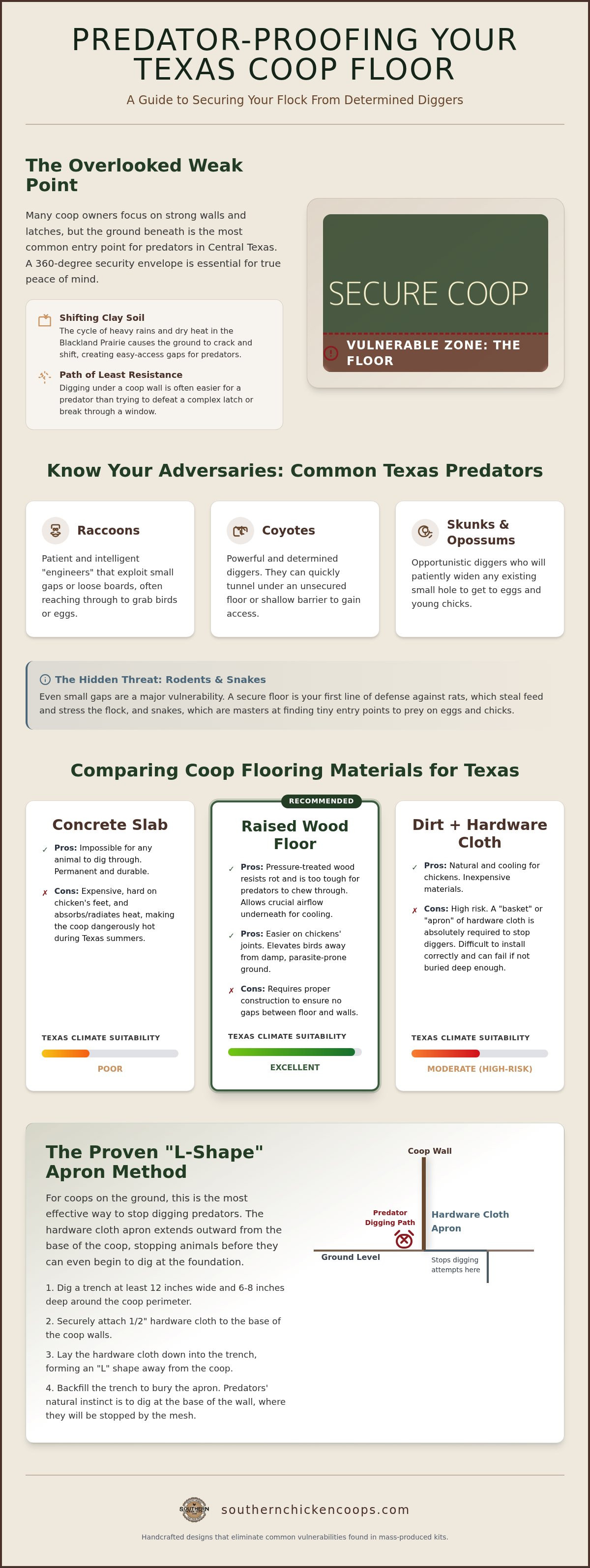
How to Predator-Proof Your Coop Floor: A Step-by-Step Security Guide
We've spent years refining our building process in McGregor, and we've learned that a secure coop is the result of many small, intentional choices. Building a predator proof chicken coop floor Texas varmints can't breach takes patience and the right materials. We want to share the exact steps we take to ensure every flock we protect stays safe from the ground up. It's about more than just blocking a hole; it's about outsmarting the animals that have all night to test your work.
- Step 1: Choose your base. We recommend a raised wood floor for the best airflow, but if you prefer a ground-level coop, you must install a full hardware cloth "basket" across the entire bottom.
- Step 2: Install the apron. This is your primary defense against diggers. Use the L-shape method to create a barrier that extends both down and away from the coop.
- Step 3: Secure the perimeter. Don't just tack the wire down. Use heavy-duty fasteners to marry the hardware cloth to the structural frame of the coop.
- Step 4: Add a dig-stop layer. Backfill your apron trench with heavy gravel or large river stones. This adds a physical weight that discourages animals from even trying to start a tunnel.
- Step 5: Regular inspections. Every time you collect eggs, take a quick walk around the base. Look for fresh dirt mounds or loose staples that might indicate a predator has been "testing" your defenses.
If you'd rather have us handle the heavy lifting and precise measurements, you can explore our custom chicken coops designed with these exact security steps in mind.
The L-Shaped Hardware Cloth Apron
The L-shaped apron is a master artisan's secret for stopping coyotes and stray dogs. You should bury your hardware cloth 6 to 12 inches deep, then bend it at a 90-degree angle so it extends 12 inches out away from the coop. When a predator approaches the wall and starts to dig, they hit the wire and don't have the "logic" to back up a foot and try again. We make sure to secure this apron directly to the coop’s base trim with galvanized screws and washers so there's no way to pull the wire away from the wood.
Sealing the Gaps
Rodents and snakes are much smaller but just as dangerous to your peace of mind. We use metal flashing along the corners of our floors to prevent rats from chewing their way into the coop. It's also vital to check for any openings using the "thumb rule." If you can fit your thumb through a gap, a Texas rat snake can likely get through it too. To keep the wire from being pried up, we recommend placing your heavy-duty staples or screws every 1 to 2 inches along the entire frame. This tight spacing ensures a predator proof chicken coop floor Texas wildlife won't be able to bypass.
Handcrafted Security: Why The Polka’s Floor Design Protects Your McGregor Flock
We've shared the technical steps and the local challenges, but seeing these details come together in a finished home is where the real peace of mind begins. Our flagship model, The Polka, was born right here in McGregor to solve the very problems we've discussed. It is a 6x12 sanctuary designed to be the ultimate predator proof chicken coop floor Texas birds can depend on. Unlike mass-produced kits that arrive in flat boxes with thin, stapled floorboards, we hand-build every foundation with the same care we'd use for our own family flock at Bird and Bee Farm.
When you choose a handcrafted coop, you are eliminating the vulnerabilities that predators love to exploit. Cheap kits often use untreated wood or flimsy panels that warp in our humidity or crack under the weight of a determined digger. We've seen too many folks lose their birds because a floor simply couldn't hold up. Our floors are solid, heavy, and integrated into the frame to ensure there are no weak points. Plus, we handle the logistics for you. Our professional delivery service brings your new coop directly to your prepared, level lot, making the transition "move-in ready" for your hens. This eliminates the DIY guesswork and ensures your predator proof chicken coop floor Texas foundation is set correctly from day one.
Built to Last in Central Texas
We select materials that don't just look good; they survive the relentless Texas sun and the pests that follow it. Every joint is tight, and every fastener is placed with the knowledge that a life depends on it. This level of stewardship is at the heart of our custom chicken coops Texas families trust. There is a special kind of confidence that comes from knowing exactly who built your coop and where the materials came from. We aren't a big corporation; we're your neighbors, and our integrity is built into every floorboard.
Take the Next Step for Your Flock
Investing in a professionally built floor might seem like a bigger step up front, but it saves you the heartbreak and cost of flock replacement down the road. A secure foundation is a "set-it-and-forget-it" solution that lets you enjoy the homesteading lifestyle without the midnight worry. We'd love for you to come by our shop in McGregor to run your hand over the wood and see the craftsmanship for yourself. We're always happy to talk chickens and help you find the right fit for your backyard. Browse our handcrafted coops and secure your flock today! We look forward to helping you protect what you love and ensuring your birds have a safe, cool, and beautiful place to call home.
Building a Foundation of Safety for Your Birds
Your journey into homesteading should be filled with the joy of fresh eggs and the quiet company of a happy flock, not the constant worry of what might be digging under the coop at night. We've seen how a predator proof chicken coop floor Texas weather won't ruin is about more than just wire; it is about choosing materials that breathe in the heat and stay firm when our clay soil shifts. By focusing on a secure 360-degree envelope and using proven methods like the L-shaped hardware cloth apron, you are giving your birds the protection they deserve.
At Southern Chicken Coops, we bring this level of stewardship to every project we touch. We're a family-owned and operated team in McGregor, and we take great pride in building our signature 6'x12' Polka model with the integrity your flock needs. Each coop is handcrafted right here in Central Texas to ensure it stands up to both the "varmints" and the summer sun. If you're ready to trade nighttime anxiety for a permanent, beautiful home for your hens, we're here to help. Secure your flock with a handcrafted Texas coop from Southern Chicken Coops and enjoy the peace of mind that comes with expert craftsmanship. We look forward to welcoming you into our community of local keepers.
Frequently Asked Questions
Is a concrete floor better than a wood floor for a chicken coop in Texas?
Wood is generally our preference for a predator proof chicken coop floor Texas climate demands. While concrete is nearly impossible to dig through, it acts as a heat sink that stays warm long into the night. A raised wood floor allows for vital air circulation that helps keep your hens cool during those 100-degree McGregor summers while still providing a solid barrier against local wildlife.
How deep do I need to bury wire to stop a coyote from digging into my coop?
We recommend burying your hardware cloth 6 to 12 inches deep and extending it 12 inches outward in an "L" shape. This configuration is highly effective because it confuses coyotes and stray dogs. When they try to dig right against the coop wall, they hit the horizontal wire and don't have the logic to back up and start a new hole further away.
Can snakes get through a hardware cloth floor?
Most adult snakes are stopped by 1/2-inch hardware cloth, but very small snakes can squeeze through tiny openings. If you have a significant problem with small snakes in your area, using 1/4-inch hardware cloth offers a much tighter barrier. It is also vital to ensure the wire is stapled tightly every 2 inches along the frame so there are no gaps for them to slide through.
Will a solid wood floor make my coop too hot in the summer?
A solid wood floor won't make your coop too hot as long as the structure is raised off the ground. Lifting the coop creates a shaded breeze-way underneath that helps lower the internal temperature. Unlike dirt or concrete, wood doesn't hold onto thermal mass, which means it cools down quickly once the Texas sun finally sets in the evening.
What is the best way to clean a predator-proof chicken coop floor?
The most efficient way to maintain your floor is by using the "deep litter" method or installing a vinyl topper over the wood. A smooth vinyl surface makes it very easy to scrape out old bedding and waste during your seasonal deep cleans. This approach keeps the structural wood protected from moisture and ensures the coop stays sanitary and comfortable for your birds year-round.
Should I use pressure-treated wood for my coop floor?
We always suggest using pressure-treated wood for the floor and frame to resist the rot and pests common in our region. It is a necessary choice for a predator proof chicken coop floor Texas owners want to last for many years. Modern treatment methods are safe for poultry, especially when you keep the wood covered with a thick, dry layer of pine shavings or hemp bedding.
How often should I inspect my coop floor for predator damage?
You should do a quick visual check every day when you gather eggs and a more thorough inspection once a week. Look specifically for fresh dirt piles, loose staples, or any signs of chewing along the bottom trim. Catching a predator's "test dig" or a small gap early is the best way to prevent a successful nighttime attack on your flock.


