

Last August, a neighbor in McGregor shared a story that still tugs at our hearts; she walked out to her coop only to find her favorite lead hen had succumbed to the triple-digit afternoon. It is a tragedy we see too often when standard, store-bought coops turn into literal ovens under the relentless sun. Understanding how to house chickens in Texas heat is more than just a hobbyist's chore. It is a matter of stewardship and protecting the lives of the animals entrusted to our care.
We agree that the combination of 100-degree days and Central Texas humidity makes cooling a unique challenge; a 98-degree day in high humidity is often more dangerous for a hen than a dry 105-degree afternoon. You deserve the peace of mind that comes with a resilient, handcrafted home for your flock. This guide promises to teach you the essential structural designs and daily management strategies required to keep your birds safe and productive. We will preview everything from natural airflow secrets that keep interiors 10 to 15 degrees cooler to the specific heat-tolerant breeds that can still provide 280 eggs a year through a Texas summer. Let's ensure you never have to face a heat-related loss again.
Key Takeaways
- Understand why Central Texas humidity makes panting less effective for your birds and how to recognize the early signs of heat stress.
- Learn to position your coop to catch the South/Southwest prevailing winds while using "High-Low" ventilation to pull hot air out naturally.
- Discover why structural choices like high ceilings and reflective roofing are essential for keeping your flock's home 10 to 15 degrees cooler.
- Master the daily "cool water" protocols and learn how to house chickens in Texas heat without letting misting systems create a swampy environment.
- Explore the long-term value of investing in a handcrafted, climate-resilient coop built right here in McGregor to withstand our unique weather.
Understanding Heat Stress in the Central Texas Climate
We know that summer in Central Texas isn't just a season; it's a test of endurance for every living thing on the property. For those of us dedicated to Poultry farming at home, that test becomes a sacred duty. Heat stress happens when a hen's internal temperature rises because she can't shed body heat fast enough. Since chickens don't have sweat glands, they rely on panting to stay cool. In our neck of the woods, the high humidity levels around Waco and McGregor often block this evaporative cooling. When the air is already thick with moisture, the dampness from a hen's breath has nowhere to go. This is the primary hurdle when learning how to house chickens in Texas heat.
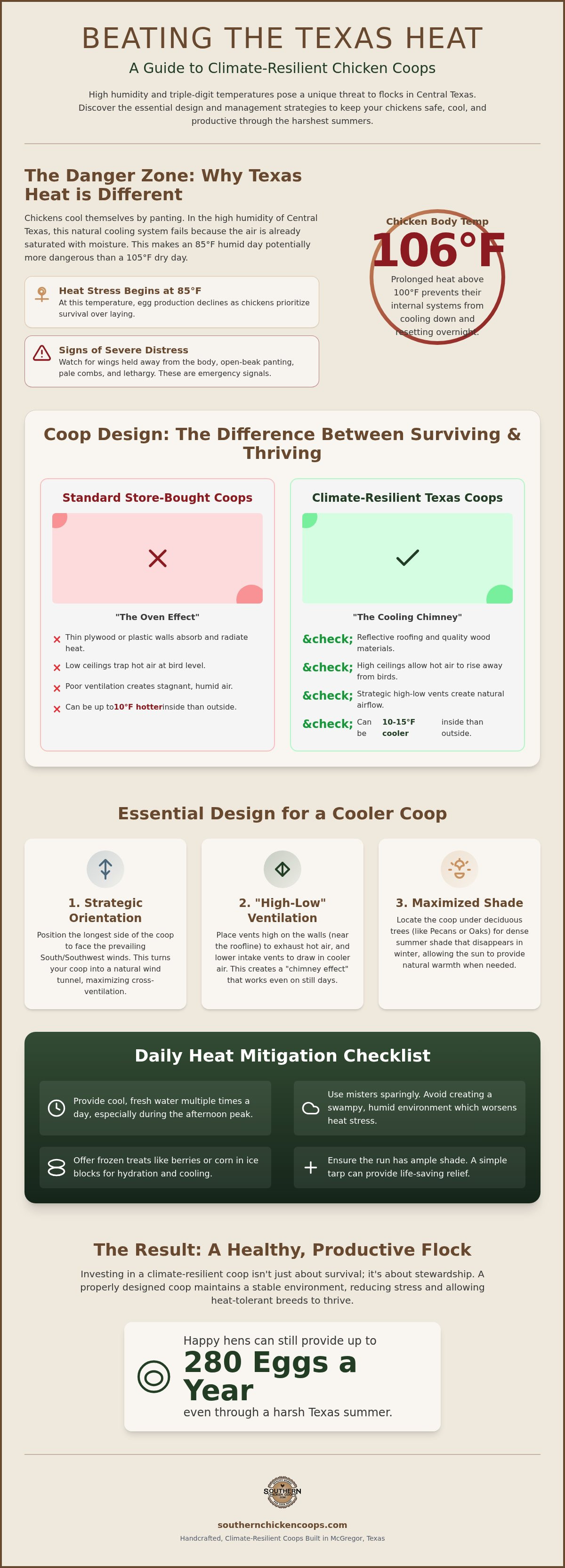
Once the thermometer hits 85°F, your flock enters what we call the "Danger Zone." You'll likely notice egg production starts to slip first. Their bodies are smart; they'll prioritize survival over laying every single time. If the heat continues to climb, you'll see clear signs of distress. Watch for hens standing with their wings held away from their bodies, open-beak breathing, or combs that look unusually pale and floppy. If a bird becomes lethargic or stops moving when you approach, she's likely in the middle of a life-threatening emergency.
The Threshold of Heat Exhaustion
A chicken’s normal body temperature sits right around 106°F. When outdoor temperatures stay above 100°F for days on end, their internal systems never get a chance to reset. We've found that nighttime cooling is just as important as daytime shade. If the coop stays at 85°F all night long, the bird's heart rate remains elevated. This cumulative stress is what often leads to sudden losses on the third or fourth day of a long heatwave. Our local humidity requires specialized airflow that actually moves the heavy, damp air out of the nesting and roosting areas rather than just swirling it around.
Why Standard Store-Bought Coops Fail in Texas
Most coops you'll find at big-box stores are built for milder climates or colder northern winters. They often use thin, treated plywood or even plastic panels that create a literal "oven effect" under the Texas sun. These structures usually lack the height needed to let heat rise away from the birds. When chickens are cramped in a small space, their own body heat adds to the ambient temperature, making it feel 10 degrees hotter inside than it is outside. To truly protect your girls, you need to look beyond basic kits and consider a durable chicken coop hot climate guide to understand what materials actually stand up to our sun. We've seen how a few extra feet of ceiling height and the right building materials can make the difference between a thriving flock and a tragic afternoon.
Strategic Coop Orientation and Natural Airflow
When we sit down with families to discuss how to house chickens in Texas heat, we always start with a compass. Proper orientation is the first line of defense against the sun. In Central Texas, our saving grace is the prevailing wind that typically rolls in from the South and Southwest. By facing the longest side of your coop toward these breezes, you transform a stagnant box into a wind tunnel. Experts at the Texas A&M AgriLife Extension emphasize that moving air is vital because it helps break the "heat envelope" surrounding a bird's feathers.
We also utilize what we call "High-Low" ventilation. This relies on the simple fact that heat rises. By placing vents near the roofline and intake openings lower down, you create a natural chimney effect that exhausts hot air even on still days. The 6x12 footprint of our Polka model is specifically designed to maximize this movement. Its elongated shape allows for a greater surface area to catch the wind compared to a square structure. We also recommend placing your coop near deciduous trees like Pecans or Oaks. These provide a thick canopy of shade during the summer but drop their leaves in the winter to let the warming sun reach your flock.
Harnessing the Texas Breeze
Physics plays a big role in keeping your hens comfortable. Cross-ventilation only works if air has a clear path to enter and exit. We've found that aligning large doors with opposing windows creates a pressure difference that pulls fresh air through the entire space. During our intense July and August stretches, many of our neighbors replace solid panels with heavy-duty hardware cloth. This allows for maximum airflow while keeping the structure secure. If you're looking for a permanent solution, our custom chicken coops are built with these airflow patterns in mind from the very first board.
The Importance of Elevation and Ground Clearance
Texas soil can become a massive heat sink by mid-afternoon. If a coop sits directly on the ground, that radiant heat transfers through the floor and keeps the interior temperature elevated long after the sun goes down. We build our coops with significant ground clearance to allow air to circulate underneath the structure. This creates a pocket of cooler air that acts as a natural insulator. It also provides a shady "porch" where your hens can dust bathe in the cool earth. Just remember that an open floor requires extra security, so be sure to check our guide on a predator proof chicken coop floor Texas to keep your girls safe from more than just the heat.
Structural Design Features for Maximum Cooling
When we build a coop in McGregor, we aren't just making a box; we're crafting a climate-controlled sanctuary. A coop’s thermal mass determines whether it stays comfortable or becomes a heat trap. We’ve found that handcrafted wood is far superior to the thin plastic or metal used in mass-produced kits. Wood naturally resists heat transfer; it doesn't bake in the sun like a plastic shell does. One of the most vital secrets in how to house chickens in Texas heat is providing plenty of vertical space. Our coops feature ceilings at least 6 feet high. This volume allows hot air to rise well above the roosting bars, keeping your hens in the cooler air below.
The Polka model’s 6x12 design provides the specific volume needed to keep air from becoming stagnant. By choosing a larger footprint and higher roofline, you create a natural buffer against the afternoon sun. This structural approach ensures that the interior stays significantly cooler than the outside ambient temperature, protecting your birds when they need it most.
Roofing and Insulation Tactics
The roof is your first line of defense against the Texas sun. We strictly avoid standard asphalt shingles because they act like a heat sponge, soaking up energy and radiating it downward. Instead, we use reflective materials or integrate radiant barriers. These barriers can reflect a vast majority of radiant heat away from the structure. As noted in the guide on Hot Weather Management of Poultry, proper insulation and ventilation are the two pillars of summer survival. We also design our roofs with deep overhangs. These ensure the coop walls stay in the shade for most of the day, preventing the wood from heating up in the first place.
Hardware Cloth vs. Solid Walls
Ventilation shouldn't stop at a single window. Our Polka model is built for 360-degree airflow. We replace large sections of solid wall with heavy-duty hardware cloth. This provides the security your flock needs against predators like raccoons or snakes while allowing every stray breeze to pass through. By designing for maximum open-air space, we ensure that body heat and humidity never have a chance to settle. It's about finding that perfect balance between a fortress and a breezy porch. When you design for airflow in a semi-custom build, you're ensuring that even on the stillest August days, your hens have access to fresh, moving air.
Daily Management: Hydration and Heat Mitigation
While structural design is your foundation, daily stewardship is what keeps your flock thriving through a Central Texas summer. Knowing how to house chickens in Texas heat includes mastering the small, daily rhythms that prevent core temperatures from spiking. We recommend implementing a "cool water" protocol. During our peak heat hours, usually between 2:00 PM and 6:00 PM, refreshing your waterers with fresh, cool liquid is essential. Warm water isn't just unappealing to a hen; it fails to help her shed internal heat effectively.
Be cautious with misting systems in our region. While they work wonders in arid West Texas, our humidity can turn a misted coop into a swampy sauna if the air isn't moving fast enough. If you use them, ensure they're positioned in high-airflow areas and only run during the hottest part of the afternoon. Another simple tip is managing your litter. We love deep bedding for winter warmth, but in July, that thick layer of straw or wood shavings acts as an insulator, trapping heat against the floor. Scraping it down to a thin one-inch layer helps the floor stay cooler and prevents the litter from composting and generating its own heat.
Hydration Strategies for 100-Degree Days
Hydration goes beyond just filling the bucket. On those brutal 100-degree days, we often add electrolytes to the waterers. This helps combat the mineral loss that occurs when hens are panting heavily. Always place your waterers in the deepest shade available. If the sun hits a plastic waterer, the temperature of the liquid can climb to 110 degrees within an hour. Refreshing the water three times a day might feel like a chore, but it's a simple act of devotion that saves lives. You can also offer frozen treats like watermelon or cucumbers; these snacks provide both hydration and a way to lower their core temperature from the inside out.
Emergency Cooling Tactics
Sometimes, the heat is simply too much, and you need to step in. We suggest creating "cool zones" by placing shallow pans of water where hens can stand. Since chickens lose heat through their feet and combs, a quick soak can lower their core temperature rapidly. You can also use the ice block method by freezing gallon jugs of water and placing them inside the coop. The hens will often lean against these to cool down. If you see a bird that is unresponsive or panting with her eyes closed, it's time to bring her into a climate-controlled space immediately. If you want a home for your flock that makes this daily management easier, consider one of our custom chicken coops built for McGregor's toughest days.
Investing in a Heat-Resilient Texas Chicken Coop
Choosing a home for your birds is about more than just aesthetics; it's an investment in their safety and your peace of mind. We've spent years refining our designs right here in McGregor to ensure they stand up to the specific demands of our climate. When you consider how to house chickens in Texas heat, the long-term ROI of a well-built structure becomes clear. A cheap, mass-produced coop might last a season or two before the sun warps the wood and the heat makes it uninhabitable. A handcrafted coop is built to endure, providing a natural heat buffer that protects your investment for years to come.
Why Handcrafted Quality Matters
There is a world of difference between a product built for a price point and one built for Texas. Bill and Tina Drivdahl bring their own farm experience into every board we cut and every nail we drive. We understand that a coop isn't just a building; it's a sanctuary. Our designs, like the 6x12 Polka model, use heavy-duty materials that provide superior insulation compared to thin, imported kits. This craftsmanship ensures that your flock remains productive and healthy even when the mercury stays above 100 degrees for weeks. If you are planning your budget, you can find more details in our guide on how much does a custom chicken coop cost in Texas.
Getting Started with Your Custom Build
We believe in a neighborly approach to business. When you're ready to upgrade your setup, we're here to walk you through the process of ordering a Polka model or a semi-custom design tailored to your specific lot. Our team handles the heavy lifting with professional coop delivery throughout the McGregor and Waco areas. To ensure a smooth setup, we ask that your lot is level and prepared before we arrive. This foundation is crucial for the structural integrity and proper ventilation of the coop. We invite you to reach out for a consultation so we can help you design a home that honors the lifestyle you've chosen.
Before the next heatwave arrives, use this final checklist to see if your setup is truly ready:
- Ventilation: Do you have 360-degree airflow and high-low vents?
- Shade: Is the coop positioned to stay out of the direct afternoon sun?
- Roofing: Does your roof reflect heat or absorb it?
- Hydration: Are your waterers in deep shade and refreshed daily?
- Bedding: Have you reduced litter depth to prevent heat retention?
Creating a Sanctuary for Your Texas Flock
We've walked through the essential steps of keeping your birds safe, from the physics of cross-ventilation to the daily rhythms of hydration. Truly understanding how to house chickens in Texas heat means moving beyond temporary fixes and embracing a home built for resilience. Whether it's our signature 6x12 Polka model or a semi-custom design, a coop handcrafted right here in McGregor provides the thermal buffer your flock needs to stay productive through August. We believe that every hen deserves a home that keeps her 10 to 15 degrees cooler when the sun is at its peak.
As a family-owned and operated team, we take pride in being stewards of the homesteading lifestyle. We've seen firsthand how the right orientation and high-quality materials can turn a stressful summer into a season of abundance. You don't have to face the next heatwave with worry. We're here to help you build a sanctuary that honors your devotion to your animals and stands the test of time. View our handcrafted Texas coops and start your custom build today! We look forward to being your partners in creating a safe, beautiful home for your girls.
Frequently Asked Questions
What is the best temperature for a chicken coop in Texas?
Chickens are most comfortable when the air stays between 55°F and 75°F. Once the temperature inside the coop climbs above 85°F, their egg production often begins to drop as their bodies prioritize staying cool. In our region, we aim to keep the coop's interior 10 to 15 degrees cooler than the outside ambient air through proper insulation and high-low ventilation patterns.
Do chickens need fans in their coop during a Texas summer?
Fans are a helpful addition when the air is stagnant, but they don't lower the temperature like an air conditioner. Instead, they move air across the birds to help break the "heat envelope" trapped in their feathers. This is especially useful during our humid McGregor afternoons. Just ensure all cords are safely tucked away and the fan is out of reach of curious beaks.
How much ventilation does a chicken coop need for hot weather?
In our climate, you can almost never have too much airflow. A basic rule is one square foot of vent space for every ten square feet of floor area, but we prefer 360-degree ventilation. This level of openness is the secret to how to house chickens in Texas heat safely while ensuring that heavy, humid air doesn't settle in the nesting areas.
Is it better to have a wood or metal chicken coop in the heat?
Wood is the superior material for a Texas summer because it is a natural insulator. Metal coops act like conductors, soaking up the sun's energy and radiating that heat directly onto your flock. A handcrafted wooden coop stays much cooler to the touch and provides a stable thermal buffer that protects your birds when the local weather turns brutal.
Can chickens survive 105 degree weather in Central Texas?
Yes, chickens can survive 105-degree days if they have deep shade, moving air, and constant access to cool water. Without these three pillars, a hen can succumb to heat exhaustion in a matter of hours. We've seen well-managed flocks in Waco stay healthy through record-breaking summers because their owners prioritized structural cooling and proactive daily management protocols.
Should I use a mister system in my chicken run?
Misters can be helpful in the run, but we suggest using them with caution in Central Texas. Because our humidity is already high, adding more moisture can sometimes make it harder for chickens to cool themselves through panting. If you use them, place them in a well-ventilated area where the water can evaporate quickly, and never use them inside the coop itself.
How do I know if my chicken is suffering from heat stroke?
Watch for extreme lethargy, panting with an open beak, and wings held far away from the body. If a hen is unresponsive or her comb looks pale and shriveled, she is likely in a life-threatening crisis. In these cases, move her to a cool area immediately and dip her feet in cool water to help lower her core temperature as quickly as possible.
What breeds of chickens are most heat-tolerant for Texas?
Breeds like White Leghorns, Rhode Island Reds, and Barred Rocks are excellent choices for our climate. Leghorns are particularly resilient, often laying over 280 eggs a year even through a long Texas summer. These birds typically have larger combs and wattles, which act like natural radiators to help them shed body heat. Choosing the right breed is a foundational step in learning how to house chickens in Texas heat.


