

What if the hardest part of getting a chicken coop isn’t choosing one, but finding the time and confidence to put it together? A kit may look like a straightforward start, but the instructions, tools, and assembly become your responsibility. That’s why pre-built coops are better than kits for keepers who would rather prepare a good home for their flock than build one from parts.
There’s satisfaction in a hands-on project, and a kit can give you a role in the build. But it also takes time, planning, and basic carpentry skills. The Coop Score estimates that DIY coop construction can take 20 to 40 hours, so factor in the work as well as the materials when comparing options.
This guide looks at the practical trade-offs in time, effort, fit, and flexibility, so you can choose what suits your skills, schedule, flock, and Texas property. It also covers what to prepare before assembling a kit or receiving a completed coop. Southern Chicken Coops builds coops one at a time in McGregor and delivers completed structures to prepared, level lots, giving Texas keepers a ready-built option.
Key Takeaways
- Compare who handles construction, finishing, and placement to understand the work behind each option.
- Kit assembly time depends on the design, your experience, and how well you prepare the workspace.
- Decide whether hands-on control is worth the planning and assembly, or whether reducing on-site construction matters more.
- Before choosing, assess your flock’s needs, measure the intended site, and plan access for delivery or assembly.
- Understanding why pre-built coops are better than kits can help you weigh convenience against hands-on work and choose a practical fit for your Texas property.
Pre-Built Chicken Coops vs. Kits: What Work Does Each Option Involve?
The main difference is who turns the parts into a usable structure. A pre-built coop arrives as a completed building, while a kit arrives as components for the buyer to assemble. Kit contents and instructions vary, so the word “kit” doesn’t describe one standard building experience. Compare not only the coop but also the labor needed to get it ready for your flock.
A delivered coop leaves construction to the builder; a kit makes assembly the buyer’s job.
What does pre-built mean when buying a chicken coop?
A pre-built coop is constructed before delivery and brought to the property as a completed structure. You don’t have to assemble its main parts on site. Delivery and placement are separate from site preparation, however: the intended location needs to be ready before the coop arrives.
At Southern Chicken Coops, we handcraft each coop in McGregor, Texas, and deliver completed coops to prepared, level lots. The building work is done before the coop reaches your property. Your planning focuses on preparing the site and making sure there is a clear route to the intended spot.
That difference changes what you need to plan for. With a completed coop, consider where it will sit, whether the ground is ready, and how it will reach that location. A suitable site and clear access are important parts of the plan, even when you aren’t assembling the structure yourself.
What work does a chicken coop kit leave to the buyer?
A kit typically requires the buyer to turn packaged components into a finished coop. The details depend on the design and instructions. You may need to identify parts, organize the work area, follow assembly steps, and fasten components together. Tools, materials, finishing tasks, and difficulty vary from kit to kit, so read the instructions rather than assuming every package has the same requirements.
- Review the instructions and inventory the components before starting.
- Prepare a workspace and organize the parts for assembly.
- Follow the kit’s steps to join and fasten the components.
- Complete any finishing tasks specified in the instructions.
You’ll also need to fit the work around your available time, tools, and help. Careful assembly matters: follow the instructions and check that parts fit as you go, so you can address a mismatch before moving on. The kit’s own guidance is the best source for its specific assembly requirements.
Both options require a site plan. Choose where the coop will go, prepare a level location, and consider how the structure will reach that spot. The difference is whether your hands-on work is mainly preparing the property for a completed coop or assembling the structure itself. That’s a useful starting point for understanding why pre-built coops are better than kits for some keepers, while a kit may appeal to those who want to build.
How Pre-Built Coops and Kits Compare on Time, Assembly, and Customization
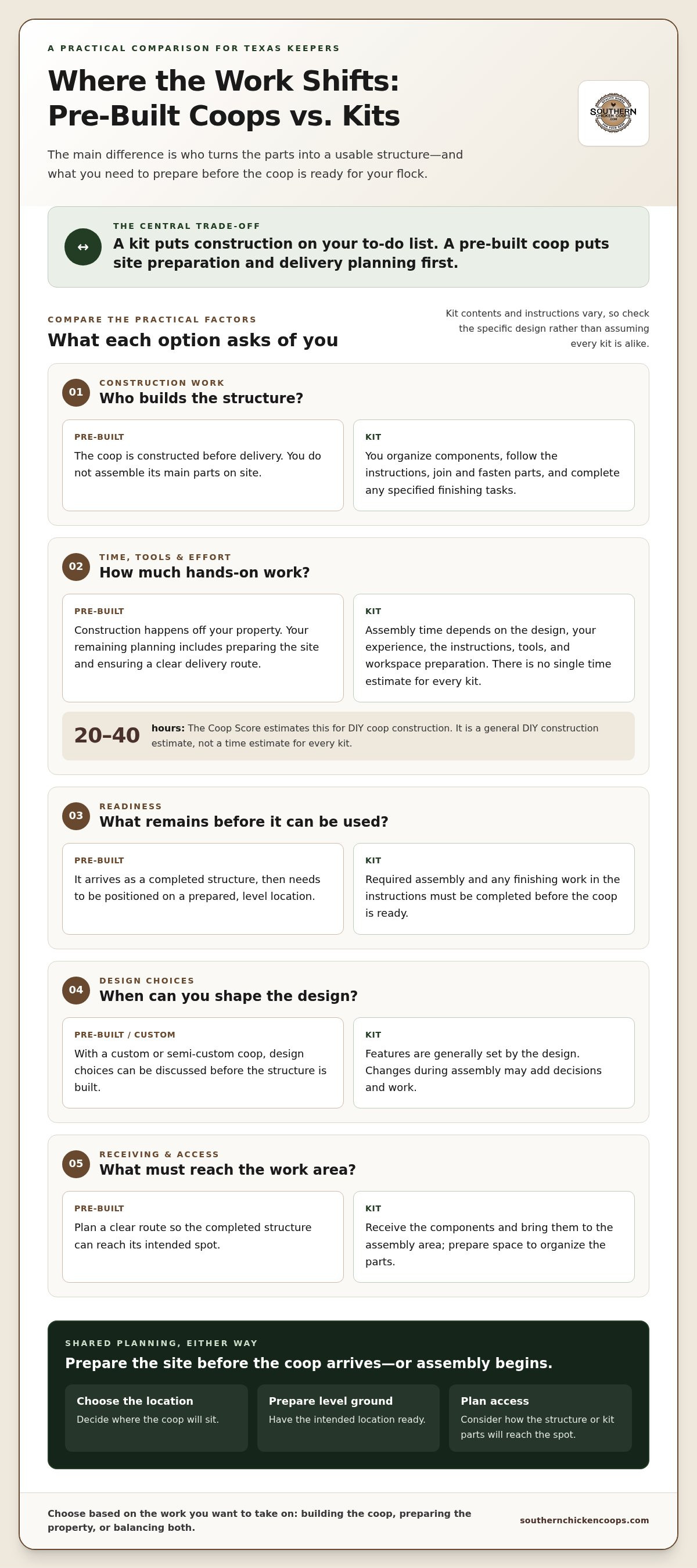
The practical difference is where the work happens and when design decisions are made. With a kit, you take on assembly. The time required depends on the kit’s complexity, your familiarity with the instructions and tools, and how well you prepare the workspace. A pre-built coop shifts construction off your property, but you still need to prepare the site and plan delivery access.
A completed coop changes your main task from building the structure to preparing for its arrival.
Customer labor: A kit buyer sorts parts, follows instructions, and assembles the coop. A pre-built coop avoids on-site construction, but the buyer still prepares the location.
Readiness: A kit needs its required assembly and finishing work before it is ready. A pre-built coop arrives as a completed structure and then needs to be positioned on the property.
Customization: A kit’s features are generally set by its design, though some buyers may consider changes during assembly. With a custom or semi-custom coop, design choices are made as part of the process.
Delivery responsibilities: Kit components need to be received and brought to the assembly area. For a delivered pre-built coop, the route and prepared placement site matter because the completed structure needs to reach its intended spot.
Assembly effort and the path to a usable coop
Kit assembly can be a satisfying project if you enjoy hands-on work and have space to organize the components. The instructions, required tools, and your experience all affect how the project goes, so there isn’t one reliable time estimate for every kit. Site preparation is a separate task for either option. With a pre-built structure, delivery and placement are also distinct steps: the coop still needs a prepared, level location and a workable route onto the property.
Ease of use matters alongside assembly. Penn State Extension Poultry Housing discusses access for cleaning and daily care, as well as material choices. Keep these practical needs in mind when comparing designs. A coop needs to work for the keeper’s routine as well as provide a home for the flock.
Customization before purchase versus changes during assembly
Customization depends on the design and the maker’s process. A kit may offer a defined layout, leaving you to assemble what’s provided. Changing components during construction can add decisions and work. With a semi-custom approach, you can discuss the design before the coop is built instead of relying on changes during assembly. Southern Chicken Coops builds handcrafted coops one at a time and offers semi-custom designs shaped around each project.
This distinction helps explain why pre-built coops are better than kits for buyers who value a completed structure and less on-site construction. Kits can suit people who enjoy building and want to participate in assembly. To explore a made-for-your-property option, see our handcrafted coop options.
Which Coop Option Fits Your Skills, Schedule, and Texas Property?
The right choice depends on more than whether you enjoy building. Consider how much time you can set aside, which tasks you want to handle, and how the coop will fit on your property. A kit can be rewarding if you want to assemble the structure. A pre-built coop may suit you better if you want to reduce construction on site and focus on preparing the location.
Texas properties vary, so assess your specific site rather than assuming one setup works everywhere. Look at the slope and firmness of the ground, where water may run after rain, how much sun reaches the area, and whether there is a clear route to the intended location. These checks help you plan a suitable spot for the coop.
When a coop kit may suit your plans
A kit may appeal if you enjoy hands-on projects and want to help build your flock’s home. Before choosing that route, make sure you have a suitable workspace, room to organize the parts, and time to work through the instructions carefully. Read the assembly guidance and consider whether the tools and tasks match your experience. If building sounds like part of the enjoyment, the extra effort may be worthwhile.
Plan around the rest of your property, too. Parts need a place to stay while you work, and the completed coop still needs a prepared location. Our guide to preparing a backyard for a chicken coop can help you think through the site before deciding how the structure will arrive.
When a pre-built coop may make more sense
If your schedule is full or you would rather not assemble a coop, a completed structure reduces the construction work you do on site. The property still needs preparation. Make sure the intended area is level and ready, and plan access so the coop can reach its intended position. Consider gates, turns, and the approach to the site before delivery.
That shift in workload is one reason why pre-built coops are better than kits for keepers who value a finished structure and less assembly at home. Southern Chicken Coops is a family-owned business in McGregor, Texas. We handcraft coops one at a time and deliver completed structures to prepared, level lots. Our overview of handcrafted chicken coops in Texas offers more context on this approach.
To choose, picture an ordinary week with the coop. Would you welcome time spent assembling it, or would you prefer a completed structure? Weigh that preference against the space, ground, access, and schedule you have. A kit isn’t automatically the wrong choice, and a pre-built coop still calls for planning. The better fit is the one that supports your flock and makes sense for your skills and property.
How to Compare a Coop Kit with a Finished Coop Before Deciding
Start your comparison with your flock and property, not the assembly method. Once you know what the coop needs to accommodate and where it can sit, you can decide whether kit assembly suits your schedule or a completed structure better fits your plans. Work through these checks, then compare the remaining responsibilities side by side.
- Consider your flock. Think about the space and daily access your birds will need, and whether your flock may change over time.
- Assess the site. Identify the intended location and prepare a level area. Consider how a completed coop could reach that spot, or where you could lay out kit components during assembly.
- Choose your workload. Decide whether you want to organize and complete the build yourself or receive a completed structure and focus on preparing the property.
- Compare the details. Look at what each option includes, what work remains, and how well the design suits your intended use.
Assess your site and the work you can take on
Walk the route from the property entrance to the coop’s planned location. Note gates, turns, overhead obstacles, and the condition of the ground. These details help you plan delivery access and placement. If you’re assembling a kit, consider whether you have a clear, organized workspace and the tools its instructions call for. Our chicken coop delivery in Texas guide offers more context for planning a completed coop’s arrival.
Compare what is finished, tailored, and left for you
For each option, write down what arrives complete and what you need to do before the coop is ready for your flock. Use a kit’s instructions to identify assembly tasks. A finished coop reduces that construction workload, but still requires a prepared site and planned placement. Then consider whether a set design meets your needs or whether a semi-custom design may suit your property and flock more closely.
Ask yourself:
- What assembly and finishing work remains, and what tools or workspace will I need?
- Which design details can be selected in advance, and what changes would require modifying the structure during assembly?
- How will the parts or completed coop reach the intended location?
- Is the placement area level and ready, and is the route clear?
For a size-specific point of reference, Southern Chicken Coops’ signature Polka model measures 6 by 12 feet. That gives you a concrete example to consider, not a one-size-fits-all answer. The 6x12 chicken coop guide can help you compare that size with your own needs. For a broader budgeting discussion, use our custom chicken coop cost guide rather than relying on a price comparison that may not reflect your project.
These checks make it easier to see why pre-built coops are better than kits for some buyers, while a kit may suit someone who welcomes the build. If a completed, handcrafted structure fits your plans, explore handcrafted coop options.
A Handcrafted, Delivered Coop: A Practical Alternative to Kit Assembly
Choosing a completed coop doesn’t mean skipping the thought and care involved in providing a good home for your flock. It means leaving construction to the builder and focusing your effort on the birds, the property, and the placement site. For keepers who don’t want a kit assembly project, a handcrafted coop delivered as a completed structure offers an alternative to buying parts and building at home.
What a handcrafted coop changes for the buyer
Southern Chicken Coops is a family-owned business based in McGregor, Texas. We build coops one at a time and deliver completed structures to customers’ prepared, level lots. Your role shifts from assembling the structure to planning where it will sit and preparing that location. Delivery and placement still call for planning, but the coop arrives completed rather than as a set of parts to assemble.
Our signature Polka model measures 6 by 12 feet. That gives you a specific size to consider, not a one-size-fits-all answer. Your flock’s needs and the space available on your property should guide the decision. A structure that works in one yard may not be right for another, so think through both your birds’ housing needs and the space you have.
Semi-custom designs offer another option when your plans call for a tailored approach. We shape the design around the project rather than treating every flock and property as identical. This can suit keepers who want a completed structure designed around their needs. It’s a practical alternative for people weighing why pre-built coops are better than kits, especially when reducing assembly work matters more than taking on a hands-on build.
Plan your next step with Southern Chicken Coops
Before settling on a design, take stock of your flock and walk the spot where you’re considering placing the coop. Check that the area is level and prepared, and plan the route a completed structure will take across your property. Preparing the location in advance helps make delivery and placement a smoother part of bringing your flock home.
- Consider the space your flock needs and how the coop will fit your property.
- Prepare a level placement area before delivery.
- Decide whether a signature design or a semi-custom approach suits your plans.
A coop should be a sound, welcoming home for the birds and a practical fit for the people caring for them. If a completed, handcrafted structure suits your plans, explore handcrafted chicken coop options.
Make Room for the Coop That Fits Your Plans
The best choice is the one that lets you begin caring for your flock without taking on work that doesn’t suit your schedule or skills. A kit can make sense if building is part of the enjoyment. If you’d rather focus on choosing a home for your birds and preparing its place, understanding why pre-built coops are better than kits can clarify your next step.
Picture the coop in your yard and the everyday care that will happen around it. Consider what you want to handle yourself, what you’d rather leave to the builder, and how the structure will fit your property. There’s no single right path for every keeper, only the one that makes sense for your flock and your life.
When you’re ready to explore a handcrafted option, explore chicken coops from Southern Chicken Coops. We’re ready to help you take the next step toward a thoughtful home for your birds.
Frequently Asked Questions
Are pre-built chicken coops worth it compared with kits?
They can be if saving assembly effort and receiving a completed structure matter more to you than building it yourself. Compare the full workload: organizing parts, following instructions, and completing the coop, versus preparing the site and planning delivery. For Texas flock owners with limited time or little interest in construction, those trade-offs help explain why pre-built coops are better than kits for some households.
How long does it take to assemble a chicken coop kit?
There’s no single assembly time for every kit. The project depends on the design, the clarity of the instructions, your experience, and whether the workspace and tools are ready before you begin. Read the assembly guide and note any steps that call for extra help or preparation before setting a start date. Allow enough time to sort parts and check each stage rather than rushing to finish.
Can a pre-built chicken coop be customized?
Yes, some pre-built coops can be tailored, depending on the maker’s design and process. Southern Chicken Coops offers semi-custom designs for Texas flock owners who want a coop shaped around their needs rather than a standard layout. Before deciding, write down the features that matter most for your birds and property. This helps separate essential needs from preferences.
Do pre-built chicken coops need to be assembled after delivery?
A pre-built coop arrives as a completed structure, so you don’t take on the kit’s main assembly work. Delivery and placement are still separate from preparing the site. Plan where the coop will sit and keep the approach to that location clear. Follow any care or setup guidance for the specific structure before introducing your flock.
What should I prepare before a chicken coop is delivered in Texas?
Prepare a level placement area and make sure the intended route is accessible. Walk it from the entry point to the coop’s location, noting narrow gates, sharp turns, overhead obstacles, or soft ground that could complicate access. Texas properties differ in terrain and layout, so assess your own site rather than assuming a familiar setup will work. Preparing the location helps delivery and placement go smoothly.
Is a chicken coop kit difficult for a beginner to assemble?
It depends on the particular kit and how comfortable you are reading instructions and working with tools. Review the parts list and assembly steps before starting, then decide whether the tools and workspace are manageable for you. If the instructions seem unclear or the work feels beyond your experience, a completed coop may be a more comfortable option than learning through a large build.
Can a kit or pre-built coop be placed on uneven ground?
A coop should be placed on a level, prepared area rather than left to sit unevenly. Sloped or irregular ground can make positioning more challenging, so assess the location before choosing a coop and plan how to prepare the site. Don’t assume assembly can compensate for a poor placement area. For a delivered structure, prepare the spot in advance; for a kit, include site work in your project plan.


