

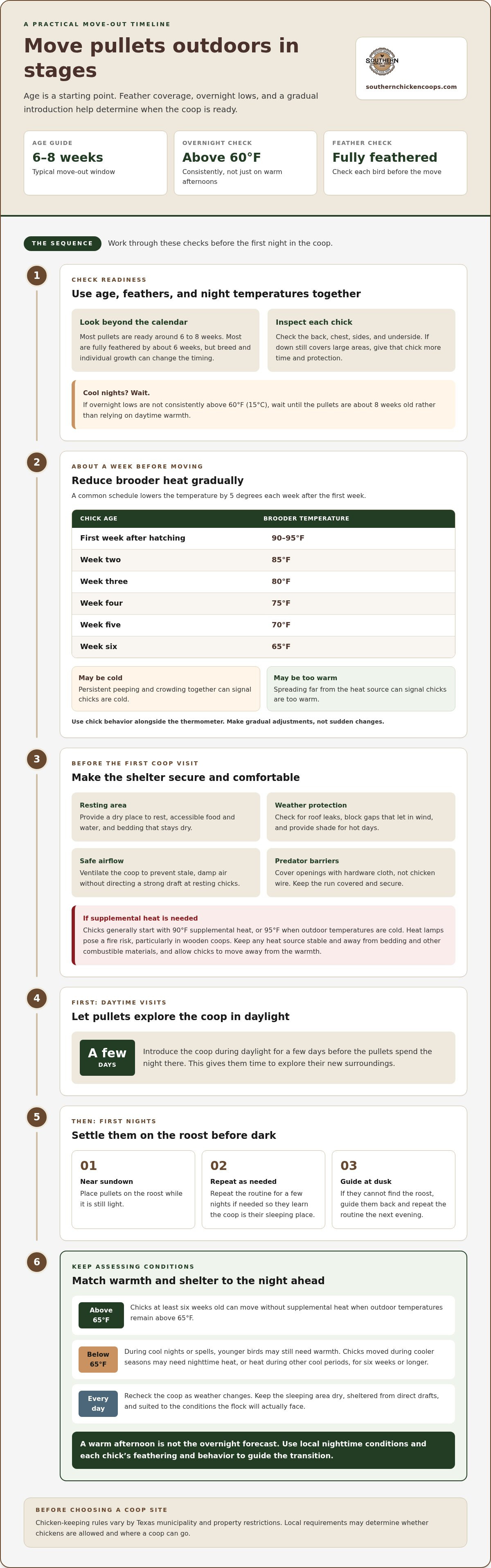
A sunny Texas afternoon isn’t the green light; the overnight low matters. Pullets are generally ready to move outside at about 6 to 8 weeks, when they’re fully feathered and nighttime temperatures stay consistently above 60°F (15°C). If nights remain colder, wait until they’re about 8 weeks old rather than judging readiness by daytime warmth alone. That’s the key to deciding when to move chicks to an outdoor coop in Texas.
It’s natural to look forward to moving your growing flock outdoors, but age alone doesn’t determine when to move chicks to an outdoor coop in Texas. Feather development and nighttime temperatures matter just as much, especially when warm days give way to cool Texas nights.
This guide explains how to weigh age, feathering, and nighttime conditions, then ease pullets into their new home. Use these practical checks to assess readiness and help young birds settle in comfortably.
Key Takeaways
- Use age as a starting point: pullets are generally ready around 6 to 8 weeks, but feather development and overnight conditions matter too.
- Look for full feather coverage before making the move; chicks with down still showing may need more time to stay warm.
- Watch nighttime lows, not just warm Texas afternoons. Consistently mild nights are an important sign that outdoor conditions are suitable.
- Ease the transition by letting pullets explore their coop during the day before they spend the night there.
- If nights are still cool, keep the chicks sheltered longer and reassess as they grow and feather out.
1. When Do You Move Chickens From Brooder to Coop?
Many pullets move from the brooder to a coop at around six to eight weeks. Treat age as a starting point: chicks also need sufficient feathers and suitable outdoor conditions. Some keepers move them at five or six weeks, while others wait longer. A gradual transition matters more than choosing the same birthday for every flock.
About a week before the move, start reducing brooder heat gradually. A common schedule lowers the temperature by five degrees each week after the first week. Use this guide:
- First week after hatching: 90-95°F.
- Week two: 85°F.
- Week three: 80°F.
- Week four: 75°F.
- Week five: 70°F.
- Week six: 65°F.
Watch how the chicks respond as the brooder cools. Persistent peeping and crowding together may mean they’re cold; spreading far from the heat source may mean they’re too warm. Make gradual adjustments, not sudden changes, and use their behavior alongside the thermometer to gauge comfort.
Introduce the coop in stages. Let pullets explore it during daylight for a few days before they sleep there. Then place them on the roost near sundown, while it’s still light, and repeat for a few nights if needed. This helps them recognize the coop as their sleeping place and find their way around before dark.
Chicken-keeping rules in Texas vary by municipality and property restrictions. Local requirements may determine whether chickens are allowed and where a coop can go, so review the rules for your address before choosing a site.
Protect young chicks by covering openings with hardware cloth, not chicken wire, which is not the recommended barrier against predators such as raccoons. Keep the run covered and secure to protect small pullets from predators and prevent escapes.
Before moving the flock, prepare the coop with accessible food and water, a dry resting area, and secure doors and openings. On moving day, settle the chicks inside calmly and watch as they explore. If they can’t find the roost at dusk, guide them back and repeat the routine the next evening.
2. Outdoor temperatures and supplemental heat
The season alone can’t tell you whether a coop is ready for chicks in Texas. Spring, summer, and fall bring different nighttime conditions across the state, so base the move on local temperatures and the shelter available. Choose a stretch of mild nights rather than relying on a warm afternoon or the season’s name.
Chicks at least six weeks old can move without supplemental heat when outdoor temperatures remain above 65°F. If nights or cool spells fall below that level, younger birds may still need warmth. Chicks moved out during cooler seasons may need nighttime heat, or heat during other cool periods, for six weeks or longer.
Provide supplemental heat only when conditions call for it. Chicks generally start with supplemental heat of 90°F, or 95°F when outdoor temperatures are cold. As they grow and feather, reduce warmth gradually and observe their behavior. Huddling together can signal that they’re cold; avoiding the warm area can mean they need less heat.
Consider fire safety when choosing heating equipment. Heat lamps pose a fire risk, particularly inside wooden coops, so don’t treat them as the default. Keep any heat source stable and away from bedding and other combustible materials, and position it so chicks can move away from the warmth. Follow the equipment’s safety instructions and check the setup regularly.
A coop should provide a dry, sheltered resting place and enough ventilation to prevent stale, damp air. Before moving chicks, check the roof for leaks, close gaps that let in wind, and make sure the run has shade for hot days. Keep bedding dry, since dampness can make a cool night harder on young birds.
Match the setup to the weather your flock will actually face:
- For heat, provide shaded areas and airflow without directing a strong draft at resting chicks.
- For cold, ensure the coop blocks direct wind and provides a dry place to settle.
- For rain, check roof coverage and prevent water from pooling in the resting area.
- For variable conditions, make sure chicks can move between sheltered and less-warm areas.
Before bedtime, check the coop after the day’s weather has shifted. A sunny afternoon can turn into a cool night, so chicks need a protected place to rest. Adjust shade, ventilation, and shelter as conditions change, keeping the sleeping area dry and free from direct drafts.
There is no single best season across Texas, since nighttime conditions vary by location and season. Choose a stretch of mild local nights; chicks at least six weeks old can go without supplemental heat when outdoor temperatures remain above 65°F.
3. Chick age and feather development
Age gives you a useful starting point, but feathers show how well a chick can handle life beyond the brooder. Most chicks are ready to move outside at about 6 to 8 weeks, when feather development is well advanced. Most are fully feathered by around 6 weeks, though breed and individual growth can shift that timing. Look at each bird, not only the calendar.
During the first 1 to 4 weeks, chicks are generally still in the early chick stage and rely more heavily on warmth. As they grow, adult feathers replace their soft down. By 5 to 6 weeks, most of a chicken’s body is covered with growing adult feathers. This change helps them retain warmth, but growing feathers are not always full coverage.
Check each chick’s back, chest, sides, and underside. If down still covers large areas, give it more time to feather out. Compare birds within the group, too. Chicks from the same hatch can develop at different rates, so the smallest or least-feathered birds may need extra protection even when their flockmates look ready.
- Mostly down: Wait; the chick still has substantial soft covering.
- Adult feathers growing across the body: Reassess coverage and the bird’s overall development.
- Full feather coverage: Consider the move alongside outdoor conditions and nighttime temperatures.
Breed matters. Silkie chicks, for example, may feather differently from other chickens, and birds within a breed can vary. A Silkie hen may begin distancing herself from her chicks at approximately five weeks, but that behavior alone doesn’t mean every chick is ready for an outdoor coop. Consider visible feather coverage and age together.
Don’t confuse “pullet” with fully grown. Pullets and cockerels aren’t considered mature until they reach 16 weeks, but coop readiness comes earlier for many chicks. The decision is about developing feathers and the conditions they’ll face, not waiting until a bird reaches maturity. A 7-week-old, fully feathered pullet and a same-age chick still showing extensive down may need different plans.
Assess each chick before the move. Note its age, inspect its feather coverage, and compare its development with its flockmates. If one bird is noticeably behind, don’t rely on the group’s average growth. Reassess it as its feathers develop, and weigh its readiness alongside the shelter and outdoor conditions.
4. Nighttime temperatures for moving chicks outdoors
Nighttime lows can matter more than a pleasant Texas afternoon when deciding whether pullets can sleep outside. Wait until outdoor nighttime temperatures are consistently above 60°F (15°C) before moving them outdoors. A single mild evening isn’t the same as a dependable run of suitable nights, so consider the pattern rather than one reading.
Low 50s°F can be too chilly for recently moved pullets. Chicks have huddled together and appeared cold after nighttime temperatures dipped into the low 50s. Huddling is a useful warning to take seriously, not a sign that the birds have settled comfortably. Their response helps reveal how the coop’s actual nighttime conditions are affecting them.
Use overnight lows to guide your decision. Check the forecast for the coming nights and compare it with conditions around the coop. A reassuring daytime high says little about the temperature where young birds sleep. If nighttime temperatures are still falling below the recommended threshold, delay moving them outdoors overnight.
Before settling on a date, follow a simple routine:
- Review the forecast’s overnight lows, not just its daytime highs.
- Use a thermometer near the chicks’ resting area to understand coop conditions.
- Look for consistently mild nights above 60°F (15°C).
- Keep pullets indoors until 8 weeks of age if outdoor temperatures are lower.
After the move, observe the birds at bedtime and again in the morning. Pullets pressed tightly together may be cold, especially if the night dipped into the low 50s. Check whether they can settle in a dry, sheltered part of the coop. Their position and behavior give you practical clues about whether the sleeping area is protecting them from the conditions outside.
Don’t judge the flock by its most confident bird. One pullet may explore and settle quickly while another remains huddled or avoids the sleeping area. Pay attention to the whole group, and respond to signs that several birds are uncomfortable. If cooler nights return, bring the pullets back into sheltered conditions until outdoor nighttime temperatures are consistently above 60°F (15°C).
Plan the transition around night, not noon. Letting chicks explore the coop during daylight can help them learn the space, but that daytime introduction doesn’t replace suitable overnight temperatures. When the forecast shows a dependable stretch above 60°F (15°C), the conditions are more suitable for a move. If temperatures stay lower, waiting until 8 weeks gives the pullets more time before they sleep outside.
5. What temperature should chicks reach before moving outside?
For outdoor nights, use a consistent low above 60°F (15°C) as the practical threshold. This means the air around the coop, not a temperature the chick must “reach.” If outdoor temperatures stay lower, keep chickens indoors until they reach 8 weeks of age.
A related guideline applies to chicks at least 6 weeks old: they can move without supplemental heat when outdoor temperatures remain above 65°F. These figures describe different conditions. The 60°F threshold is a nighttime guide for moving pullets, while the 65°F guideline concerns moving chicks without extra heat. Don’t treat either number as a substitute for checking feather development and the coop itself.
Measure where the birds will sleep. A weather reading far from the coop may not reflect the temperature inside its resting area. Check an outdoor thermometer near the coop, then compare nighttime readings with the forecast. Look for a consistent pattern above 60°F (15°C), not one unusually warm evening followed by colder nights.
Use this decision sequence before moving chicks:
- Confirm the pullets are old enough and have developed suitable feather coverage.
- Check the expected nighttime lows, using 60°F (15°C) as the threshold.
- If temperatures remain lower, keep chicks sheltered until they reach 8 weeks.
- For chicks at least 6 weeks old, consider whether nights remain above 65°F without supplemental heat.
- Introduce the coop during daylight before relying on it for overnight shelter.
These checks help avoid a common mistake: assuming a warm daytime high means nights are suitable. A chick may explore comfortably in afternoon sunshine but struggle as the air cools overnight. If temperatures fall below the threshold, waiting gives chicks more time to develop before they face outdoor nights.
Watch the flock after the move, especially at bedtime and early morning. Birds huddling tightly may be reacting to cold. Check the thermometer, shelter, and forecast lows, then adjust your plan rather than assuming one night tells the whole story. Temperature readings and chick behavior are most useful together.
Choosing a coop that suits your flock and Texas conditions can make it easier to prepare a sheltered outdoor home. Explore custom coop options for your flock as you plan the transition.
Southern Chicken Coops: Custom Chicken Coops
Southern Chicken Coops builds custom chicken coops for keepers preparing a secure, comfortable outdoor home. If you’re planning for pullets to move outside, a coop designed around your flock and property can help make that transition practical. The 6'x12' Polka model is designed for durability and functionality in the Texas climate, and semi-custom designs can be tailored to your needs. Coop delivery is also available.
Think about how your coop will shelter birds from local weather and provide a secure place to roost. Those details matter as young chickens leave the brooder and begin settling into their outdoor home. If you’re planning a coop for your flock, contact Southern Chicken Coops to discuss custom options.
Prepare a Home for the Flock You’re Raising
Moving pullets outdoors is also a chance to plan beyond their first nights. Consider how your flock may grow, where it will spend the day, and what shelter will suit your property over time. A well-planned coop can become a lasting part of your backyard routine, not just a temporary stop after the brooder.
If you’re planning when to move chicks to an outdoor coop in Texas, a well-considered coop can support that next stage. Southern Chicken Coops offers custom chicken coops and coop delivery, helping you plan a home around your flock and setting. To talk through your coop plans, contact Southern Chicken Coops. Take the next step at a pace that feels right for your birds, and enjoy watching them settle into a home built for their future.
Frequently Asked Questions
When Are Pullets Ready to Move Outside?
Pullets are generally ready around 6 to 8 weeks, once feathered and outdoor conditions are suitable. To decide when to move chicks to an outdoor coop in Texas, consider nighttime lows as well as age. A fully feathered pullet may be ready before a flockmate still covered in down. Make the decision bird by bird, and ensure each chick can reach sheltered space, food, and water after moving.
When Do You Move Chickens From Brooder to Coop?
Move chickens from the brooder when their development and outdoor conditions support the change, often around 6 weeks or later. Start with daylight visits so they can explore the coop without facing an unfamiliar space at bedtime. For example, let chicks find the waterer and resting area before their first overnight stay. If they’re still dependent on brooder warmth, keep them in the brooder longer.
How old should chicks be before moving to an outdoor coop?
Most chicks move outdoors around 6 to 8 weeks, while bantams should wait until 8 weeks. Age alone doesn’t settle the question: feathering and nighttime temperatures also matter. A fully feathered chick in mild weather may be ready sooner than a less-feathered bird of the same age. If outdoor temperatures are lower, keep chicks indoors until they reach 8 weeks and reassess their development.
How do you acclimate chicks to outdoor temperatures gradually?
Lower brooder heat gradually, then give chicks time to explore the coop during daylight before moving them there overnight. Let them learn where food, water, and shelter are, then return them to their usual space. Watch whether they huddle, move away from warmth, or settle comfortably. Make the overnight move only once they’ve had time to get familiar with the coop.
How warm does a chick brooder need to be by age?
Start brooder temperatures at 90-95°F during the first week after hatching, then reduce warmth by five degrees each week. That means 85°F in week two, 80°F in week three, 75°F in week four, 70°F in week five, and 65°F in week six. Use the schedule as a guide and observe chick behavior, since huddling or moving away from heat can signal discomfort.
What nighttime temperatures are safe for chicks in Texas?
Wait for outdoor nighttime temperatures to remain consistently above 60°F (15°C) before moving pullets outside. Nights dipping into the low 50s°F can leave recently moved chicks huddling as they try to stay warm. If temperatures remain below the threshold, keep chicks sheltered until they reach 8 weeks. Check conditions near the coop’s sleeping area, since that’s where the birds experience the night.
How can you tell chicks are fully feathered and ready for the coop?
Look for adult feathers covering the body rather than large areas of soft down. Check the back, chest, sides, and underside, and compare each chick with its flockmates. Most of a chicken’s body has growing adult feathers by 5 to 6 weeks, but development varies by breed and bird. Feather coverage is one readiness sign, not a reason to overlook age or cool nighttime conditions.


