

A ready-made coop can save build time, while a custom-built coop can better suit your flock and property. In the Tractor Supply coop vs. custom built coop comparison, the practical choice depends on your assembly skills, how much work you can take on, and whether the coop provides the predator protection and cleaning access you need. Southern Chicken Coops builds completed coops in Texas and delivers them ready to use, so you can compare a finished structure with a store-bought kit that requires assembly.
It’s natural to look first at the purchase price or materials bill, but the lasting value also depends on the work and upgrades a coop may need. We’ll compare buying and building for budget, time, predator protection, and cleaning, then offer a straightforward decision guide to help you choose a home that suits your flock and the way you keep it.
Key Takeaways
- Compare the full effort, not just the purchase or materials bill: assembly time, carpentry skills, and potential upgrades all affect the decision.
- Assess predator protection closely; stronger mesh and secure lower edges can matter more than a coop’s appearance.
- Choose coop space with your flock’s indoor time and run needs in mind, rather than relying on the advertised bird capacity alone.
- Look for easy access to the interior so routine cleaning and manure removal are manageable.
- A custom-built coop may suit you better when fit, durability, and your property’s needs matter more than a quick assembly.
Assembly time and carpentry skills
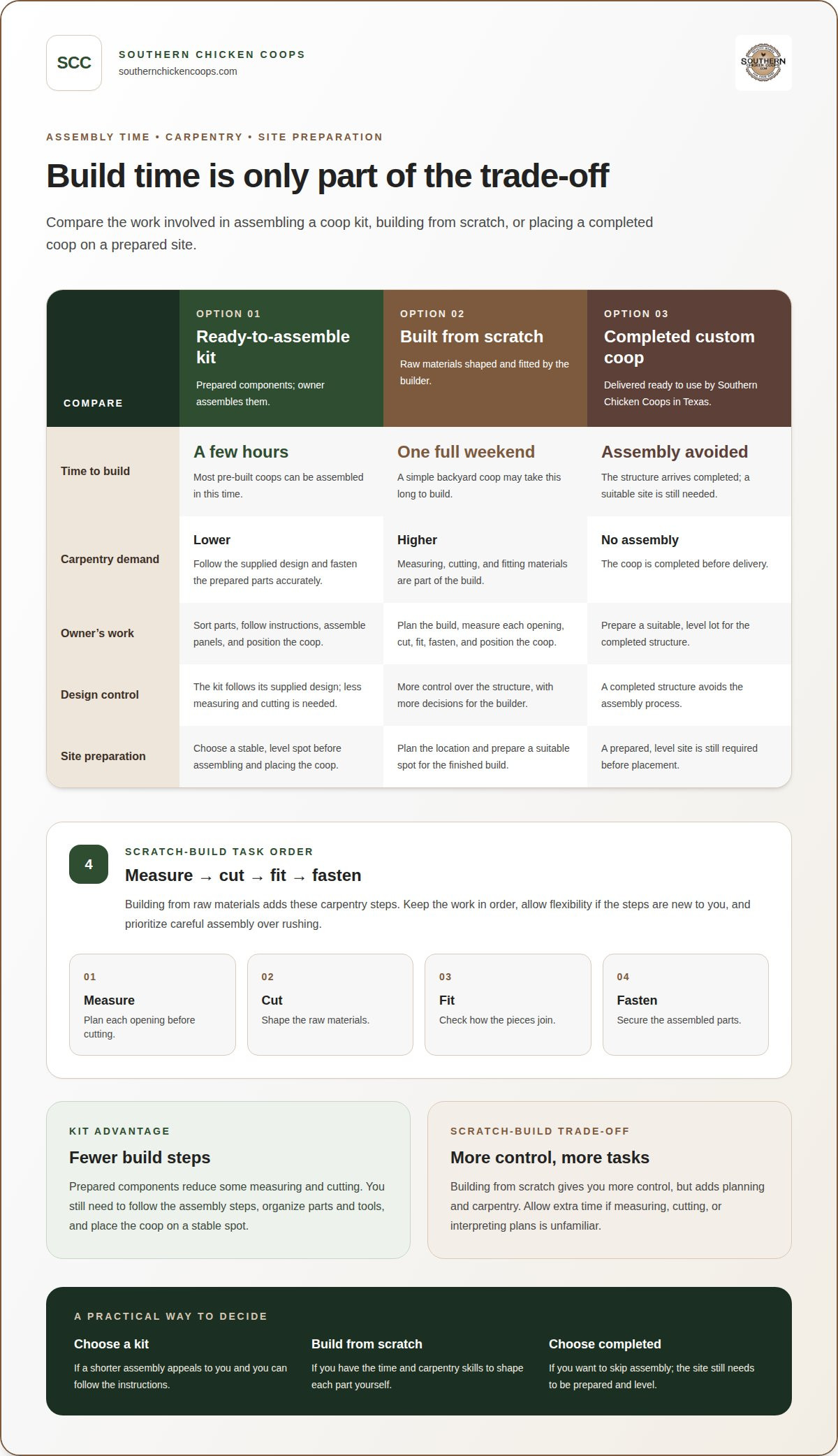
Assembly time depends on whether you’re fastening prepared panels or building a chicken coop from raw materials. Most pre-built coops can be assembled in a few hours, while a simple backyard coop may take one full weekend to build.
For a fair comparison, separate hands-on labor from planning and site preparation. A kit reduces some measuring and cutting, but the owner still needs to follow its assembly steps and place the coop on a suitable, stable spot.
Ready-to-Assemble Coop Kits
A ready-to-assemble kit arrives as components for the owner to put together, rather than as a finished chicken coop. Its main advantage is a shorter build: most pre-built coops can be assembled in a few hours. The trade-off is following the supplied design, sorting parts, and fastening panels accurately. Missing a step can leave doors or joints misaligned, so keep the instructions close.
Assembly and Installation
Assembly joins the coop’s pieces; installation means positioning the finished structure where it will stand. A kit owner handles both tasks, from laying out parts to securing the completed structure in its chosen location. Building from scratch adds carpentry steps such as measuring, cutting, and fitting materials. A simple backyard build may take one full weekend, especially when those tasks are new to the builder.
Convenience and Assembly
Convenience is not only the time spent fastening pieces. It also includes preparing a level spot, organizing tools, and resolving fit problems. A kit can simplify construction with prepared components, while a scratch build gives you more control but requires more decisions. For example, you must measure each opening before cutting material. A fully built coop avoids assembly, but still needs a suitable site.
Carpentry experience affects how manageable those steps feel. A first-time builder may need extra time to interpret plans and correct a crooked cut; someone comfortable using basic tools can work more steadily. Before choosing, consider whether you can measure, cut, and fasten without rushing. If you want to skip assembly, Southern Chicken Coops delivers completed coops for placement on a prepared, level lot.
| Option | Typical time | Carpentry demand | Owner’s work |
|---|---|---|---|
| Ready-to-assemble coop | A few hours for most pre-built coops | Lower | Follow instructions and assemble parts |
| Simple backyard coop built from scratch | One full weekend | Higher | Measure, cut, fit, and fasten materials |
Choose a kit if you value a shorter assembly and can follow its steps; choose a scratch build if you have the time and carpentry skills to shape each part yourself.
Smaller chicken coops can often be built over a weekend. Treat this as a planning guide rather than a promise; the schedule still depends on the work involved and the builder.
Before beginning, decide whether the project fits the time you can set aside, and keep the tasks in a sensible order: measure, cut, fit, then fasten. If those steps feel unfamiliar, allow flexibility rather than trying to finish every part in a single push. A smaller design may make a weekend build a realistic possibility, but careful assembly remains more important than working quickly.
Predator protection and hardware cloth
A Tractor Supply coop and a custom-built coop differ in predator protection through their materials, seams, and lower edges. Lightweight wire may need an upgrade, while custom-built examples use half-inch hardware cloth and a dig-proof skirt. Either way, examine the complete enclosure, not just the mesh on its largest panel.
Chicken wire does not reliably stop predators. Hardware cloth provides stronger protection, and backyard chicken owners recommend replacing lightweight wire with 1/2-inch hardware cloth on factory-built coops. The mesh is only one part of the barrier: gaps around doors, corners, and the floor can leave an entry point even when the main panels look secure.
Check each vulnerable area in a deliberate order. Start at the base, where thin boards or open gaps can invite chewing or digging. Follow the wall seams to the roofline, then inspect doors, hinges, and latches. A sturdy-looking frame cannot make up for a loose panel or an opening a predator can push through.
Predator-Proofing Upgrades
For a kit coop with lightweight wire, replacing exposed sections with 1/2-inch hardware cloth is a practical upgrade. Attach the mesh securely along the frame, including vulnerable lower edges, rather than covering only one visible opening. A dig-proof skirt adds a barrier around the perimeter, addressing a different route of entry than wall mesh.
These changes add work after assembly, so include them when comparing a kit with a custom-built structure. A kit may suit a small flock of two or three hens when the owner is comfortable strengthening its predator-proofing. If you prefer a coop designed with half-inch hardware cloth and a dig-proof skirt, custom construction may better match that priority.
Predator Protection
Reports of damage show why material and construction deserve close attention. One buyer described two large neighborhood dogs chewing through thin lower boards and knocking a coop over. That account does not predict what every coop will withstand, but it illustrates why thin boards and unsecured framing can undermine a barrier.
By contrast, custom-built coop examples use half-inch hardware cloth and a dig-proof skirt. Those features address openings and digging risks, but the whole enclosure still matters: secure doors, sound framing, and tight connections help prevent weak spots. Choose based on the predator pressure around your yard and the time you can give upgrades. A well-planned build can make protection part of the structure, while a kit may require added proofing after assembly.
the owner can make protection part of the plan rather than assume the supplied enclosure is sufficient. Custom coops described use a dig-proof skirt for predator protection. A kit coop may be a reasonable start for a flock of two or three hens if the owner is on a tight budget and is comfortable upgrading predator-proofing. The choice turns on whether the owner can take on those upgrades or would rather have that feature built into the coop.
Prefabricated coops compared with custom-built coops
Prefabricated coops offer a ready-made design, while custom construction allows more control over dimensions and features. The better fit depends on flock size, available space, mobility needs, and how much tailoring matters.
Kit and Custom-Coop Upfront Costs
A kit’s upfront cost reflects its prepared components and standard design; a custom build’s cost depends on materials, dimensions, and construction choices. Since custom coops are the client’s offering, prices aren’t compared here. For a fair budget decision, account for the whole structure, including any materials or upgrades needed after purchase.
A portable chicken tractor is another option: it can be moved around the yard, unlike a fixed coop that stays in one place. Mobility can suit a setup where chickens need access to changing areas. A fixed structure may make more sense when you want a permanent location and do not need to move the enclosure. Southern Chicken Coops builds fixed coops, not mobile chicken tractors.
Local zoning and permit requirements depend on the property’s jurisdiction. The location, structure, and planned flock can affect which local requirements apply, so there’s no single answer for every Texas address.
Tractor Supply Coop Sizes, Prices, and Capacity
Tractor Supply coop dimensions, prices, and advertised capacities vary by model, so compare the specific product’s floor area and stated capacity. An advertised six-chicken coop may comfortably house only three or four standard-sized laying hens, especially when birds spend significant time indoors during bad weather.
That gap matters when choosing between a standard design and custom dimensions. Start with the number of hens and their indoor time, then assess the usable coop space rather than relying on the label alone. A design that feels adequate in mild weather may feel crowded when birds stay inside.
Reviews and Common Complaints
Owner reports can reveal practical issues that a product description may not emphasize. Some buyers describe lightweight boards or weather-related wear; boards can warp after getting wet and drying, which may make doors harder to close. Treat individual experiences as examples, not as a prediction for every coop.
Reviews can help distinguish assembly concerns from durability concerns. A door that becomes difficult to close points to a fit or weather-exposure issue; loose hardware calls for a different response. Compare reports about the same model and look for recurring details, rather than treating one owner’s experience as universal.
A six-hen label, a mobile tractor, and a fixed custom design serve different needs. Choose by matching usable space and location to your flock, then weigh the model’s dimensions and upkeep against the flexibility you want.
DIY materials and hidden expenses
A DIY coop’s materials bill is only one part of its budget. The design determines how much lumber, plywood, roofing, mesh, and hardware the build needs. A simple rectangular structure, for example, uses a different cutting plan from a coop with separate nesting areas. Sketching the frame and openings first helps identify materials before construction begins. A completed coop avoids the DIY materials list and build work.
Tractor Supply recommends pressure-treated lumber for the base and components that contact the ground. For the rest of the structure, it recommends exterior-grade lumber and plywood to improve durability and weather resistance. These choices affect the initial materials list, but also help match the build to the conditions the coop will face.
Build the list by separating structural materials from finishing supplies. Include the base, wall framing, sheathing, roof, fasteners, and door hardware. Then account for cutoffs, because door and ventilation openings can leave pieces that do not fit elsewhere. A plan that changes after cutting can mean buying more material or adapting the design. With a completed coop, you do not need to source those materials yourself.
Tools can also add to a DIY project’s outlay. A builder who already has measuring, cutting, and fastening tools starts from a different point than someone who must obtain them for one coop. Assembly errors can create another expense: a misplaced cut or misaligned door may require replacement material and extra labor to correct.
Weather protection deserves a place in the budget, not just in the finishing stage. Wooden coops need protection from the elements, and exposed surfaces may need periodic maintenance. Wetting and drying can warp boards and make doors harder to close. Southern Chicken Coops’ coops come with classic white paint and silver/galvalume metal roofing as standard.
- Base: Use pressure-treated lumber where wood contacts the ground.
- Walls: Choose exterior-grade lumber and plywood for the remaining structure.
- Fit: Measure door and opening locations before cutting panels.
- Upkeep: Include suitable sealing or repainting in the long-term plan.
For a comfortable build, compare the full materials list with the work you can do using tools already on hand. A custom plan may let you shape dimensions around your yard, but each change can affect lumber lengths, panel cuts, and finishing needs. A standard kit narrows those decisions but still requires assembly. Southern Chicken Coops offers completed coops, including semi-custom designs.
Before starting, mark every major cut and opening on the plan, then group materials by the coop section they serve. That makes it easier to spot missing items and reduce avoidable waste. The best budget comparison accounts for materials, tools, corrections, and upkeep together, rather than treating lumber alone as the project’s full cost. If you prefer not to build, compare that total with a completed coop.
Manure management and cleanability
Coop cleaning is easier when you can reach the areas where droppings collect. Choose a layout with clear access for regular cleaning and manure removal, rather than judging it by appearance alone. A narrow doorway or obstructed corner can turn a straightforward task into awkward work. Southern Chicken Coops’ hen houses include clean-out doors.
During a design comparison, picture the cleaning process from start to finish. Open the main access point, reach beneath roosting areas, and remove soiled bedding without working around fixed obstacles. A wide door can make it easier to sweep debris toward an opening. The key is usable reach, not simply the number of doors.
Look at where manure settles. Droppings often collect beneath roosts, so that space should be accessible for scraping or sweeping. A removable board or tray can make collection more convenient if the design includes one. Southern Chicken Coops’ hen houses include clean-out doors to help you reach the interior for cleaning.
Floor design also affects the work. A smooth, accessible floor is generally easier to sweep than one interrupted by hard-to-reach joints or raised edges. If bedding covers the floor, consider how you will lift it out and carry it away. The route from the coop to your disposal area matters too, especially when a bucket or rake must pass through the doorway.
- Reach: Check that doors provide access to roosting and nesting areas.
- Collection: Consider how a scraper, broom, or tray would remove manure.
- Clearance: Look for corners and floor edges that could trap bedding.
- Removal: Picture carrying used bedding through the doorway to its next destination.
Prefabricated coops use a fixed layout, so cleaning depends on the access points and interior arrangement provided. A custom design can account for your preferred cleaning approach from the planning stage. Southern Chicken Coops’ hen houses include clean-out doors, and semi-custom designs let you tailor a coop to your needs.
Before settling on a coop, mentally rehearse one routine cleanup. Identify where the manure gathers, how you’ll reach it, and how you’ll move it outside. If easy access is central to your decision, explore custom coop designs with cleaning needs in mind.
Southern Chicken Coops: Custom Chicken Coops
Southern Chicken Coops builds custom chicken coops for keepers who need a tailored fit beyond a standard kit. Its 6' x 12' Polka model is designed for durability and functionality in the Texas climate, with semi-custom designs available to suit specific needs. This path can make sense when flock housing, property layout, or local weather calls for a considered design rather than a ready-made assembly project. Coop delivery is also available. If you’re weighing a custom coop for your flock, contact Southern Chicken Coops to discuss your needs.
Choose a Coop That Fits Your Daily Routine
Choosing between a Tractor Supply coop and a custom-built coop is also a choice about how you want chicken keeping to feel day after day. Picture an ordinary morning: opening the coop, tending your flock, and moving through the space when weather or chores change your routine. A design that fits those habits can feel more useful over time than one chosen only for convenience at purchase. Southern Chicken Coops builds fixed coops for Texas chicken keepers who want a completed structure.
Settle on your priorities before making the final call. Which compromises are you comfortable with, and which would frustrate you each week? Keep those answers in mind as you weigh the options, and choose a coop that suits how you care for your birds.
If a tailored design feels right for your property and flock, get in touch with Southern Chicken Coops to start a conversation about your coop plans. You’re taking a thoughtful step toward a home built around your birds and your way of life.
Frequently Asked Questions
How Much Does It Cost to Buy a Chicken Coop?
There’s no single purchase cost for every chicken coop; the total depends on its size, materials, layout, and delivery needs. For a DIY build, the materials list changes with the design and any predator-proofing additions. For a custom coop, the price depends on the project and is provided after a quote request. Compare the complete setup you need, not a coop’s advertised starting point alone.
When does a kit coop actually make sense?
A kit makes sense when its standard footprint suits your yard and you are comfortable assembling the supplied parts without changing the plan. It can work for a straightforward setup where your flock’s needs are stable and you have time to make necessary improvements. If the site has unusual dimensions or you need a particular layout, a fixed kit design may force compromises that reduce its convenience. Southern Chicken Coops offers semi-custom coops for a more tailored fit.
Why is a custom coop worth more than a store kit?
A custom coop can justify its added investment when its design addresses a real constraint, such as an awkward yard shape, a preferred door position, or a particular way of gathering eggs. Tailored dimensions can help the structure work with your routines instead of requiring you to adapt them. The value is strongest when those practical gains matter more than choosing a standard model.
What are the advantages and disadvantages of buying a prefab coop versus building one?
A prefab coop offers a defined design, while building from scratch gives you more control over its layout and details. The trade-off is how much planning and decision-making you want to take on. Consider how each option would fit beside an existing fence or garden, and whether you may want to change your flock setup later. If you want a completed coop with room to tailor the design, Southern Chicken Coops offers semi-custom coops.


