

The lowest quoted coop isn’t always the best value. When comparing Horizon Structures with a local Texas coop builder, start with the plans, written scope, and rules for your property. Local ordinances and county, state, and federal laws govern building projects, and even small, modular, or prefabricated structures may require a building permit.
It’s natural to weigh upfront cost first, but a coop also needs to suit your flock, stand up to Texas weather, and help protect against predators. A useful comparison goes beyond the initial quote to cover what’s included, how the coop is built, and what the written warranty says.
This guide covers practical questions to help you compare code and permit considerations, total costs, dimensions, predator and weather protection, builder processes, and warranty terms. Use these criteria to assess each option and choose a coop suited to your property and flock.
Key Takeaways
- Confirm which local rules and permits apply to your property before settling on a coop plan; a small or prefabricated structure may still require a permit.
- Compare written quotes by their full scope, including delivery and setup, so you can understand what each proposal covers.
- Judge predator and weather protection by the coop’s practical design and how it suits your site, not by appearance alone.
- Ask builders about their work process and insurance documentation, and make sure the construction company’s warranties are documented in the purchase contract.
- Use your flock’s needs and property conditions to decide whether a custom coop and delivery are the right fit.
1. Building codes, permits, and agricultural exemptions
Start with the property, not the coop brochure. Local ordinances and county, state, and federal laws govern building projects in the United States. Requirements for an outdoor coop can depend on its location and how the property is governed. Even a modest design may need review, so use the site address as the starting point for any code discussion.
Ask the local building department which rules apply to a coop at that address. Describe the proposed structure accurately, including whether it is permanent, modular, or prefabricated. Even smaller, modular, and prefabricated buildings may require a permit, so “portable” or “prebuilt” doesn’t mean you can assume one isn’t needed. Clarify the applicable steps before finalizing plans, rather than after delivery or site preparation.
Treat agricultural exemptions with the same care. Don’t assume that keeping chickens, horses, or other animals automatically exempts a structure from local rules. The word “agricultural” alone doesn’t settle which requirements apply. Ask the relevant local authority how it treats the specific property and intended use. A coop for a household flock, for example, may raise different questions from one associated with an agricultural operation. Keep the discussion tied to the actual site and use.
Before comparing builders, note the authority’s guidance and any required permit or variance steps. A variance is not the same as a general exemption, so clarify which process applies to your plan. If officials require changes to the location or dimensions, revise the plan before approving construction details. This helps prevent a mismatch between the coop’s footprint and property requirements, and gives you a consistent basis for comparing plans and craftsmanship.
For a practical comparison, give each builder the same site details: property address, intended use, proposed placement, and exterior dimensions. Ask how the plan can accommodate changes required by local rules. Keep permit decisions separate from design preferences: attractive trim or a traditional look doesn’t determine code compliance. The coop should suit its flock and setting, while meeting applicable requirements. Clarifying the process early makes the path from plan review to a finished structure clearer.
Horse barn buyers should check applicable local building codes, permits, or variances before finalizing plans. Consider the barn’s intended use, placement, and proposed dimensions, and don’t treat an early design as settled until you’ve clarified the process. If the review requires a permit or variance, account for it before committing to the final layout. Use the guidance to shape the plan and any builder discussion. This keeps design decisions connected to property requirements and avoids relying on assumptions about which steps apply.
2. Detailed quotes, freight, and setup costs
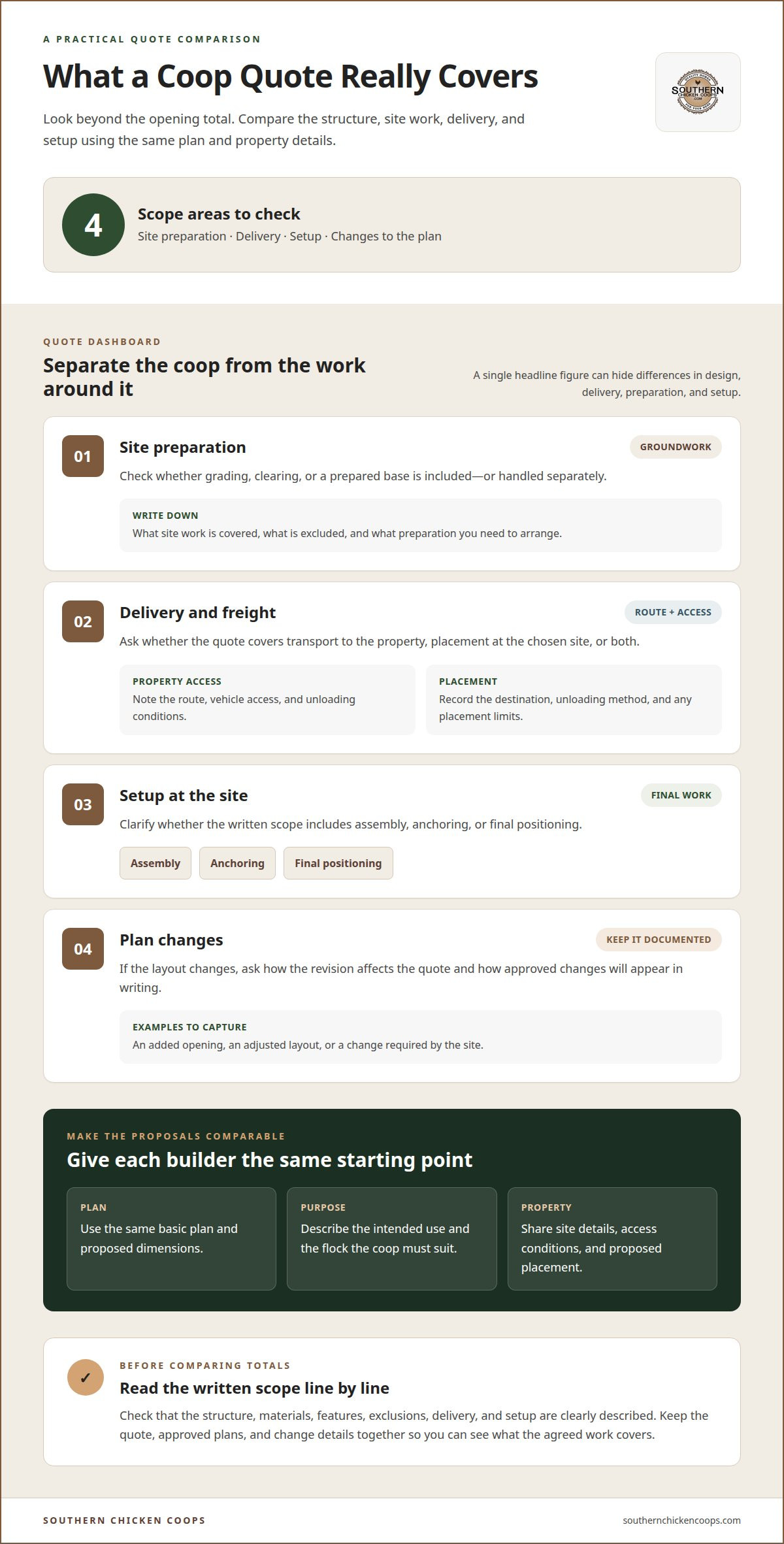
A useful quote separates the coop from the work and logistics around it. Compare proposals using the same basic plan, intended use, and site details. A straightforward delivery route may require different preparation from a narrow gate or uneven drive, even when two designs look similar in a brochure. Review each line item, not just the opening total.
Ask what the quoted construction includes. The description should identify the structure, materials, features, and any work excluded from the price. If the plan changes, such as adding an opening or adjusting the layout, the written scope should reflect the revision. That makes it easier to distinguish differences in design from differences in what each builder includes.
Ask for a clear explanation of freight and delivery. The route to the property, vehicle access, and unloading conditions can affect logistics. Find out whether the quote covers transport to the property or placement at the chosen site as well. A driveway that ends well short of the coop location, for example, may require a different unloading plan from an open, level approach. Keep these details consistent across proposals.
- Site preparation: Identify whether grading, clearing, or a prepared base is included or handled separately.
- Delivery: Record the destination, access assumptions, unloading method, and any limits on placement.
- Setup: Clarify whether assembly, anchoring, or final positioning forms part of the written scope.
- Changes: Ask how a revised plan affects the quote and how approved changes appear in writing.
These comparison points matter beyond chicken coops. Horse barns and other outdoor structures also depend on design, transportation, site conditions, and construction scope. A single headline figure can hide important differences. Separate the structure from delivery, preparation, and setup, then compare like with like. If a proposal combines several tasks, ask for each one to be clearly described in the written estimate.
A coop’s price depends on the project and is provided after a quote request; factors include design, materials, delivery, access, and setup needs. Keep the quote, approved plans, and change details together. This makes it easier to see what the agreed work covers and spot an omitted task before construction begins.
3. Predator protection and weather readiness
A coop houses living animals, so examine openings, edges, doors, and roof details closely. Look for gaps around doors and wall joints where predators might reach inside. Check how the doors close and whether their latches stay secure when pushed or pulled. A sturdy-looking exterior matters less if a small opening compromises the enclosure. Ask how the design addresses risks around your property.
Walk the planned coop location and note nearby trees, brush, fences, and buildings. These features can affect access, shade, drainage, and visibility. Thick brush beside a wall may conceal a weak spot, while a low area may collect water after rain. Share these site conditions when discussing the design instead of relying on a generic claim about predator protection.
Weather readiness starts with the site, too. In Texas, a coop needs to serve its flock through local heat and changing weather, so compare shade, airflow, rain management, and protection from exposure. Ask how the design balances ventilation with secure openings. A coop that blocks every breeze may feel enclosed, while unprotected openings can expose birds to rain or wind. Look for a practical balance suited to the location.
- Doors and access: Consider whether you can close and secure each entry consistently during daily care.
- Edges and openings: Look for gaps at corners, vents, and the meeting points between walls and doors.
- Roof and runoff: Ask where rainwater will travel and whether the coop’s placement directs it away from the living area.
- Shade and airflow: Review how nearby trees or structures affect sun exposure and air movement.
Apply the same site-based review to any structure that houses animals. Horse barns and chicken coops have different needs, but each must suit its occupants and location. Compare proposed features with the conditions you observed, then identify which details address predators and which address weather. Instead of asking whether a design is “weatherproof,” discuss the specific doorway, opening, roof edge, or exposed side.
Before approving a plan, picture routine care on a hot afternoon and after heavy rain. Can you reach the doors easily? Does the site let you spot damage or standing water? Are vulnerable openings visible and closable? These checks help distinguish a considered design from one that merely looks sturdy. A carefully planned coop supports flock safety while fitting the working landscape.
4. Questions to ask coop builders
Lead times and customer reviews don’t establish a reliable blanket ranking between Horizon Structures and Texas coop builders. Compare each builder’s stated schedule for your project and look for recurring review themes about communication, delivery coordination, and whether completed work met expectations.
Start with the scope. Ask how the builder records your flock’s needs, chosen layout, and site details before construction. Clarify who confirms door placement and access needs, and how approved changes appear in the final plan. Clear answers help prevent different assumptions from becoming part of the same agreement.
Ask how the builder coordinates delivery and setup. Find out what access and site conditions the plan assumes, who handles placement, and how changes are communicated. If a narrow gate affects the delivery route, raise it before work begins. A written response gives everyone a shared understanding.
- Schedule: What project steps affect the expected completion and delivery timing?
- Scope: Which features and tasks are included in the written agreement?
- Changes: How are plan revisions documented and reflected in the agreement?
- Communication: Who provides updates if a planned step changes?
Discuss insurance before workers enter your property. Before work begins, consider asking the builder for insurance documentation and confirming its status with the issuing agent or broker. The contractor’s certificate should come directly from the insurance agent or broker, and you should check its validity with them. This creates a clear document trail rather than relying only on verbal assurance.
Ask how the builder handles site-specific questions and what information they need from you. The property address, intended coop placement, and access details can help frame the discussion. Then clarify who is responsible for communicating construction changes. Specific answers make each builder’s process easier to understand and distinguish a general description from a commitment.
Customer reviews are most useful when you look for repeated, relevant details rather than focusing on one glowing or critical comment. Look for similar projects, communication during the process, delivery coordination, and whether the finished work matched expectations. Compare those themes with the builder’s written answers and schedule. Reviews add context but don’t replace clear project documents.
Before agreeing, organize the written scope, schedule details, insurance documentation, and approved changes together. These records provide a practical reference as the coop moves from planning toward delivery.
Neither lead times nor customer reviews establish a blanket winner between Horizon Structures and Texas coop builders. Compare the stated schedule for your project and look for recurring review details about communication, delivery coordination, and whether completed work met expectations.
5. Written warranty coverage
Horizon Structures and Texas coop builders can differ from project to project, so compare written terms, material descriptions, construction scope, and customization details side by side. There is no single warranty or materials standard for every builder; the contract shows what each agreement covers.
Keep the warranty in the purchase contract, not just in a brochure or conversation. Horse barn buyers should have the construction company document express and implied warranties in the contract. Apply the same discipline to a coop: the written agreement should identify the structure and spell out the applicable warranty terms.
Read each warranty term for its coverage, limits, and process. Does it cover materials, construction, or both? Which conditions could affect coverage, and how should you report a concern? A phrase such as “workmanship covered” may leave questions about which coop components it includes. Ask for specific language in the agreement rather than relying on a broad phrase.
- Materials: Match the written material descriptions to the approved plan.
- Construction: Identify which parts of the completed structure the warranty addresses.
- Exclusions: Note any stated conditions or situations outside the coverage.
- Claims process: Record how to report a concern and what information the builder needs.
- Changes: Keep approved customizations and revisions with the contract documents.
Customization makes clear paperwork especially useful. If the plan changes a door location, storage area, or other feature, make sure the final documents reflect that choice. A drawing and contract describing different versions can make later questions harder to resolve. Keep the approved plan, written scope, warranty language, and change records together so they all refer to the same finished coop.
Consider how the coop will function in everyday use. If a door, roof, or other component becomes a concern, the written terms should help clarify whether it relates to covered materials or construction. Don’t assume a warranty covers every cause of damage or future repair. Use the contract’s actual language to understand its coverage, limits, and claims process.
Before signing, read the warranty alongside the plans, rather than treating it as a separate promise. If a phrase is unclear, ask for its meaning in writing and retain the response with your agreement. For a coop shaped around particular flock and property needs, discuss a custom coop plan with those written requirements in view.
There is no uniform standard across Horizon Structures and Texas coop builders. Materials, construction coverage, warranty terms, and customization depend on each project agreement. Compare the written material descriptions, covered construction, warranty limits, and approved changes in each builder’s contract and plans.
Southern Chicken Coops: Coop Delivery
Southern Chicken Coops builds custom chicken coops and delivers them for people ready to create a practical home for their flock. After comparing site requirements, project scope, protection features, and written warranty terms, consider whether a custom design suits your property and daily care needs.
We can shape a coop around your priorities and deliver it as the next step toward a finished setup. A custom design may suit you if a standard layout doesn’t fit your space or you want the plan to reflect your flock’s needs. Contact Southern Chicken Coops to discuss your coop plans.
Choose a Coop That Fits the Life Around It
A good coop should fit naturally into your daily routine, not become a project you keep working around. Picture the morning feed, evening close-up, and the path you’ll take in changing weather. These ordinary moments can help you choose a layout and placement that serve your flock well over time.
As you weigh Horizon Structures vs a local Texas coop builder, let your decision reflect your property, your birds, and the care you want to give them. A thoughtful design can become a considered part of your home and land, suited to the work and life it will hold.
Southern Chicken Coops offers custom chicken coops and coop delivery for this next step. If you’re ready to talk through your plans, contact Southern Chicken Coops. We’ll be glad to hear what you have in mind and help you move forward with care.
Frequently Asked Questions
Which Texas builders specialize in custom chicken coops or poultry buildings?
Southern Chicken Coops specializes in custom chicken coops for Texas flocks. The coops are built in McGregor, and the signature Polka model measures 6' x 12'. Semi-custom designs let customers tailor a coop to their needs. If you’re comparing builders, focus on whether their designs suit your flock and property, rather than assuming every poultry building company offers the same kind of coop.
What are typical prices for a locally built chicken coop in Texas?
There isn’t one typical price for a locally built coop because the total depends on the project. A custom coop’s price is provided after a quote request and depends on design, materials, requested features, delivery distance, site access, and setup needs. For a useful comparison, request the same layout and delivery assumptions in each proposal, then review what each written scope includes.
What questions should I ask when choosing a chicken coop builder in Texas?
Ask how the proposed coop will fit your flock’s space needs and your prepared lot. For birds that aren’t free-ranging, Southern Chicken Coops’ guidance allocates 8 square feet of run space per bird, plus 10 inches of roost space per hen. Also discuss how delivery and placement suit the site. For example, a level area with a clear approach can help clarify the delivery plan before you commit.
How do Horizon Structures and Texas coop builders compare on materials, construction, warranties, and customization?
Compare each builder’s written scope, including materials, features, and construction details. Ask how plans can be customized for your site and flock, and review the warranty terms documented in the purchase contract.
How do lead times and customer reviews compare for Horizon Structures and Texas coop builders?
There is no reliable blanket ranking. Compare each builder’s stated schedule for your project and look for review themes about communication, delivery coordination, and whether completed work meets expectations.


