

A flock can bring a family closer when children have a real part in its care. Involving kids in chicken keeping works best when tasks suit their age and abilities: younger children can observe and help with simple jobs under close supervision, while older children can gradually take on routines such as feeding, watering, and collecting eggs. Adults remain responsible for the flock’s wellbeing.
It’s natural to wonder whether the daily work will feel like a chore, but small, steady jobs can give children a meaningful way to care for animals and share in family life. In this guide, you’ll learn how to choose a family-friendly breed, divide daily care, and make coop setup a shared project, with room for the moments that turn chicken keeping into a family tradition. Build handwashing into the routine too: the Centers for Disease Control and Prevention recommends washing with soap and water for at least 20 seconds after contact with chickens.
Key Takeaways
- Choose a breed for temperament and your Texas climate, not appearance alone; an aggressive rooster may not suit a family with young children.
- Make chicken care a shared routine by matching responsibilities to each child’s confidence and experience.
- Plan coop space around the flock, with 2-3 square feet per chicken, and give children age-appropriate ways to help with setup.
- Use everyday moments such as gathering eggs and checking on the flock to create meaningful family rituals.
- A chore chart and calm, supervised interactions can help children build confidence while keeping the birds’ wellbeing at the center.
1. Why Involve Kids in Chicken Keeping?
Raising chickens gives children a meaningful way to practice responsibility through daily care. They can see where food comes from, watch a hen lay eggs, and learn that healthy animals depend on steady attention. Collecting eggs from the nesting box makes that lesson tangible: children connect the hen, the nest, and breakfast.
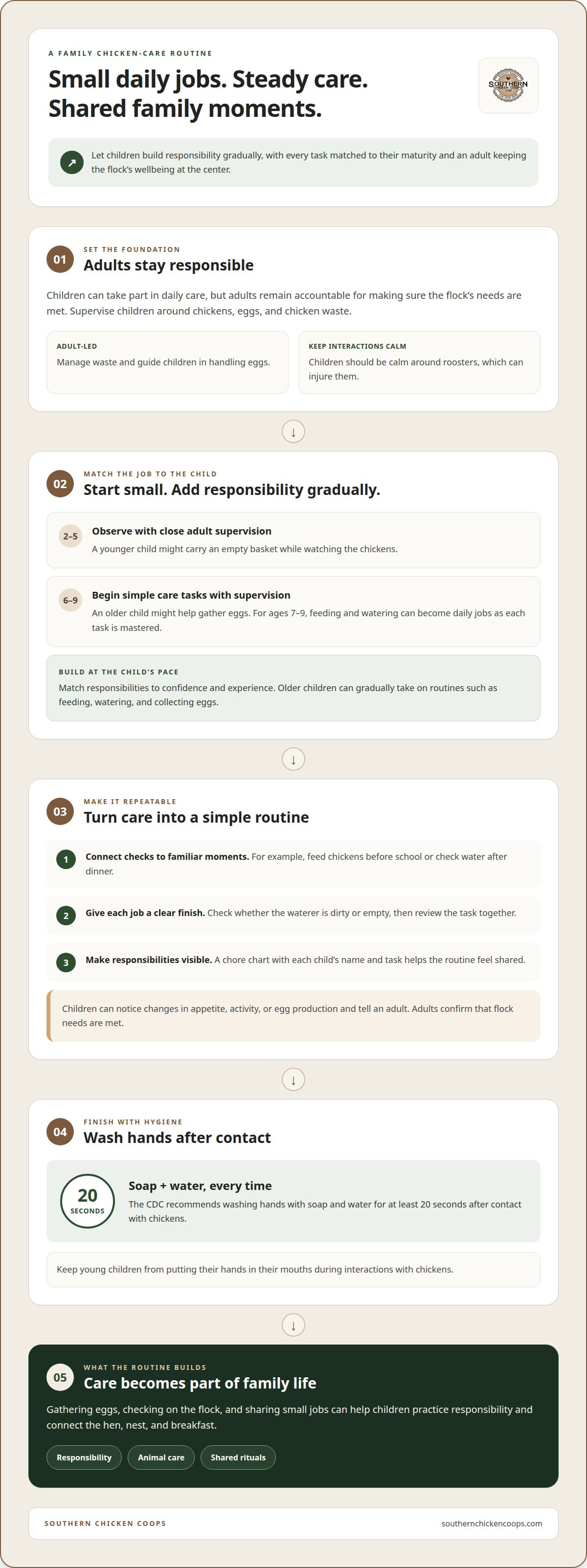
Keep the first jobs small and matched to each child’s maturity. Children ages 2 to 5 can observe chickens with close adult supervision; children ages 6 to 9 can start simple care tasks with supervision. A younger child might carry an empty basket, while an older child helps gather eggs. A chore chart with each child’s name and task makes responsibilities visible and helps the routine feel shared.
Let each child’s interests guide the next step. One may enjoy filling a treat cup, while another prefers watching the flock settle at dusk. Give every task a clear finish, such as checking whether the waterer is dirty or empty, then review it together. A gentle reminder and a chance to try again teach more than taking over after the first mistake.
In Texas, rules depend on the property’s address: local ordinances and zoning determine whether backyard chickens are allowed and what conditions apply. Before bringing birds home, review the rules for your specific property, including restrictions on hens or roosters. The cost of raising backyard chickens in the United States depends on choices such as flock size, housing, feed, bedding, and ongoing care. Planning for these needs helps families understand the commitment without relying on a single figure.
Make health and supervision part of the routine. Chickens can carry Salmonella even when they look healthy, so the Centers for Disease Control and Prevention recommends washing hands with soap and water for at least 20 seconds after contact. Adults should supervise children around birds, eggs, and chicken waste, and keep young children from putting their hands in their mouths during interactions. Have an adult manage waste and guide egg handling; keep children calm around roosters, which can injure them.
Care also means preparing children for loss. Chickens can live 5 to 10 years, depending on breed, but a bird may die sooner. Acknowledge a child’s sadness, answer questions simply, and consider a small family ceremony to remember the hen. Sharing that moment helps children understand that responsibility includes kindness in difficult parts of animal care.
2. Choosing a family-friendly chicken breed
A family-friendly flock starts with temperament, handling needs, and your backyard conditions. Breed can offer useful clues, but individual birds differ, and even a gentle hen may become protective while broody. Choose birds that suit how your family hopes to interact with the flock, not appearance alone.
Families seeking calm, more docile birds often consider larger breeds, though size does not guarantee an easy temperament. Buff Orpingtons are described as gentle, slow-moving, and docile. Cochins are known as quiet and easy to handle, while Australorps are sweet, regular layers that are also easy to handle. These qualities can make feeding, offering treats, and calm observation more comfortable for children.
Other breeds bring different strengths. Plymouth Rocks are among the suggested kid-friendly choices, and Barred Rocks average around 200 eggs a year. Jersey Giants are described as slow-moving, quiet, and easy to handle. Silkies are quirky, slow-moving, and very quiet, but they aren’t cold-hardy. In Texas, consider local weather alongside temperament; a breed’s suitability includes whether its needs match your setting and care routine.
Match breed traits to your children’s interests. A child who enjoys collecting eggs may like a flock chosen for laying, while a child drawn to unusual birds may be charmed by a Silkie’s appearance. Cochins have heavily feathered feet and legs, and Polish chickens’ crest feathers can block their view of overhead activity, sometimes making them easier for children to catch. These traits do not mean every bird will enjoy being held.
Egg color can add curiosity to raising chickens, but each hen lays eggs of one color throughout her life. Choose breeds for temperament and care first, then treat egg color as a pleasant extra. It’s a simple way to show children that different hens lay different-looking eggs, without expecting one bird’s eggs to change shades.
Starting with chicks gives children time to get familiar with their birds as they grow. Frequent, gentle handling while chicks are small can help them become comfortable around people, though the flock still needs patient, respectful care. If your family wants to involve kids in chicken keeping, plan how to handle birds calmly before inviting children to pick them up.
Families with young children are generally advised to avoid keeping a rooster. Roosters may become territorial or defensive, and spur strikes can injure a child. An aggressive rooster or a broody hen guarding eggs may not suit close interaction. For a family weighing breed traits alongside a secure, lasting home for its hens, custom coop planning can be part of preparing the backyard before birds arrive.
3. Family participation in daily chicken care
A reliable routine helps children learn that living animals depend on consistent care. Connect flock checks to familiar moments, such as feeding chickens before school or checking water after dinner. Children can notice changes in appetite, activity, or egg production and tell an adult. Adults remain responsible for making sure the flock’s needs are met.
For children ages 7 to 9, feeding and watering can become daily jobs as they master each task. Ask them to check whether feed is available and whether water looks clean, then confirm their work together. Children ages 10 to 12 can take on more responsibility, including basic cleaning tasks. Children aged 10 and older may manage care independently when they already have experience.
Make each task specific. “Check the water” is clearer than “help with the chickens.” A child can inspect the drinker, refill it when needed, and tell an adult if it’s dirty or damaged. A simple chart with spaces for feed, water, and egg collection helps the family see which jobs are complete. Adjust responsibilities as children show care and consistency.
Safe handling starts with a calm approach. Teach children to approach a hen from the front, not from behind or above. An adult can demonstrate how to support her body and gently hold her wings while lifting. Keep handling brief and supervised, and let the bird go if she struggles. Children should wash their hands before and after handling chickens.
Daily care also offers practical lessons in observation. Australorps are known as sweet, easy-to-handle birds and regular layers. Children can note whether eggs appear in the nesting box and tell an adult if a hen’s usual behavior changes. Comparing observations over time helps them understand that laying and activity are part of a flock’s routine, not guaranteed on a child’s schedule.
Knowing about breeds can sharpen those observations. A Rhode Island Red rooster may be territorial or defensive, so children should never approach one without close adult supervision. Families can explain that different birds need different boundaries, just as children can learn to read a hen’s posture before trying to pick her up. Feeding treats from an open palm may suit calm birds, but an adult should decide when interaction is appropriate.
Long-term care means putting the flock’s needs first, even when children’s interests change. They may lose enthusiasm for a chore, get busy with school, or need reminders. Adults should keep checking feed, water, cleanliness, and the birds’ condition, while inviting children back into manageable tasks. That steady example teaches responsibility through caring for backyard chickens, even when the routine feels ordinary.
4. Building and setting up a chicken coop together
Planning a chicken coop gives children a hands-on role before the flock arrives. Start with a simple family sketch: mark the entrance, nesting box, and places for feed and water. Ask each child to choose a useful detail, such as a spot for collecting eggs or a labeled container for bedding. An adult should lead decisions about the coop’s structure and placement, while children contribute ideas they can understand.
Space is a practical first lesson in planning. Allow 2-3 square feet per chicken in the coop, then use the flock size to guide the layout. Children can count the planned birds and help compare that number with the available floor space. A roomy, orderly setup makes it easier to reach feeders, inspect the nesting box, and gather eggs without crowding the hens.
Give each child a safe, specific setup task. One can arrange clean nesting material, another can place an egg basket near the coop entrance, and a third can check whether feed and water are easy to reach. Ask children to explain why they chose each spot. That conversation turns a favorite detail into a useful lesson about how thoughtful design supports daily care.
Cleaning is more manageable when jobs are clear. Older children can help remove soiled bedding, add clean bedding, and look for changes in the birds while an adult supervises. One family using the deep litter method cleans out its coop once in the spring. This example shows children how a cleaning plan can follow the chosen management method instead of becoming an unstructured chore.
Sanitizing needs adult oversight. The section’s cleaning guidance names a 10% bleach solution for coop sanitation; children can help by carrying clean supplies or keeping the egg basket out of the work area. An adult should handle preparation and application, then make sure the space is ready for the hens before they return. Keep children away from cleaning products and waste during the task.
Build a repeatable reset into the family routine. After collecting eggs, return the basket to its place, check that the nesting box is tidy, and put tools away. A child can mark those jobs on a chore chart while an adult checks the finished coop. These small habits help keep a docile hen’s home in order and give children a clear part in caring for it.
5. Family bonding through chicken keeping
Chicken keeping creates shared moments that need no special occasion. A family can collect eggs before breakfast, check the flock together after school, or watch hens settle at dusk. Those repeated moments give children and adults a common story to return to. The lasting value comes from doing something together, not from making every task feel like a lesson.
Give each child a way to make the routine their own. One might name a favorite hen, while another enjoys noting which nesting box holds eggs. Families can keep a simple flock journal with a sketch, a short observation, or the day’s egg count. Reading the entries together later makes learning visible and gives children a sense of ownership in the flock’s care.
Chicken behavior offers natural conversation starters. Watch how a hen scratches through bedding, approaches feed, or responds to a rooster’s call. Ask children what they notice before explaining what the birds are doing. An Easter Egger, for example, can prompt a conversation about how different hens lay different-colored eggs. Let ordinary behavior guide the learning rather than turning every visit into a lesson.
Shared care also teaches patience and cooperation. One family might have a child check the feed while a sibling gathers eggs, then switch jobs another day. When a hen avoids being held, the family can respect her space and observe instead. That choice shows children that caring for an animal means paying attention to its comfort, not expecting it to behave like a pet on demand.
Create a small tradition around the flock. Families could note the first egg in the journal, take a seasonal photo near the coop, or celebrate a hen’s birthday with an extra observation walk. Keep treats suitable for chickens and let an adult decide what and how much to offer. A simple ritual gives everyone a reason to pause together, even during a busy week.
Most of all, let family connection grow at the flock’s pace. A child may become interested in bedding, while a sibling prefers watching an Australorp at the feeder. Share those interests without making affection or handling a requirement. For families shaping a chicken coop around shared routines, plan a coop for family life. A well-considered space can make gathering, observing, and caring together part of the day.
Southern Chicken Coops: Custom Chicken Coops
Southern Chicken Coops can help turn your family’s flock plans into a well-crafted home for the hens. If you’re deciding how the coop should fit your birds, backyard, and daily routines, its custom chicken coops offer a practical next step. The signature Polka model is a 6'x12' coop designed for durability and functionality in the Texas climate, and semi-custom designs can be tailored to specific needs. Coop delivery is also available, making it easier to bring the finished coop to your property.
A thoughtfully planned coop gives children a welcoming place to collect eggs, observe the flock, and share age-appropriate care with an adult. To talk through a coop for your family, contact Southern Chicken Coops.
Make Room for Your Family’s Next Tradition
The best part of involving kids in chicken keeping may be what grows around the daily routine. Choose one shared moment your family wants to protect, such as a quiet visit with the flock or a meal made special by gathering eggs together. Let children help shape that tradition, then allow it to change as their interests and confidence grow. The chickens become part of family life, and the memories belong to everyone.
A thoughtful next step is making sure the coop supports the way your family hopes to spend time with its birds. Consider how children will move through the space, where you’ll gather, and what would make caring for the flock feel natural. If you’re ready to plan a home suited to your flock and family, contact Southern Chicken Coops about a custom chicken coop. Begin at your family’s pace, and let the good moments take root.
Frequently Asked Questions
Why Involve Kids in Chicken Keeping?
Keeping chickens gives children a shared, hands-on way to learn how family choices affect an animal’s wellbeing. Invite them to notice one change on each visit, such as which hen chooses a particular nesting box or how the flock reacts to a new object. Discuss what they observe and decide together how to respond. This kind of attention makes chicken care a shared family practice, not just a list of chores.
What are age-appropriate chicken-keeping tasks for kids?
Match tasks to a child’s confidence, coordination, and ability to follow instructions. A young child can carry an empty egg basket with an adult, while a school-age child might gather eggs or help measure feed. Older, experienced children can take on more of the routine, with an adult checking the result. Increase responsibility gradually, and make sure every child knows which jobs require adult help.
What supplies and setup are needed for a family chicken coop and run?
Plan for a secure coop and run, suitable bedding, a feeder, a waterer, nesting boxes, and an egg basket. In Texas, consider how the setup fits your property and local conditions. Keep supplies organized near the coop so children can prepare for chores without carrying everything at once. A designated place for clean and used tools also makes the routine easier to manage.
How much time does daily chicken care take?
Daily care time depends chiefly on flock size, coop layout, and the jobs that need attention that day. A family’s routine may include checking feed and water, observing the birds, gathering eggs, and securing the coop. Extra work may be needed when supplies run low or a bird needs closer attention. Keep the routine predictable, and leave an adult responsible for making sure every essential job gets done.
How can kids learn about chicken behavior, eggs, and life cycles?
Use a flock journal to connect observations over time: children can sketch a hen, note her behavior, and record when eggs appear. Talk about how a chick grows into a laying hen, and compare egg colors from different birds. Fresh eggs may arrive in about 16-18 weeks, or later depending on breed. Waiting helps children see that raising chickens follows the birds’ development, not an instant timetable.
What chicken breeds are calm and suitable for families with children?
Buff Orpingtons, Cochins, Australorps, and Plymouth Rocks are among the breeds suggested for families. Breed traits can guide your choice: Buff Orpingtons are described as gentle, while Cochins are known as quiet and easy to handle. Individual birds still vary, so choose based on the temperament you observe and the care your backyard can support. Keep children supervised, especially around a rooster or a hen protecting eggs.


