

Imagine walking out to your backyard on a sweltering July morning, only to find your prize hens struggling in the 105-degree heat or a coop door pried open by a clever raccoon. It's a heartbreaking sight that many of our neighbors have faced. We know you pour your heart into your flock, and it's frustrating when the harsh climate or local wildlife makes it feel like an uphill battle. Dealing with common chicken coop problems in Texas can feel like a full-time job when your equipment isn't built for our specific conditions.
We're here to help you turn that around by sharing our years of experience as Central Texas master craftsmen. You'll discover how to protect your Texas flock from extreme heat, local predators, and structural failures with expert advice on building for longevity. We'll show you how to achieve a predator-proof setup and a coop that stays cool naturally without needing electricity. It's time to build a home for your birds that's as resilient as the Texas spirit itself, ensuring your homesteading journey remains a source of joy rather than a source of worry.
Key Takeaways
- Learn why standard ventilation often fails during a Texas summer and how to keep hens safe from heat stress without relying on electricity.
- Discover the specific materials needed to outsmart local predators like raccoons and snakes that can easily tear through basic chicken wire.
- Understand how shifting clay soils and heavy spring storms contribute to common chicken coop problems in Texas and what structural features are required to keep your coop level.
- Explore the vital connection between your coop's footprint and your flock's health, including ways to prevent ammonia buildup during our humid months.
- See how handcrafted quality and thoughtful design, such as the 6x12 Polka model, offer a lasting sanctuary built specifically for our unique climate.
The Heat Crisis: Why Standard Coops Fail in Texas Summers
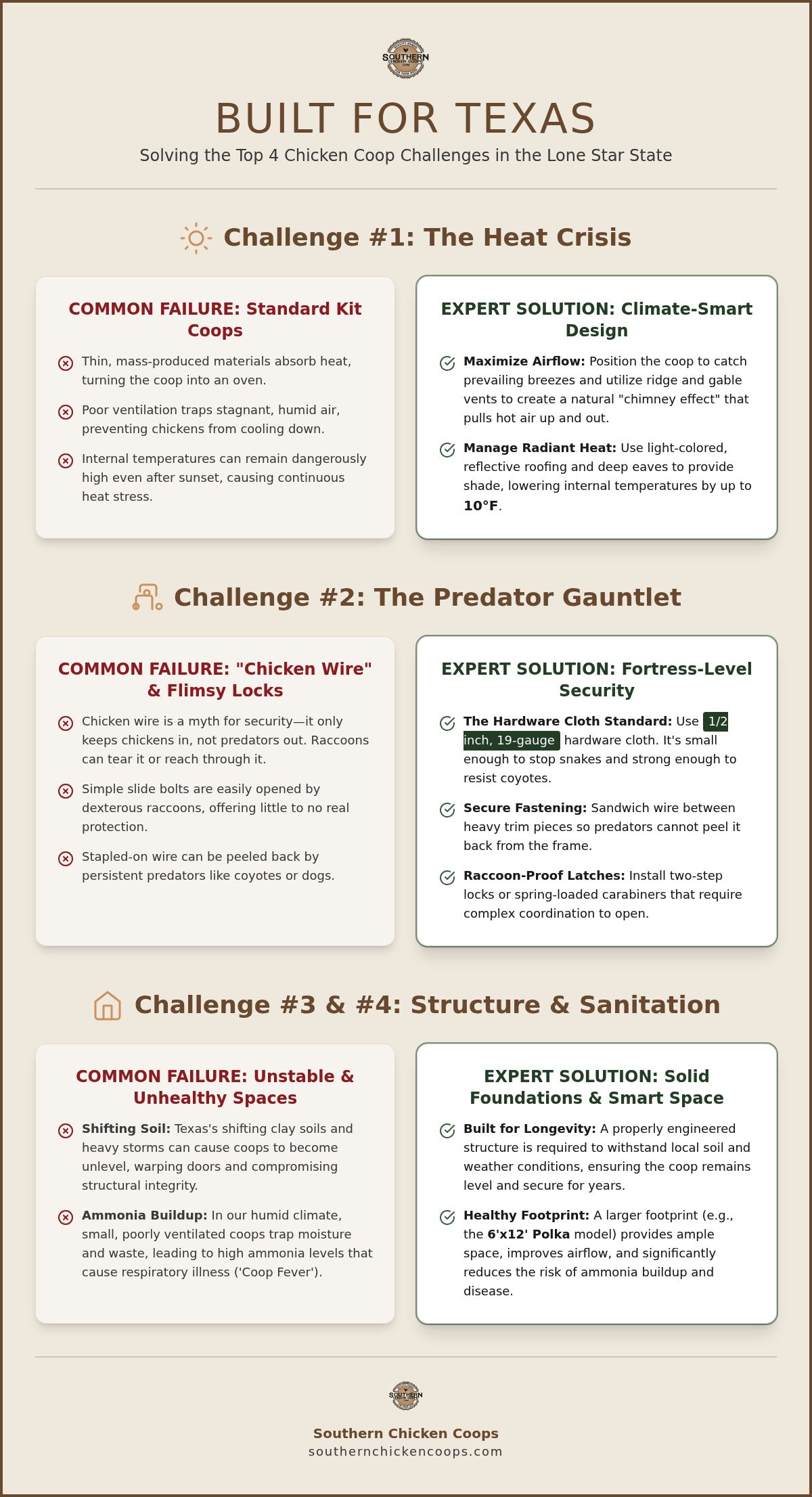
In the heart of Texas, the sun isn't just a neighbor; it's a force of nature. While many new keepers worry about a rare winter freeze, the true silent killer is our unrelenting summer heat. Chicken heat stress happens when a bird's internal temperature rises faster than they can cool down through panting and wings-out behavior. Chickens don't sweat. They rely on respiratory evaporation. In the heavy humidity of Central Texas, that air is already saturated, making it nearly impossible for them to find relief. This is one of the most common chicken coop problems in Texas, often leading to a sudden loss of birds that seemed fine just hours before.
Standard 'kit coops' you find at big-box stores are often the primary culprit. These structures usually feature thin, mass-produced wood and cramped layouts that trap stagnant air. In poultry farming, we understand that thermal mass plays a huge role. Cheap materials act like an oven, absorbing the sun's energy and radiating it directly onto your hens long after the sun goes down. We've seen coops where the internal temperature actually stays higher than the outside air well into the night, giving the birds no time to recover their strength.
Mastering Cross-Ventilation and Airflow
To keep your flock safe, you have to work with the land. We always recommend positioning your coop to catch the prevailing south-to-north breeze that carries us through the Central Texas summer. Our Polka model is built with a 6x12 footprint specifically to maximize this airflow, ensuring no corner becomes a pocket of dead air. You need ridge vents at the very peak and gable vents on the sides to let the hottest air escape before it settles on the roosts. The chimney effect is a natural cooling process where hot air rises and exits through high vents, creating a vacuum that pulls cooler air in through lower openings.
Managing Radiant Heat and Shading
The roof is your first line of defense against the Texas sun. A dark or metallic roof without proper coating can turn a coop into a furnace, baking the interior. Choosing lighter colors and specific reflective materials can lower internal temperatures by as much as 10 degrees. We also focus on deep eaves that extend well past the walls to protect the interior from the harsh glare. These provide vital shade during the mid-day hours when the sun is directly overhead. If you can, place your home for the birds near deciduous trees; they'll provide a cool canopy in the summer but drop their leaves to let the warming sun through during the winter months.
The Texas Predator Gauntlet: Moving Beyond Chicken Wire
In our neck of the woods, keeping chickens safe is a serious commitment that requires more than just a sturdy fence. We call them the 'Texas Big Three': raccoons, rattlesnakes, and red-tailed hawks. Each one presents a unique challenge to your flock's safety. One of the most common chicken coop problems in Texas is underestimating just how clever and persistent these neighbors can be. While it's tempting to think a simple enclosure will do, many folks discover too late that standard designs don't account for the sheer variety of threats we face in Central Texas.
You've likely heard it before, but it bears repeating: chicken wire is designed to keep chickens in, not to keep predators out. A hungry raccoon can reach through those wide holes or simply tear the thin wire apart with its paws. It's essentially a dinner invitation for any passing predator. Effective Predator management for poultry flocks requires a much tougher barrier that can withstand teeth, claws, and weight. Don't forget the latches, either. Raccoons are incredibly dexterous and can easily slide a simple bolt; we always recommend spring-loaded carabiners or two-step locks that require more coordination than a raccoon can manage.
The Hardware Cloth Standard
We believe 1/2 inch hardware cloth is the non-negotiable minimum for any Texas coop. It's small enough to stop a snake and strong enough to resist a coyote's teeth. When we build, we don't just staple the wire to the surface; we sandwich it between heavy trim pieces so no predator can peel it back from the frame. Using 19-gauge wire is the professional choice because it provides the necessary thickness to resist the persistent chewing and pulling of larger predators. This level of craftsmanship ensures your birds stay safe while still allowing for the vital airflow we discussed earlier.
Anti-Dig Barriers and Snake Proofing
Predators don't just come from the sides or the air. In rural areas, skunks and coyotes are notorious for digging under the edges of a coop. Installing a 'predator apron' is the best way to stop them. This is a layer of hardware cloth that extends outward from the base of the coop along the ground, which stops an animal the moment they start to dig. You also need to be mindful of tiny gaps. Anything larger than half an inch is a doorway for a rattlesnake looking for a meal. Before your birds arrive, spend time preparing your backyard for a chicken coop by leveling the ground and checking for these entry points. If you're looking for a sanctuary built with these exact defenses in mind, our handcrafted custom chicken coops offer the peace of mind you deserve.
Structural Integrity: Battling Texas Soil and Storms
If you've lived in the McGregor or Waco area for a season, you've seen the deep cracks that form in our Blackland Prairie clay during a dry spell. This soil is famous for its "shrink-swell" behavior; it expands with heavy rain and contracts during a drought. For a building, this constant movement can be devastating. These shifting foundations are among the most common chicken coop problems in Texas, often causing doors to stick, frames to rack, and roofs to leak. We've seen many owners struggle with structures that simply weren't built to handle the ground moving beneath them.
Beyond the soil, our spring thunderstorms bring high winds that can easily toss a lightweight kit coop across a pasture. Many mass-produced coops weigh less than 200 pounds, which makes them vulnerable to being upended in a typical Texas supercell. When you combine wind pressure with the intense UV index of Central Texas, which can cause thin cedar or plastic to warp and crack in under a year, it becomes clear why durability is a necessity rather than a luxury. We build with the understanding that a coop must be a permanent fixture on your land, capable of standing firm through every season.
Building for Longevity in McGregor and Waco
We take pride in using handcrafted methods that prioritize resilience over speed. Instead of the thin staples found in assembly-line models, we use heavy-duty fasteners and rot-resistant lumber that can withstand our humid cycles. Our 6x12 Polka model is a favorite for this reason; its footprint provides a low center of gravity and significant weight that keeps it anchored. If you're looking for a structure that won't give up on you after the first big storm, you can find a 6x12 chicken coop for sale that's built right here in Texas.
Preparing Your Lot for Delivery
To ensure your coop serves you for decades, the foundation you provide is just as important as the building itself. We require a level, prepared lot because even the strongest coop can suffer structural stress if it's sitting on an uneven slope. We often suggest using a base of crushed granite or a concrete pad to help with drainage and prevent the clay from pulling at the frame. This preparation is a vital step in our process for chicken coop delivery Texas, ensuring that when we place your handcrafted coop, it stays level and functional for the long haul.
The Space and Sanitation Struggle: Avoiding 'Coop Fever'
When the humidity climbs in Central Texas, the air inside a coop can change faster than a summer storm rolls in. It's not just about the external temperature; it's about the environment your birds are breathing every minute. Ammonia bloom is a serious risk when droppings meet our high moisture levels. This chemical reaction releases gases that can damage a hen's sensitive respiratory system. It's one of the most common chicken coop problems in Texas that many folks overlook until their birds start acting lethargic or stop laying eggs altogether.
Managing your bedding is a vital part of this battle. While the "Deep Litter Method" is popular for providing warmth in colder states, it can actually trap too much heat and moisture in our climate if it isn't managed with care. You need a setup that allows for quick, frequent cleaning without making it a back-breaking chore. We've found that having large, easy-access cleaning doors is the difference between a job that gets done and a job that gets delayed, which directly impacts the health of your flock.
Sizing for the Texas Homestead
Industry standards often suggest four square feet per bird, but those rules don't account for a "Texas summer lockdown." When the sun is high, your hens might refuse to leave the shade of the coop for most of the day. If they're packed too tightly, the psychological stress leads to pecking and bullying. We believe a 6x12 footprint is the sweet spot for 10 to 12 hens in our region. It provides enough room for them to find a cool spot and spread their wings without feeling crowded. This philosophy of generous space is built into every one of our custom chicken coops Texas families use to keep their birds happy.
Sanitation Systems that Work
Keeping a clean home for your birds also means managing the pests that thrive in our heat. Mites and lice are persistent threats, so providing a dedicated area for dust baths is essential for natural pest control. We also design our coops with removable roosts and nesting boxes to make deep cleaning a simple process. The Sand Method is a cooling alternative for Texas runs that uses coarse sand instead of wood chips to provide a naturally cooler surface that's easy to scoop. If you're ready to invest in a home that makes bird health a priority, take a look at our handcrafted custom chicken coops built right here in McGregor.
Investing in a Solution: Why The Polka Beats the Problems
Throughout this guide, we've explored the many ways our environment tests the limits of backyard poultry keeping. From the "Texas Big Three" predators to the structural stress of shifting Blackland Prairie clay, it's clear that a one-size-fits-all approach simply doesn't work here. Solving common chicken coop problems in Texas requires more than just a weekend project or a flimsy kit from a catalog. It requires a structure built with regional awareness and a deep respect for the animals it protects. Our Polka model is the culmination of these lessons. It combines superior cross-ventilation with a heavy-duty frame that stands firm against spring supercells. This 6x12 design ensures your birds have the space they need to stay cool and healthy even during our most humid months.
Choosing a handcrafted coop means you are investing in a life-support system for your flock. We focus on every detail, from the gauge of the hardware cloth to the specific placement of the vents, because we know that a single failure can lead to heartache. While mass-produced imports often prioritize shipping convenience over durability, we prioritize the safety and well-being of your hens. By addressing heat, predators, and soil movement in one cohesive design, we help you move past the cycle of constant repairs and bird loss, allowing you to focus on the joy of fresh eggs and happy clucks in your backyard.
The Southern Chicken Coops Difference
Our work isn't just a business; it's a calling rooted in our own daily life at Bird and Bee Farm. Bill and Tina Drivdahl understand the worry of a midnight predator alert or a record-breaking heatwave because they live it too. Every build that leaves our shop in McGregor is handcrafted one at a time, ensuring that every joint is tight and every piece of hardware cloth is secure. This local craftsmanship offers a level of integrity you won't find in anonymous imports. When you choose a home from us, you're gaining the peace of mind that comes with a predator-proof, heat-ready sanctuary. Please reach out to us if you're ready to provide a handcrafted home for your hens that truly honors their role on your homestead.
Your Next Steps for a Texas-Ready Flock
Now is the time to take an honest look at your current setup. If your birds are panting heavily, if you're finding gaps in your wire, or if your doors are beginning to stick, these are signs that your coop might be failing the Texas test. We invite you to read our comprehensive Texas chicken coops guide to further understand the standards of high-quality housing. As we look toward the 2026 season, our build schedule is filling up quickly. Because we build each coop by hand to ensure the highest quality, we recommend contacting us early to secure your spot. Let's work together to build a future for your flock that is safe, comfortable, and built to last.
Building a Legacy for Your Texas Flock
Raising chickens in our great state is a rewarding journey, but it requires a home that can stand up to our unique environment. We've discussed how vital it is to prioritize high-volume ventilation for those 100-degree days and why 1/2-inch hardware cloth is your only real defense against persistent local predators. By addressing common chicken coop problems in Texas with a heavy-duty frame and a level foundation, you're doing more than just building a shelter; you're providing a sanctuary where your birds can truly thrive.
As a family-owned and operated team, we take immense pride in every structure we build. Every one of our coops is handcrafted in McGregor, TX, and specifically designed for Texas heat to ensure your peace of mind. We'd love to help you move forward with confidence. Explore our handcrafted Polka model and secure your flock's future today. Your hens deserve a home built with integrity and heart, and we're here to help you make that a reality.
Frequently Asked Questions
Is chicken wire enough to keep raccoons out of my Texas coop?
No, chicken wire is not enough to keep raccoons out of your coop. Raccoons are incredibly strong and have dexterous paws that can easily pull apart thin chicken wire or reach through the gaps to harm your birds. To truly protect your flock from common chicken coop problems in Texas, we recommend using 1/2 inch 19-gauge hardware cloth. It's much tougher and provides a secure barrier that stands up to the persistent claws and teeth of our local wildlife.
How do I keep my chickens cool during a 100-degree Texas day?
Keeping your birds cool starts with providing deep, consistent shade and ensuring high-volume airflow through the coop. On those triple-digit afternoons, you can offer frozen fruit treats or place frozen water jugs in their favorite dust-bathing spots to lower their body temperature. Always make sure they have access to multiple fresh water sources in the shade. These simple steps, combined with a well-ventilated structure, help your hens manage the stress of our intense summer sun.
What is the best bedding for chicken coops in humid Texas climates?
In our humid climate, we find that sand or hemp bedding works much better than traditional straw or wood shavings. Straw tends to trap moisture and can quickly lead to mold or a dangerous ammonia bloom in the heat. Coarse construction sand is particularly helpful because it drains well and stays cooler underfoot for your birds. It's also much easier to scoop, which helps you keep the environment clean and dry throughout the year.
How much ventilation does a chicken coop really need in Central Texas?
In Central Texas, your coop needs significantly more ventilation than standard designs provide to prevent respiratory issues. We suggest having at least one square foot of vent space for every ten square feet of floor area as a minimum. However, because of our extreme heat, we often build with much larger openings to capture the prevailing south-to-north breeze. This constant movement of air is vital for carrying away heat and moisture before it stresses your flock.
Do I need to worry about snakes in my chicken coop?
Yes, snakes are a very real concern for Texas chicken keepers, especially rat snakes looking for eggs and rattlesnakes seeking shade or small prey. You can protect your flock by sealing every gap larger than half an inch with hardware cloth. It's also wise to keep the area around your coop clear of tall grass and debris where snakes might hide. Taking these precautions ensures your birds stay safe from these quiet intruders.
Why is my pre-built kit coop falling apart after only one year in Texas?
Most pre-built kits use thin, mass-produced lumber that simply can't withstand the intense Texas UV index and our shifting clay soils. The wood often warps or cracks within the first year, leaving your birds vulnerable to predators and the elements. We build our coops with heavy-duty fasteners and rot-resistant materials to ensure they stand firm against common chicken coop problems in Texas. Investing in handcrafted quality means your coop will last for seasons, not just months.
Can I use a metal roof on my chicken coop in the Texas heat?
You can certainly use a metal roof, but the color and installation method are critical for temperature control. A dark metal roof will absorb heat and turn your coop into an oven, while a light-colored or galvanized roof reflects the sun's rays. We always recommend including an air gap or insulation under the metal to prevent radiant heat from transferring directly into the living space. This setup can keep the interior up to ten degrees cooler.
What size coop do I need for 12 chickens in a hot climate?
For a flock of 12 chickens in our hot climate, we recommend a footprint of at least 6x12 feet. Giving your birds extra space is essential because they need room to spread their wings and find cool spots when they are locked down during the hottest parts of the day. Overcrowding is a major source of stress and can lead to health issues. Our Polka model is designed with this exact footprint to provide the necessary room and airflow for a healthy flock.


