

A molt can mean fewer eggs, or none for a while. Supporting chickens through their first molt starts with knowing this is a normal feather-renewal process: it averages around 7-8 weeks, though timing varies, and laying often slows or stops as daylight decreases. The pause can be worrying, but it doesn’t automatically mean something is wrong.
It’s understandable to wonder whether a young hen’s bare patches, loose feathers, and quiet nest box signal a problem. A first full molt generally comes around 18 months of age, while first-year pullets usually don’t go through one.
Here, we’ll explain why chickens molt, what feather regrowth can look like, how long the process may take, and what happens to egg production. We’ll also cover practical ways to keep molting birds comfortable, signs that deserve closer attention, and how a safe, well-designed coop can support your flock through this seasonal change.
Key Takeaways
- Feather loss usually follows a gradual pattern, but timing can differ across birds, even within the same flock.
- Handle molting hens gently; new pin feathers are tender and can bleed if broken.
- Egg production may slow sharply or stop during molt, so a quiet nest box can be part of this seasonal transition.
- Keep routines steady and reduce crowding or flock changes to help molting birds rest with less stress.
- Offer balanced, protein-rich feed and watch for bleeding, irritated skin, or feather loss affecting only one bird.
Typical molting duration and feather regrowth sequence
A chicken’s molt averages 7-8 weeks, though some birds take longer to replace every feather. Seasonal timing, feather-loss patterns, and egg production help explain what you may see.
Typical Molt Length
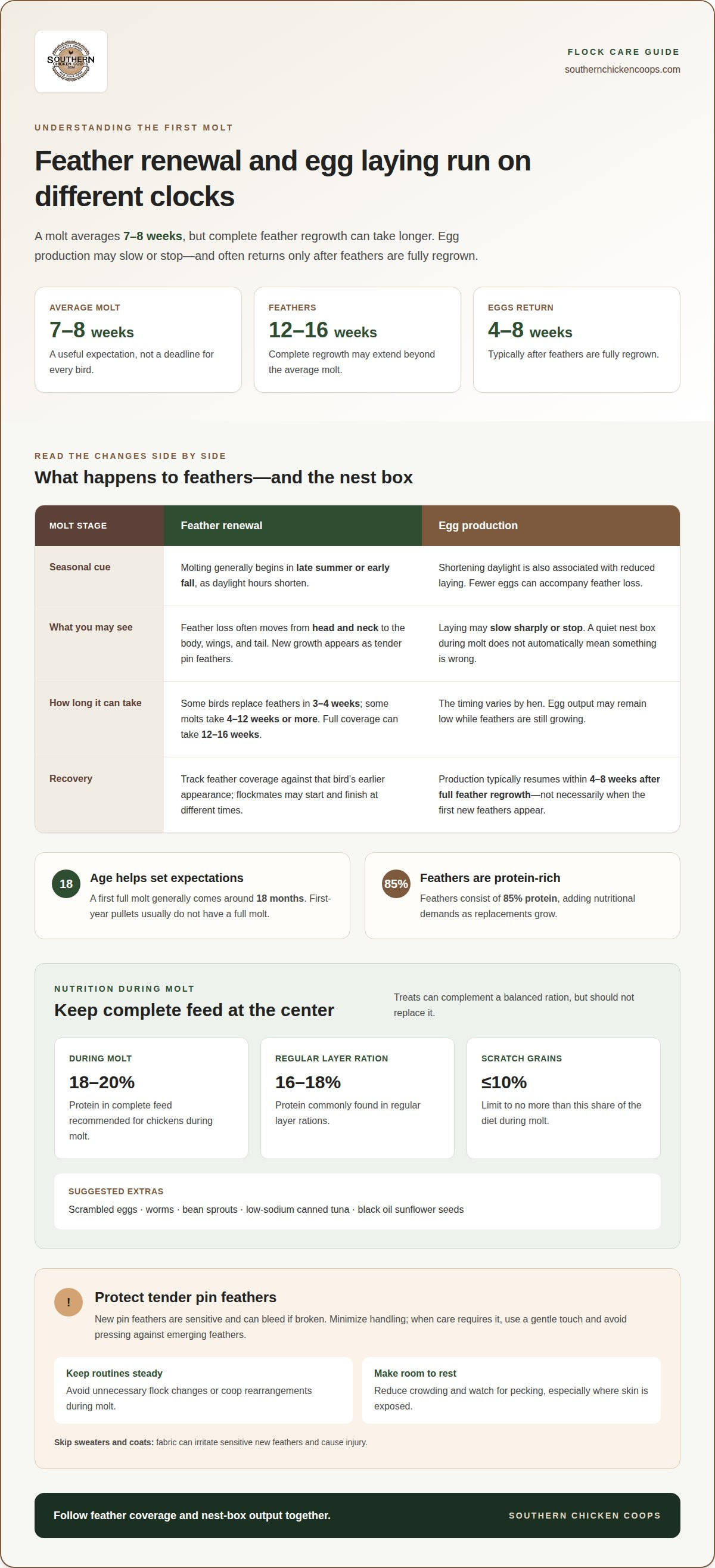
A typical molt is the period when a chicken sheds old feathers and grows replacements, averaging 7-8 weeks from start to finish. That average helps set expectations, but it isn’t a deadline for every bird. Some molts take 4 to 12 weeks or more, while complete feather regrowth can last 12 to 16 weeks. Allow for the individual bird’s pace when assessing progress.
In Texas and elsewhere, chickens generally begin molting in late summer or early fall, as daylight hours shorten. The seasonal shift is a common cue, but breed, nutrition, stress, and daylight can affect when an individual bird starts. A pullet hatched in early winter or spring may have its first molt the following fall. First-year pullets usually don’t have a full molt, so age and season together offer useful context.
Birds in the same flock don’t necessarily follow the same schedule. They may start at different times, extending the period when some are molting. A hen that starts later may still be regrowing feathers after an earlier molter looks fully feathered again. Track each bird’s changes rather than treating the flock’s molt as one synchronized event.
Feather Loss and Regrowth Sequence
Feather loss often progresses from the head and neck to the body, wings, and tail. New feathers emerge as pin feathers, giving you a way to follow changes across the bird rather than judging the molt by one bare patch. Pin feathers are tender, so handle your hen gently while they develop.
Regrowth speed varies: some chickens replace feathers within 3 to 4 weeks, while others need 12 to 16 weeks for full coverage. These timelines describe different experiences, not a promise that every bird follows either one. Late-season, strong layers generally molt quickly, while flockmates may move at a different pace. Comparing a hen’s current feathers with her own earlier appearance can make gradual changes easier to notice.
Egg laying can slow sharply or stop during molting, so fewer eggs may accompany feather loss. Production typically resumes within 4-8 weeks after feathers are fully regrown, not necessarily as soon as the first new feathers appear. Because full regrowth may extend beyond the average 7-8-week molt, the return of eggs can come later than expected. Tracking feather coverage alongside nest-box output helps clarify that sequence.
Why chickens molt and how feather regrowth affects egg production
Molting replaces worn feathers, while shorter daylight and the demands of regrowth can affect a hen’s laying rhythm. Understanding these changes helps you support your flock with steady nutrition and gentle care.
The Molting Process
Molting is the seasonal shedding and replacement of feathers, a normal renewal that can coincide with fewer eggs. Feather loss typically moves from the head and neck across the body, wings, and tail. New pin feathers emerge as old feathers fall, so a hen may look uneven during the change. Recognizing this pattern helps distinguish gradual molting from sudden, isolated feather loss.
Feathers consist of 85% protein, and growing replacements adds nutritional demands while a hen’s egg production may slow or stop. Shortening daylight is also associated with both seasonal molting and reduced laying. These changes can overlap, so a quiet nest box doesn’t necessarily mean feather growth has stalled. Watch feather development and egg output together rather than treating either sign alone.
Protein Foods for Feather Regrowth
Protein-rich feed and modest treats can support a hen as she grows feathers. Suggested options include scrambled eggs, worms, bean sprouts, and low-sodium canned tuna. Some keepers also offer black oil sunflower seeds. Treats should complement, not replace, a balanced poultry ration, since a varied menu alone may not provide complete nutrition.
A complete feed containing 18-20% protein is recommended for chickens during molt; regular layer rations commonly contain 16-18%. Keep complete feed available, and limit scratch grains to no more than 10% of the diet during molt. Any extras should remain a small share of daily intake, preserving the balanced feed as the flock’s main source of nutrients.
Careful Handling of Pin Feathers
Pin feathers are sensitive new growth, so minimize handling during this stage. Their developing shafts can bleed if broken, making unnecessary restraint or close feather inspection a poor choice. Observe your bird without repeatedly picking her up, and handle her gently only when necessary for care.
For example, if you need to move a molting hen, keep your touch calm and avoid pressing against emerging feathers. Avoiding rough contact protects tender growth while it develops. A stable, comfortable home matters too; if your flock’s housing needs have changed, explore custom chicken coops suited to your birds.
Do all chickens stop laying during molting?
No. During molt, hens can sharply reduce laying or stop completely. The change in daylight that prompts seasonal molting also affects egg production, so fewer eggs can accompany feather loss.
Keep molting hens comfortable with a calm, sheltered coop and familiar routines. Don’t put sweaters or coats on them: fabric can irritate sensitive new feathers and cause injury.
Reduce stress by avoiding unnecessary changes. When possible, don’t add new birds or rearrange the coop during a molt. Either change can unsettle flock routines while a hen is growing feathers and adjusting her laying rhythm.
Give molting birds enough room to rest without crowding or pecking. Extra space matters when a hen has exposed skin, since flockmates may target those areas. Watch how birds use the coop and make sure a resting hen can move away from busy flock activity.
Competition at the feeder can add pressure to a flock already managing a molt. Set up feed access so multiple birds can eat, rather than letting one dominant hen guard the only feeding spot. Watch mealtimes: if a molting bird is repeatedly displaced, adjust access so she can eat without a confrontation.
Keep daily patterns familiar. Maintain your usual feeding and coop routines, and postpone avoidable changes while birds are molting. A predictable routine limits disruption; unfamiliar flockmates or changes to the coop layout can trigger competition and make resting harder.
Handling is another disturbance to limit. Avoid picking up a molting hen for routine checks or repeated feather inspections. Observe her posture, movement, and access to food from nearby, and reserve handling for necessary care. Less disturbance gives sensitive new feathers room to develop.
Molting hens may seem less energetic, more irritable, or less social than usual. Give a withdrawn bird space, and watch for pecking at exposed patches. If flockmates crowd her, a calmer resting area within the coop can help her avoid conflict while staying with the flock.
Egg counts can vary between hens during the same molt. One bird may continue laying while another stops, so track each hen’s pattern rather than expecting the whole flock to pause together. Stable routines, accessible feed, and room to rest address practical stressors without making every quiet nest box a cause for concern.
Why egg production slows or stops during molt
Egg production may slow sharply or stop while a hen molts. Shortening daylight triggers feather replacement and can also reduce or stop laying as the reproductive system naturally regresses. The two changes can happen together, so a smaller egg collection during molt may reflect seasonal biology. Not every hen will stop laying, and birds may pause for different lengths of time.
Daylight helps explain why feather loss and fewer eggs often appear together. As the days shorten, the seasonal signal affects both molting and a hen’s reproductive rhythm. That overlap matters when interpreting a change in the nest box. A hen shedding feathers during the seasonal shift may lay less while remaining active and eating.
Flock totals can hide differences between individual birds. One hen may continue laying while another pauses, and their molt schedules may not match. For example, you might see fewer eggs overall without every nest becoming quiet. Note which birds are molting and compare their laying patterns over time. This gives you a clearer picture than relying on one day’s egg count.
Age and seasonal context can also help interpret a pause. In a healthy flock without external parasites or other problems, chickens older than 12 months shedding feathers in late summer or early autumn are likely molting. That pattern supports a seasonal explanation for reduced laying. It does not mean every drop in egg production has the same cause, so consider feather changes and timing together.
After feather coverage is complete, egg production typically resumes within 4-8 weeks. The interval begins after feathers are fully regrown, not when the first pin feathers appear. If a hen is still replacing feathers, that return window hasn’t begun. This distinction helps set a realistic expectation: a hen can look partly feathered and still be moving through molt.
Keep a simple record of daily eggs and visible feather changes. Note whether a particular hen is losing feathers as the flock’s total egg output falls. Then record when her feathers appear fully regrown and compare that with later laying. This timeline helps distinguish the molt from the recovery period that follows, without assuming all hens will start laying again together.
Molting and reduced laying are linked, but the sequence varies by bird. A hen may slow down, stop, or continue laying during feather replacement; the seasonal daylight change can reduce production regardless. Use the bird’s age, feather loss, and regrowth stage as context. Once full regrowth is evident, the usual 4-8-week return window offers a useful guide for watching egg production.
Why chickens molt
Molting is how chickens replace feathers as part of their natural growth cycle. For adult birds, shortening daylight in late summer and early fall is the primary seasonal trigger. Chickens shed old plumage and grow a fresh set rather than keeping the same feathers indefinitely. The process can be uneven: one bird may lose feathers while another still looks fully feathered. Understanding the seasonal cue helps explain why feather loss often appears alongside reduced laying.
Age helps distinguish an adult molt from a young bird’s feather changes. A chick’s first juvenile molt begins at 6-8 days old and is complete by approximately 4 weeks. A second juvenile molt occurs between 7-12 weeks, as young birds continue developing their feathers. Those early changes aren’t the same as an adult hen’s annual molt. First-year pullets usually don’t have a full molt, while a first annual molt generally occurs around 16-18 months.
Season isn’t the only influence on timing. Breed, nutrition, stress, and daylight can all affect when a bird begins molting. Stressors that can trigger premature feather loss include inadequate food or water, poor nutrition, extreme heat stress, overcrowding, predator threats, and broodiness. For example, a bird facing heat stress and limited access to feed may start shedding outside the usual seasonal pattern. Consider flock conditions to put unusual timing into context.
Molting isn’t limited to hens. Roosters also replace feathers, and molts can be more intense in a chicken’s second year and beyond. A hen that lays less may shed and regrow feathers so slowly that the molt goes unnoticed. Flockmates can also start at different times, making the overall change appear gradual. These differences explain why one seasonal cue doesn’t produce the same pattern in every bird.
The practical takeaway is to consider age, season, and recent stressors together. A bird older than 12 months shedding feathers in late summer or early autumn is likely molting when the flock is otherwise healthy and has no external parasites or other problems. By contrast, poor nutrition or crowding may help explain premature feather loss. For a flock whose housing needs have changed, explore custom coop options suited to its needs.
Southern Chicken Coops: Custom Chicken Coops
Southern Chicken Coops offers custom chicken coops for keepers planning a secure, lasting home for their flock. If your current setup no longer suits your birds or your property, a custom design can help match the housing to your needs. The signature Polka model measures 6'×12' and is designed for durability and functionality in the Texas climate. Semi-custom designs are also available, and coop delivery is offered.
As you plan for future molts, consider how your flock uses its space for resting and feeding. A well-planned coop gives you a practical foundation for everyday care through seasonal changes. Contact Southern Chicken Coops to talk about a coop for your flock.
Make the Next Season Easier on Your Flock
Supporting chickens through their first molt can become part of a thoughtful flock-care routine, rather than a season that catches you by surprise. As you look ahead, consider what you’ve learned about your birds: which hens prefer a quieter corner, how your flock uses its space, and what changes help daily care feel more settled. Those observations can help you prepare for future seasonal transitions with greater confidence.
A dependable home is part of that preparation. If your coop no longer works well for your birds or property, a custom-built option may be a useful next step. Southern Chicken Coops builds handcrafted and semi-custom coops in McGregor, Texas, and delivers completed coops to prepared, level lots. Reach out to discuss a housing solution for your flock.
When you’re ready to discuss your setup, contact Southern Chicken Coops. A little thoughtful planning now can help you care for your birds with steadiness through the seasons ahead.
Frequently Asked Questions
How long does molting last?
A chicken’s molt averages 7-8 weeks, but feather replacement can take longer. Some birds may need 12-16 weeks to fully regrow feathers. Flockmates often start at different times, so the flock’s overall molt may last beyond any one bird’s period. For supporting chickens through their first molt, keep a simple note for each hen, rather than using the first or last molter to set one flock-wide timeline.
When Does Molting Happen?
Adult chickens generally molt in late summer or early fall, as daylight hours shorten. A bird hatched in early winter or spring may have its first annual molt the following fall. Timing can vary with breed, nutrition, stress, and daylight, so two hens of similar age may not start together. A seasonal start is useful context, especially when feather loss appears across several birds.
Why Do Chickens Molt?
Chickens molt to replace feathers as part of their natural cycle. Shorter daylight in late summer and early fall is the primary seasonal trigger. Stressors such as inadequate food or water, extreme heat stress, overcrowding, predator threats, poor nutrition, or broodiness can also bring on premature molting. Consider recent conditions alongside a bird’s age and feather changes when interpreting an unexpected molt.
Is feather loss ever a sign of something else?
Yes. Feather loss with bleeding or irritated skin, or loss limited to one bird, deserves a closer look for mites, lice, or pecking injuries. A typical seasonal molt often affects birds at different times, but a damaged patch or one bird being targeted may point to another issue. Observe the skin and flock interactions, and note whether other hens show similar feather changes.
When Will Eggs Come Back?
Egg production typically resumes within 4-8 weeks after feathers are fully regrown. The timing starts from complete feather coverage, not from the first signs of new growth. Keep track of the hen’s regrowth and laying rather than judging recovery from the flock’s total egg count. For example, one hen may resume before her flockmates, whose molts began later or progressed at a different pace.
When do chickens have their first molt, and how long does it last?
A chicken’s first annual molt generally occurs around 16-18 months of age; first-year pullets usually don’t have a full molt. Young birds also have juvenile feather changes: the first begins at 6-8 days old and is complete by approximately 4 weeks. A second juvenile molt occurs between 7-12 weeks. These early changes differ from the adult seasonal molt.
What are the signs of a normal first molt in chickens?
Typical signs include seasonal feather shedding followed by new growth, often beginning around the head and moving across the body. A molting hen may also seem less energetic, more irritable, or less social. Her comb and wattles may lose some bright red color during molt. Bleeding, irritated skin, or feather loss affecting only one bird calls for closer observation for other causes.
What should chickens eat during their first molt, and how much protein do they need?
Supporting chickens through their first molt includes keeping complete poultry feed at the center of the diet. Choose feed containing 18-20% protein, with feed available freely. Scrambled eggs, worms, or bean sprouts can supplement the ration, but shouldn’t replace it. Keep scratch grains to no more than 10% of the diet so treats don’t displace the balanced nutrition a growing feather coat needs.


