

A chicken flock can do more than fill the egg basket. A self-sufficient homestead chicken setup in Texas can bring eggs and chicks close to home while fitting into a wider system of gardens, compost, and locally grown feed. The goal isn’t to make chickens independent of care, but to connect their daily needs naturally with the rest of the homestead.
If you hope to rely less on purchased feed, think beyond the coop. Garden surplus can supplement a flock’s diet, while bedding and manure can become part of a composting routine. These connections take planning: the right setup depends on your household’s food needs, available space, and how you want chickens to contribute.
This guide covers practical ways to keep food-producing chickens near the house, integrate them into a homestead, and reduce reliance on purchased feed. It also looks at planning for eggs and meat and creating a coop and run suited to Texas weather, so you can build a steady, well-cared-for setup one step at a time.
Key Takeaways
- Plan your flock around the eggs and meat your household expects to use, and think through needs over a chosen period before deciding how many birds to keep.
- Connect chickens to the wider homestead by making thoughtful use of garden surplus and composting suitable bedding and manure.
- Reduce reliance on purchased feed by considering what your garden and property can provide, while keeping the flock’s daily care needs in view.
- Choose chicken breeds according to your priorities for heat tolerance, egg production, or meat, rather than expecting one choice to suit every goal.
- Design the coop and run around shelter, predator protection, and Texas weather; a well-planned structure helps support a steady, cared-for flock.
Food-producing chickens near the house
Keeping chickens near the house puts eggs within reach and makes care part of the homestead routine. Place the coop where you can reach it easily, then connect daily chores with nearby food production. A garden can provide suitable surplus, while bedding and manure can contribute to compost for garden soil. These links can make the setup more sustainable, but they don’t remove the need for complete feed and dependable care.
Situation: One Texas homestead discussion described food-producing birds on 2.5 acres near the house. Action: The proposal kept poultry close to household routines and the surrounding land. Result: It illustrates how proximity can make daily feeding, egg collection, and observation part of regular chores. The acreage is an example, not a universal space requirement; flock size and layout depend on the property and household plan.
Situation: Another family had more than 20 laying hens for an abundant egg supply. Action: They kept a dedicated laying flock. Result: Eggs supported household food production, with surplus eggs available to sell or trade where applicable rules allow. A separate example involved 25 chickens remaining from two batches of broilers raised that summer. That flock shows how meat birds can complement layers without serving the same purpose.
In Texas, rules for hens, roosters, and egg sales depend on the local area and the activity. Before setting up a flock or selling eggs, identify the requirements that apply to your property and sales plan. Don’t assume rules for hens also cover roosters or commercial sales.
For poultry registration, disease prevention, and avian flu, keep flock records and use clean water and equipment. Take sensible steps to separate your flock from visiting birds. Follow current official instructions before moving or selling poultry, especially during disease-control measures. Daily observation helps you notice changes in appetite, movement, or egg production promptly.
In Texas heat and drought, keep fresh water available and provide shade and airflow. Secure the coop and run before storms, keep bedding dry, and shelter birds from winter cold. Plan the layout so water, ventilation, and routine checks remain practical as conditions change.
To hatch and raise chickens, select eggs for incubation, keep the brooder clean and warm, and provide suitable feed and water as chicks grow. Plan processing separately, with humane handling and safe food practices. Hatching adds a new care cycle, so match each batch to your flock’s space and your household’s needs.
Predators around Texas properties can include coyotes, raccoons, foxes, snakes, and birds of prey. Protect chickens with a secure nighttime coop, sturdy latches, and a covered run with well-fitted barriers. Check gates and openings during regular chores: a small gap can undermine an otherwise thoughtful setup.
Chickens in an integrated homestead system
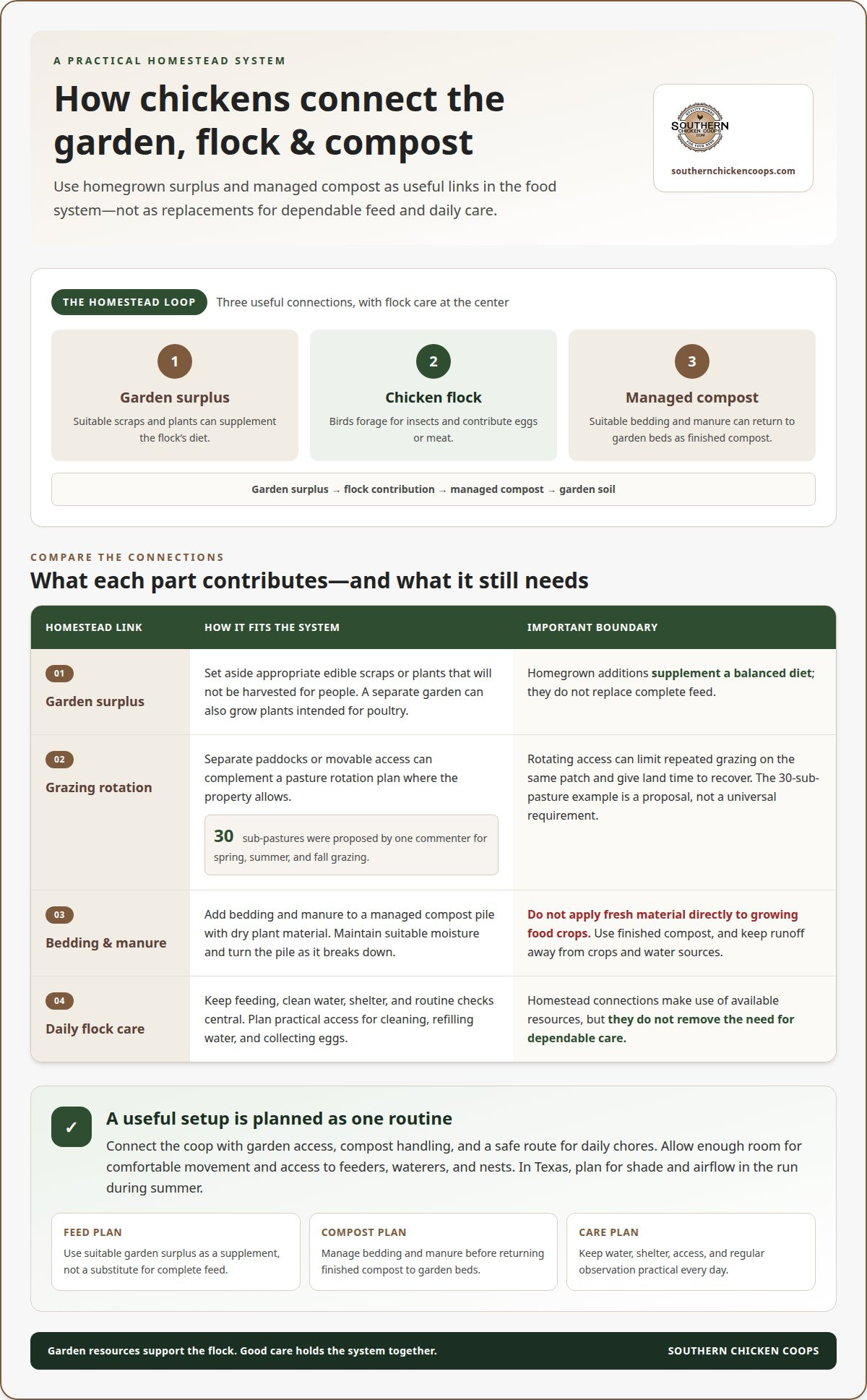
A homestead flock can contribute beyond eggs and meat. Chickens forage for insects, eat suitable garden surplus, and produce manure for composting. Make each connection part of a clear routine: grow suitable plants for poultry, collect bedding and manure, and return finished compost to garden beds. This makes a self-sufficient homestead chicken setup in Texas part of a wider food system, while the flock still needs dependable feed, clean water, shelter, and daily care.
Situation: A garden produces edible scraps and plants that won’t be harvested for people. Action: Set aside appropriate surplus for chickens, or plan a separate garden with plants intended for poultry. Result: The birds can use some homegrown food, and the garden becomes part of the feed plan. These additions supplement a balanced diet rather than replace it.
Situation: A homestead has grazing land that needs a thoughtful rotation plan. Action: One commenter proposed dividing pasture into 30 sub-pastures for spring, summer, and fall grazing. For chickens, separate paddocks or movable access can complement that approach where the property allows. Result: Rotating access can help limit repeated grazing on the same patch, while giving the land time to recover.
Chicken bedding and manure can contribute to compost, but don’t put fresh material directly on growing food crops. Add it to a managed pile with dry plant material, maintain suitable moisture, and turn it as it breaks down. Apply finished compost to garden beds, and keep runoff away from crops and water sources. This makes manure management a useful part of a sustainable garden routine.
Space per bird depends on flock size, behavior, outdoor access, and room for feeders, waterers, and nests. Plan for comfortable movement and easy access for cleaning, refilling water, and collecting eggs. In Texas, shade and airflow also affect how well a run serves birds during summer. These details help make a self-sufficient homestead chicken setup in Texas practical for both the flock and its caretaker.
Setup and maintenance costs depend on housing, fencing, flock size, feed, bedding, water, and ongoing care. A custom coop’s price depends on the project and is provided after a quote request; feed and protection needs shape recurring expenses.
Connect the coop with garden access, compost handling, and a safe route for daily chores. Custom chicken coop planning can help fit the structure to those needs while keeping animal care central.
A commenter estimated that raising ducks and chickens for meat and eggs would require 1 acre on a homestead, and another commenter listed a hen house as homestead infrastructure. Poultry, including chickens, can also help manage pests and ticks. In winter, keeping chickens in a hoophouse can help raise its inside temperature, adding another possible connection between the flock and growing space.
Rotational grazing means moving livestock to different areas to reduce overgrazing. Homesteaders can combine this practice with local feed sources, composting, and manure management to further reduce their carbon footprint. These choices can link poultry care with land stewardship, while still requiring attention to the flock’s housing, feed, and daily needs.
How many chickens does a self-sufficient Texas homestead need for eggs and meat?
Start with household use, not a target flock size. Track how many eggs your household eats and how often chicken appears in meals. Then decide whether you want a steady supply, occasional surplus, or both eggs and meat. The right flock size depends on those needs, your space, and the time you can give to daily care.
A useful first step is to plan food production over a chosen period: 3 months, 6 months, 9 months, or 1 year. Estimate egg use across that period, allowing for guests, preserving, and times when household demand changes. A homesteading discussion recommended this kind of needs-based planning. It helps turn a broad goal into a practical flock plan.
Situation: A household wants eggs through the year, but its weekly use varies. Action: Record egg consumption, then compare it with a realistic laying estimate for the chosen hens. Account for age, breed, health, and seasonal changes in laying. Result: The household can set a target based on actual use, rather than expecting every hen to lay at the same rate year-round.
For meat, work backward from planned meals. List how often you want chicken on the table, how many people each meal serves, and whether you’ll preserve any harvest. Then consider the birds’ growth period, processing arrangements, and freezer capacity. Meat birds and laying hens serve different roles, so decide whether to manage separate groups or prioritize one purpose first.
Situation: A family wants eggs and home-raised meat, but has limited time for flock care. Action: It could begin with a manageable laying flock, learn the daily routine, then plan meat production around its meal calendar. Result: The family gains experience before adding another group and can make a more grounded decision about space, feed, and processing work.
Leave room in the plan for change. Hens may lay less as they age, while illness, heat, and seasonal conditions can affect production. A replacement plan should consider how new pullets will fit into the existing flock and how you’ll care for birds that no longer meet your egg goals. Records of eggs collected, feed use, and household demand can make those decisions clearer.
Finally, match the flock to its housing, secure outdoor space, feed storage, water access, and your daily schedule. A larger flock means more routine work and more resources to manage. For a self-sufficient Texas homestead, a thoughtful flock size balances household food goals with the land and care available, rather than chasing a single number that may not suit your circumstances.
Best chicken breeds for Texas heat, egg production, and meat
Choose chickens for the purpose you have in mind, then match that choice to your Texas climate and care plan. Texas includes hot-humid, hot-arid, and temperate climate zones, so conditions vary across the state. A breed suited to one homestead’s priorities may not suit another’s. Compare birds by intended use, heat-management needs, temperament, and available records for their parent flock.
Situation: A household wants eggs as its main food contribution. Action: Prioritize laying performance, temperament, and a flock size your household can care for. Ask for records showing how the birds’ parents performed, rather than relying only on a breed label. Result: You can select birds to meet your household’s egg goals while considering the conditions where they’ll live.
Situation: Another homestead wants meat for planned meals. Action: Focus on birds intended for meat, and plan their care, feed, processing, and storage before bringing them home. Result: The choice reflects the household’s food plan, rather than assuming laying hens and meat birds serve identical roles. If you want both eggs and meat, consider whether separate groups fit your space and routine.
For heat, consider each bird’s needs alongside the housing you can provide. Shade, airflow, clean water, and a sheltered place to rest matter through hot weather. Conditions vary: a hot-arid property and a hot-humid property can present different daily challenges. Breed selection should complement practical heat management, not replace it.
Use a consistent comparison before choosing:
- Purpose: Decide whether eggs, meat, or both come first.
- Climate: Match the bird’s care needs to your local Texas conditions.
- Temperament: Consider how the flock will fit your household routine.
- Records: Compare available parent-flock information with your goals.
- Capacity: Account for feed, housing, water, and daily attention.
A breed name alone doesn’t settle the decision. For example, if summer heat is a major concern, first assess shade and airflow, then compare candidate birds’ care needs. If meat is the priority, start with meal plans and processing logistics. These steps help narrow the choices without treating one breed as best for every Texas homestead.
Before choosing birds, write down your primary purpose, local weather conditions, and available care routine. Then compare breeds against those needs and include housing in the same plan. This measured approach helps align egg production, meat goals, and animal well-being with the realities of your homestead.
A broader homestead food plan can help put poultry goals in context. The family reported producing 80-90% of its own food during its first year on the homestead. The family used a 1:8 rule to estimate potato yields: each pound of seed potatoes should produce about 8 lbs. of potatoes. Considering those foods alongside eggs or meat can help clarify what contribution the flock is meant to make. Keep that goal connected to local conditions and the care routine you can sustain, rather than choosing birds by breed name alone.
How to design a predator-proof chicken coop and run for Texas weather
Build protection into the whole enclosure, not just the coop door. Texas has hot-humid, hot-arid, and temperate climate zones. A well-planned coop is a key part of a self-sufficient homestead chicken setup in Texas, pairing secure barriers with shade, airflow, and shelter from wind-driven rain. Site conditions vary, but every opening, latch, roof edge, and ground-level seam deserves attention.
Situation: Chickens roost safely inside but forage in an exposed run during the day. Action: Enclose the run overhead and around its sides, using sturdy materials and secure closures. Protect the lower edge so predators can’t easily push beneath it or through a weak seam. Result: Birds can use protected outdoor space, while the coop remains their nighttime shelter.
Pay close attention to doors and small gaps. Choose latches that stay fastened when bumped, and close the coop door each evening. Cover vents with protective mesh while preserving airflow. Check corners, roof joins, and ground edges during routine cleaning. Raccoons may work simple fastenings, while snakes can enter through surprisingly small openings.
Situation: A coop in hot-arid Texas gets strong sun, while a hot-humid site faces humid air and rain. Action: Plan shade and ventilation around local exposure, keep air moving, and prevent rain from soaking bedding. Include a dry, sheltered area where birds can retreat. Result: The enclosure can suit different Texas conditions when its layout responds to the site.
Plan for storms during construction. Anchor the structure securely, protect exposed edges, and keep the roof and run cover in good condition. Position doors and access points so you can operate them safely after heavy rain. Before severe weather, secure loose items near the enclosure and make sure the flock can reach dry shelter. These steps help the structure remain useful as conditions change.
Use this sequence to catch weak points:
- Choose the site: Consider shade, drainage, wind exposure, and access for daily care.
- Secure the shell: Close gaps at doors, vents, roof edges, and ground-level seams.
- Protect the run: Cover exposed sides and overhead areas, fastening each connection.
- Plan for heat: Provide shade, ventilation, and reliable access to water.
- Review after storms: Repair loose mesh, damaged latches, and disturbed edges.
Keep everyday tasks in mind, too. Place feed and water where you can refill them without leaving doors open, and make cleaning access straightforward. A self-sufficient homestead chicken setup in Texas needs a coop that supports both protection and routine care. Request a custom chicken coop shaped around your flock, property, and local weather.
Southern Chicken Coops
Southern Chicken Coops can help turn your flock plan into practical housing suited to your homestead. Consider a custom coop when you need the structure to fit your birds, daily routines, and property layout. The signature Polka model is a 6'x12' coop designed for durability and functionality in the Texas climate, and semi-custom designs can be tailored to specific poultry needs. Coop delivery is also available. A well-planned coop supports the wider setup by providing a secure home base for feeding, roosting, and egg collection. If you’re ready to discuss housing for your homestead flock, contact Southern Chicken Coops.
Take the Next Step Toward Your Homestead Plan
Let your first decisions reflect how your household actually lives. Write down what you want your flock to contribute, where daily chores fit, and which parts of the setup need careful planning. A self-sufficient chicken setup for a Texas homestead grows from practical choices made in the right order, not from trying to do everything at once.
As your plan takes shape, think about the coop as a lasting part of the home landscape. It should support your routine and give your birds a secure, well-considered place to live. If you’re ready to talk through housing for your homestead, contact Southern Chicken Coops.
Each thoughtful step brings the goal closer: a cared-for flock, food close to home, and a setup that belongs on your land. Start with the needs in front of you, and let the rest grow steadily from there.
Frequently Asked Questions
How much does it cost to set up and maintain a homestead chicken flock in Texas?
Setup and maintenance costs depend on housing, fencing, flock size, feed, bedding, water, and ongoing care. A custom coop’s price depends on the project and is provided after a quote request.
Chicken coop and run size per bird for a Texas homestead
Space per bird depends on flock size, behavior, outdoor access, and room for feeders, waterers, and nests. Plan for comfortable movement, easy cleaning and refilling, egg collection, shade, and airflow.


