

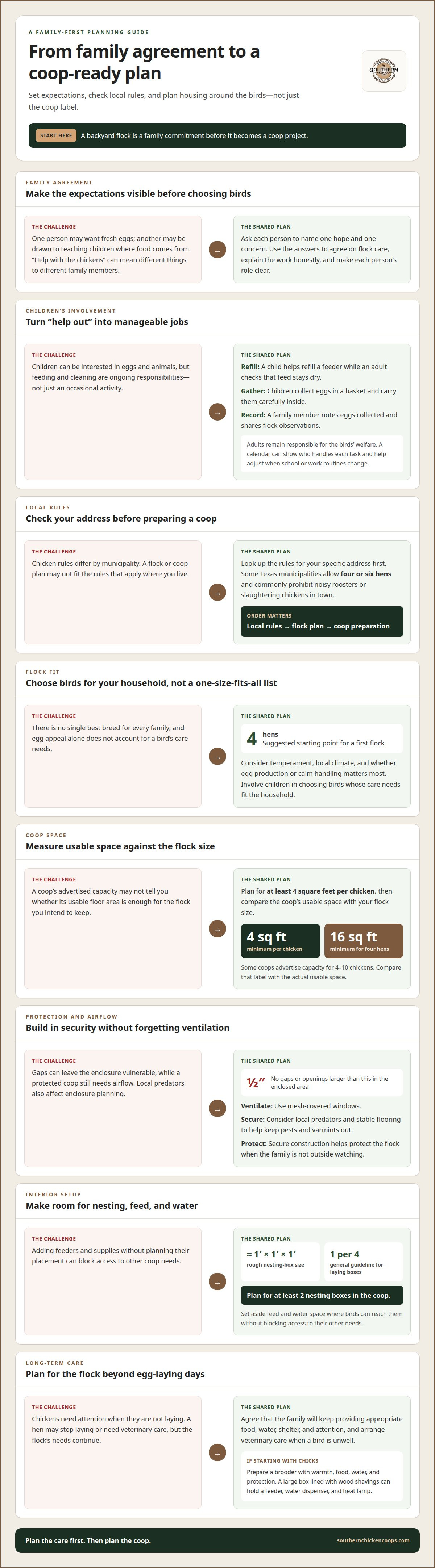
A backyard flock is a family commitment before it becomes a coop project. Getting my family on board with backyard chickens starts with agreeing on who will care for the birds and what everyone hopes to learn. In Texas, local rules vary: some municipalities allow four or six hens and commonly prohibit noisy roosters or slaughtering chickens in town. Check the rules for your address before preparing a coop.
Fresh eggs may be the first thing that comes to mind, but chickens can also give children a hands-on role in food production, from caring for the flock to seeing where breakfast begins. A shared plan helps everyone understand the daily responsibilities as well as the rewards.
In this guide, we’ll cover ways to involve children, discuss common family concerns, and consider practical details to settle before choosing a coop. You’ll get a clearer sense of how a backyard flock could fit your household and what to consider when planning safe, comfortable housing for your birds.
Key Takeaways
- Build family support by talking through shared goals and deciding how children can take part in caring for the flock.
- Plan the coop around the birds’ comfort, protection, ventilation, and room to move.
- Weigh the learning opportunities and fresh-food appeal alongside hygiene and household safety considerations.
- Account for setup, ongoing supplies, and regular care when deciding whether a flock fits your family’s routine.
- When you’re ready to plan housing, consider how a custom coop can suit your flock and backyard.
1. Family projects and connecting children with food production
Getting my family on board with backyard chickens starts with understanding what matters to each person. One family member may value fresh eggs, while another wants children to learn where food comes from. Ask everyone to name one hope and one concern, then use those answers to shape a shared flock-care plan.
For a reluctant adult, explain the benefits with everyday examples, not promises. Children can learn that eggs come from animals that need food, water, and regular care, rather than simply appearing in a carton. Be just as clear that feeding and cleaning are ongoing responsibilities. An honest picture helps everyone weigh the learning opportunity against the work involved.
A backyard flock can make food production hands-on. One family kept seven chickens, including three Golden Comets, then added two Easter Eggers because they lay green eggs. Choosing breeds can give children a starting point for noticing differences among hens and asking how food reaches the table. It also shows how thoughtful choices can make a flock feel personal.
Names and small projects give children ways to participate beyond collecting eggs. One family named a chicken Mayzie after the character their oldest daughter played in a Dr. Seuss production. Children might draw the flock, help record eggs, or suggest names for new birds. These activities connect family interests with the flock’s daily life.
Make each child’s role clear and manageable. For example:
- A child can help refill a feeder while an adult checks that the feed stays dry.
- Children can gather eggs in a basket and carry them carefully inside.
- A family member can note the eggs collected and share observations about the flock.
Specific jobs make “help with the chickens” easier to understand. Adults remain responsible for the birds’ welfare, while children contribute in ways suited to their readiness. A calendar can show who handles each task and help the family adjust when school or work routines change.
A practical way of getting my family on board with backyard chickens is to connect the project with food and family history. Chicken husbandry shifted about a hundred years ago as people moved from farms to cities, and most Americans are described as three or four generations removed from the farm. Let children learn by watching, asking questions, and taking part in steady, age-appropriate care.
2. Preparing for backyard chickens
Before raising chickens, find out whether your town allows them. Local rules differ, but some Texas municipalities allow four or six hens and commonly prohibit noisy roosters or slaughtering chickens in town. Learn which rules apply where you live before choosing a flock or preparing a chicken coop.
For a first flock, a suggested starting point is four hens of easy-to-manage breeds. There’s no single best breed for every family. Consider temperament, the local climate, and whether egg production or calm handling matters most. Choose birds whose care needs fit your household, and involve the children in the decision.
Unlike store-bought eggs and many household pets, chickens need suitable outdoor housing and ongoing care, while giving children a direct role in food production. Eggs from a backyard flock don’t cancel out that commitment: the birds still need attention when they aren’t laying.
The responsibility continues if a hen stops laying or needs veterinary care. The family must keep providing appropriate food, water, shelter, and attention, and arrange veterinary care when a bird is unwell. Discussing this commitment before bringing chickens home helps everyone understand that a flock is a long-term responsibility, not a short-lived activity.
Plan the space around the number of birds, not the label on a coop. A coop should provide at least 4 square feet per chicken. For four hens, that means planning for at least 16 square feet of coop space. Some coops advertise capacity for 4-10 chickens, so compare the usable space with the flock you intend to keep.
Protection and airflow matter too. The enclosed area should have no gaps or openings larger than 1/2 inch, and mesh-covered windows provide ventilation. Consider local predators when planning the enclosure. A stable floor can help keep pests and varmints out, while secure construction protects the flock when the family isn’t outside watching.
Plan the interior before setting up feeders and supplies. Nesting boxes are roughly 1’x1’x1’, with a general guideline of one laying box per four chickens and at least two boxes in the coop. Set aside space for feed and water where birds can reach them without blocking access to their other needs.
If your family starts with chicks, prepare a brooder with warmth, food, water, and protection. A large box lined with wood shavings can hold a feeder, water dispenser, and heat lamp. Planning the brooder and chicken coop helps adults and children understand what raising chickens involves from the start.
3. What are the benefits and drawbacks of keeping backyard chickens?
A backyard flock can bring food and daily learning into family life, but it also requires steady care. The benefits may matter most to households that value fresh eggs, enjoy observing animals, or can use coop waste in a compost pile. The drawbacks matter just as much: chickens need attention even when no one feels like doing chores.
Used hay or pine shavings and chicken manure can go into compost as natural fertilizer. This connects the coop with a garden: bedding and manure become part of a composting routine instead of simply being discarded. Families without a garden may value this benefit less, so consider where the material will go before deciding how useful it is to your household.
Children can learn by noticing everyday details, such as how the flock responds to weather or how eggs differ in appearance. An adult can guide these observations without turning every visit into a lesson. The flock also offers a chance to talk about the work behind food, while shared routines can make animal care meaningful.
There are limits to the appeal. Chickens can make a yard less tidy, and their care doesn’t stop for holidays or busy school weeks. Decide who will feed, water, and check on the birds when the usual caregiver is away. If nobody can reliably take on those tasks, the responsibilities may outweigh the enjoyment.
Free-ranging can expose birds to predators. In one family’s early attempt, a possum killed a chicken named Penny. That experience shows the tradeoff: birds may explore more of the yard, but the family has less control over their exposure. Plan outdoor access with the risks around your home in mind.
Health deserves a clear place in the family discussion. Backyard poultry can carry harmful germs, including avian influenza viruses, that can make people sick, according to the CDC. Children younger than 5 years old are at greater risk of serious illness from diseases spread between poultry and people, according to the Centers for Disease Control and Prevention. Account for young children when deciding how the household will interact with birds.
Before committing, list the household’s expected benefits beside its responsibilities. One family may value compost for garden beds, while another may find daily care difficult to fit around work and school. Discuss both sides together, including predator concerns such as Penny’s encounter with a possum. A balanced decision gives everyone a chance to understand what chicken keeping offers and what it requires.
4. How much does it cost to start and maintain a backyard chicken flock?
There isn’t one startup total that fits every flock. The budget depends on housing, the number of birds, the feeding setup, and the supplies you choose. Separate one-time setup needs from recurring care, then decide which costs your household can manage before bringing chickens home.
Past flock examples show how much setup can differ. These are distinct examples, not a standard budget or a promise that a similar flock will cost the same.
For your own estimate, list what you’ll need and mark each item as an initial or recurring expense:
- Initial setup includes the coop, brooder equipment for chicks, feeders, water dispensers, and other supplies.
- Recurring care includes feed, bedding, and replacing supplies as they wear out or run low.
- Additional costs can depend on the flock’s needs and the setup you choose for protecting and caring for the birds.
Feed is an ongoing expense, and how much chickens eat can vary by breed and season. They may also peck at bugs and plants, but feed remains their main source of nutrition. Treat foraging as a supplement, not a reason to leave feed out of the household budget. Track feed use as the flock settles into a routine, then plan purchases around actual consumption.
Coop costs depend on the design, size, materials, and features selected, with pricing given after a quote request. Include the housing decision early in your budget, since the coop and its setup shape how the rest of the flock’s needs fit together. A lower initial outlay may not represent the whole cost if the arrangement also requires additional supplies or changes later.
Compare coop options by what each provides, not by a capacity label alone. Housing and supply needs differ for a small flock and a larger one. Start with the number of hens your family can care for, then list the equipment and recurring essentials for that plan. This keeps the budget tied to a real flock, rather than an appealing but unplanned purchase.
Finally, leave room in your household plan for changing needs. Appetite can vary with season and breed, and worn or depleted supplies need replacing. A simple written record of feed purchases and care supplies helps your family see the ongoing pattern. Review it together before expanding the flock, so each addition comes with a clear understanding of its continuing costs.
5. How much time and daily care do backyard chickens require?
Backyard chickens need a dependable care routine, not attention only when eggs appear. Each day, someone in the household should provide food and water, observe the flock, and keep the birds’ living area in order. A shared schedule makes those tasks visible, especially when school, work, or family plans change.
Begin the morning with a practical check: make sure the birds have feed and clean water, then look for anything unusual. In the evening, confirm the flock is safely settled in its coop. These simple rounds help adults notice changes, while children can take on suitable tasks under supervision.
Cleaning is another regular responsibility. One family fluffed its coop’s deep-litter shavings every couple of weeks, added shavings about once a month, and completely cleared them every 3 or 4 months. Those intervals describe that family’s routine, not a fixed schedule for every coop. Bedding condition and the arrangement of the coop affect what needs attention.
Make upkeep easier to share by assigning specific jobs. One person can refresh the water, another can check the feed, and an adult can oversee the coop’s condition. A household calendar can show who is responsible each day. If someone will be away, name a backup before the regular caregiver leaves.
Chicks add a different care pattern. A brooder needs warmth, food, water, and safety, so someone must keep those essentials in place while chicks grow. One family raised chicks in a temporary brooder for about 8 weeks before moving them to the coop. Another guidance point describes keeping a brooder clean for about six weeks, until chicks move to their permanent coop. The timing can vary with the chicks’ readiness and setup.
Include feed and water equipment in the care routine. Check that supplies remain available and containers are clean enough for continued use. Observe how the flock behaves around its feeder and water dispenser; an empty feeder or spilled water may call for an adjustment. Regular checks also help the family spot changes before they become harder to manage.
Before choosing a flock, write down who handles each task on ordinary days and who steps in during busy periods. That plan makes the workload concrete instead of leaving “help with the chickens” undefined. If you’re planning housing around an easy care routine, explore coop options suited to your flock.
Monitor how much your chickens eat because appetites vary by season and breed. Chickens generally eat less in summer and bulk up in colder months, so include feed consumption in routine checks.
Southern Chicken Coops
Southern Chicken Coops can help turn your family’s flock plan into practical housing. Once you’ve settled on your birds, care routine, and space needs, custom chicken coops offer a way to shape the coop around your household and flock. Coop delivery helps bring that housing to your backyard, making it a natural next step as you prepare for chickens.
If your family is ready to plan its coop, contact Southern Chicken Coops to discuss your project.
Take the Next Step Together
Getting my family on board with backyard chickens is less about winning an argument than making a shared decision. Give everyone room to say what excites them, what feels like a burden, and what would help the plan work. A thoughtful conversation now can shape a routine the household is willing to maintain.
Choose one practical next step as a family, such as sketching the space you have in mind or agreeing on who will handle daily care. Keep talking as the plan develops. Children can contribute ideas, while adults make sure the flock’s needs remain central.
If your family is ready to move from discussion to planning, contact Southern Chicken Coops to talk about your project. A shared plan is a good place to begin, and every careful step brings your family closer to a backyard flock that fits your home.
Frequently Asked Questions
What Do I Need To Consider Before Setting Up My Chicken Coop?
Before setting up a coop, settle the flock size, family care plan, site, and local rules. In Texas, ordinances typically allow four or six hens and commonly prohibit noisy roosters, so local limits can shape your housing choice. Plan where feed, water, and bedding will be stored, and who will care for the birds during travel. A level, well-drained location also helps guide coop placement.
How much space and what kind of coop do chickens need?
Choose housing based on your flock size and how the birds will use the outdoor area. For chickens that aren’t free-ranged, Southern Chicken Coops’ capacity guidance allows 8 square feet of run space per bird. Each hen also needs 10 inches of roost space. Look for a design with secure mesh, ventilation, and protected openings, and consider drainage and shade when planning its place in a Texas backyard.
What are the health, hygiene, noise, smell, and predator risks of backyard chickens?
Backyard poultry can carry harmful germs, including avian influenza viruses, that can make people sick, according to the CDC. Children younger than 5 years old are at greater risk of serious illness from diseases spread between poultry and people, according to the Centers for Disease Control and Prevention. Include hygiene and coop cleaning in your care plan. Roosters can create noise concerns, while secure enclosures help limit predator exposure.
What local zoning rules, permits, and HOA restrictions apply to backyard chickens?
Requirements depend on your municipality and community rules, so review local ordinances alongside any HOA covenants. In Texas, ordinances typically allow four or six hens and commonly prohibit noisy roosters or slaughtering chickens in town. Look for rules on flock limits, roosters, coop placement, and nuisance concerns. Permit requirements can vary locally, so establish what applies to your address before buying birds or preparing a coop.
What are the best chicken breeds for beginners and families with children?
There isn’t one best breed for every family. Choose easy-to-manage birds whose temperament and care needs suit your household, local climate, and priorities, such as egg production or calm handling.


