

Imagine stepping into your Bexar County backyard on a quiet morning, coffee in hand, to the soft clucking of your own hens, only to worry that a neighbor's complaint or a misunderstood ordinance might put your flock at risk. We understand that the dream of fresh eggs shouldn't be buried under a mountain of confusing legal jargon. It's a heavy weight to carry when you want to do right by your birds and your community, but the local San Antonio rules for backyard chickens feel like a moving target. You aren't just looking for a hobby; you're seeking a way to provide for your family while acting as a good steward of your land.
We've put together this 2026 guide to help you master the local ordinances and build a thriving, compliant backyard flock in the Alamo City with total peace of mind. You'll learn exactly how to navigate the 8-hen limit, where to place your coop to respect the 50-foot setback rule, and how to protect your girls from both hungry coyotes and the relentless South Texas sun. From understanding city code to finding a handcrafted, move-in ready coop that stands up to the heat, we're here to walk this path with you as your neighbors and expert guides.
Key Takeaways
- Learn the specific San Antonio rules for backyard chickens, including the eight-hen limit and the city's strict stance on keeping roosters in residential areas.
- Understand the mandatory 50-foot setback requirement and why proper coop placement is the most important step in staying compliant with city ordinances.
- Discover the essential design features needed to protect your birds from the intense South Texas heat and persistent local predators like raccoons and coyotes.
- Explore simple egg diplomacy strategies to keep your neighbors happy and ensure your backyard homestead is a welcome part of the community.
- Find out how handcrafted, Texas-built coops provide a resilient sanctuary for your birds and simplify the process of starting your backyard journey.
Navigating San Antonio Backyard Chicken Ordinances in 2026
Starting a backyard flock in the Alamo City is a rewarding journey, but it begins with a clear understanding of the local landscape. We've spent years building handcrafted homes for these birds, and we've seen how much peace comes from knowing you're fully compliant with city code. In San Antonio, the primary oversight for your feathered friends falls under Animal Care Services (ACS). Their goal isn't to hinder your homesteading dreams, but to ensure the health of the animals and the harmony of our neighborhoods. Understanding the San Antonio rules for backyard chickens is the first step in being a responsible steward of your land.
The 8-Hen Rule and Why It Matters
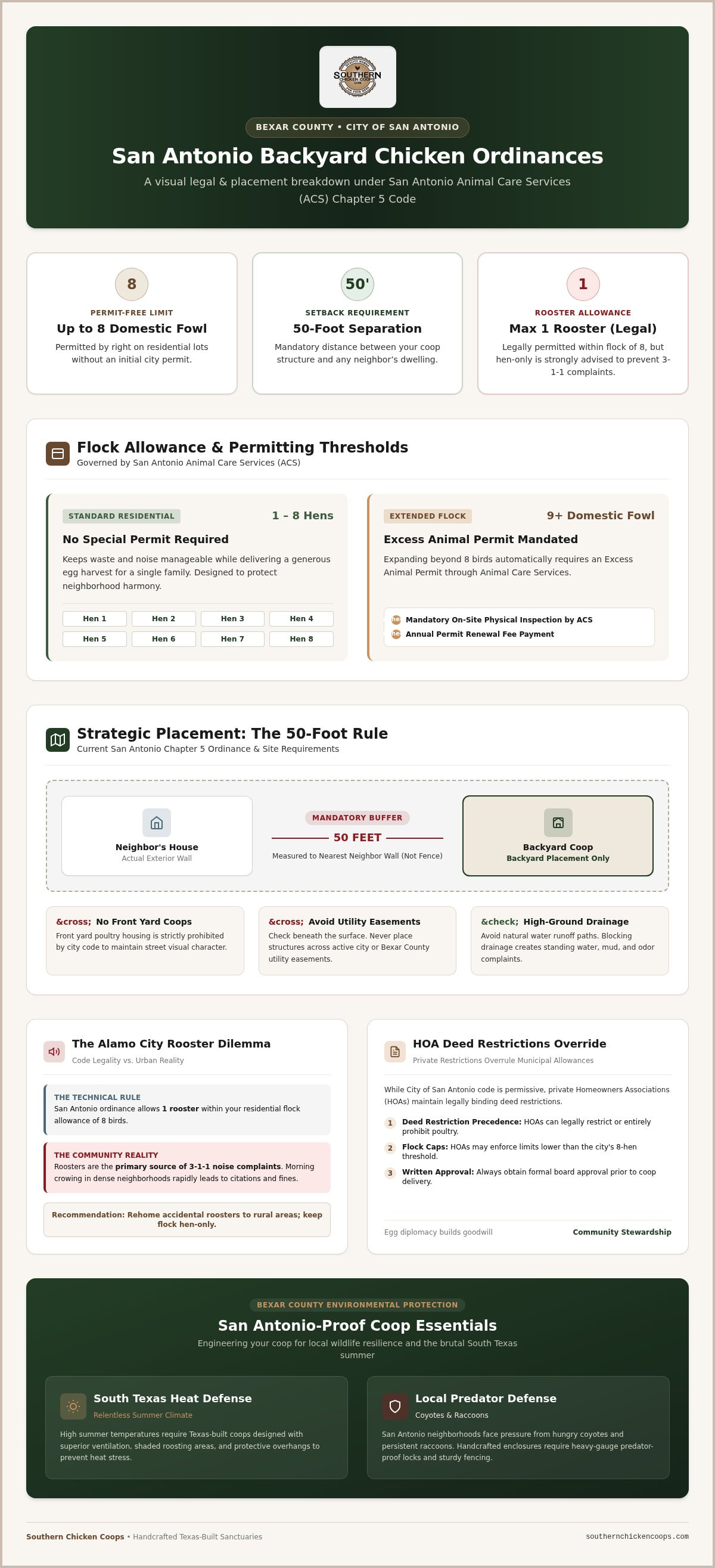
The current San Antonio code permits residents to keep up to eight domestic fowl on a residential parcel without a special permit. This limit is a thoughtful balance. Eight birds provide a generous supply of eggs for a family while keeping waste management and space requirements manageable. If you wish to grow your flock beyond this number, you'll need to apply for an Excess Animal Permit through ACS, which involves an inspection and an annual fee. For most of our neighbors, sticking to a flock of eight ensures a healthy environment where each bird has plenty of room to thrive. It also helps you stay within reasonable limits regarding odor and noise, which keeps the peace with those living nearby.
The No-Rooster Policy in the Alamo City
While San Antonio ordinances technically allow for one rooster within your flock of eight, we often suggest a hen-only approach for urban residents. The practice of urban chicken keeping relies heavily on neighborly goodwill. Roosters are the primary source of noise complaints to 3-1-1, and in dense neighborhoods, that early morning wake-up call can quickly lead to citations and fines. If you find an accidental rooster in a batch of straight-run chicks, it's often best to find him a new home in a more rural area. Keeping your backyard quiet is a simple way to show respect for your community while enjoying the benefits of fresh eggs.
Before you commit to a new flock, we can't stress enough the importance of checking your specific Homeowners Association (HOA) rules. Even though city law is welcoming, many HOAs in San Antonio have deed restrictions that can override city allowances. Some might limit you to fewer birds or prohibit them entirely. We always recommend getting written approval from your board to protect your investment. Following the San Antonio rules for backyard chickens, alongside your neighborhood guidelines, ensures your journey into homesteading is a success from day one.
Strategic Placement: The 20-Foot Setback Rule
Finding the perfect spot for your flock is about more than just where the sun hits the grass. It's an act of stewardship for your birds and your neighborhood. While many homeowners search for the 20-foot rule, it's vital to look closer at the current San Antonio Animal Care Services Chapter 5 ordinances. These regulations actually specify a 50-foot buffer between your coop and any neighboring dwelling. We've seen how a well-placed, well-built chicken coop can make compliance simple, ensuring your homesteading journey stays peaceful and legal.
In San Antonio, your poultry must reside in the backyard. Front yard housing is prohibited to maintain the visual character of our streets. When picking your site, you also need to look beneath the surface. Avoid placing your coop over utility easements or in areas where your backyard naturally drains. A coop that blocks a drainage path can lead to standing water, which creates mud and unwanted odors. We want your birds to have a dry, high-ground sanctuary that keeps them healthy and your neighbors happy.
Measuring Your Backyard for Compliance
Don't just measure from your fence line. The city measures from the actual walls of your neighbor's house. We recommend taking a long tape measure and finding the distance from the nearest point of your neighbor’s home to your proposed site. On narrow urban lots, this can be a challenge. You might need to find the "sweet spot" in the center of your yard to maximize that buffer zone. Visualizing this area before our delivery team arrives ensures a smooth setup. If you're feeling unsure about your layout, we have a guide on preparing your backyard for a chicken coop that covers site prep in detail.
Sanitation and Odor Control Standards
The San Antonio rules for backyard chickens aren't just about distance; they're about cleanliness. You're required to maintain a fly-free environment and manage waste so it doesn't become a nuisance. High-quality craftsmanship plays a huge role here. A coop with proper flooring and airflow prevents the buildup of damp bedding, which is the primary cause of coop odor. By choosing a design that prioritizes easy cleaning and superior drainage, you're doing more than just following the law. You're creating a beautiful, respectful addition to your property. If you're ready to see how a professional structure fits into your space, our team is happy to discuss how custom chicken coops can be tailored to your specific lot size.
Building a San Antonio-Proof Coop: Heat and Predator Protection
While following the San Antonio rules for backyard chickens keeps you in good standing with the city, your coop's construction is what keeps your birds in good health. In our region, a coop is more than just a shelter; it's a sanctuary that must stand up to intense heat, sudden thunderstorms, and very persistent urban wildlife. We've seen many folks start with "cheap" pre-fab kits only to find they fall apart after one Texas summer or a single visit from a neighborhood raccoon. True stewardship means building something resilient that honors the life of the animal and the beauty of your home.
A well-built coop handles the stress of the South Texas climate so you don't have to. Beyond the legal requirements for square footage, you have to consider the physical toll that 100-degree days and high-wind spring storms take on a structure. We build our coops one at a time, focusing on the longevity and resilience that mass-produced kits simply can't offer. When you choose a handcrafted home for your flock, you're investing in a structure that remains a beautiful, functional part of your backyard for years to come.
Ventilation Secrets for South Texas Summers
The heat is the most significant challenge for any San Antonio flock. Chickens don't sweat, so they rely on panting and airflow to stay cool. This is why we prioritize superior ventilation in every design. We avoid traditional chicken wire, which offers little protection and can restrict air, opting instead for heavy-duty galvanized hardware cloth. According to the Texas A&M AgriLife Extension poultry heat stress guide, providing continuous shade and cross-ventilation is non-negotiable when temperatures soar. Our signature Polka model is engineered for this exact purpose, positioned to catch the prevailing breezes that roll across Central Texas, ensuring your girls stay productive and comfortable even in August.
Urban Predator Defense Strategies
San Antonio’s urban environment is surprisingly wild. Raccoons, opossums, and hawks are common sights in neighborhoods from Alamo Heights to Stone Oak. These predators are clever and strong. A raccoon can easily reach through standard chicken wire or manipulate a simple hook-and-eye latch. We use robust locking mechanisms that require more dexterity than a predator possesses. To stop diggers like coyotes or stray dogs, we recommend installing a hardware cloth "apron" that extends outward from the base of the coop. This prevents animals from tunneling under the fence. A solid, well-crafted roof is also essential, deterring birds of prey and protecting the structure during the high winds of our seasonal storms. By investing in a handcrafted home, you're ensuring that the San Antonio rules for backyard chickens are met with a structure that is as safe as it is compliant.
Beyond the Law: Keeping Peace with Your Neighbors
Following the San Antonio rules for backyard chickens ensures you won't face city citations, but true success comes from the goodwill of those living on the other side of your fence. We believe that keeping chickens is a communal experience. It’s about more than just your own breakfast; it’s about being a good neighbor. One of our favorite strategies is what we call "Egg Diplomacy." When you share a dozen fresh, colorful eggs with the family next door, those occasional clucks from the backyard start to sound a lot more like a benefit than a nuisance. It turns your hobby into a community asset.
Noise management is another key to social harmony. While hens are much quieter than the average barking dog, their "egg song" can be a bit early for some. We design our coops with features that help manage these early morning hours. By using light-blocking materials and ensuring your birds are secured in a dark, comfortable environment until the sun is fully up, you can delay their wake-up call. This simple step shows your neighbors that you respect their peace and quiet just as much as you value your flock. It also provides a wonderful educational opportunity for local families to see where their food comes from in a respectful, quiet way.
Managing Chicken Manure and Pests
In the San Antonio heat, keeping things clean isn't just about following the law; it's about comfort. A poorly managed coop can attract flies or rodents, which is a quick way to lose neighborly support. We recommend a regular cleaning schedule that goes beyond the basic requirements. By using an elevated coop design, you eliminate the dark, damp spaces where pests love to hide. Secure feed storage is equally vital. We always suggest metal containers with tight-fitting lids to ensure you aren't accidentally feeding the local wildlife. Plus, chicken manure is a gift for your garden. When properly composted, it becomes "black gold" that can help your San Antonio landscaping thrive during the dry summer months.
The Aesthetic Advantage of Handcrafted Coops
A chicken coop shouldn't be something you try to hide. When a structure is handcrafted with care, it becomes a beautiful addition to your property that can actually boost neighbor acceptance. An "eyesore" made of scrap wood and mismatched wire is often what triggers complaints. In contrast, our custom chicken coops Texas models are built to complement the architectural style of your home. Choosing the right colors and finishes allows the coop to blend into your backyard oasis. When your neighbors see a well-maintained, attractive structure, they see a homeowner who takes pride in their property and respects the San Antonio rules for backyard chickens. If you're ready to add a functional piece of art to your yard, you can view our handcrafted coop designs to find the perfect fit for your neighborhood.
Why Southern Chicken Coops is the San Antonio Choice
We've spent a lot of time talking about the regulations and the environment, but at the heart of this journey is the home you provide for your birds. Based right here in McGregor, Texas, we build each of our coops with a deep understanding of what it means to raise a flock in the Central Texas climate. We aren't just a business; we're Bill and Tina Drivdahl, fellow homesteaders who believe that every bird deserves a safe, beautiful sanctuary. When you're navigating the San Antonio rules for backyard chickens, you need a partner who knows the local challenges and cares about your success as much as you do. Our work is a calling rooted in integrity, and we take professional pride in every board we cut and every latch we secure.
The Polka: San Antonio’s Premier Chicken Home
Our signature Polka model is specifically designed to meet the needs of the modern urban homesteader. With its 6x12 footprint, it provides 72 square feet of space, which comfortably exceeds the city's requirement of 6 square feet per bird for a full flock of eight. While big-box kits often use thin wood and flimsy mesh that warps in our heat, we build the Polka one at a time using high-quality materials meant for longevity. It features the superior ventilation we discussed earlier, ensuring your hens stay cool when the thermometer hits triple digits. This isn't just a coop; it's a handcrafted piece of craftsmanship that honors the tradition of Texas building and provides a resilient sanctuary for your girls.
Stress-Free Delivery to Your San Antonio Backyard
We know that setting up a new coop can feel like a daunting task, especially when you're trying to ensure perfect placement for those setback rules. That’s why we offer professional delivery and placement services directly to your prepared lot in San Antonio. Unlike national companies that ship a crate to your driveway and leave the assembly to you, we personally ensure your coop is situated exactly where it needs to be. We treat your property with the same respect we give our own. All you need to do is prepare a level spot, and we'll handle the rest, making your transition to chicken keeping as smooth as possible. If you're ready to see our current handcrafted inventory, you can browse our chicken coops for sale Texas to find a move-in ready home for your girls.
We see ourselves as more than just builders; we're your neighbors and your expert guides. We're here to help you protect the lifestyle you're building, acting as a reliable resource long after the delivery truck leaves your driveway. By choosing a Southern Chicken Coop, you're investing in a partnership that prioritizes the safety of your animals and the beauty of your home. We look forward to helping you master the San Antonio rules for backyard chickens with a coop that is as sturdy as it is stylish.
Ready to Start Your San Antonio Flock?
Starting a backyard flock in the Alamo City is a beautiful way to connect with your food and your land. By now, you have a solid grasp of the San Antonio rules for backyard chickens, from the eight-hen limit to that crucial 50-foot setback from neighboring homes. You also know that success in South Texas requires a structure built to withstand our intense summers and clever urban predators. We believe that choosing a coop shouldn't be a source of stress, but a step toward a more sustainable, joyful lifestyle.
Our family-owned team in McGregor is here to help you every step of the way. We take immense pride in building handcrafted homes that are specifically engineered for the Texas sun. When you're ready to provide your girls with a safe, stylish sanctuary, we'll handle the professional delivery directly to your prepared lot. Explore our handcrafted coops and schedule your San Antonio delivery today! We're excited to see your backyard transformation begin.
Frequently Asked Questions
Do I need a permit to keep chickens in San Antonio?
You don't need a permit to keep up to eight domestic fowl on a residential lot in San Antonio. This allows most families to enjoy fresh eggs without extra paperwork. If your heart is set on a larger flock of nine or more birds, you'll need to submit an application for an Excess Animal Permit through Animal Care Services, which involves a site inspection and an annual fee.
Can I have a rooster in my San Antonio backyard?
San Antonio allows one rooster within your total flock of eight birds. While it's legal, we often suggest a hen-only flock for our urban neighbors. Roosters are the primary source of noise complaints to 3-1-1, and keeping the peace in a dense neighborhood is much easier without that early morning wake-up call. Focusing on hens ensures a quiet, productive backyard that your neighbors will appreciate.
How far must a chicken coop be from my neighbor’s house in San Antonio?
Your coop and run must be positioned at least 50 feet away from any neighboring dwelling, business, or occupied building. It’s a common mistake to measure from the fence line, but the city specifically looks at the distance to your neighbor's house. Following these San Antonio rules for backyard chickens protects you from nuisance citations and ensures your flock has a safe, respectful place in the community.
What is the maximum number of chickens allowed in San Antonio?
The city allows a maximum of eight chickens without a permit. For those with larger properties who want more than eight birds, the required setback distances increase significantly under the San Antonio rules for backyard chickens. A flock of 26 to 50 birds requires a 75-foot buffer, while 51 or more birds must be 100 feet from neighboring homes. Most urban lots find that the eight-bird limit is the perfect size.
How do I protect my chickens from San Antonio heat?
Protecting your flock from the heat starts with a coop designed for the Texas climate. Our Polka model uses superior ventilation and shaded runs to keep birds cool when temperatures exceed 90 degrees. You can also use misters or frozen treats during heat waves. It's vital to provide deep shade and multiple water sources, as chickens can suffer from life-threatening heat stress very quickly in our region.
Are there specific predators I should worry about in San Antonio?
Raccoons, opossums, and hawks are the most frequent visitors to San Antonio coops, but coyotes and stray dogs are also concerns. We build our coops with heavy-duty hardware cloth because standard chicken wire is too easy for a predator to tear. Using complex latches and securing the base with a hardware cloth apron will stop clever raccoons and digging animals from reaching your girls during the night.
Does San Antonio allow "chicken tractors" or mobile coops?
Yes, mobile coops are permitted as long as they provide at least 6 square feet of space per bird and maintain the 50-foot setback from neighboring houses. You must also ensure your birds are secured inside an enclosed coop between 10:00 PM and 6:00 AM. While tractors offer fresh grass, they must be just as predator-proof as a stationary model to keep your flock safe in an urban environment.
Can my HOA ban chickens even if the city allows them?
Your HOA has the legal right to ban or restrict chickens, even if the city of San Antonio is welcoming. Texas state laws that limit municipal bans don't currently stop HOAs from enforcing their own private deed restrictions. We highly recommend reviewing your neighborhood covenants and getting written approval from your board before investing in a coop. It's the best way to ensure your new hobby stays stress-free.


