

Renting isn’t the only way to house a backyard flock: Texas chicken keepers can compare a rental setup with owning a coop suited to their property. The useful alternatives to Rent-A-Coop in Texas aren’t just about how the coop is acquired; they’re about what the setup includes, from the structure to its equipment.
Looking beyond the monthly arrangement makes sense. A coop may seem like a good fit at first, but its size, layout, and features affect the birds’ comfort and the everyday work of caring for them.
Here, we explain how rental setups differ from owning a coop and what to consider when comparing them. We’ll look at equipment, reviews, and practical trade-offs to help you decide which option suits your flock and home.
Key Takeaways
- Compare rental and ownership arrangements by looking at what the coop includes, how long you need it, and what happens when your needs change.
- Assess the coop and equipment as a complete setup, not just a structure; the details affect daily care and convenience.
- Read customer reviews for specific comments about setup, usability, and the overall rental experience, rather than relying on a rating alone.
- If you’d rather own a coop suited to your flock and property, consider how a custom coop and delivery could fit your plans.
How do Texas chicken coop rental and backyard poultry services compare?
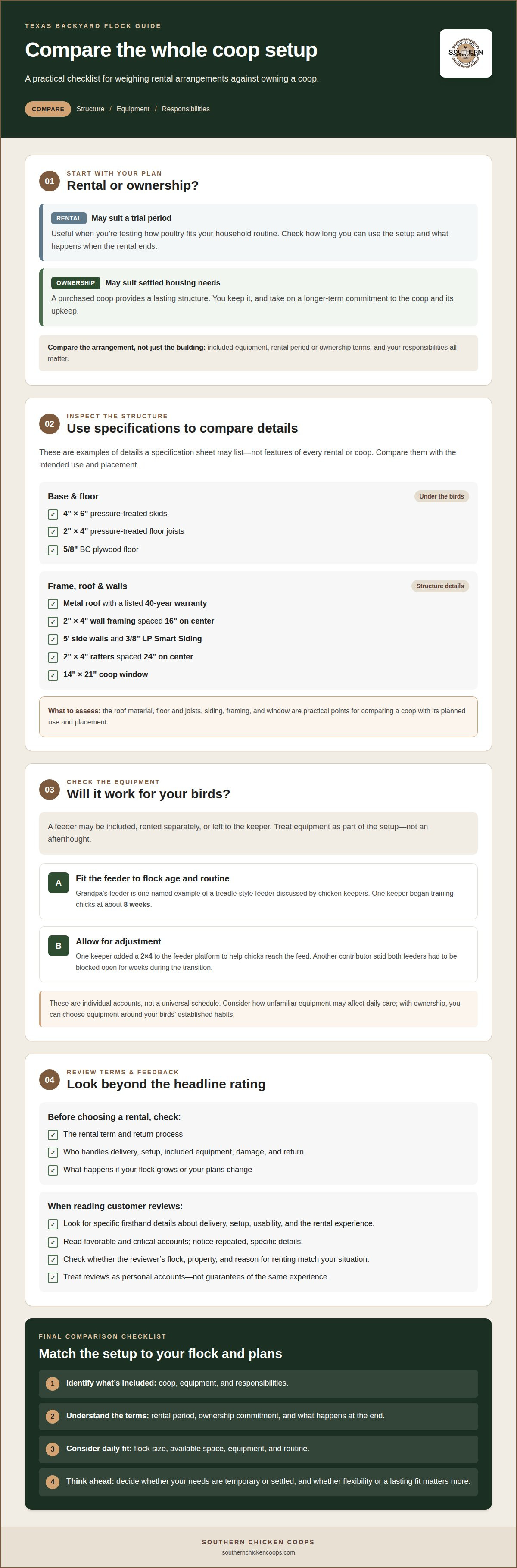
Renting and owning solve different problems for a Texas flock. A rental may suit someone trying poultry before committing to a permanent structure. Ownership can make more sense once the flock and its housing needs are settled. Compare the whole arrangement, not just the coop: what equipment is included, how long you can use it, and what happens when the rental ends. Those details affect daily care as much as the building itself.
Rental packages may combine a coop and equipment, while other services may address specific needs. A coop purchase, by contrast, provides a lasting structure. Compare each option in three categories: the structure, included equipment, and your responsibilities. This makes it easier to judge whether a rental’s convenience suits your plans or whether owning a coop is a better fit for your household.
Construction details also affect the comparison. Coop specifications can include 4" × 6" pressure-treated skids, 2" × 4" pressure-treated floor joists, and a 5/8" BC plywood floor. Other listed details may include a metal roof with a 40-year warranty, 2" × 4" wall framing spaced 16" on center, and 5' side walls. These measurements describe examples, not every rental or coop. Use them to understand the level of detail a specification sheet can provide.
For Texas keepers, a roof, floor, and frame are practical points to compare. A roof’s material tells you what covers the structure; the floor and joists describe the base beneath the birds. Siding and framing add more information: examples include 3/8" LP Smart Siding and 2" × 4" rafters spaced 24" on center. A 14" × 21" coop window is another specification to consider. Compare these details against the coop’s intended use and placement.
Equipment deserves its own review. A feeder may be included, rented separately, or left to the keeper. Grandpa’s feeder is one named example of a treadle-style feeder discussed by chicken keepers. One keeper began training chicks at about eight weeks. Another added a 2x4 to the feeder platform, helping chicks reach the feed. These examples show why equipment fit matters: birds may need time and adjustments to use a new setup comfortably.
When comparing feeders or other equipment, consider how they fit your flock’s age and routine. One forum contributor said both feeders had to be blocked open for weeks during the transition. That account doesn’t establish a universal schedule, but it highlights the adjustment some birds may need when introduced to unfamiliar equipment. With a rental, account for that transition; when you own the setup, you can choose equipment around your birds’ established habits.
Ownership also affects how you plan for a growing flock. A rental can suit a trial period, while a custom coop can be designed around your property and housing plans. Ask whether your needs are temporary or settled. Consider your intended flock size, available space, and the equipment you’ll use every day. Those choices clarify whether flexibility or a lasting fit matters more.
Before choosing, compare the arrangements in order: identify the coop and equipment included, understand the rental period or ownership terms, then consider how the setup fits your flock’s daily routine. A detailed specification, such as 5' side walls or a 14" × 21" window, helps make the structure easier to evaluate. Equipment examples such as Grandpa’s feeder prompt a separate question: will your birds use it comfortably? These practical comparisons make the choice clearer without assuming every rental package is alike.
What risks, limitations, and customer reviews should Texans consider?
A rental arrangement has an endpoint. Before choosing one, understand its term, return process, and who handles each responsibility. If you plan to keep raising chickens, you may need a new housing plan when the rental ends. If you’re testing how poultry fits your household routine, temporary housing may be useful. The right choice depends on what you plan to do after the trial, not just on the coop’s arrival.
Read the agreement as carefully as the product description. Review the terms for delivery, setup, included equipment, damage, and return. Consider what happens if your flock grows or your plans change. A rental that suits a small starter flock may later feel limiting. With ownership, you keep the structure, but take on a longer-term commitment to the coop and its upkeep.
Reviews can show how an arrangement works in everyday use. Look for details, such as whether delivery met expectations or the included setup suited the reviewer’s routine. A comment saying “great experience” tells you less than one explaining what went smoothly. Reviews are personal accounts, not guarantees that you’ll have the same experience. Treat them as examples, not promises.
Read favorable and critical reviews, and look for recurring details. If several reviewers mention confusion about return timing, examine the agreement’s return terms closely. If someone describes difficulty with an accessory, consider whether it suits your flock. One comment may describe an unusual situation; repeated, specific accounts deserve more attention than general complaints without context.
Check whether a review matches your situation before relying on it. A keeper with a different flock, property, or reason for renting may have different priorities. A short-term trial and a long-term backyard setup, for example, are different use cases. Give more weight to reviews that explain the circumstances and identify the feature being discussed. That context helps you judge whether the experience applies to your plans.
Rental limitations may become clearer when circumstances change. A growing flock, a move, or a decision to stop keeping chickens can affect whether the arrangement still works for you. Think through these possibilities before committing. If you expect your setup to change, consider flexibility and the end-of-rental process. If your plans are settled, compare renting with owning a structure designed for your needs.
Use a simple review-reading process:
- Identify the reviewer’s situation, such as a trial flock or established backyard setup.
- Separate firsthand details from broad opinions about the experience.
- Look for repeated comments about the same feature or process.
- Compare those comments with the written rental terms.
This approach keeps reviews useful without treating them as proof of every outcome. Texans weighing alternatives to Rent-A-Coop can use customer accounts to spot questions worth considering, then compare those answers with their own long-term plans. If owning a coop seems better suited to your household, explore an ownership-focused setup as a different path. A careful choice starts with the arrangement that fits your flock, property, and plans beyond the first season.
Southern Chicken Coops: Coop Delivery
Southern Chicken Coops offers Coop Delivery for keepers choosing a lasting home for their flock. If renting no longer fits your plans, a custom chicken coop can be tailored to your needs and property. The company’s 6'x12' Polka model is designed for durability and functionality in the Texas climate, while semi-custom designs allow a more personalized approach.
Consider a purchase when you’re ready to own a coop rather than arrange temporary housing. Think about your flock, available space, and the structure that fits your daily routine. These details help you choose a practical home for your birds and your property.
If a handcrafted coop and delivery sound like the right next step, contact Southern Chicken Coops to discuss your plans.
Choose a Coop That Fits Your Next Chapter
The right home for your flock should suit more than today’s routine. Think about how you want chicken keeping to work in the seasons ahead: manageable, steady, and suited to your available space. Looking ahead can help you decide whether temporary housing still meets your needs or whether it’s time to consider a lasting solution. Choose an option that supports your birds and works for your household.
As you compare Texas alternatives to Rent-A-Coop, let your flock’s needs and your plans guide the decision. Southern Chicken Coops can discuss a handcrafted coop suited to your property and delivery to your prepared lot. Contact the team to talk through your next step.
When you’re ready to talk through your plans, contact Southern Chicken Coops. We’d be glad to hear what you’re building toward and help you take the next step with care.


