

The best backyard flock isn’t always the one that produces the most eggs. For raising chickens for eggs vs meat in Texas, choose laying breeds if a steady supply of eggs is your priority, meat birds if poultry for the table is your goal, or dual-purpose chickens if you want both. Your available space, flock plans, and local rules also affect what will work.
Before bringing chicks home, weigh the practical differences: egg layers are bred for laying, while meat birds are raised for growth and meat production. Dual-purpose breeds can serve both goals, but the balance between eggs and meat matters when deciding what you want from your flock.
This guide compares the three options and explains what to consider about Texas heat, chicken housing, and local rules. City ordinances, zoning, deed restrictions, or HOA rules may affect a backyard flock. Understanding these factors helps you choose birds that suit your household and plan a safe, comfortable home for them.
Key Takeaways
- Choose egg layers for a steady supply, meat birds for meat production, or dual-purpose breeds when you want a balance of both.
- Compare breeds such as Buff Orpingtons, Black Australorps, Dark Cornish, Cochins, and Delawares against your flock goals and Texas summer conditions.
- Before starting a flock, review local zoning, city or county rules, deed restrictions, and HOA requirements for limits on chickens, noise, and odor.
- Plan a secure, ventilated coop with enough room for roosting and dust baths, and consider how your chosen birds will fit the space.
- Think through the ongoing work involved in feeding, housing, and caring for birds before deciding whether eggs, meat, or both suit your backyard.
🥚 What Does “Dual-Purpose” Mean?
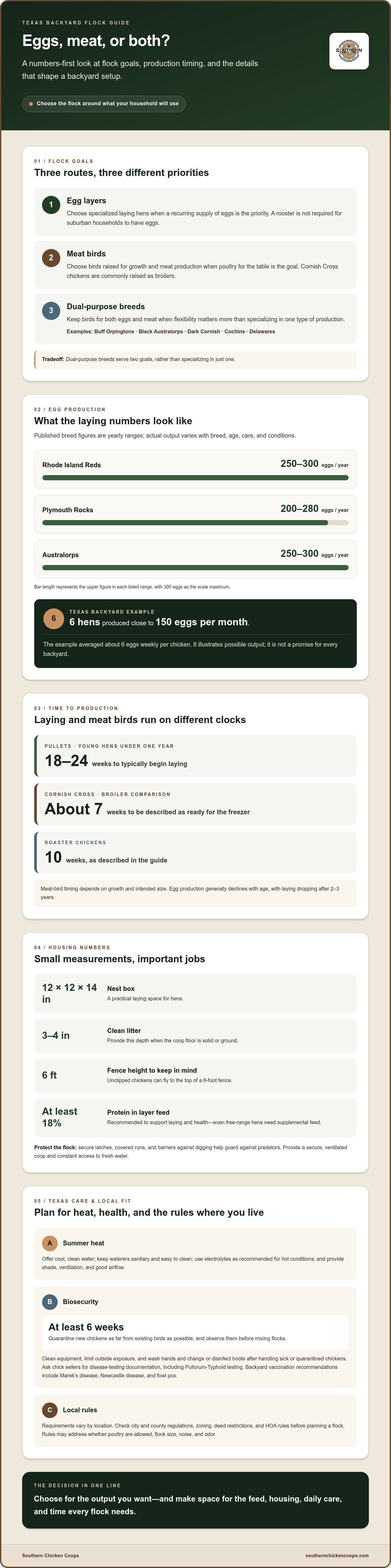
Dual-purpose chickens are kept for both eggs and meat. Examples include Buff Orpingtons, Black Australorps, Dark Cornish, Cochins, and Delawares. They can suit households that want fresh eggs as well as birds raised for meat. The tradeoff is that these breeds serve two purposes rather than specializing in just one.
Breed choice shapes what your flock produces. Leghorn strains are known as strong egg layers, while Cornish Cross chickens are commonly raised as broilers. Dual-purpose breeds offer another path if flexibility matters more to you than maximizing egg or meat production. Each flock’s purpose also affects housing, feeding, and management.
Profitability depends on more than what the birds produce. Feed, suitable housing, daily care, and the time needed to manage a flock all affect whether keeping chickens breaks even or earns a profit. Producing eggs or meat at home takes ongoing work. Consider what you’ll use regularly, how much care fits your routine, and whether a mixed-purpose flock suits your household better than a specialized one. No breed eliminates the work of keeping birds.
Texas heat makes summer care part of the decision. Provide cool, clean water, and use electrolytes as recommended for hot conditions. Keep water sanitary and choose waterers that are easy to clean. A well-ventilated, shaded coop with good airflow helps birds handle hot weather. These measures matter for every flock, whether focused on eggs, meat, or both.
Biosecurity matters whenever you add birds to a flock. Quarantine new chickens for at least six weeks, keeping them as far from existing birds as possible. Separation lets you observe newcomers and helps limit disease transmission. Clean equipment and limit outside exposure to reduce opportunities for germs to spread between birds.
Good handling habits add another layer of protection. Wash your hands and change or disinfect boots after handling sick or quarantined chickens. Ask chick sellers for disease-testing documentation, including Pullorum-Typhoid testing. Backyard vaccination recommendations include Marek’s disease, Newcastle disease, and fowl pox. These steps support flock health, but they don’t replace clean housing, ventilation, and attentive daily care.
Choose dual-purpose chickens when a practical balance matters more than specialized output. The breeds listed above offer starting points, while Texas summer care and flock-health routines shape the work involved. Compare that commitment with your household’s priorities before choosing birds for your backyard.
Egg-laying chickens in a suburban backyard
For suburban households, laying hens provide a recurring supply of fresh eggs without requiring a rooster. Pullets, young hens under one year old, typically begin laying between 18 and 24 weeks of age. Production varies with breed, age, care, and conditions, so plan for eggs as a regular food source rather than a fixed daily quantity.
Breed selection can make a noticeable difference. Rhode Island Reds are described as laying 250-300 eggs per year, while Plymouth Rocks may produce 200-280. Australorps are also described at 250-300 eggs per year. A Texas backyard example with six hens produced close to 150 eggs per month, averaging about six eggs weekly per chicken. That illustrates what a small flock can yield, not a promise for every backyard.
Egg output changes over a hen’s life. Laying generally declines as chickens age, with production dropping after two to three years. If you keep laying hens, consider what you’ll do as production eases, including whether to keep older birds or raise replacement pullets. Raising chickens for eggs vs meat in Texas also means planning for how long hens may remain part of your flock.
In a suburban yard, the coop needs to protect birds and make egg collection straightforward. A nest box measuring 12 by 12 by 14 inches provides a practical laying space. Provide 3-4 inches of clean litter when the floor is solid or ground, and collect eggs regularly to reduce breakage, spoilage, and predation. A secure, ventilated structure also helps shelter hens from weather and predators.
Fencing deserves attention because unclipped chickens can fly to the top of a 6-foot fence. Strong fencing, covered runs, secure latches, and barriers against digging can help protect a backyard flock from raccoons, foxes, coyotes, hawks, and snakes. Even free-range hens need supplemental feed for egg production, balanced feed, and constant access to fresh water. Layer feed containing at least 18% protein is recommended to support laying and health.
Broiler timing differs from the months pullets need before laying. Cornish Cross chickens, commonly raised for meat, are described as ready for the freezer in about 7 weeks. Roaster chickens are described at 10 weeks. Processing timing depends on the bird’s growth and intended size, so these timelines are useful comparisons rather than an egg-laying schedule. This is one practical distinction when comparing raising chickens for eggs vs meat in Texas.
If nest boxes, ventilation, and predator protection are shaping your backyard plan, custom chicken coops can be tailored to the needs of a laying flock.
Local zoning, deed restrictions, HOA rules, and poultry regulations
Texas backyard poultry rules vary by location and may also depend on whether you sell birds or their products. Before planning a flock, distinguish land-use rules from sales and processing requirements.
Zoning and Poultry Rules
Zoning and property restrictions determine whether poultry may be kept on a particular lot, and under what conditions. City and county regulations may address flock size, noise, and odor, while deed restrictions and HOA rules can set separate limits. Review each layer before choosing egg layers, meat birds, or both. A property’s rural appearance alone doesn’t establish which rules apply.
Permits for Selling Eggs or Meat
Permit requirements depend on the product, how it is prepared, where it is sold, and the rules that apply. Selling fresh eggs and selling processed poultry meat involve different considerations, so don’t assume permission for one covers the other. Before planning sales, identify the product and sales arrangement, then determine the requirements for that activity.
Home-raised chickens may be processed only in a location allowed for the intended use and under applicable rules. The legal option depends on whether the meat is for household use or sale, as well as the processing arrangements. Costs depend on factors such as the number of birds and the processing method. These details shape both the practical plan and any required handling.
Organic-style poultry management emphasizes prevention, cleanliness, and reducing reliance on synthetic products. But describing a flock as organic-style is not the same as marketing eggs or poultry as organic. Organic products must meet applicable certification standards and recordkeeping requirements. Layers intended for organic sales therefore need a management plan and records that support those standards.
Commercial poultry farming involves decisions beyond those of a backyard flock. Land, housing, equipment, feed, and labor all shape an operation’s needs. In contract poultry production, a company supplies birds and feed, while the operator pays for labor and housing. This illustrates why financing depends on the production model and the responsibilities assigned to the operator.
For poultry education in Texas, Texas A&M AgriLife Extension and county extension offices provide useful guidance. Their educational materials can help owners understand flock care, production planning, and local agricultural considerations. Match advice to your flock: layers, meat birds, and mixed-purpose chickens have different management goals.
Biosecurity matters for every poultry flock, including backyard birds. Quarantine new chickens for at least six weeks, keep them as far from existing birds as possible, and clean equipment. Wash your hands and change or disinfect boots after handling sick or quarantined birds. These practices help reduce disease transmission and protect flock health, including against threats such as avian influenza.
Local ordinances and coop space
Before settling on a flock size, match your plans to the property and coop. A general rule of thumb is 3 square feet per bird inside the coop. That figure helps estimate a starting footprint, but it isn’t a universal legal standard. Local ordinances may set their own limits, so space planning and rule-checking belong together.
Start by identifying the authority responsible for your address. City and county regulations may differ, and deed restrictions or HOA rules can add another layer. Review rules on flock size, noise, and odor before building or bringing chickens home. A city resident with a small yard and a rural landowner may face different conditions, even within Texas.
Use the 3-square-foot guideline to calculate the coop’s basic bird area, then consider how birds will use it. Chickens need space to roost and take dust baths, not just stand inside. Feeders, waterers, and doors also occupy room. Sketching these features together can reveal whether a planned coop feels crowded before the flock is raised.
Egg production brings practical layout needs. Hens need convenient access to nest boxes, and every bird needs access to food and water. Arrange these features so one busy area doesn’t block another. For example, a feeder beside the entrance may crowd birds coming and going. A clear layout also makes daily checks and cleaning easier.
Meat birds and laying hens both need suitable shelter, but the flock’s purpose affects how you use the space. A laying flock needs convenient nest access and egg collection. A meat flock needs a layout that supports routine feeding, watering, and observation. If you keep both, plan separate functional areas where needed and account for every bird when assessing coop space.
Texas weather makes ventilation, shade, and secure construction important design considerations. Airflow helps prevent stale, humid conditions, while shade offers relief during hot weather. Strong latches and covered runs can help protect birds from predators. These features don’t replace local rules, but they make your housing plan more complete than floor area alone.
Keep a simple planning record with your address, the relevant ordinance or restriction, intended flock size, and coop measurements. Then compare that plan with the 3-square-foot-per-bird guideline and the birds’ needs for roosting, dust bathing, feeding, and laying. This gives you a concrete way to spot conflicts before construction or flock changes, rather than reshaping the setup after birds arrive.
Meaning and advantages of dual-purpose chickens
Buff Orpingtons, Black Australorps, Dark Cornish, Cochins, and Delawares are dual-purpose breeds raised for eggs and meat. For a Texas backyard, compare them against your goals and consider how well each can handle local heat. No breed removes the need to plan for summer care, suitable housing, and daily flock needs.
Dual-purpose chickens offer flexibility: one flock can provide eggs and, later, meat. This can suit households that want both without keeping separate specialized flocks. The tradeoff is that a dual-purpose bird balances two roles rather than focusing solely on either one. Choose this approach if variety matters more than maximizing egg production or meat growth.
Breed choice shapes that balance. Buff Orpingtons, Black Australorps, and Delawares are familiar options for a mixed-purpose flock. Dark Cornish and Cochins are also among the dual-purpose breeds listed above. Compare the qualities you value, such as laying, body type, and temperament, then consider Texas heat. Choose birds whose care needs fit your setup.
Starting with unsexed chicks can help divide flock roles: keep hens for laying and raise roosters for meat. This approach puts both sexes toward different household goals. It also requires a plan for managing roosters and confirming that property rules allow them. Noise restrictions can be especially important in suburban neighborhoods.
Dual-purpose birds can make flock planning less rigid. If your household’s priorities change, the flock can still serve both purposes. Hens provide eggs, while birds raised for meat can contribute food later. That flexibility doesn’t guarantee a particular quantity of either. Feed, age, breed, health, and care all affect results, so set expectations that fit the flock you raise.
Texas summer care remains essential whichever breed you choose. Provide cool, clean water during hot weather, and maintain shade and airflow in the coop. Keep water containers clean and watch for changes in the flock’s comfort. Fresh water, ventilation, and daily observation help birds through the heat and make it easier to notice changes in behavior or appetite.
Make the choice by weighing three things: whether you want eggs, meat, or both; how your property accommodates the flock; and how much daily care fits your routine. If dual-purpose chickens suit your household, plan a custom coop for your flock with their shelter, ventilation, and day-to-day use in mind.
Southern Chicken Coops: Custom Chicken Coops
Southern Chicken Coops can help turn your flock choice into a practical housing plan with custom chicken coops. Whether you’re keeping layers, meat birds, or dual-purpose chickens, the coop should fit your birds and backyard needs. Their semi-custom designs allow the housing to be tailored to those needs, while the 6'x12' Polka model is designed for durability and functionality in the Texas climate.
Coop delivery is also available, making it a natural next step once you’ve considered your flock’s purpose, space, and local rules. A carefully planned coop gives your birds a dedicated home suited to your backyard setup.
For a closer look at coop options, visit Southern Chicken Coops.
Make Your Backyard Flock Plan Real
Turn your preferred flock into a workable backyard plan. Before bringing birds home, consider how their daily care will fit your household routine and available space. That practical fit matters as much as choosing eggs, meat, or both. A thoughtful plan gives you a steadier start and keeps your birds’ needs at the center.
As you decide on raising chickens for eggs vs meat in Texas, consider the shelter your flock will need through changing seasons. Southern Chicken Coops builds custom chicken coops and delivers them, helping you move from a flock plan to a home for your birds. A well-considered coop can support a backyard routine you’ll enjoy tending.
If you’re ready to plan housing around your flock, contact Southern Chicken Coops. We’d be glad to help you take the next step toward a welcoming home for your chickens.
Frequently Asked Questions
Eggs, meat or both?
Choose eggs for a regular supply of a food your household already uses, meat for a planned poultry harvest, or both for a mixed-purpose flock. Think beyond the first season: laying hens remain part of the flock after production slows, while meat birds are raised for a defined purpose. Your household’s food habits, care routine, and long-term plans help make the choice practical.
How much does it cost to raise laying hens versus broiler chickens in Texas?
There isn’t one cost that fits every Texas backyard. Laying hens need ongoing feed and care throughout their productive lives, while broilers have a shorter growing cycle but require brooding, feed, and processing arrangements. Housing, equipment, flock size, and care also affect the comparison. To budget, list recurring expenses separately from setup costs, then compare them with how much of the eggs or meat your household will use.
How many eggs do common chicken breeds lay per year in Texas?
Reported annual production ranges include 250-300 eggs for Rhode Island Reds, 200-280 for Plymouth Rocks, 200-250 for Buff Orpingtons, and 250-300 for Australorps. These are breed descriptions, not a guaranteed count for each Texas hen. Age and care affect laying, and heat tolerance is a useful consideration when choosing birds for a Texas backyard. Compare expected production with your household’s usual egg use.
What Texas laws and local ordinances regulate keeping chickens?
Rules may come from city or county regulations, zoning, deed restrictions, and HOA requirements. Local provisions can address flock size, noise, and odor, so rules vary between Texas neighborhoods. Distinguish rules for keeping birds from requirements for selling eggs or poultry. Write down each relevant restriction before settling on a flock plan or building location.
Is raising chickens for eggs or meat more economical for a Texas household?
Neither option is automatically more economical. Compare your household’s actual food use with the full work and resources required. Egg production is spread across a hen’s laying life, while meat production centers on raising birds for a planned harvest. Include feed, housing, equipment, routine care, and processing in your comparison. Producing more than your household can use can reduce the practical value of a flock.


