

A handful of scratch won’t meet a chicken’s needs: a healthy flock needs balanced feed suited to each bird’s life stage and constant access to fresh water. A key part of what to know before getting chickens in Texas is that treats and table scraps should make up no more than 10% of their overall diet.
It’s natural to look forward to fresh eggs and the pleasure of caring for a flock. But good chicken keeping starts with a safe, comfortable home and steady routines that protect your birds through Texas heat, changing weather, and everyday risks.
Here, we’ll walk through the essentials: what to feed chickens, how to prepare a ventilated coop and secure run, which breeds may suit the heat, and practical steps for flock health and predator protection. You’ll also find ways to connect with local support, so you can make thoughtful choices and give your birds a sound start.
Key Takeaways
- Feed chickens a balanced ration suited to their life stage, keep fresh water available, and reserve treats and scraps for no more than 10% of their diet.
- Plan a dry, shaded, well-ventilated coop with enough room for natural behaviors, and build security into both the coop and run.
- Choose breeds with Texas heat and your flock goals in mind, including egg production and temperament.
- Reduce disease risks with clean equipment, handwashing, careful introductions for new birds, and attention to changes in flock behavior.
- When you’re planning a durable home for your flock, Southern Chicken Coops offers custom chicken coops and coop delivery.
1. Building a ventilated, predator-resistant coop and run
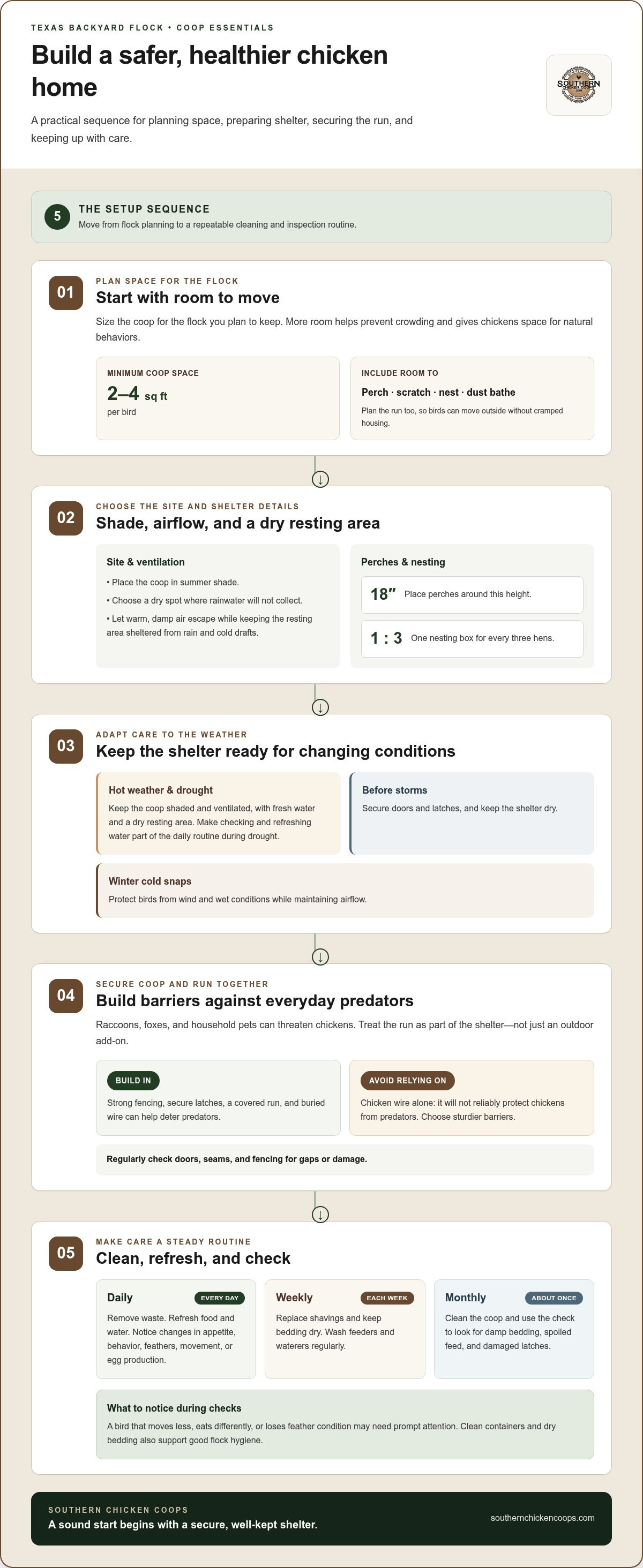
Start by sizing the coop for the flock you plan to keep. Texas backyard chickens need approximately 2 to 4 square feet of coop space per bird at a minimum. More room helps prevent crowding and gives birds space to perch, scratch, nest, and dust bathe. Plan the run, too, so chickens have room to move outside without relying on cramped housing.
Good airflow matters in a hot Texas summer, but ventilation shouldn’t leave birds exposed to rain or cold drafts. Provide openings that let warm, damp air escape while keeping the resting area sheltered. Place the coop in summer shade and choose a dry spot where rainwater won’t collect. Set perches around 18 inches high, and provide one nesting box for every three hens.
During hot weather, keep the coop shaded and ventilated, with fresh water and a dry resting area. In drought, make checking and refreshing water part of your daily routine. Before storms, secure doors and latches and keep the shelter dry. During winter cold snaps, protect birds from wind and wet conditions while maintaining airflow.
Plan the coop and run as one secure shelter, not just a place to sleep. Strong fencing, secure latches, a covered run, and buried wire can help deter predators, including raccoons, foxes, and household pets. Chicken wire won’t reliably protect chickens from predators, so choose sturdier barriers. Regularly check doors, seams, and fencing for gaps or damage.
Cleaning is part of flock care, not just a matter of appearance. Remove waste and refresh food and water daily. Replace shavings weekly, keep bedding dry, and clean the coop about once a month. Wash feeders and waterers regularly, too. Dry bedding and clean containers make the space easier to maintain and support good flock hygiene.
Use cleaning time to check the birds and their shelter. Notice changes in appetite, behavior, feathers, movement, or egg production. A bird that moves less, eats differently, or loses feather condition may need prompt attention. Check for damp bedding, spoiled feed, and damaged latches as well. These observations can help you spot concerns early and keep the coop in good order.
2. Choosing breeds suited to Texas heat and flock goals
Start with your flock’s purpose, then consider Texas temperatures and each breed’s traits. Leghorns, Plymouth Rocks, Wyandottes, and Orpingtons are suited to Texas conditions. Jersey Giants are heat-sensitive and don’t thrive under the hot Texas sun. Breed choice affects daily care, egg production, and how comfortably birds manage local weather.
For an egg-laying flock, compare breeds by laying ability and temperament. If you want friendly birds to observe and handle, consider how their temperament fits your household. Meat production calls for planning around the flock’s purpose and housing needs, too. Weigh heat and cold tolerance, broodiness, and friendliness before choosing. These traits affect the care your birds will need through changing seasons.
Plan for a flock rather than a single chicken. Chickens should be kept with at least two other chickens, so choose a group size and suitable housing accordingly. Hens don’t need roosters to lay eggs, which can help you plan an all-hen flock. Check the local restrictions that apply to your property before choosing birds.
Baby chicks need different care and feed from older birds. Choose starter feed for chicks from 0-6 weeks of age, grower feed for chickens from 6-18 weeks, and layer feed from 18 weeks of age and up. Keep feed appropriate to the birds’ life stage as they grow. Chicks also need a heat source during their first two to three weeks because they can’t regulate body heat. Keep brooding temperature around 90-95 degrees during their first week, then lower it by five degrees each week after the first week.
Before bringing chicks home, prepare their brooder, suitable feed, and clean water. Chicks raised outdoors need a brooder before going outside, and they may stay in one for up to 12 weeks. A guide with week-by-week care tips through 16 weeks can help you track changing needs. Vent sexing is 90% accurate, so don’t assume every chick’s sex has been identified correctly.
To budget for starting and maintaining a Texas backyard flock, account for the number and age of the birds, feed, bedding, equipment, and housing. Ongoing costs also depend on feed freshness, flock health needs, and the care your setup requires. A practical budget covers the birds’ needs through different life stages, not just the day you bring them home.
3. Flock biosecurity and disease prevention
Common chicken health problems include pasty butt in chicks, mites or lice, bumblefoot, sour or impacted crop, and lash eggs. Raccoons, foxes, and household pets can threaten chickens. Secure housing, clean equipment, and limiting contact with wild birds help reduce health and predator risks.
Avian influenza has impacted commercial and backyard flocks since 2020. Keep chickens away from wild birds, especially migratory waterfowl. Protect feed and water from wild bird contact, since contamination can expose the flock to disease. A covered feeder and waterer placed inside the birds’ secure area can help keep visitors out.
Introduce new birds carefully. Quarantine chickens arriving from another farm or home before adding them to your flock. Observe their appetite, droppings, mobility, and behavior separately. Clean equipment used for incoming birds, and avoid sharing soiled tools between groups. If a bird appears ill, move it to a separate area to help limit disease transmission.
Make handwashing part of daily chicken care. Wash your hands after handling birds, collecting eggs, or cleaning bedding. Disease organisms can travel on shoes and clothing, so avoid entering another person’s poultry house after visiting your own flock. Chicken manure and litter may contain harmful bacteria, including E. coli and Salmonella. Handle soiled bedding carefully, and clean feeders and waterers regularly.
Watch each bird for changes, since chickens can hide signs of illness. A droopy comb, unusual droppings, or a hen isolating herself calls for prompt attention. Notice appetite, feather condition, movement, and egg production as well. Record changes as they appear so you can describe what’s different and when it began. A well-stocked first-aid kit and a separate space for sick or injured birds are practical parts of flock preparation.
Companionship matters. Chickens are social birds, so don’t plan to keep one alone. A stable flock provides company and allows natural interaction, while sudden introductions can cause stress and pecking. Watch how birds behave together, especially after adding new members. Severe feather pecking isn’t normal and can signal a need for more foraging time. Give the flock opportunities to scratch and forage, and check for injuries during routine observation.
Keep water systems easy to clean, and place them where water can stay as cool and sanitary as possible. Control rodents around feed storage, since they can contribute to disease spread. Store feed securely, remove spills, and replace dirty water promptly. These repeatable steps help keep the flock’s surroundings cleaner and reduce opportunities for contamination.
4. Predator protection
Starting with a secure run makes daily chicken care safer and more predictable. Raccoons, foxes, and household pets can threaten poultry, so build barriers around the birds’ outdoor space. A sturdy fence, a covered run, and secure latches work together. If one part fails, another may still keep a predator from reaching the flock. Walk the perimeter before letting chickens out, and look for loose fencing, open gaps, or a latch that doesn’t close firmly.
Choose hardware cloth rather than chicken wire for predator protection. Chicken wire won’t reliably protect chickens from predators, while hardware cloth provides a sturdier barrier. Use it to close openings in the coop and run, including around doors and windows. Bury wire along the run’s perimeter to help deter animals from digging underneath. Check the barrier regularly, especially after storms or ground disturbance.
Make the run a secure place for birds to move and forage. A covered run provides a barrier from above, while strong fencing closes off the sides. Keep gates shut whenever chickens are inside, and test each latch by opening and closing it yourself. Clear clutter near the fence so damaged sections are easy to spot. These checks make predator prevention a repeatable part of chicken care.
Free-ranging can be rewarding, and chicken keepers are encouraged to let birds range daily. Balance that freedom with a clear plan for returning them to secure housing. Keep the coop accessible, and gather the flock before leaving the area or ending the day. Chickens outside a protected run have less shelter from predators, so consider the surroundings and your ability to watch them. A secure run offers a safer option when free-ranging isn’t practical.
Look for warning signs around the coop. A damaged latch, disturbed soil beside buried wire, or a gap in the fencing needs prompt repair. These clues may not identify the animal, but they show where the enclosure needs attention. Check the birds for injuries or changes in movement after an encounter. If a chicken seems unwell or shows signs of illness, separate it from the flock and monitor it closely.
Build a brief inspection into your daily routine: test the door, scan the fence, and make sure the run is covered. After severe weather, check again for shifted panels or new openings. Keep the coop and run clean, since spilled feed can attract unwanted visitors. Hardware cloth, buried wire, secure latches, and regular checks help close gaps predators could exploit and give your flock a protected place to forage.
5. Backyard chicken-keeping support
Good support gives new keepers somewhere to turn when routine care changes. Before bringing birds home, identify a local poultry group, county extension office, or veterinarian who works with poultry. Find out where to get guidance on feed, illness, and flock behavior. Local experience can help you plan for Texas conditions, while a veterinarian can assess a bird showing concerning symptoms.
Start a flock record before your first day of chicken keeping. Note each bird’s age, breed, and feed, along with any health changes. Record observations about appetite, droppings, feathers, mobility, and egg production. If a hen becomes withdrawn or eats less, dated notes help you describe the change clearly when seeking advice.
Local rules are another reason to build a support network early. Before deciding on flock size or coop placement, review the city or county regulations, zoning rules, deed restrictions, and HOA rules that apply to your property. Look for possible limits on chicken numbers, coop placement, permits, and roosters. A nearby keeper may share practical experience, but local rules determine what applies to your address.
Prepare for the first weeks of raising chicks with a written care plan. Chicks need a brooder and age-appropriate starter feed from 0-6 weeks. Keep notes on their feed, water, and behavior, and observe whether each chick is active and eating. If you’re raising adult birds instead, record their arrival and keep new birds separate while you observe them.
Build reliable support around specific tasks rather than relying on one general source. An experienced keeper can share how they organize daily feeding, while a poultry veterinarian can explain which signs warrant prompt attention. Find someone dependable to care for the flock if you’re away. Share clear instructions about feed, water, doors, and whom to contact if a bird appears ill.
Support can also help you refine your setup as your flock changes. Keep a list of practical questions about shade, dry bedding, run security, and space. Bring those details to a local poultry group or knowledgeable adviser, rather than asking for one-size-fits-all advice. If your housing plan needs to fit your property and flock, put a tailored coop plan into motion.
Make support part of your preparation, not just an emergency resource. Before getting chickens, write down the local rules, routine care tasks, and a contact for poultry health questions. A simple plan helps you respond thoughtfully as birds grow, seasons change, and flock needs shift.
Southern Chicken Coops: Custom Chicken Coops
Southern Chicken Coops offers custom chicken coops for keepers planning a secure, lasting home for their flock. If your property, flock size, or housing priorities call for a tailored setup, a custom coop can help bring those needs together. The signature Polka model is a 6'x12' coop designed for durability and functionality in the Texas climate. Semi-custom designs can also be tailored to your needs, with coop delivery available.
Use your flock goals and coop placement to guide your housing plans. A well-planned coop is essential to responsible chicken keeping, alongside daily care and predator protection.
For a coop suited to your flock and property, contact Southern Chicken Coops to discuss your plans.
Make Your Chicken-Keeping Plans a Reality
You now have a clearer sense of what to know before getting chickens in Texas. Before bringing your flock home, turn that knowledge into a plan that fits your property and daily routine. Decide who will handle feeding, water, egg collection, and routine checks. A steady routine makes it easier to notice changes and care for your birds consistently.
Your housing plan is a good place to bring those decisions together. Southern Chicken Coops offers custom chicken coops and coop delivery for keepers preparing a home for their flock. If you’re ready to take the next step, contact Southern Chicken Coops today to discuss your coop plans.
With thoughtful preparation and attentive care, you can start raising chickens with confidence and make them a rewarding part of your Texas home.
Frequently Asked Questions
What do chickens eat?
Feed chickens a balanced ration made for their age and purpose. Chicks need starter feed, growing birds need grower feed, and laying hens need layer feed. Scratch is a treat, not a complete feed, and treats or scraps should stay under 10% of the diet. Keep fresh water available; a hen can drink an average of 1 cup per day. Buy feed in manageable amounts to help keep it fresh.
Are backyard chickens legal in Texas, and what state laws apply?
Whether you can keep chickens depends on the rules that apply to your property, including local ordinances and zoning. If you’re deciding what to know before getting chickens in Texas, first find out whether your city or county restricts poultry, roosters, coop placement, or flock size. Also review deed restrictions and HOA rules. Hens can lay eggs without a rooster, so an egg-laying flock doesn’t require one.
What are the chicken ordinances in major Texas cities and counties?
Chicken rules vary across Texas, so there’s no single city-and-county answer for every address. Look up the ordinance and zoning rules for the exact municipality or county where your property is located. Check permitted flock size, coop location, setbacks, and rooster restrictions. If your address is outside city limits, county rules and deed restrictions may still matter. Keep a copy of the requirements with your flock plan.
How many chickens can you keep in Texas cities, and are roosters allowed?
The number of chickens allowed and whether roosters are permitted depend on local rules. Some localities limit flock size, and some prohibit roosters. Check the ordinance for your specific address before buying birds, especially if you live within city limits or a planned community. If your goal is eggs, hens can lay without a rooster. This can simplify planning where rooster restrictions apply, but it doesn’t override limits on hens.
What coop, setback, sanitation, and noise rules apply to backyard chickens in Texas?
Local requirements may cover coop permits, distance from neighbors, flock limits, and roosters. Noise and odor management also help maintain good neighbor relations. Find the rules for your property, then place the coop accordingly. Store feed securely, clean the enclosure regularly, and manage waste before odors build. Hens are quieter than roosters, though a hen’s post-lay egg song can be as loud as a dog bark.
What coop size, ventilation, shade, and predator protection do chickens need in Texas heat?
Plan for approximately 2 to 4 square feet of coop space per bird, with ventilation that releases warm air while sheltering chickens from weather. Place the coop in summer shade and keep its location dry. Perches around 18 inches high support resting, while natural scratching and nesting space help birds use the enclosure. For predator protection, use hardware cloth rather than chicken wire, secure latches, and a covered run.
Which chicken breeds handle Texas heat best and suit beginners?
Leghorns, Plymouth Rocks, Wyandottes, and Orpingtons are among the breeds suited to Texas conditions. Jersey Giants are heat-sensitive and don’t thrive under the hot Texas sun. For a beginner flock, weigh heat tolerance, egg-laying goals, temperament, and broodiness rather than choosing by appearance alone. Consider how much time you can give to daily care, too. Breed needs and your setup should work together through Texas seasons.
What permits, inspections, or homeowners association rules should you check before getting chickens in Texas?
Part of what to know before getting chickens in Texas is which rules apply to your exact address. Check city or county zoning and ordinances for poultry restrictions, coop permits, and inspection requirements. Then review deed restrictions and HOA rules, which may add limits on keeping chickens or placing a coop. Consult the relevant local office and your HOA documents before purchasing birds or building.


