

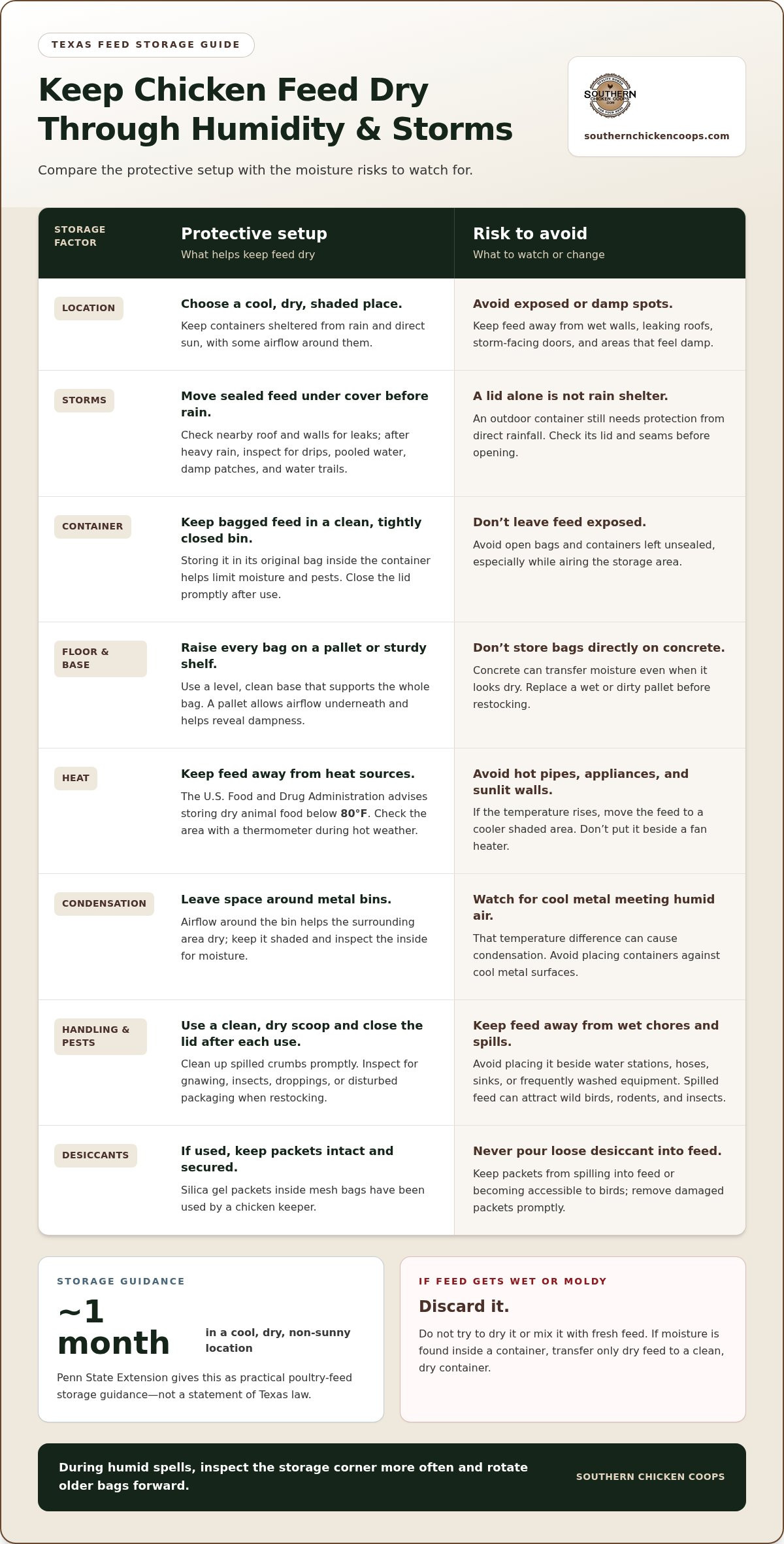
Keeping chicken feed dry in humid Texas starts with a cool, shaded, dry storage spot and a tightly closed container that helps keep out moisture and animals. Keep the container off the floor and away from heat; the U.S. Food and Drug Administration advises storing dry animal food below 80°F.
A sturdy bin helps, but its location and how you handle feed matter just as much. Texas humidity and storms can bring moisture into a storage area, so a few practical habits can help keep feed dry and protect the supply your flock relies on.
Choose a suitable location, raise bags off the floor, and protect feed from moisture and pests. Handle each refill cleanly, know what to do with feed that gets wet, and make storage convenient for everyday use.
Key Takeaways
- Choose a shaded storage area sheltered from rain, and keep containers out of direct sun.
- Store feed in its original bag inside a clean, tightly closed container to help limit moisture and pests.
- Raise bags on a pallet or shelf so they’re not sitting on a damp floor.
- Use a clean, dry scoop and close the container promptly after each refill.
- Discard feed that has become wet or moldy rather than trying to dry it or mix it with fresh feed.
Adjusting storage practices for humid summers and storms
Ventilate the storage area while keeping feed sealed in a dry, tightly closed container. Avoid placing a container against cool metal where warm, humid air can reach it, since the temperature difference can cause condensation.
Close feed containers after each use and store them inside a closed building or sturdy bin. Clean up spilled crumbs promptly, because wild birds, rodents, and insects can contaminate feed.
- Prepare for storms before rain arrives. Move feed away from doors, windows, and places where water could blow inside. Check the roof and nearby walls for leaks, then place the sealed container beneath cover. A container outdoors still needs shelter from direct rainfall, not just a lid.
- Keep the storage area ventilated, not exposed. Airflow around the storage container helps the surrounding area dry after humid weather. Keep the feed itself closed against damp air. Don’t aim a fan at an open bag, or leave its contents exposed while airing the room.
- Watch for condensation on metal. Cool metal can collect moisture when warmer, humid air contacts its surface. Leave space around metal bins so air can circulate, and keep them shaded rather than heating them. If you see moisture inside, transfer dry feed to a clean, dry container.
- Make a quick post-storm inspection. After heavy rain, look for damp patches, roof drips, pooled water, and water trails near storage. Check the container’s lid and seams before opening it. If feed has become wet or moldy, discard it instead of drying it or blending it with fresh feed.
- Limit access for pests. Keep bags inside closed bins or a closed storage building, and shut lids promptly after scooping. Remove spilled feed from the floor and around the container. Inspect the storage area for gnawing, insects, droppings, or disturbed packaging whenever you restock.
- Adjust your routine during humid spells. Check the storage corner and container more often when damp weather persists. Buy only the amount your flock can use while the feed remains dry and sound. Rotate older bags forward, and clean crumbs from the bin before adding a fresh bag.
Since the feeder cover has not been tested in driving rain, keep the birds indoors during foul weather rather than relying on the cover.
Choosing a cool, dry, shaded feed-storage location
- Choose shelter over convenience. For everyday poultry-feed storage, prioritize a cool, dry, shaded place protected from rain and direct sun. Penn State Extension advises that poultry feed can be stored for about one month in a cool, dry, non-sunny location. This is practical storage guidance, not a statement of Texas law.
- Compare possible spots during the day. Check whether sunlight reaches the area, whether rain blows in, and whether the space feels damp after humid weather. A shaded interior closet or covered storage area may work better than an exposed porch. Keep containers away from leaking roofs, wet walls, and doors where stormwater could enter.
- Look for signs of trapped moisture. Inspect the floor, walls, and container exterior for damp patches, musty smells, or condensation. Choose a spot with some airflow around closed containers, while keeping the feed protected from humid air. Avoid sealing a damp room around storage; dry the area and address leaks before placing feed there.
- Keep storage separate from wet chores. Don’t place feed beside a water station, hose, sink, or frequently washed equipment. Splashes and drips can reach bags even when the surrounding room appears dry. In a shed, set the container away from the entry where wet boots, tools, or wind-driven rain may bring moisture inside.
- Use desiccants cautiously. A chicken keeper has used silica gel packets inside mesh bags in a feed container. Keep any packet intact and secured so it cannot spill into feed or become accessible to birds. Don’t pour loose desiccant into the feed, and remove damaged packets promptly.
- Choose a container that suits the location. Put bagged feed inside a clean, closed container that helps resist moisture and animals. A covered indoor closet may need less protection from rain than an outdoor storage spot, but both need a secure lid. Make sure the container remains easy to inspect and clean.
- Reassess the spot after changing seasons. The best location in a dry spell may become damp during prolonged rain or humid weather. Check the storage area after storms and when temperatures shift, then move the container if water, sun, or condensation becomes a problem. Keep feed accessible without placing it beside heat sources or wet surfaces.
Keeping feed off the floor and away from heat
- Raise every bag above the floor. Concrete can transfer moisture to feed bags even when it looks dry. Set bags on a wooden pallet or sturdy shelf instead. A pallet also lets air circulate beneath them and makes it easier to spot dampness before it reaches the packaging.
- Keep the base stable and clean. Use a level pallet that supports the entire bag, rather than leaving its corners unsupported. Before restocking, sweep away crumbs and check the boards for dampness. Replace any wet or dirty pallet so the next bag stays clear of moisture.
- Leave space around the storage setup. Keep bags and bins away from warm appliances, hot pipes, and sunlit walls. Enclosed spots can trap heat, while contact with cool surfaces can cause condensation in humid air. Leave enough room to inspect the floor and move bags safely.
- Use a thermometer to monitor the area. The U.S. Food and Drug Administration advises storing dry animal food below 80°F. Place a thermometer near the feed, away from direct sunlight, and check it during hot weather. If the reading rises, move the feed to a cooler shaded area instead of placing it beside a fan heater or other heat source.
- Keep containers shaded, not tightly wrapped. A covered spot can limit direct sun, but airflow around the container still matters. Don’t wrap a bin in material that traps heat or prevents inspection. Check the outside for condensation, especially when humid air meets a cooler metal container.
- Separate feed from household heat sources. Keep bags away from water heaters, dryers, ovens, and other heat-producing equipment. In a shed, avoid the wall that gets strong afternoon sun. Choose an interior or shaded location, then check its temperature during the warmest part of the day.
- Make lifting and rotation part of the routine. Keep the oldest bag within easy reach, and don’t stack feed against a heat source or where it blocks airflow. When moving a bag, check its underside and the pallet for dampness. A dry base and a cooler storage spot work together to protect feed quality.
Correct feed handling
Buy feed according to flock size and how quickly your birds use it. A chicken eats approximately 0.25 pound daily; a 23-pound bag lasts about 23 days for four hens, 15 days for six, 9 days for ten, or 4 to 5 days for twenty.
- Protect the feed bag inside its container. Place the original sack in a clean, dry bin with a secure lid. Keeping feed in its bag makes rotation easier and adds a barrier against spills, pests, and damp air. Close the lid promptly after each refill.
- Use a dedicated, clean, dry scoop. Keep it away from waterers, damp surfaces, and used bedding. A wet scoop can carry moisture into dry feed. Return it to a clean spot after use instead of leaving it in the coop or on the ground.
- Remove old crumbs before adding a new bag. Sweep out leftover fines and check the bin’s corners and seams. Crumbs can hold moisture and attract pests, while residue makes it harder to spot problems with fresh feed. Dry the container fully before restocking.
- Rotate bags in order. Use the oldest feed first and mark each bag with its purchase date. This helps prevent forgotten bags from lingering through hot, humid weather. Buy smaller amounts if your flock uses feed slowly or the storage area stays damp.
- Inspect feed before every refill. Look for clumping, dampness, unusual odors, insects, or visible mold. Temperature, humidity, rainfall, insect damage, and storage conditions can affect mycotoxin occurrence in grain and finished animal food. Discard feed exposed to moisture rather than mixing it with dry feed.
- Keep rodents and other animals away. Close bags and bins after use, clean up spilled feed, and check packaging for gnaw marks. Wild birds, rodents, insects, and other animals can contaminate feed. A closed storage bin also keeps curious flock members away between refills.
- Adjust your purchase rhythm to actual use. Track how long a bag lasts, then plan the next purchase before the current supply runs out. A four-hen flock and a twenty-hen flock use a 23-pound bag at very different rates. University of Minnesota Extension recommends keeping feed dry and protected from rodents during winter, when stored supplies also need regular inspection.
How long does chicken feed stay fresh after opening in hot, humid weather?
- Use about one month as a guide, not a timer. Penn State Extension advises that poultry feed can be stored for about one month in a cool, dry place out of the sun. Hot, humid conditions are different, so inspect the feed and storage area instead of assuming every opened bag stays fresh for the same length of time.
- Match bag size to your flock’s pace. Feed lasts longer in a small flock’s bin than in a larger flock’s bin, but slow use means more time exposed to storage conditions. A chicken keeper who could store only a 25-pound bag indoors reported needing to buy feed about every two weeks. Treat that as one household’s routine, not a universal schedule.
- Write the opening date on each bag. Mark when you open the feed, then place the oldest supply where you’ll use it first. This helps you notice a bag that lingers through humid weather. If you rotate several bags or feed types, keep a simple record of purchase and opening dates.
- Check feed before serving it. Each time you open the container, look for dampness, clumping, mold, insects, and unusual odors. Moisture can support mold and bacterial growth. Discard feed that has become wet or moldy. Removing visible mold, drying, cooking, or mixing it with fresh feed won’t make it safe.
- Protect the feed between checks. Reseal the bag or container as soon as you finish scooping, and keep the scoop clean and dry. After a windy storm or nearby spill, check the lid and bag closure. A tight seal limits further exposure, but can’t reverse moisture or spoilage already in the feed.
- Buy smaller amounts when use is slow. If a bag stays open for a long time, keeping less feed on hand can limit how long it sits in humid conditions. Let your flock’s actual consumption guide your buying routine. Adjust it if bags regularly linger or show signs of moisture before they’re empty.
- Make storage part of the flock’s layout. Keep the feed container accessible for daily checks without placing it where rain or water spills reach it. If you’re reconsidering the space around your flock, plan a more practical coop setup that supports your routine.
Southern Chicken Coops: Custom Chicken Coops
Southern Chicken Coops builds custom chicken coops for keepers planning around their flock and property. If your current arrangement leaves birds exposed to storms or makes daily care awkward, a thoughtfully planned coop can create a more practical space. Consider how its position relates to your separate feed-storage area, including sun and rain exposure and the ease of carrying feed during refills. Southern Chicken Coops also delivers coops to your property. A custom coop won’t replace a dry, protected feed container, but it can be part of a better-planned chicken-keeping setup. Contact Southern Chicken Coops to discuss a coop for your flock.
Make Feed Storage Part of Your Seasonal Routine
Adjust your storage routine as the weather changes. A quick check after a storm or during a stretch of humid days can catch small problems before they disrupt your flock’s routine. Keeping chicken feed dry in humid Texas takes steady attention to the space, container, and feed you rely on, not a perfect setup.
Your feeding routine may also work better when the coop and storage area are planned together. Easy access, sensible placement, and thoughtful design can make everyday care more manageable while keeping your flock’s needs at the center.
If you’re planning a coop that fits your property and chicken-keeping routine, contact Southern Chicken Coops to start a conversation. A well-considered setup is a worthwhile step toward caring for your birds with confidence through every Texas season.
Frequently Asked Questions
What Is the Best Way to Store Chicken Feed?
Store chicken feed in a shaded, dry place in a closed container that suits your flock’s routine. A smaller flock may find it easier to manage a modest supply than several open bags. Check the feed and container at each refill, especially after a Texas storm or humid spell. Consistent checks help you catch changes before questionable feed reaches the feeder.
Should I keep feed in the original bag inside the bin?
Yes, keeping feed in its original bag inside a clean bin is practical. The sack keeps the feed together and preserves its label, which helps with rotation. Fold the bag opening closed before securing the bin lid. If the sack gets wet, smells unusual, or is damaged, inspect the feed carefully and don’t serve it if it appears spoiled.
What should I do if the feed smells rancid but looks normal?
Don’t feed it to your chickens. An unusual, rancid smell is reason to set feed aside, even if the kernels look dry and unchanged. Appearance alone can’t rule out a problem. Dispose of questionable feed, then clean and dry the container before adding fresh supply. Check nearby bags for the same odor, particularly if they shared storage after a leak or spill.
How should chicken feed be stored in humid climates to keep it dry?
A reliable routine for keeping chicken feed dry in humid Texas starts with a shaded, sheltered spot and a closed container. Avoid places where stormwater can enter or damp air can become trapped around the feed. Keep the area accessible so you can spot leaks, condensation, or pests during regular checks. Inspect feed when you open it; a closed lid alone doesn’t show whether it stayed dry.
What airtight, rodent-proof containers work best for storing chicken feed?
A sturdy bin with a tightly fitting lid is useful; keep the feed sack inside if it fits. Food-grade plastic containers and metal feed cans are both used for feed storage. Place metal containers in the shade and check inside for condensation after humid weather or temperature changes. Choose a container that’s easy to open, inspect, and clean, then close it securely after use.
What are the signs that chicken feed has absorbed moisture or grown mold?
Look for dampness, clumping, discoloration, or visible mold. A musty or otherwise unusual odor can also signal a problem. Check the bag’s bottom and corners, where moisture may collect unnoticed, as well as the container walls and lid. If you see signs of spoilage, don’t mix the affected feed with fresh feed or try to dry it for later use.
Can chickens eat damp or moldy feed, and what are the health risks?
No. Don’t offer damp or moldy feed to chickens. Moisture can support mold and bacterial growth, and visible mold may not show the full extent of spoilage. Keep questionable feed out of the flock’s reach and discard it. Don’t try to make it usable by scraping off mold, drying it, cooking it, or blending it into fresh feed.
Should chicken feed be stored indoors, in a shed, or in a metal bin in Texas heat?
Choose a spot that stays dry, shaded, and protected from rain rather than relying on the type of building alone. An indoor location can work if it isn’t damp; a shed needs protection from leaks and direct sun. Metal bins can store feed, but check inside for condensation, especially after humid weather or temperature changes. The best setup stays dry and is easy to inspect.


