
Texas franchise stories often begin with a single local restaurant. For anyone exploring a first-time chicken ownership path in Texas, one useful starting point is Golden Fried Chicken: its first restaurant opened in San Marcos in 1967. That early milestone gives this first-time chicken owner’s guide to Texas a place to begin.
Starting with chickens in Texas means making choices that fit your property, local rules, budget, and daily routine. This first time chicken owner guide Texas covers how to check local requirements, plan your flock and estimate the care and housing it needs. With those basics in place, you can make decisions that suit your home and the Texas climate.
Key Takeaways
- Start by finding out how your city or county handles flock limits and whether rules differ for roosters, coop placement, or permits.
- Plan your setup budget around the birds, secure housing, feed, water, and the ongoing care a flock needs.
- Choose beginner-friendly birds with Texas heat in mind, and prepare shade, airflow, and fresh water for hot weather.
- Keep young children away from poultry and their living areas; the Centers for Disease Control and Prevention advises that children younger than 5 years old shouldn't handle backyard poultry.
- When you’re ready to plan durable housing for your flock, Southern Chicken Coops offers custom chicken coops and coop delivery.
How many chickens can you keep in Texas cities and counties?
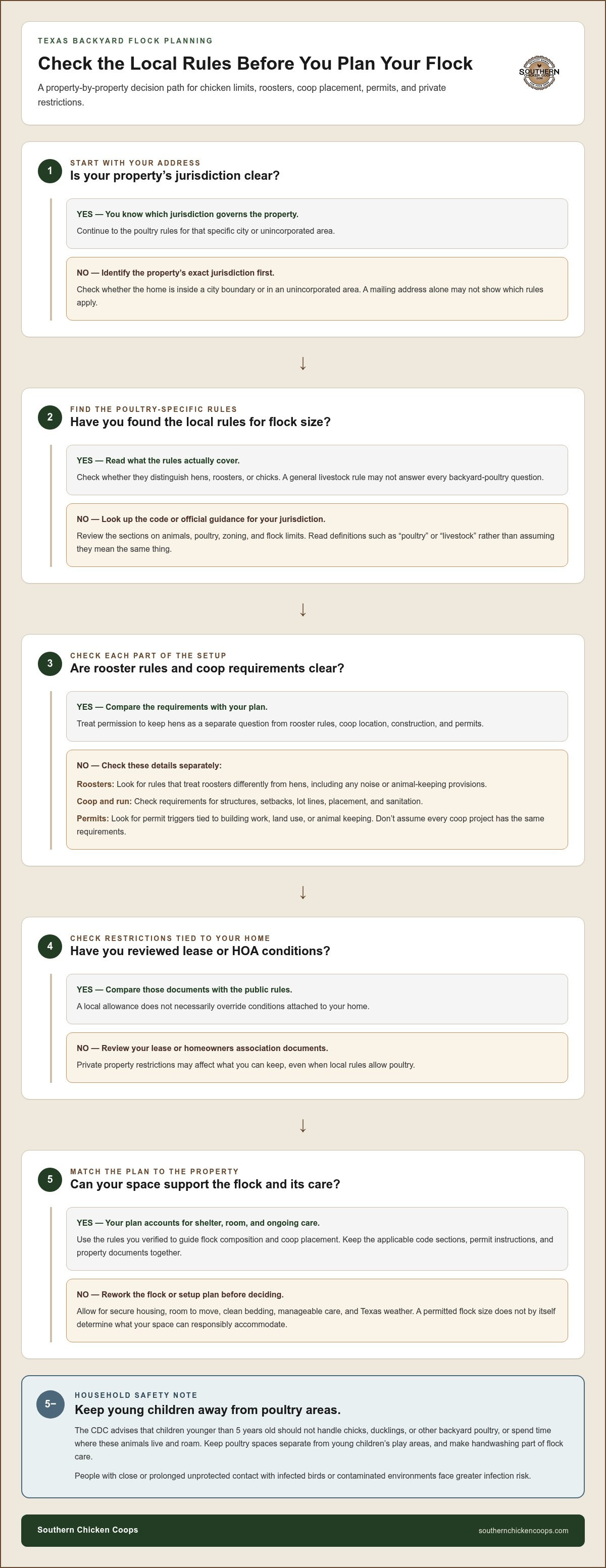
There isn’t one flock limit that applies to every Texas address. The number of chickens you can keep depends on the local rules for your property, including whether it sits inside city limits or in an unincorporated area. A first-time owner in a city and a neighbor outside it may face different requirements, even when their homes are close together.
Start by identifying your property’s exact jurisdiction, then find the local rules for poultry. A city code may treat backyard chickens differently from county land-use rules. Property restrictions, such as a lease or homeowners association rules, may also affect what you can keep. Don’t assume a nearby neighbor’s flock size applies to your address.
- Locate your jurisdiction. Identify whether your home is within a city boundary or in an unincorporated area. A mailing address alone may not tell you which rules govern the property.
- Look for poultry-specific limits. Read the applicable local rules for flock size, and see whether they distinguish hens from roosters or chicks. A general livestock rule may not answer every backyard-poultry question.
- Review coop and lot conditions. Note any rules about where a coop or outdoor run may sit, along with property-line or sanitation conditions. These details can affect how many birds your space can responsibly accommodate.
- Account for private restrictions. Review lease terms or homeowners association documents alongside public rules. A local allowance does not necessarily override conditions attached to your home.
- Match your flock to the space. Even where a local rule permits a particular flock size, plan for adequate shelter, room to move, clean bedding, and manageable care.
This approach gives you a practical answer for your home instead of an unreliable statewide guess. An Austin address, for example, may have different local requirements from a rural property outside city limits. The rules for your specific location matter more than a statewide number repeated without context.
Also consider who will share the yard. According to the Centers for Disease Control and Prevention, children younger than 5 years old shouldn't handle chicks, ducklings, or other backyard poultry or spend time in areas where these animals live and roam. Keep poultry spaces separate from young children’s play areas, and make handwashing part of flock care. The U.S. Government Publishing Office notes that people with close or prolonged unprotected contact with infected birds or contaminated environments face greater infection risk.
Before choosing a flock size, consider both what local rules allow and what your property can support. A suitable flock leaves room for secure housing, clean surroundings, and consistent care through Texas weather.
What are the Texas laws and local rules for backyard chickens, roosters, coops, and permits?
For a Texas backyard flock, the rules depend on the specific property and local requirements. Don’t rely on a single statewide chicken-count or permit figure. Before planning a coop, read the applicable city or county rules for poultry, roosters, structures, and permits. Treat each question separately: permission to keep hens doesn’t automatically answer whether roosters are allowed or where a coop can go.
Start with the local code or official guidance for the jurisdiction where your property sits. Look for sections on animals, poultry, zoning, structures, and permits. If the rules use terms such as “poultry” or “livestock,” read the definitions rather than assuming they mean the same thing. A rule about hens may not cover roosters, and a structure provision may apply even when keeping birds is allowed.
- Separate hen and rooster rules. Look for language that treats roosters differently from hens. If a rule addresses noise or animal keeping, read its scope carefully instead of assuming a hen allowance covers a rooster.
- Check coop placement and construction. Find any requirements that mention accessory structures, setbacks, lot lines, or placement. Then compare the proposed coop location with the property layout, not just the flock plan.
- Identify permit triggers. Look for a permit process tied to building work, land use, or animal keeping. The relevant trigger may depend on the structure or property, so don’t assume a small backyard coop has the same requirements as a larger project.
- Review property-specific restrictions. Read lease terms and homeowners association documents alongside public rules. For example, a renter may face lease conditions even when local rules allow poultry.
- Keep the records together. Save the applicable code sections, permit instructions, and property documents. That gives you a clear reference when deciding flock composition and coop placement.
Make a written checklist before buying birds or building. Record what the rules say about poultry, roosters, coop location, and permits, then compare each item with your plan. If a rule is unclear, ask the local office responsible for it how it applies to your property. Keep the question specific, such as whether a proposed coop location falls under a structure provision.
This sequence helps prevent a common planning mistake: treating permission to keep chickens as approval for every related choice. Local rules and property documents may cover different parts of your setup, so compare each one with your intended flock and coop before moving ahead.
How much does it cost to buy chickens and set up a backyard flock in Texas?
There isn’t one reliable startup total for every Texas flock. Your budget depends on the birds you choose, your yard, and the housing and equipment you need. Separate one-time setup expenses from recurring care. A coop, for example, is a major setup purchase, while feed and bedding need to be replenished.
Build your estimate by listing the purchases your plan requires. Include the birds, their housing, equipment, and ongoing supplies. Prices depend on the case and are given after a quote request; factors include coop size, materials, and project needs. For other items, compare the specific products and quantities that suit your flock rather than relying on a broad total.
- Birds: The cost depends on whether you choose chicks or older pullets, along with breed and seller. Chicks also need suitable care while they grow, so include their early housing and supplies in your plan.
- Housing and security: Consider the coop, outdoor run, and measures that protect birds from weather and predators. Yard layout, flock plans, and construction choices affect what the setup requires.
- Feeding equipment: Budget for feeders and waterers that match your setup. Feed itself becomes a recurring expense, and the type and amount depend on the birds’ age and needs.
- Bedding and cleaning supplies: Bedding needs replacement, and a clean coop takes suitable supplies. Include these repeat purchases alongside the initial setup.
- Care and contingencies: Account for routine flock care and the possibility of veterinary attention. A plan that leaves room for changing needs is more useful than a total based only on buying birds.
Separate setup purchases from ongoing expenses in a simple worksheet. List the coop and feeders as setup items, then add feed, bedding, and care supplies as recurring costs. If you’re comparing chicks with pullets, include the brooding equipment and closer early care chicks require, not just the birds’ purchase price.
Texas weather affects what your housing plan needs. Shade, airflow, and dependable access to clean water matter in hot conditions, while secure shelter supports everyday care. Plan these features before choosing a coop or buying equipment. A lower initial cost may not be worthwhile if the setup doesn’t suit your yard or flock.
Before buying, write down your intended flock size, available space, and essential equipment. Price each item and separate startup purchases from recurring costs. This gives you a practical budget to adjust as your plans take shape, without relying on a one-size-fits-all estimate.
Which chicken breeds are best for Texas heat and beginners
For a Texas beginner, compare breeds known for heat tolerance and manageable temperaments. Leghorns, Australorps, Rhode Island Reds, Plymouth Rocks, and Easter Eggers are common options to consider. No breed eliminates the need for shade, airflow, and fresh water. Choose with your yard, flock goals, and ability to provide daily care in mind.
Start by deciding what you want from your flock. If egg production is the priority, compare laying breeds such as Leghorns and Rhode Island Reds. If a calm temperament matters more, ask about the particular birds you’re considering. Breed tendencies can help narrow your options, but individual birds vary, and age, handling, and flock conditions also shape behavior.
- Leghorn: A light-bodied breed often considered for warm climates. It can suit owners focused on eggs, though an energetic bird may need a well-managed run.
- Australorp: A popular dual-purpose choice with a generally steady reputation. Consider it if you want a breed commonly kept for both eggs and meat.
- Rhode Island Red: A familiar backyard choice valued for egg production and hardiness. Ask about the temperament of the specific line, since behavior can vary.
- Plymouth Rock: A dual-purpose breed often considered by households seeking a docile flock. Its heavier build makes shade and ventilation important during Texas heat.
- Easter Egger: A mixed-type bird known for varied appearance and egg color. It can add variety, but characteristics differ between individual birds.
Treat breed names as a starting point, not a guarantee of performance. Before choosing birds, ask the seller whether they’re sexed, how old they are, and how they’ve been raised. A pullet is a young female; a chick needs brooding and closer early care. Knowing the birds’ age and sex helps you choose what suits your experience and plans.
Heat readiness also depends on the setup. Provide shade during the hottest part of the day, allow air to move through the coop, and keep clean water accessible. Avoid overcrowding so birds have room to move and settle comfortably. In a Texas summer, suitable housing supports the breed rather than leaving it to cope alone.
For your first flock, shortlist a few breeds and compare their adult size, temperament, and care needs. Choose birds that fit your space and daily routine, not just their appearance or egg color. A smaller, carefully selected flock can be easier to observe and care for as you learn each bird’s habits.
What do chickens eat, and how much feed and water do they need in Texas summers
Make age-appropriate poultry feed the foundation of your flock’s diet. Chicks, growing birds, and laying hens have different nutritional needs, so choose feed labeled for the birds’ life stage. Don’t assume, for example, that feed intended for mature layers suits young chicks. Follow the product’s feeding directions and keep feed available as directed.
Feed use varies with age, size, breed, laying status, and access to other food. Birds eating mostly complete feed have different needs from those that forage in a yard. Rather than relying on one figure for every Texas flock, track how quickly your birds eat. Refill feeders consistently and adjust your routine to their actual use.
- Keep feed dry. Store poultry feed in a closed container, protected from moisture, pests, and wild birds. Damp or contaminated feed can spoil, so remove feed that’s wet or visibly soiled.
- Make water easy to reach. Place stable waterers where every bird can access them, and refresh the water regularly. In Texas heat, check them more often because warm weather and evaporation can affect availability.
- Clean feeding equipment. Remove caked feed and rinse waterers as part of routine care. A clean setup makes it easier to notice changes in consumption or water quality.
- Limit extras. Treats and table scraps shouldn’t replace a balanced poultry ration. If offering additions, keep them modest so the birds continue eating their complete feed.
Water needs change with temperature, activity, and feed intake. Chickens may drink more on hot summer days, so don’t rely on a single morning check. During daily care, check each waterer, refill it as needed, and make sure the flock can reach clean water throughout the day. Place containers in shade where practical, and keep them stable and safe.
To understand your flock’s routine, note how much feed you add and how much remains at the next check. Watch whether every bird, including quieter flock members, can reach the feeder and waterer. If leftovers suddenly change, inspect the feed, water, and equipment before adjusting the ration. These observations can help you spot a supply problem.
During Texas summer, feed storage and coop design work together: heat and dampness can compromise supplies, while good airflow helps keep the flock’s living area comfortable. If you’re planning housing around convenient feeder and waterer access, plan a custom chicken coop that suits your flock and yard.
Southern Chicken Coops: Custom Chicken Coops
Southern Chicken Coops is a natural next step when your flock plan calls for housing shaped around your birds, yard, and Texas weather. Its custom chicken coops are tailored to individual needs, helping you plan a home that balances practical function with lasting construction. The 6'x12' Polka model is one option, designed for durability and functionality in the Texas climate.
When comparing coop layouts, consider how you’ll provide shade, airflow, secure shelter, and convenient access to feeders and waterers. These daily needs can guide design choices for your property. Southern Chicken Coops builds custom coops in Texas and delivers completed coops to a prepared, level lot, making a custom-built home a practical next step once you’ve settled on your flock’s needs.
For a custom coop built around your plans, contact Southern Chicken Coops or visit southernchickencoops.com.
Build a Flock Plan That Fits Your Home
Turn your ideas into a practical plan: choose a flock that fits your routine, decide how you’ll care for it through changing seasons, and plan housing that supports its needs. A first-time chicken owner guide Texas is most useful when it leads to choices grounded in your yard and daily life. Thoughtful planning can make keeping chickens a steady, rewarding part of home.
When you’re ready to shape the housing around your plans, Southern Chicken Coops offers custom chicken coops and coop delivery. Share the needs you’ve identified for your flock and property, and take the next step at your own pace. Contact Southern Chicken Coops to begin a conversation about coop options. A well-planned home gives your birds a sound place to settle and gives you a practical foundation for the care ahead. Start with what suits your household, then build your flock journey with patience and confidence.
Frequently Asked Questions
What should a first-time chicken owner in Texas know before getting chickens?
A first-time chicken owner guide Texas should start with a care plan and a clear idea of what you want from your flock. Decide who’ll check on the birds when you’re away, where you’ll store feed, and how you’ll keep the feeding area clean. If children help, set simple rules for handwashing and gentle handling. These daily routines make getting started with chickens more manageable.
How much coop and run space does each chicken need, and how should a coop be built for Texas weather?
For a first-time chicken owner’s guide to Texas, space planning can start with Southern Chicken Coops’ guidance: allow 10 inches of roost space per hen and 8 square feet of run space per bird when chickens aren’t free-ranged. For Texas weather, prioritize shade, airflow, secure construction, and drainage. Choose a level site that won’t collect floodwater, helping the coop and run stay practical through changing conditions.


