

A garden coop that adds to curb appeal should look at home beside the house and stand up to Texas weather. Farmhouse materials and thoughtful details, such as shutters and window overhangs, can give it a finished look, while good site planning helps protect the structure and the ground around it. The best design makes beauty serve a practical purpose, too.
It’s natural to want a coop that feels like part of your landscape, not an afterthought in the yard. Coordinated choices can bring warmth and character without competing with your home.
Materials, accessories, rain protection, and runoff management all contribute to a polished, functional garden feature. Planting and lighting can also tie the coop into its surroundings, so the whole yard feels considered and welcoming.
Key Takeaways
- Choose farmhouse materials and accessories that suit your home, while keeping durability and daily function in mind.
- Thoughtful coop features and a tidy layout can help limit odors, discourage pests, and keep the yard looking orderly.
- Weigh the time and craftsmanship involved in building against the convenience of choosing a professionally made coop.
- Use coordinated planting and simple lighting to bring color, texture, and charm to the coop’s surroundings.
- Plan roof and window overhangs to shield the coop from rain and direct runoff away from the structure.
1. Farmhouse-style materials and accessories
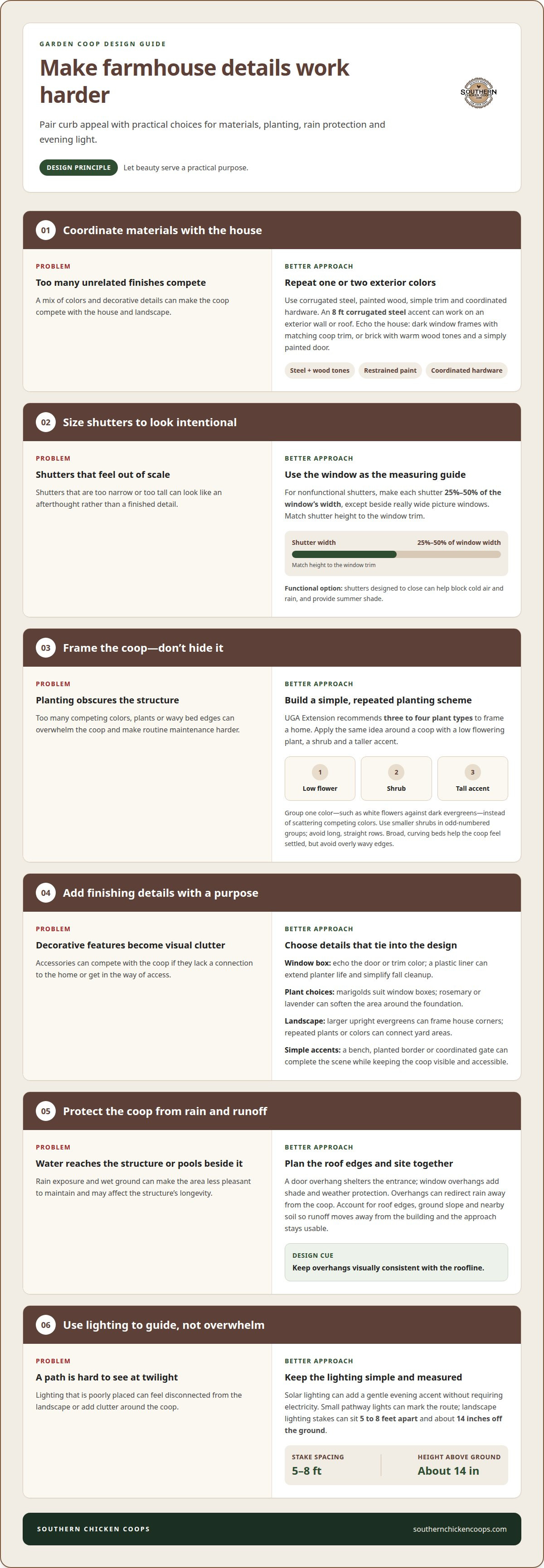
A garden coop that adds to curb appeal balances traditional details with materials suited to its surroundings. Corrugated steel, painted wood, simple trim, and coordinated hardware can create a farmhouse impression without making the structure feel overly ornate. One listed material option is 8 ft corrugated steel, which can provide a strong visual accent on an exterior wall or roof. Pair metal with wood tones or restrained paint colors so the coop relates naturally to the home’s existing finishes.
Start with the house, not a catalog of decorative details. A white farmhouse with dark window frames might suit a coop with coordinating trim and a muted metal roof. A brick home could instead inspire warm wood tones and a simply painted door. Repeating one or two exterior colors creates cohesion; several unrelated shades can make the coop compete with the house and landscape.
Shutters can make coop windows look more finished while serving a practical purpose when designed to close. They can help block cold air and rain, and provide summer shade. For nonfunctional shutters, use a width between 25% and 50% of the window’s width, except beside really wide picture windows. Match shutter height to the window trim. These proportions help the shutters look intentional rather than undersized or oversized.
A window box adds another farmhouse detail, especially when its color echoes the door or trim. A plastic liner can extend the planter’s life and simplify fall cleanup. Marigolds are one option for window boxes, while rosemary or lavender can soften the area around the foundation. Arrange plants to add color without obscuring windows, access points, or the coop’s outline.
Use a variety of plants to frame the structure rather than hide it. UGA Extension recommends three to four plant types around a home to frame it and draw attention to an attractive front door. The same idea can guide a coop landscape: combine a low flowering plant, a shrub, and a taller accent. UGA Extension also recommends grouping one color, such as white flowers against dark evergreens, instead of scattering competing colors.
For shrubs, UGA Extension recommends planting smaller varieties in odd-numbered groups and avoiding long, straight rows. Larger, upright evergreen shrubs can frame house corners, while repeated plants or colors can connect separate yard areas. Broad, curving landscape beds help a coop look settled into its setting. Avoid overly wavy edges, which can make mowing and routine maintenance harder.
Overhangs can contribute farmhouse character while helping protect the structure. A door overhang shelters the entrance while someone locks or unlocks the coop; window overhangs provide shade and weather protection. They can also redirect rain runoff away from the coop, supporting the structure’s longevity. Keep the overhangs visually consistent with the roofline so these functional details look like part of the original design.
Finish with accessories that make sense in the setting. Solar lighting can add a gentle evening accent without requiring electricity, while small pathway lights help mark the route at twilight. Landscape lighting stakes can be placed 5 to 8 feet apart and about 14 inches off the ground. A simple bench, a planted border, or a coordinated gate can complete the scene, provided each addition leaves the coop visible and accessible.
3. What coop features prevent odors, pests, and visual clutter?
Odor control starts with managing moisture and making bedding accessible for regular cleaning. A well-planned coop should provide airflow while protecting birds from direct drafts and rain. Operable windows deserve attention during design because poor ventilation can make temperature regulation difficult. Air movement helps dampness escape, and dry bedding is easier to keep fresh than bedding that stays wet.
Cleaning access matters as much as ventilation. A practical doorway and reachable interior surfaces make it easier to remove soiled bedding from corners and beneath roosting areas. A clear path from the entrance to the floor, for example, is easier to maintain than an interior crowded with awkward partitions. Thoughtful placement of roosts and nesting areas also helps contain everyday mess.
Runoff affects both odor and appearance around the structure. If rainwater gathers beside the coop, the ground may stay muddy, making routine care less pleasant. A considered site plan directs water away from the building and keeps the approach usable. Roof edges, the slope of the ground, and nearby soil all shape where runoff travels, so account for them when planning placement.
Pest-conscious design considers both access and feed storage. Raccoons and opossums are nocturnal predators, so secure closures matter after evening chores. Feed left in an open container can also attract unwanted visitors. A storage area with a firmly closed lid keeps feed contained and the yard orderly. Keep it near the coop for convenient daily use, but avoid leaving loose bags or buckets beside the entrance.
Doors, windows, and other openings should close neatly, without obvious gaps around the edges. Consider how each opening will be used, then choose a closure suited to that purpose. A window intended for ventilation needs to open for airflow and close when conditions change. This practical balance supports animal care while keeping the exterior composed.
Visual clutter often comes from useful items that lack a designated place. Feed scoops, cleaning supplies, spare bedding, and water containers can accumulate around the coop when storage is overlooked. Plan a concealed or visually consistent storage spot, and keep the approach clear. A simple exterior palette, aligned doors, and grouped supplies make the building look intentional rather than like a collection of add-ons.
Lighting also affects how orderly the area feels after dusk. Small solar lights along a garden path can help mark the route at twilight, while a single light near the entrance makes the doorway easier to locate. Keep fixtures and cords, if used, arranged neatly rather than scattered around the coop. A professional layout can coordinate access, ventilation, storage, and appearance; explore professionally planned coop designs as one way to bring those needs together.
A simple, deliberate outdoor plan can make nearby landscaping feel coordinated with the coop rather than crowded around it. Regularly trimming bushes planted beneath windows can help prevent them from becoming overgrown. Keeping the area visually considered reinforces the sense that the coop has a defined place in the yard, while leaving its windows and entrance uncluttered. Choosing a consistent approach to the surrounding lawn, trees, and decorative accents can also help the building sit comfortably within the broader outdoor setting. The goal is not to fill every open space, but to give useful features and greenery a considered place.
A yard improvement plan can start with the lawn and trees before moving on to larger features such as a patio or outdoor kitchen. This gives the overall setting a clear starting point before attention turns to additions around the coop. Garden centers can create visual merchandising settings with items such as outdoor seating, rugs, lanterns, and flowerpots to provide design inspiration. These displays can help guide choices about colors and materials for a tidy, cohesive appearance, without requiring every decorative item to be placed beside the coop. A few deliberate choices can support a composed look while keeping the approach clear for everyday care.
4. Is it better to build or buy a decorative chicken coop?
The right choice depends on how much control you want over the design and how much project work you want to manage. Building from scratch offers freedom over dimensions, materials, and placement. Buying a professionally built coop shifts construction planning to experienced hands. For a homeowner seeking farmhouse character alongside dependable function, a custom coop can bring those priorities together.
Building can suit someone with construction experience, available time, and a clear plan. The design needs to account for location, access, ventilation, weather exposure, and daily care. A decorative cupola or painted trim won’t compensate for awkward doors or poorly placed windows. Make sure the coop works for the birds and their caretakers before adding ornamental details.
There’s also coordination to consider. Building from scratch involves decisions about materials, layout, finishes, and how the structure will sit in the landscape. A coop near a garden path, for example, needs an entrance that won’t block the route. A sloped or exposed site can affect placement and rainwater flow. These choices shape both the finished appearance and how easy the area is to use.
Buying a ready-made coop can simplify the process, but standard dimensions and appearance may not suit every yard. A design that looks balanced in a catalog may feel crowded beside a narrow side garden or disconnected from the home. Before choosing, consider the available footprint, the route for delivery, and how the coop’s roofline and finishes will relate to nearby buildings.
A professionally made custom coop offers another path: the structure is built around the owner’s needs rather than selected solely from standard options. Custom Chicken Coops can account for the intended placement, preferred farmhouse details, and practical requirements in one coordinated design. Southern Chicken Coops’ Polka model is a 6'x12' coop designed for durability and functionality in the Texas climate. Semi-custom designs provide another way to tailor a coop to specific needs.
Compare the options by looking beyond appearance. A helpful design discussion covers:
- Site fit: The footprint, access route, and nearby landscape features.
- Daily use: Door placement and practical access for routine care.
- Weather: Roof design, overhangs, and runoff direction.
- Visual match: Materials, trim, and colors that complement the home.
These points help clarify whether a standard coop or a tailored design better fits your property. A ready-made option can work well when its layout and appearance suit the site. A custom approach may be a better fit when the yard has unusual constraints or the design needs to echo specific architectural details.
For a decorative coop that remains practical, choose an approach that gives function and finish equal attention. A custom design brings your priorities into the plan, while professional construction turns that plan into a finished structure. The best route fits the site, supports daily care, and feels at home beside the house.
5. Appeal ideas
Plan the view from the street as carefully as the view beside the coop. A clear sightline can help the structure feel intentional from the curb. Keep the coop visible, then use planting to frame rather than conceal it. A garden path leading toward the entrance can connect the structure with the wider yard.
Use a restrained planting palette to give the area a settled look. For example, repeat one flower color near the coop and along a nearby bed. UGA Extension recommends grouping plants of one color, such as white flowers against dark evergreens, rather than mixing many colors. Repetition links separate yard areas without adding more decorative objects.
Texture brings interest even when flowers aren’t in bloom. UGA Extension recommends choosing plants with varied shapes and textures, including those with seasonal color or interesting bark. A mix of upright foliage, low-growing ground cover, and flowering plants gives the landscape dimension. Keep taller plants behind shorter ones so the coop’s doors and windows remain easy to see.
Seasonal changes can make the view feel cared for throughout the year. Tulips planted in fall can provide spring blooms, while shrubs with changing foliage or interesting bark add interest beyond the flowering season. Choose plants suited to Texas and group them where their mature shapes won’t crowd the coop. Low-maintenance choices bring color without making the border difficult to manage.
Preserve mature trees wherever they suit the yard plan. UGA Extension notes that large trees take decades to grow and advises preserving as many mature, natural trees as possible. Their established canopy can give the coop a natural setting, while trunks and branches add structure above low garden beds. Keep the entrance and path open so shade doesn’t come at the expense of access.
Make the route to the coop part of the design. A defined path organizes the space and helps visitors approach without stepping through planting beds. Small pathway lights can help prevent stumbles at twilight. Solar lighting adds a gentle accent without electricity, and evenly spaced fixtures make the route look deliberate instead of scattered.
Use one or two outdoor details to create a welcoming destination. A simple bench beside the garden path invites someone to pause, while a bird bath can add a focal point away from the coop entrance. Keep these features in proportion to the yard. Several ornaments crowded into one corner can distract from the farmhouse design; a single useful feature gives the eye a clear place to rest.
Finish by refreshing the surrounding landscape rather than adding more objects. Replace faded mulch, remove dead plant material, and keep weeds from overtaking flowers. A tidy bed helps the coop stand out through its shape and materials. These small, repeatable tasks keep the yard appealing through the seasons and preserve a cared-for appearance.
Bring these landscape ideas together with a coop designed for its setting. Plan a landscape-ready coop as part of a cohesive yard design.
Southern Chicken Coops: Coop Delivery
Southern Chicken Coops builds Custom Chicken Coops and delivers completed coops to a prepared, level lot. Turn to the company when you want a handcrafted structure tailored to your yard’s layout and home, without taking on construction yourself. A semi-custom design can account for practical access, placement, and details that help the coop feel at home in the landscape.
Share the features that matter most, such as a coordinated exterior, useful windows, or a sheltered entrance. Those priorities can guide a design that balances appearance with everyday function. For a calm next step, contact Southern Chicken Coops to discuss your coop plans.
Shape a Coop Plan That Feels at Home
Before settling on a final design, picture the view from your favorite approach to the house. Which detail should catch the eye first: the coop’s trim, a planted path, or the welcoming entrance? Choosing one visual anchor can focus later decisions and prevent the yard from feeling crowded.
A garden coop that adds to curb appeal should connect with the way you use your outdoor space, not simply look good in a photograph. Consider the routines around it, the sightlines from your home, and the character you want the landscape to carry through changing seasons. Those priorities give a design conversation a useful starting point.
With a clear sense of what matters most, you can move from inspiration toward a plan shaped for your property. Share the look and practical needs you have in mind, then consider how they can come together in a carefully crafted coop.
Talk through your coop plans with Southern Chicken Coops, and take the next step toward a garden space that feels truly your own.
Frequently Asked Questions
What garden coop designs can a custom coop provider offer to improve curb appeal?
A custom coop can be shaped around your property’s layout and the look you want, while remaining practical for Texas conditions. Southern Chicken Coops builds handcrafted Custom Chicken Coops, including semi-custom designs tailored to specific needs. For example, the design can account for the coop’s position in relation to a fence, garden, or home. That helps the structure feel like a considered part of the property rather than a separate feature.
How can a custom coop provider help a chicken coop blend with a home's exterior and landscaping?
A custom design can coordinate the coop’s placement and visual details with nearby features. Share how the home’s exterior, garden borders, and access paths relate to the intended location. The design can then account for sightlines and movement through the yard. In a Texas landscape, these choices help integrate the coop without placing plants or decorations where they obstruct entrances or routine access.
What attractive materials and colors can you request for a custom backyard chicken coop?
Southern Chicken Coops’ standard finish includes classic white paint and silver/galvalume metal roofing. Other paint colors and colored metal roofing are optional upgrades. Windows may be white or black, depending on current availability. These choices let you coordinate the coop with your home’s trim, roof, or nearby fence. Classic white paint can echo light-colored exterior details, while silver/galvalume roofing adds a simple metal finish suited to a Texas backyard.


