

Imagine walking out to your backyard on a July afternoon in McGregor, only to find your favorite hen panting with her wings spread wide, struggling to breathe in the 104-degree stillness. It's a heavy feeling that every Texas chicken keeper knows too well, especially when you're searching for the best chicken breeds for Central Texas heat to prevent such heartbreak. We've all seen egg production drop off as soon as the summer sun turns the run into a sauna. You want to protect your girls, but conflicting advice from generic blogs often fails when it meets the reality of our intense regional climate.
We believe that keeping chickens should be a joy, not a constant battle against the elements. In this 2026 guide, you'll discover which breeds thrive in the intense sun and how the right housing protects your flock from 100-degree days. We'll walk through the specific traits that keep Mediterranean breeds laying through August, the ventilation secrets of our handcrafted Polka model coops, and the simple ways you can lower mortality rates. By the end, you'll have a clear plan to keep your birds safe and your egg basket full all year long.
Key Takeaways
- Identify the Mediterranean and desert-born genetics that define the best chicken breeds for Central Texas heat so your flock stays healthy through the peak of August.
- Learn how the "Heat Dome" effect and Central Texas humidity impact your hens' internal temperatures and why standard shade isn't always enough.
- Discover why even the hardiest birds require a home designed for specific airflow patterns to prevent the dangerous "hot-box" effect.
- Follow our selection checklist to match your specific property's shade and your family's egg production goals with the most resilient breeds.
- See how handcrafted craftsmanship and the ventilation of the Polka model create a protective sanctuary that honors your commitment to your flock's well-being.
The Central Texas Heat Challenge: Why Your Breed Choice Matters
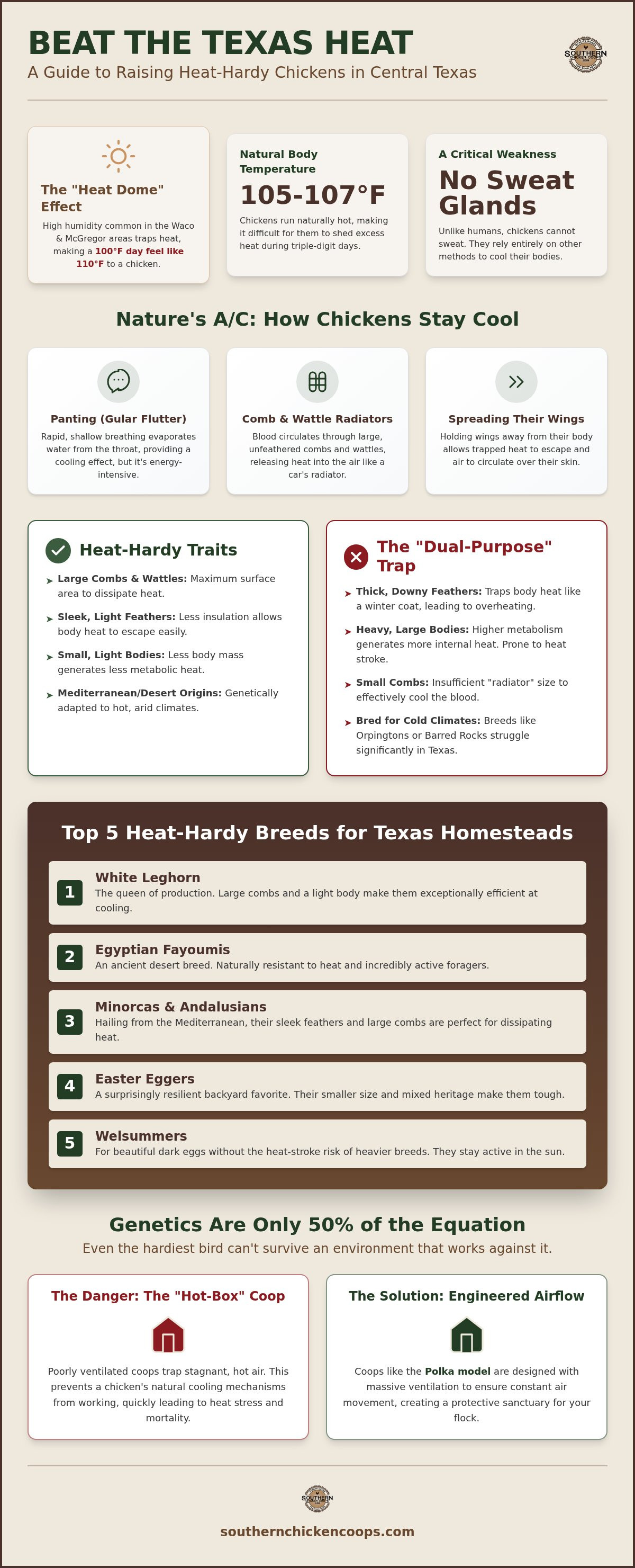
We've spent many summers watching the horizon in McGregor, knowing that once June hits, the heat doesn't just arrive; it settles in for the long haul. For our feathered friends, this is more than a discomfort. A chicken's normal body temperature sits between 105 and 107 degrees Fahrenheit, and they carry no sweat glands to help them cool down. When we face the "Heat Dome" effect common in the Waco and McGregor areas, the humidity traps that warmth, making a 100-degree day feel like 110 to a hen. Finding the best chicken breeds for Central Texas heat is the first step in being a good steward of your flock.
Thermoregulation is the natural process where chickens use their large combs and rapid breathing to release excess body heat into the surrounding air. While a bird bred for the snowy winters of Maine might be called "hardy," that thick layer of downy feathers becomes a life-threatening liability during a Texas triple-digit streak. We often see well-meaning neighbors lose birds because they chose breeds based on generic advice rather than our specific regional demands. Success in our climate requires a shift in perspective, moving away from heavy, fluffy birds toward sleek, active breeds that can handle the sun.
How Chickens Cool Themselves
A chicken's comb acts much like a radiator in a car, circulating warm blood close to the surface where it can be cooled by the breeze. When you see your girls panting or standing with their wings held away from their bodies, they're working hard to move air across their skin. This biological struggle is why the "vessel" you choose for them is so critical. Even the most heat-hardy bird can't survive a coop that holds onto stagnant air. We design our Polka model with massive ventilation because we know that if the air isn't moving, the chicken's natural cooling systems simply can't function.
The Dangers of the 'Dual-Purpose' Trap
Many new keepers are drawn to "dual-purpose" breeds like Orpingtons or Barred Rocks because they're friendly and large. However, these heavy breeds often struggle significantly in Central Texas. The metabolic cost of carrying that extra weight creates more internal heat, making them prone to heat stroke when the thermometer climbs. Instead of focusing on "big birds," we encourage our neighbors to look for "thriving birds." For example, the Naked Neck chicken is a wonderful example of specialized genetics; with fewer feathers to trap heat, they stay much cooler than their fluffier counterparts. Choosing the best chicken breeds for Central Texas heat means prioritizing birds that stay light, active, and productive even when the ground is cracked and the grass is dry.
Top 5 Heat-Hardy Chicken Breeds for Texas Homesteads
Choosing the best chicken breeds for Central Texas heat isn't just about finding birds that survive; it's about finding birds that thrive when the ground is baking. We've raised many varieties in McGregor, and we've found that genetics often speak louder than any misting system. Here are the top performers that handle our triple-digit summers with grace.
- The White Leghorn: These are the undisputed queens of production. Their large, single combs act as efficient radiators, and their small, light bodies don't hold onto the heat like heavier breeds do.
- Egyptian Fayoumis: This ancient breed comes from desert roots. They're incredibly active and possess a natural resistance to heat that is hard to beat in our local climate.
- Minorcas and Andalusians: Both hail from the Mediterranean. They carry large combs and sleek feathers, allowing them to dissipate heat quickly while maintaining a steady laying pace.
- Easter Eggers: A favorite for backyard flocks, these birds are surprisingly resilient. Their smaller size and mixed heritage often make them tougher than many purebred "cold-hardy" types.
- Welsummers: If you want those beautiful dark, terracotta eggs without the heat-stroke risk of a heavy Marans, the Welsummer is your best bet. They stay active even when the sun is at its peak.
- Southern Chicken Coops: While not a breed, the environment is the other half of the survival equation. We've seen that even the hardiest Leghorn needs a place to escape the direct glare of the sun. Our handcrafted custom chicken coops are designed to protect these high-energy breeds, ensuring they have the specific shade and airflow they deserve.
The Mediterranean Class: Built for the Sun
Most of the best chicken breeds for Central Texas heat share a common ancestry in hot, dry regions. These birds don't have the thick, fluffy down of their northern cousins. Instead, they have sleek, tight feathers that allow air to reach their skin. They're often smaller in stature, which is a massive biological advantage. A smaller bird has less internal mass to cool down, meaning they don't have to work nearly as hard to stay comfortable during a Waco afternoon.
The 'Texas-Tough' Layers
In the middle of July and August, many chickens will naturally slow their egg production to save energy. However, the breeds we've listed are known for their persistence. You might notice eggshells getting a bit thinner during a heatwave; this happens because birds pant to stay cool, which changes their internal chemistry. By choosing birds with smaller body mass, you're giving them a survival advantage that translates into more consistent laying. We focus on these "thriving birds" because they honor the stewardship we all feel for our flocks.
Genetics vs. Environment: Why the Coop is 50% of the Equation
Even if you've carefully selected the best chicken breeds for Central Texas heat, your work is only half finished. We often tell our neighbors in McGregor that a heat-hardy bird in a "hot-box" coop is still a bird in danger. You can't rely solely on genetics to overcome the physics of a stagnant, sun-baked structure. In our region, a coop must do more than just provide shelter; it must actively work to move heat away from your birds. Finding the right balance between a bird's natural resilience and a well-engineered home is the secret to a thriving summer flock.
One of the biggest mistakes we see is the use of thin metal roofing without proper pitch or insulation. While metal is durable, it acts as a massive radiator, beaming heat directly down onto the roosting bars during those long July afternoons. We prefer wood or insulated roofing materials that create a thermal barrier between the sun and your hens. Additionally, while it might be tempting to leave every door open on a 105-degree night, Central Texas predators like raccoons and coyotes are always searching for an easy meal. You need a design that allows for maximum airflow without compromising the security of your flock.
Ventilation: The Silent Life-Saver
True cooling comes from the chimney effect, where hot air is allowed to rise and escape through high-level vents, pulling cooler air in from below. This cycle is vital for preventing respiratory issues and heat exhaustion. When setting up your lot, we recommend positioning your coop to catch the prevailing South wind that sweeps across our Texas prairies. By using high-quality hardware cloth instead of solid walls in strategic areas, we find a balance that lets the breeze through while keeping teeth and claws out. This cross-ventilation ensures that the air at the birds' level is always fresh and moving.
The Polka Model Design Philosophy
We built our signature 6x12 Polka model specifically to address these environmental challenges. This footprint isn't just about floor space; it's about providing the necessary cubic feet of air to prevent heat from pooling near the ceiling. Every detail is handcrafted with a focus on longevity and animal well-being, ensuring that your investment is protected for years to come. We invite you to take a closer look Inside The Polka: Features Your Texas Hens Will Love to see how we've integrated these cooling principles into a secure home. When you invest in the best chicken breeds for Central Texas heat, they deserve a home that works just as hard as they do to stay comfortable.
Selection Checklist: Choosing Your Flock for McGregor and Waco
We've spent years helping our neighbors get started, and we've learned that selecting the best chicken breeds for Central Texas heat is only part of the puzzle. Before you bring those chirping chicks home to McGregor or Waco, take a moment to walk your land. A successful homestead starts with a plan that respects both the birds' biology and the unique layout of your property. We approach this as a form of stewardship, ensuring every bird we help house has the best chance to thrive.
Step 1 is always about shade. Walk your property at 2:00 PM. If you don't have natural canopy from oaks or elms, you'll need to create it with structures or landscaping. Step 2 is matching your goals to the best chicken breeds for Central Texas heat, whether you want high production from a Leghorn or the colorful eggs of an Easter Egger. For Step 3, consider temperament. Mediterranean breeds are often flightier and more active than the heavy, docile breeds common in cooler climates. Finally, Step 4 is to finalize your coop placement. Moving a heavy, handcrafted building after the birds have settled is stressful for everyone involved, so it's best to get it right from the start.
Assessing Your Level Ground
We often talk to neighbors who have the perfect spot in mind, only to realize the ground has a significant slope. A level lot is critical for proper coop airflow and ensures the structural integrity of your home for years to come. When we handle your professional coop delivery, we want to ensure the building sits perfectly to catch those southern breezes that move through the Texas Blackland Prairies. To get your site ready, we recommend reading our Backyard Chicken Coop Prep: A Texas Homestead Guide. Preparing your acreage ahead of time makes the transition seamless for your new arrivals.
Managing a Mixed Flock
It's common to want a colorful variety of birds, but managing a mixed flock in Central Texas requires extra attention. While heat-hardy and cold-hardy breeds can live together, the heavier birds will need more frequent monitoring during our 100-day triple-digit streaks. You'll need to adjust feeding requirements, perhaps adding calcium or electrolytes to their water when the stress of the heat is at its highest. Keep an eye on the peck order; heat stress can make birds irritable, leading to more aggression in the coop. If you're ready to provide a safe sanctuary for your girls, we'd love to help you choose one of our custom chicken coops that fits your specific flock size.
Protecting Your Investment with a Southern Chicken Coop
We believe that your choice of the best chicken breeds for Central Texas heat deserves a home that reflects your deep commitment to their well-being. A generic, thin-walled kit from a big-box store often warps under the relentless Texas sun within a single season. Those mass-produced options might look fine in a catalog, but they weren't built with the Blackland Prairies in mind. By choosing a handcrafted coop built right here in McGregor, you're investing in a structure designed to stand up to our unique environmental challenges while keeping your birds safe from predators and heat stroke alike.
When Bill and Tina Drivdahl founded Southern Chicken Coops, it was never just about building boxes. It was a calling rooted in integrity and stewardship. We treat every client like a neighbor because you are one. We're master artisans who are deeply invested in your success, acting as expert guides as you navigate the joys of homesteading. This isn't a purely commercial venture; it's a partnership where we help you protect the lifestyle you've chosen to build for your family and your flock.
The Polka: Built for Texas Longevity
Our signature Polka model is the culmination of our passion for craftsmanship and our deep respect for the animals we serve. We use materials that resist the warping and drying out that often happen during our 100-day triple-digit streaks. Investing in a long lasting chicken coop is a one-time decision that prevents the heartbreak of structural failure or flock loss. For our neighbors in the Central Texas area, we provide professional delivery to level lots, ensuring your new coop is perfectly positioned to catch the breeze and protect your investment for decades to come.
Your Next Steps to a Cooler Flock
If you're ready to move beyond the frustration of heat stress and falling egg production, we're here to collaborate. We encourage you to reach out and consult with us on your semi-custom needs. Whether you're just starting your search for the best chicken breeds for Central Texas heat or you're looking to upgrade an existing setup, we'd love to have you visit us in McGregor. Seeing the craftsmanship firsthand helps you understand the intersection of form and function that defines our work. You truly can raise happy, productive hens in the heart of Texas, and we'd be honored to help you build their perfect home.
Building a Sustainable Sanctuary for Your Texas Flock
Choosing the right birds is a beautiful first step toward a thriving homestead. We've seen how Mediterranean genetics and sleek body types allow the best chicken breeds for Central Texas heat to stay productive when the thermometer climbs. However, even the hardiest Leghorn or Fayoumi depends on a home that honors their need for constant airflow. By pairing resilient breeds with a structure designed for our specific climate, you're doing more than just keeping birds; you're practicing true stewardship of the animals you love.
Bill and Tina Drivdahl are here to support your journey every step of the way. Every coop we build is handcrafted one at a time in McGregor, Texas, with a focus on the durability and ventilation our local environment demands. We provide professional delivery to your prepared lot, ensuring your new sanctuary is set up for success from day one. You don't have to face those long, triple-digit streaks with worry. Explore the Polka: The Best Chicken Coop for Texas Heat and discover how a thoughtfully designed home protects your girls. We're honored to be your neighbors in this calling, and we can't wait to see your flock thrive.
Frequently Asked Questions
What is the single most heat-tolerant chicken breed?
The White Leghorn is widely considered the single most heat-tolerant breed for our region. Their large single combs work like radiators to shed body heat, and their light frame prevents them from overheating as quickly as heavy breeds. While Egyptian Fayoumis are also incredibly resilient, the Leghorn remains the top choice for those seeking the best chicken breeds for Central Texas heat alongside high egg production.
Can chickens stay in the coop during a Texas heatwave?
Your chickens can stay in the coop during a heatwave only if the structure provides massive, active airflow. In a standard, poorly ventilated coop, the air becomes stagnant and far hotter than the outside temperature. We designed our Polka model specifically to prevent this "hot-box" effect. If your coop doesn't have cross-ventilation or high-level vents to let heat escape, it's safer for your birds to be in a shaded outdoor run.
How do I know if my chickens are dying from heat?
Heat stroke often starts with heavy panting and birds holding their wings away from their bodies to catch a breeze. If a hen becomes extremely lethargic, develops a pale comb, or stops reacting to your presence, she is in immediate danger. In the final stages, birds may experience seizures or lose the ability to stand. We always tell our neighbors that early intervention with cool water and shade is the key to saving a bird.
Is it better to have a wood or plastic chicken coop in Texas?
Wood is significantly better than plastic for the Texas climate because it doesn't trap heat like a greenhouse. Plastic coops often reach dangerous internal temperatures during our 100-degree days, even with the doors open. We build our handcrafted coops from high-quality wood that offers natural thermal resistance. This material, combined with our specific design for the Polka model's ventilation, ensures your flock has a sanctuary that stays cooler than mass-produced alternatives.
Do I need to add a fan to my chicken coop?
A fan can be a helpful addition, but it shouldn't be your only cooling strategy. Fans simply move air; if the air inside the coop is already 105 degrees, the fan won't provide much relief unless there's an intake of cooler air. We prioritize structural ventilation first. If you do add a fan, ensure it's a closed-motor model designed for dusty environments. This prevents fire hazards while helping your birds' natural thermoregulation process during the hottest afternoons.
What should I feed my chickens when it's over 100 degrees?
Stick to their high-quality layer crumbles or pellets, but try to avoid feeding heavy grains like corn in the late evening. Digesting corn creates significant metabolic heat, which can make it harder for a hen to cool down overnight. Instead, offer chilled treats like watermelon or cucumbers during the peak of the day. These snacks provide extra hydration and a bit of relief without taxing their systems during a Central Texas triple-digit streak.
How much water does a hen need in the summer?
A single hen can drink up to a quart of water every day when temperatures exceed 100 degrees. This is nearly double what they consume in the winter. It's not just about the amount, though; the water must be kept cool and fresh to encourage them to drink. We recommend placing multiple waterers in deep shade. If the water feels like warm tea to your hand, your chickens likely won't drink enough to stay hydrated.
Should I hose down my chicken coop to cool it off?
Hosing down the roof of your coop or the ground nearby can provide a noticeable cooling effect through evaporation. However, you should avoid hosing down the inside of the coop or getting the bedding wet. High humidity combined with high heat is actually more dangerous for chickens than dry heat alone. Wet bedding also leads to ammonia buildup and respiratory issues. Focus on cooling the surrounding air and providing damp soil in the run instead.


