

Rain can make a familiar chicken run feel like a dull place to spend the day. Restlessness, repeated pecking at surroundings, or little interest in exploring may suggest your flock needs more to do, though these behaviors alone don’t prove boredom. These five chicken boredom busters for rainy days use simple options you may already have: feed to forage for, branches, low climbing structures, and vegetables to peck at.
It’s natural to want your hens to stay comfortable and occupied when wet weather keeps them near shelter. This guide covers ways to spot possible boredom and create safe, engaging activities with everyday materials. You’ll find practical ideas for making regular feed more interesting, adding natural textures and low climbing opportunities, and hanging vegetables securely, while keeping your birds’ comfort and safety in mind.
Key Takeaways
- Look for repeated, restless behaviors and consider whether your flock has enough to explore before assuming boredom is the cause.
- Turn clean leaves, fallen branches, and regular feed into simple foraging opportunities on wet days.
- Add sturdy, low climbing features and change the run’s layout to give chickens fresh places to investigate.
- Offer vegetables for pecking, securing them carefully and keeping treats supplementary to balanced feed.
- Choose activities that suit your flock and keep access to food, water, nesting boxes, and exits clear.
1. Leaf piles and fallen branches for scratching
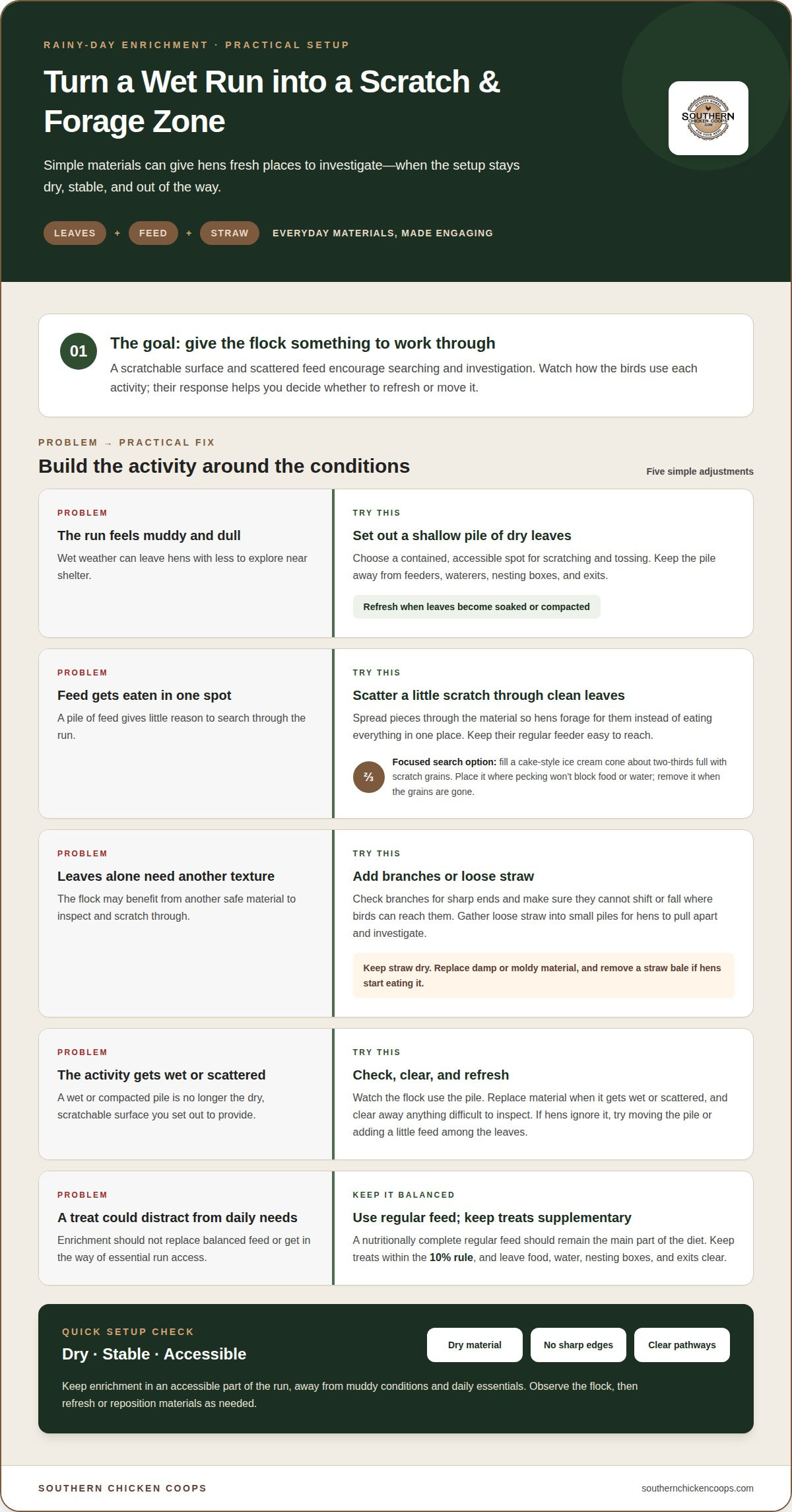
A shallow pile of dry leaves gives hens something to scratch, toss, and investigate when rain keeps them close to the run. Put leaves in a contained spot, away from feeders, waterers, nesting boxes, and exits. Chickens can forage through fallen leaves, while branches add another natural texture to explore. Check branches for sharp ends and make sure they won’t shift or fall where birds can reach them.
Rain can turn a busy run into a muddy patch, so a leaf pile offers a simple activity and a fresh area to explore. If the leaves become soaked or compacted, remove them and replace them with dry material. In winter, offer leaves when they’re available. The goal is a scratchable surface, not a layer of material that traps moisture against wet ground.
Regular scratch grains can make the pile more inviting. Scatter a little through clean leaves or bedding so the chickens search for each piece instead of eating it all in one spot. You can also fill a cake-style ice cream cone about two-thirds full with scratch grains. Place it where the flock can peck without blocking food or water, and remove it when the grains are gone.
Straw can encourage scratching, too. A straw bale may occupy a flock for days or weeks, depending on the birds, but it must stay dry. Replace damp or moldy straw, and remove the bale if hens start eating it. You can also gather loose straw into small piles for the flock to pull apart and investigate.
Keep the setup simple: place a pile in an accessible part of the run and watch how the birds use it. If they scratch through it, refresh the material when it gets wet or scattered. If they ignore it, try moving the pile or adding a little feed among the leaves. A cabbage leaf offers another pecking target, but keep vegetables as a separate treat rather than burying large pieces in straw. These small changes turn ordinary yard materials into practical chicken boredom busters for rainy days, with room for the flock to scratch and forage.
For particularly rainy weather, the author puts piles of leaves in the pen because chickens dislike a muddy pen. A cake-style ice cream cone filled 2/3 full with scratch grains can offer another focused search activity, especially when placed on dry bedding rather than in mud. Watch whether the flock turns over the material as it forages, and clear away anything that becomes wet or difficult to inspect.
A chicken keeper in western South Dakota piles waste hay into small stacks 3-5 feet high before snowstorms, then flips the hay onto the snow for chickens to scratch through. A chicken keeper in western South Dakota also scatters scratch on coop bedding once a week to encourage chickens to turn it over. Keep straw used for enrichment dry, replace damp or moldy straw, and remove a straw bale if hens start eating the straw. These practices give the flock fresh material to work through while keeping the scratching activity separate from its regular feeding area.
2. Using regular feed for enrichment
On rainy days, make your chickens’ regular feed more engaging by hiding a little in clean bedding or a shallow foraging box. Scatter feed where the birds can scratch and search, while keeping their usual feeder easy to reach. Try this indoors or in a sheltered run, as long as the activity doesn’t block water, nesting boxes, or exits.
For a homemade puzzle, use a sturdy, shallow box with clean bedding and sprinkle some regular feed through it. Choose an object too large to swallow, with no sharp edges or small detachable pieces. Avoid containers that can tip onto a bird or trap its head. Watch the flock’s first attempts, then remove the box if it breaks or becomes wet and soiled.
Safe indoor activities include foraging through clean bedding, pecking at feed in a shallow tray, and investigating a securely mounted mirror. A mirror can add visual variety, but fix it firmly and keep its edges out of reach. Leave clear space around feeders, waterers, nesting boxes, and exits so activities don’t interfere with daily needs.
Clean, sturdy household materials without loose parts can become simple toys. A plain cardboard box can hold bedding and a little feed, while a firm, low tray can turn regular feed into a search game. A mirror gives the flock something different to look at, though chickens may react differently to their reflections. Check every item for sharp edges, dangling loops, or pieces the birds could swallow.
Keep treats modest. A chicken’s regular, nutritionally complete feed should remain the main part of its diet, and treats should stay within the 10% rule. Use a little feed from the normal ration for puzzles, rather than adding extra treats, and remove uneaten food daily to limit spoilage and pests.
Rotate activities every few days: swap a foraging box for a mirror or change where feed is scattered. Chickens need enough indoor room to move around and reach food, water, nesting boxes, and exits without crowding; the flock’s size and the layout determine what feels workable. Chickens can use a sheltered outdoor area in rain, but keep them protected from harsh weather and away from muddy conditions or wet feed. For a home planned around your flock’s needs, explore custom chicken coops.
3. Adding climbing structures and environmental variety
A sturdy, low structure gives chickens another way to move around the run on a rainy day. Set a clean plank across two stable stumps to make a simple bridge, then watch how the flock approaches it. Keep the surface steady and free of sharp edges, splinters, and loose fasteners. Low features are especially useful for heavier breeds, since a short step is easier to navigate than a tall perch.
For a compact climbing feature, make a small A-frame from wooden two by twos and screws. Check that it sits firmly on the ground and doesn’t wobble when birds step onto it. A sturdy swing can add movement, too, but it should be wide, securely fastened, and kept low. Leave room for chickens to walk around each feature, rather than placing structures across a feeder, waterer, nesting box, or exit.
A covered chicken-wire tunnel offers another route to explore, while a low perch or ladder changes the run’s layout. Inspect every edge and connection before use, and remove anything bent, loose, or sharp. A rocking-horse-style roosting bar has a perch just inches above the ground, adding a modest change in height. Choose features that suit your flock’s size and movement, and keep the path through the run clear.
You don’t need to build something new to add variety. Move a safe stump or reposition a sturdy perch every couple of weeks to make familiar surroundings feel different. You can also arrange branches or clean wood pieces as obstacles to walk around and investigate. Place them securely and leave room for birds to pass without crowding. Notice where your flock gathers, then move a feature to an underused corner of the run.
A garden view can add interest beyond the run. CDs hung securely around a run or garden can catch light and provide visual stimulation, but place them where chickens can’t peck at sharp edges or get tangled. Remove damaged discs and loose hanging materials. The aim is to change what the flock sees, not introduce a hazard within reach.
Introduce one change at a time, then observe whether the chickens use it. A sturdy bridge may suit birds that like stepping up, while another flock may prefer exploring a rearranged run. Some chickens use swings, ladders, and perches less readily than other enrichment, so observe your own birds instead of assuming every toy will entertain them. Safe structures and fresh layouts can make a rainy run more engaging without sacrificing clear paths or stable footing.
4. Hanging vegetables for pecking
A hanging vegetable turns pecking into an activity, especially when rain keeps chickens under shelter. Offer cabbage, broccoli, or cauliflower whole, or place it in a treat ball. You can also make a simple vegetable “piñata” by suspending it securely where the flock can reach. The movement encourages birds to work for the food rather than finding it all in a dish.
Set up the treat with your birds’ safety in mind. Attach it firmly, without dangling string, wire, or loops that could tangle a chicken. Keep the vegetable low enough for comfortable pecking and away from feeders, waterers, nesting boxes, and exits. Check the attachment before the flock investigates, then remove it if it loosens or becomes damaged.
Cabbage is a practical choice because its leaves give chickens different edges to tug and peck. You can also hang sweet potatoes for the flock to work on. For a larger treat, use a pumpkin and let the birds explore its surface over time. In one coop, a pumpkin lasted almost a week as the chickens ate it gradually; your flock’s pace depends on how readily they eat it.
Fresh vegetables should remain treats, not a substitute for regular, nutritionally complete poultry feed. Keep treats within the 10% rule, and take away uneaten pieces after the flock has had enough for the day. Remove vegetables before they freeze solid or begin to spoil. On rainy days, check any food left in the run, since wet feed can spoil and should be removed promptly.
Keep plastic packaging off hanging treats. Remove produce sleeves and labels before offering vegetables, and keep packaging scraps out of the chickens’ reach. Once the treat is secured, watch how each bird approaches it. If a piece falls, move it out of a muddy area and offer it only while it remains clean and fresh.
Use this activity as one small part of a varied rainy-day routine. Cabbage or broccoli gives the flock a pecking target, while a pumpkin may invite longer exploration. Rotate the vegetable instead of leaving the same item in place indefinitely. These simple chicken boredom busters for rainy days use familiar produce, while secure attachment and timely cleanup help keep treats safe and orderly.
After sunflowers start dying, the author cuts up a stalk with its flower head and seeds each week for the flock to peck at. The family also hangs Cheerios for their chickens every couple of weeks during winter.
5. Recognizing boredom-related chicken behaviors
A rainy afternoon changes what your flock can do, so compare its behavior with its usual routine. Chickens scratch, forage, and explore. A sudden lack of these outlets may show up as repeated pacing or persistent pecking at the same surface. Those signs can have other causes, so treat them as clues to investigate, not proof of boredom.
Look for patterns across the flock rather than judging one moment. If several hens repeatedly crowd one corner, peck at walls, or show little interest in exploring, note what has changed in their surroundings. A muddy run, for example, may limit access to favorite scratching spots. Add a dry, engaging area, then observe whether the birds spread out and explore again.
Feather pecking needs careful attention. Repeatedly pecking another chicken can be related to boredom, but may also signal stress, discomfort, or another flock problem. Check whether it happens in one location, involves particular birds, or continues after you add foraging opportunities. Safely separate an injured bird and seek poultry-care guidance if pecking causes wounds or persists.
Don’t mistake ordinary behavior for a warning sign. A hen pausing to rest, preen, or roost is not automatically bored; roosting is part of a chicken’s normal routine. Instead, look for a clear change, such as a bird that used to explore but now repeatedly paces during a rainy spell. Compare its behavior with a familiar summer day, when the flock may have more access to outdoor foraging.
Make a simple observation routine: note the weather, where the chickens spend time, and which activities they choose. Introduce one change, such as a leaf pile or low climbing feature, and see whether their interest shifts. If the flock investigates the new area, you’ll learn more than you would by offering several unfamiliar objects at once. Remove anything that causes crowding or blocks food, water, nesting boxes, or exits.
The clearest takeaway is to look for repeated changes from each bird’s normal behavior, then adjust the environment and observe again. A pretty scene in the run matters less than whether hens can move, forage, rest, and reach essentials comfortably. If your current setup leaves little room for those routines, plan a coop layout with room for your flock.
Southern Chicken Coops
Southern Chicken Coops can help when rainy-day boredom points to a broader need for a well-planned home and run. Its custom chicken coops are tailored to flock needs, with designs built for durability and functionality in the Texas climate. A thoughtfully planned coop gives you a foundation for everyday routines, including space for chickens to move, rest, and access essentials when wet weather limits outdoor activity.
If you’re considering a coop that better suits your flock and property, Southern Chicken Coops also delivers completed coops to your prepared, level lot. Discuss your chickens’ needs and how the setup fits your day-to-day care. Contact Southern Chicken Coops to talk through your coop needs.
Build a Rainy-Day Routine That Fits Your Flock
Let your chickens’ choices guide what you keep in their rainy-day routine. One flock may investigate a new texture, while another prefers familiar surroundings and a small foraging challenge. Notice which activities hold their attention, which they ignore, and whether everyone can move around comfortably. This simple pattern helps you choose chicken boredom busters for rainy days that suit your birds, rather than adding objects just for variety’s sake.
As your flock grows or its housing needs change, consider whether the coop still supports comfortable daily routines in wet weather. A well-planned space can make it easier to keep enrichment accessible without crowding essential areas. If you’re thinking about a setup tailored to your chickens, connect with Southern Chicken Coops to discuss your needs. Start with what your flock does on a rainy day, and build from there. Small, thoughtful adjustments can make the next stretch of wet weather easier for both you and your birds.
Frequently Asked Questions
How do you know if your chickens are bored?
Look for a repeated change from each chicken’s usual routine, especially during rainy spells. A short daily note of where the flock spends time and what it explores can reveal patterns that one glance might miss. Check whether a new behavior affects one bird or several, and whether it continues after the weather clears. Boredom is one possibility, but behavior alone can’t establish the cause.
Are hanging cabbage or treat dispensers safe for chickens?
They can be safe when the food is suitable and the dispenser is sturdy, securely fixed, and free of sharp edges or loose pieces. Avoid attachments with dangling string, wire, or loops that could tangle birds. Place the item where chickens can approach without crowding one another, then watch their first interaction. Remove it if the holder breaks, loosens, or creates a hazard.
What are signs of boredom or stress in chickens, such as feather pecking?
Feather pecking, repeated pacing, or persistent pecking at surroundings can signal that something in the flock’s routine or environment needs attention. These behaviors don’t identify the cause by themselves. Note which birds are involved, where it happens, and whether the pattern changes after you improve the setup. If pecking injures a bird or continues, seek poultry-care advice rather than treating enrichment as the only solution.
What are affordable chicken enrichment toys and their prices?
Simple enrichment can cost nothing when you use clean, safe materials you already have, such as a sturdy cardboard box for supervised exploration. Prices for purchased toys vary by item and seller, so there’s no single reliable price for every option. Before using an object, make sure chickens can’t swallow it, become trapped, or reach sharp edges or detachable parts. Remove anything that becomes wet, damaged, or dirty.
How much space do chickens need indoors when confined by bad weather?
Give chickens enough room to move around and reach food, water, nesting boxes, and exits without crowding. The space needed depends on flock size and the coop layout.


