

Imagine waking up on a humid July morning in McGregor, walking out with your coffee, and finding that the "bargain" coop you bought just two years ago has warped under the Texas sun, leaving a gap just wide enough for a raccoon to reach your favorite hen. It's a heartbreak we've seen too many neighbors face when a build doesn't match the demands of our rugged landscape. You want the very best for your girls, a place where they feel safe and cool even when the thermometer hits triple digits. That's why knowing the right questions to ask a chicken coop builder is the most important step in your journey as a flock owner.
We understand that a coop isn't just a shed; it's a sanctuary and an investment in your family's lifestyle. In this guide, we'll show you how to interview a builder to ensure you get a structure that's durable, predator-proof, and designed for the unique challenges of 2026. We'll cover everything from lumber quality and heat-resistant ventilation to the logistics of getting that beautiful new home delivered safely to your Waco area property. By the end, you'll have the confidence to choose a master artisan who builds with integrity, craftsmanship, and heart.
Key Takeaways
- Learn why high-quality exterior screws and specific lumber choices are the foundation of a coop that lasts for decades rather than just a few seasons.
- Discover the essential questions to ask a chicken coop builder to ensure your flock stays safe from Central Texas predators and extreme summer temperatures.
- Understand the specific ventilation requirements needed to create a life-saving cross-breeze without exposing your birds to dangerous winter drafts.
- Find out how to prepare your McGregor or Waco area property for a seamless delivery process of a fully assembled custom home.
- Identify the signs of a master artisan who prioritizes the well-being of your animals and shares your values of stewardship and integrity.
Why Choosing the Right Chicken Coop Builder is Your Flocks Best Defense
Choosing a coop is a big decision for any family. It’s about more than just finding a place for your hens to sleep; it’s about providing a sanctuary that honors their lives. Many folks start by looking at those "box" coops found at big-box retailers. They look charming in a photo, but they're often built with thin materials that aren't meant to last. When we talk about a "home" for your hens, we mean a structure built with the same care and integrity you’d want for your own house.
The philosophy behind the build matters just as much as the wood itself. A builder who views their work as stewardship will prioritize safety and comfort over cutting corners. As you start your journey, the specific questions to ask a chicken coop builder should reveal whether they truly understand the responsibility of protecting your flock. Investing in craftsmanship isn't just about aesthetics; it's about the long-term return on your investment and the safety of the animals under your care.
The Risks of Mass-Produced Coop Kits
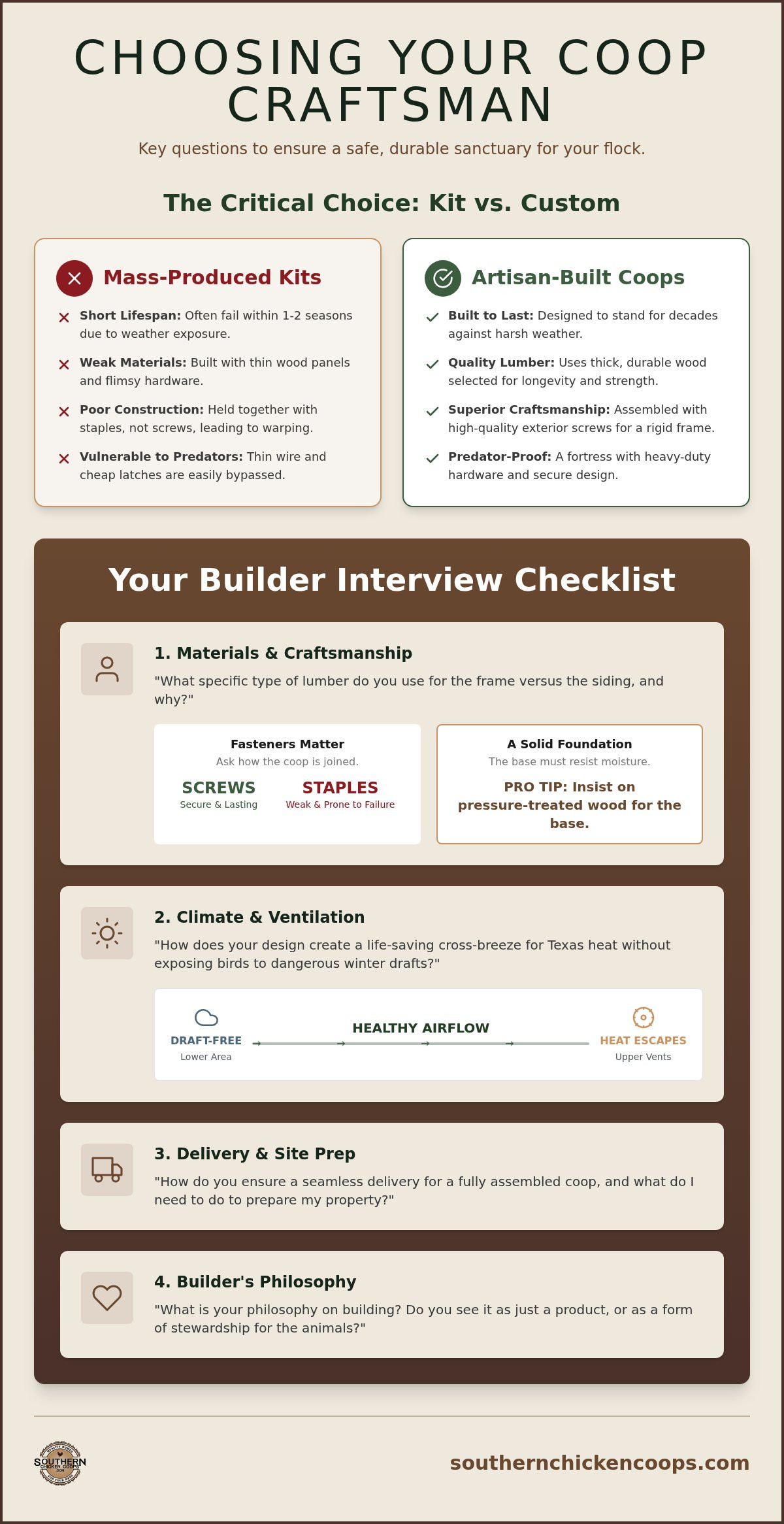
Most mass-produced kits arrive in a flat box with "some assembly required." While the initial price might look attractive, these units often fail within the first two seasons. They typically rely on thin cedar panels and staples rather than high-quality exterior screws. This leads to several common failure points that can put your birds at risk. Thin frames often can't support the weight of the roof over time, especially after a heavy Texas rain. Cheap latches and thin wire mesh are easily bypassed by determined predators. You'll likely spend more on repairs and replacement birds than you would have spent on a quality build. Securing a handcrafted home means you aren't just buying a product; you're securing peace of mind.
The Local Advantage: Why Texas Builders Know Best
Central Texas presents a unique set of challenges that a builder in another part of the country might not consider. We have to deal with intense humidity and heat cycles that can warp inferior wood in months. A local builder from the McGregor or Waco area understands that a coop must be a fortress. Our local predators, including raccoons, hawks, and coyotes, are incredibly resourceful and persistent.
One of the vital questions to ask a chicken coop builder is how they've designed their structures to handle our specific climate. Building locally means using materials that can breathe in the summer heat while remaining sturdy enough to keep your girls safe during a sudden windstorm. When you work with a neighbor, you're supporting the local economy and ensuring that the hands that built your coop are just a short drive away if you ever need guidance on your homesteading journey.
The Bones of the Build: Questions About Materials and Craftsmanship
When we step into our shop in McGregor, we see more than just lumber and sawdust. We see the future home of your beloved flock. The integrity of that home depends entirely on the materials chosen and the way they're put together. One of the first questions to ask a chicken coop builder is what specific type of lumber they use for the frame versus the siding. With lumber prices in 2026 remaining 25% to 40% higher than pre-2020 levels, some builders might be tempted to cut corners with lower-grade materials. We believe your girls deserve a foundation that won't falter.
Framing and Siding for Longevity
In our experience, using pressure-treated wood for the base is non-negotiable because it's in constant contact with the ground and moisture. However, the walls and siding need to be resilient against the harsh Texas sun. Whether it's cedar or high-quality siding, the thickness of the material matters. Thin panels can rot quickly or be chewed through by a determined predator. We believe that true handcrafted quality is the result of one-at-a-time construction, where every board is measured and cut specifically for that unique build. This attention to detail ensures a snug fit that mass-produced kits simply can't match. If you're curious about how we select our materials, you can see our custom chicken coops in person to feel the difference for yourself.
Hardware and Security Specs
Security is a form of stewardship. You must ask how the coop is joined together. While many commercial builders use staples or nails to save time, we suggest looking for high-quality exterior screws. Screws don't pull apart when the wood swells and shrinks in our Central Texas humidity. When considering security, one of the vital questions to ask a chicken coop builder is how they attach their hardware cloth. We recommend 1/2-inch mesh. It's much stronger than standard chicken wire, which a coyote can tear like paper.
How that mesh is attached is just as important. It should be sandwiched between wood or held with heavy-duty fasteners that won't pull out under pressure. Your security checklist should also include raccoon-proof latches and heavy-duty hinges on nesting box lids. These small details are part of a larger biosecurity plan to Defend the Flock from both predators and disease. Finally, don't forget the roof. In our region, a roof rated for high-heat reflection can lower the temperature inside the coop by several degrees, keeping your girls comfortable during those long August afternoons.
Fighting the Texas Heat: Ventilation and Climate-Specific Design Questions
Living in Central Texas, we all know that the summer sun is relentless. While some folks worry about the winter chill, the true danger to our flocks is the oppressive heat of July and August. Heat kills more birds in our region than the cold ever will. When you're interviewing someone for the job, one of the most critical questions to ask a chicken coop builder is exactly how many square inches of permanent ventilation they include in their design. It isn't enough to just have a window; you need a system that moves air constantly to prevent heat stress.
A builder should be able to explain their strategy for heat mitigation without hesitation. Ask if they offer radiant barrier roofing or heat-reflective paint options. These materials can reflect up to 97% of radiant heat, which significantly lowers the temperature inside the coop. We also recommend asking if the coop is designed to be elevated. Lifting the structure off the ground allows for essential airflow underneath the floor, preventing the coop from absorbing and holding ground heat during those long triple-digit stretches.
Mastering Airflow Without Sacrificing Security
Airflow is a science of balance. We often utilize the "high-low" principle, which places vents near the roofline to let rising hot air escape while lower openings draw in a cooler breeze. This creates a natural chimney effect. However, every vent must be protected. You should ensure these openings are covered with predator-grade mesh so your girls stay safe while they stay cool. For a deeper look at these design choices, we've shared more details on how to house chickens in Texas heat to help you plan for long-term climate durability.
Shade and Orientation Advice
A builder who truly understands stewardship will help you decide which way to face your coop on your property. Orientation is everything. Facing the coop to catch the prevailing south-easterly winds can provide a life-saving cross-breeze. We also look for wide eaves in a design. These overhangs act like a natural porch, keeping the direct sun off the walls and nesting boxes. Our 6x12 Polka model features a footprint specifically designed to maximize this airflow while providing enough space for the birds to spread out and stay cool. These specific questions to ask a chicken coop builder will help you find a partner who understands the unique demands of our Texas environment.
Beyond the Build: Asking About Delivery, Placement, and Site Prep
You've done the work to ensure the wood is sturdy and the ventilation is right for our Texas summers. Now, you need to think about the day that beautiful structure actually arrives at your home. A handcrafted coop is a significant investment in both weight and quality; it isn't something you just toss in the back of a pickup truck. One of the vital questions to ask a chicken coop builder is whether they deliver the unit fully assembled or if they plan to build it on your property. We believe in the integrity of a shop-built structure, so we deliver our coops fully assembled to ensure every screw and joint remains exactly as it was intended.
A builder should be upfront about the logistics of the move. Ask about delivery fees based on the mileage from McGregor and how they handle tight gates or uneven pastures. If your backyard has limited access, you need to know that before the trailer pulls into your driveway. Moving a structure that can weigh over 1,000 pounds requires specialized equipment and a steady hand. Understanding these details early helps you avoid "delivery day surprises" that could lead to property damage or a coop that doesn't fit where you imagined it.
Preparing Your Lot for Success
Level ground is non-negotiable for the longevity of your build. If the foundation is even slightly off, you might find that your nesting box lids don't sit flush or your predator-proof latches start to bind over time. When you're considering the questions to ask a chicken coop builder, ask for their specific foundation requirements. Most master artisans will recommend a level pad of crushed gravel, concrete blocks, or firmly packed dirt. You'll also need to ensure there's a clear, wide path for a truck and trailer to reach the site. For a complete checklist on getting your property ready, take a look at our guide on preparing your backyard for a chicken coop.
What to Expect on Delivery Day
The arrival of your coop should be a celebration, not a chore. A professional delivery usually takes about an hour or two once the trailer is on-site, depending on how much fine-tuning is needed to get the coop perfectly level. Our professional delivery service ensures your handcrafted coop is positioned safely and securely on your prepared, level lot so you can begin your journey with confidence. Once the coop is in place, a good builder will walk you through the entire structure. They should show you how the latches work, explain the ventilation controls, and ensure every door swings freely. This is your time to ask any final questions about the stewardship of your new home. If you're ready to start the process, you can schedule your coop delivery with us today.
Finding a Builder Who Shares Your Values: The Personal Side of Custom Coops
When you choose a builder, you're inviting someone into your homesteading story. It's about more than just a transaction; it's about finding a partner who values the lives of your animals as much as you do. One of the most telling questions to ask a chicken coop builder is whether they actually raise chickens themselves. At Southern Chicken Coops, our designs weren't born in a corporate office. They were forged through our own daily experiences at Bird and Bee Farm, where we've spent years learning exactly what a flock needs to thrive in the heart of Texas.
We believe in the power of a face-to-face conversation. If you’re near McGregor, we encourage you to ask if you can visit the shop to see our work in person. There's a certain peace of mind that comes from seeing the sawdust on the floor and meeting the people whose hands will be crafting your coop. This personal connection is the foundation of a "neighborly handshake" agreement, where integrity and ethical business practices matter more than a fine-print warranty from a distant manufacturer.
The Value of a Family-Owned Business
Bill and Tina Drivdahl understand that stewardship is a calling. When you work with a family-owned business, you aren't just a customer number; you're a neighbor. This means our relationship doesn't end when the delivery trailer pulls away. You should always ask a builder about their process for handling questions after the coop is delivered. Whether it's a question about the best orientation for a new season or a simple check-in on a latch, we stand by our work because our name is on it. Investing in a builder who shares your values ensures that the care put into the construction matches the care you give your birds every morning.
Making the Polka Model Your Own
While our signature 6x12 Polka model is designed for maximum durability and airflow, we know that every homestead has its own unique spirit. One of the vital questions to ask a chicken coop builder is whether they offer semi-custom modifications to fit your specific flock needs or aesthetic preferences. Maybe you need a specific paint color to match your barn or a slight adjustment to the nesting box access. These personal touches turn a high-quality structure into a true part of your home. If you're ready to find a sanctuary that reflects your values, we invite you to explore our custom chicken coops and see how we can help your flock flourish.
Securing Your Flock's Future with Confidence
Your journey toward a thriving backyard flock begins with a single, sturdy foundation. By keeping these specific questions to ask a chicken coop builder in your pocket, you've taken the most important step in protecting your investment and your animals. You now know to look for high-quality exterior screws over staples, the life-saving necessity of specialized ventilation for our Central Texas summers, and the importance of a professional delivery service that respects your property.
Building a home for your hens is a sacred trust. We take that responsibility to heart every day in our McGregor shop. As a family-owned and operated business, we've dedicated ourselves to creating Texas heat-resistant designs that stand the test of time and the trials of our climate. We want you to feel the same pride and peace of mind every time you walk out to gather eggs that we do. When you're ready to see the difference that true craftsmanship makes, we're here to help you get started.
View Our Handcrafted Texas Chicken Coops
Frequently Asked Questions
What is the most important question to ask a chicken coop builder?
The most vital question to ask a chicken coop builder is whether they have personal experience raising their own flock. This background ensures the design accounts for the daily realities of animal care, such as ease of cleaning and egg collection. A builder who lives the homesteading lifestyle understands the nuances of safety and comfort that a purely commercial operation might overlook when crafting a home for your birds.
How can I tell if a chicken coop is actually predator-proof?
You can identify a truly predator-proof design by examining the mesh and fasteners used throughout the build. Look for 1/2-inch hardware cloth rather than thin chicken wire, which predators like raccoons can easily tear. The mesh should be secured with heavy-duty screws or sandwiched between wood rather than held by simple staples. Check that all doors and nesting boxes feature complex latches that require multiple steps for a predator to open.
Do I need a permit for a 6x12 chicken coop in Texas?
Under Texas state law HB 1750, cities have limited power to restrict backyard flocks, but you must still check your specific city ordinances and HOA covenants. Most Texas cities allow coops without a permit if they meet specific setback requirements from property lines. However, HOAs can still prohibit chickens entirely, so it is vital to review your private deed restrictions before scheduling your delivery to a McGregor or Waco area property.
What kind of wood is best for a Texas chicken coop?
The best wood for our climate is a combination of pressure-treated lumber for any ground-contact points and resilient siding for the walls. Since Central Texas deals with high humidity and intense sun, using rot-resistant materials is essential for longevity. We find that high-quality siding or cedar holds up well against the warping effects of our heat cycles, keeping the structure sound and your girls safe for many years.
How much should a high-quality custom chicken coop cost?
While prices vary based on size and features, industry data from early 2026 shows the median cost to build a quality coop is around $2,000. Over 50% of poultry owners spend more than $1,500 to ensure their structure is durable and safe. Investing in a handcrafted build often saves money in the long run by avoiding the frequent repairs and replacements common with the cheaper, mass-produced alternatives found at big-box retailers.
What should I look for in coop ventilation for hot weather?
Effective hot-weather ventilation requires permanent openings that allow for a continuous cross-breeze without creating direct drafts on the roosting birds. Look for a "high-low" vent placement that lets hot air escape through the roofline while drawing cooler air in from below. In our region, features like radiant barrier roofing and wide eaves are also essential questions to ask a chicken coop builder to ensure the interior stays cool.
Is it better to buy a pre-built coop or a DIY kit?
A pre-built coop is almost always superior to a DIY kit in terms of durability and safety. Most kits found online use thin, fragile wood and staples that quickly fail in the Texas wind and sun. While a kit might seem cheaper initially, a handcrafted, pre-built structure arrives fully assembled and ready to protect your birds from day one without the hidden costs and frustrations of constant maintenance and repairs.
How do I prepare my ground for a delivered chicken coop?
To prepare your ground for a delivered coop, you must ensure the site is perfectly level and clear of any debris or overhanging branches. We recommend a foundation of crushed gravel, concrete blocks, or firmly packed dirt to prevent the structure from settling unevenly over time. A level lot ensures that doors and latches function correctly and helps the pressure-treated base effectively shed moisture away from the main wooden frame.


