

You step out into the yard after a typical Texas downpour, and instead of the usual morning chores, you notice the base of your chicken coop is starting to sag and darken with moisture. It is a frustrating reality for many of our neighbors who find themselves replacing flimsy, mass-produced structures every couple of seasons because the humidity and soil simply reclaim them. We understand that heartache, as we have dedicated our lives to crafting structures that stand as a testament to quality and stewardship.
We believe your flock deserves a home built to last, which is why finding a truly rot resistant chicken coop Texas weather cannot break down is essential for any serious homestead. In the pages ahead, we will share exactly how to choose materials that defy the damp and construction techniques that keep the rot at bay. You will learn how to protect your investment from termites and mold while creating a sanctuary that remains beautiful through every storm and summer heatwave. We are here to guide you toward a structure that serves your family for a decade or more, ensuring your piece of the Texas landscape is both functional and enduring.
Key Takeaways
- Identify the three main environmental threats, including humidity, ground moisture, and termites, that cause most standard coops to fail within just a few seasons.
- Learn how to select a rot resistant chicken coop Texas families can trust by comparing heavy-duty lumber options and rust-proof hardware.
- Discover why handcrafted construction from local artisans provides the water-tight joints and structural thickness that mass-produced kits lack.
- Understand how to properly prepare your site with an "airflow gap" to prevent soil-borne decay and protect the longevity of your investment.
- Find out how specific regional designs, like our Polka model, offer a protective sanctuary that withstands intense heat and storms for years to come.
The Silent Enemy: Why Most Chicken Coops Rot in the Texas Climate
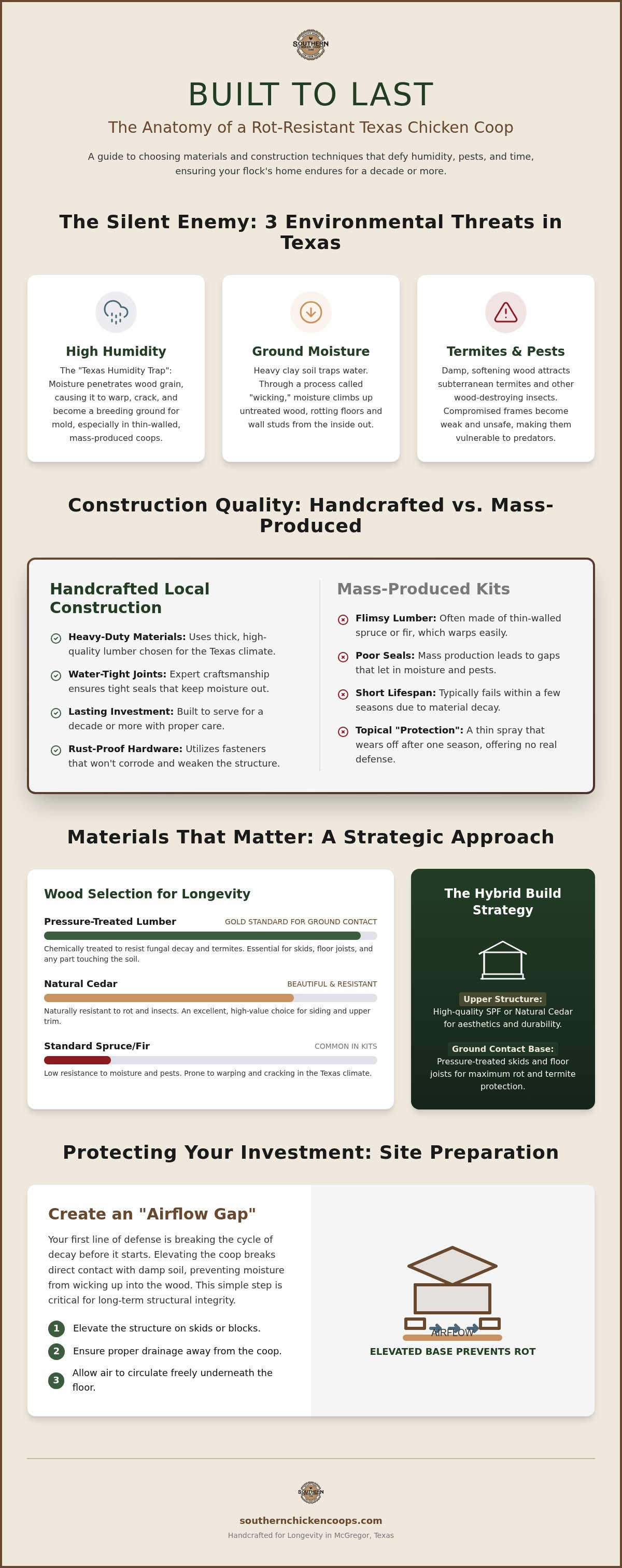
In our part of the country, rot resistance isn't just a marketing term; it's a necessity for survival. When we talk about a rot resistant chicken coop Texas climate requires, we aren't just looking at the type of wood used. We're looking at how that structure stands up to the heavy humidity and the baking sun that define Central Texas. Most mass-produced coops you find at big-box stores use thin-walled spruce or fir. While these might look charming in a catalog, they often fall victim to the "Texas humidity trap." This happens when moisture gets deep into the wood grain during our humid nights and then expands under the afternoon sun, causing the wood to warp and crack.
We've seen many neighbors frustrated by "rot-resistant" labels on imported kits. Often, these labels only refer to a thin topical spray that wears off after one season. Without deep-penetrating wood preservation techniques, these coops become breeding grounds for mold. True longevity comes from a combination of heavy-duty materials and a design that accounts for our specific environment. There are three main culprits that lead to early coop failure: trapped ground moisture, stagnant air from poor ventilation, and the relentless pressure of local pests.
The Role of Ground Moisture and Texas Soil
If you live near McGregor or anywhere with heavy clay soil, you know how water behaves after a storm. That clay holds onto every drop, creating a damp micro-climate right at the base of your coop. When untreated wood panels touch this soil, a process called "wicking" begins. Moisture climbs up the fibers of the wood, rotting the floor and the lower wall studs from the inside out. It's why we always emphasize that a level, prepared lot is your first line of defense. By elevating the structure and ensuring proper drainage, you break the cycle of decay before it even starts.
Termites and Pests: The Secondary Cause of Decay
Damp, softening wood is like a dinner bell for wood-destroying insects. Subterranean termites are common across the state, and they find their way into any structure where wood meets moist earth. Once these pests compromise the frame, the structural integrity of the entire coop is at risk. This decay creates more than just a maintenance headache. Soft, rotted wood is easy for predators like raccoons or foxes to tear through. A coop that is rotting is a coop that is no longer safe for your flock. Protecting your birds means protecting the wood they live in, ensuring every joint remains tight and every board remains solid against the elements.
Materials That Matter: Choosing the Best Rot-Resistant Wood and Hardware
Choosing the right materials is where stewardship meets craftsmanship. We don't believe in cutting corners because we know these coops aren't just boxes; they're homes for your birds and an investment in your lifestyle. To build a rot resistant chicken coop Texas families can rely on for a decade, we have to be picky about every board and screw that enters our shop. It's a methodical process that balances the natural beauty of wood with the structural resilience needed to face our harsh environment.
Some folks might tell you that plastic is the only way to avoid decay, but we disagree. Heavy-duty wood construction offers thermal benefits and structural strength that plastic simply can't match. The secret lies in using the right wood for the right job. For anything that touches the ground, pressure-treated lumber is the only choice. It's chemically designed to resist the fungal decay and termite pressure common in our humid climate. This ensures the foundation of your coop remains solid even when the soil stays damp for weeks.
Pressure-Treated vs. Natural Cedar
While pressure-treated wood is the gold standard for ground contact, natural cedar is often praised for its inherent resistance to rot and insects. Cedar is a beautiful choice for siding and upper trim, but it can be quite an investment. We've found that a hybrid approach often serves our neighbors best. By using pressure-treated lumber for the skids and floor joists, we create a rot-resistant base. We then use high-quality SPF or cedar for the upper structure, providing a balance of longevity, aesthetic harmony, and value. This strategy ensures the parts most vulnerable to moisture are the most protected.
Hardware and Fasteners: The Backbone of the Coop
The best wood in the world won't matter if the fasteners rust out in three years. We've seen too many kits held together by thin staples that snap under the pressure of high winds or a determined predator. In our McGregor shop, we use galvanized or stainless steel fasteners. These won't rust or bleed into the wood over time. This is especially vital for securing the 1/2" x 1/2" hardware cloth. If you're curious about how these professional-grade materials come together, you can explore our handcrafted coop designs to see the difference for yourself.
Our Polka model is a prime example of this philosophy. We don't just build; we protect. This includes applying high-quality exterior paints and sealants. These finishes act as a vital shield, preventing water from intruding into the wood grain. When you combine heavy-duty hardware with a well-sealed structure, you get a coop that stands tall against the Texas heat and storms, remaining a beautiful addition to your homestead for years to come.
Handcrafted vs. Mass-Produced: Why Local Texas Construction Outlasts Kits
Choosing between a local build and a mass-produced kit is about more than just aesthetics. It's about the physical substance of the structure. When you're looking for custom chicken coops Texas families can trust, the difference is often found in the weight of the lumber. Most mass-produced kits are designed with shipping logistics in mind rather than the longevity of your flock. To keep freight costs low, these manufacturers use thin, lightweight panels that lack the density needed to resist our intense humidity. A truly rot resistant chicken coop Texas climate won't destroy needs the substance of heavy-duty lumber, something you simply won't find in a flat-packed box.
The Problem with Thin-Panel DIY Kits
Shipping-friendly designs often sacrifice material density for portability. When wood is that thin, it warps quickly under the Texas sun, creating cracks where moisture enters. Pre-drilled holes in these kits are another major concern. They rarely line up perfectly, leaving small gaps that become rot hotspots where water pools and sits after a storm. This leads to what we call the "disposable coop" cycle. Families find themselves shopping for a replacement every two or three years because the original structure is literally falling apart under the pressure of Central Texas weather. It's a frustrating cycle that ends up costing more in the long run.
The Handcrafted Advantage in McGregor
We build our coops one at a time in our McGregor shop. This patient approach allows us to ensure every joint is tight and every board is placed with intention. Our artisans understand the Central Texas wind and rain patterns because we live and work right here. We approach each build with a stewardship mindset, knowing we're creating a home that protects your animals. For those seeking the gold standard, our Polka model is a popular choice for a 6x12 chicken coop for sale that arrives at your home fully assembled. By delivering a finished structure, we eliminate the structural weaknesses that come with bolt-together kits. A fully assembled coop has a rigid, unified frame that stands strong against high winds and shifting soil, providing a level of protection that a novice-built kit simply cannot provide.
Siting and Maintenance: Protecting Your Investment from Ground Moisture
Building a high-quality structure is only half the battle. Where you place that structure on your property determines whether it will truly last for the next decade. Even a rot resistant chicken coop Texas weather has tested needs a thoughtful location to avoid the constant pressure of standing water. We approach siting as a form of stewardship; it's about giving your handcrafted coop the best possible environment to do its job. When we deliver your coop, we want to ensure it's sitting on a foundation that promotes longevity rather than inviting decay.
The Importance of a Level Foundation
The heavy clay soil found across Central Texas is notorious for holding onto water long after a storm has passed. If a coop is placed in a low spot, it essentially sits in a shallow pool every time we get a heavy rain. Standing water at the base of your structure is the fastest way to accelerate rot, even in treated lumber. This is why we require a professionally prepared, level lot before we schedule our delivery. We often recommend using a base of crushed granite, gravel, or even a concrete pad. These materials allow water to drain away from the footings quickly, keeping the wood skids dry and structural integrity intact. For a step-by-step checklist on getting your site ready, you can read our guide on preparing your backyard for a chicken coop.
Ventilation: Rot Prevention from the Inside Out
While we often focus on the rain, the moisture inside the coop can be just as damaging. Chicken droppings release a significant amount of humidity. Without proper airflow, this moisture settles into the interior walls and ceiling, leading to internal wood decay and mold. We design our structures with a "Goldilocks" approach to ventilation. There is enough air movement to dry the wood and keep your hens cool during a July heatwave, but the openings are positioned to keep the interior safe from driving rain. Maintaining an "airflow gap" by keeping the floor elevated off the dirt is vital for this process, as it allows the ground underneath to dry out between weather events.
As we move through 2026, keeping your coop in top shape only requires a little bit of seasonal attention. We suggest a few simple habits to protect your investment:
- Clear the base: Remove any wet leaves, mulch, or tall grass that has piled up against the bottom of the coop.
- Check the seals: Inspect the paint or sealant once a year, especially on the side that faces the afternoon sun.
- Inspect the hardware: Ensure all latches and hardware cloth remain tight and free of debris.
If you're ready to bring a durable, beautiful structure to your homestead, contact us to discuss our custom chicken coops and we'll help you find the perfect fit for your flock.
The Southern Chicken Coops Promise: Built for Longevity in McGregor
At the heart of our work is a simple belief: if a job is worth doing, it's worth doing with integrity. When Bill and Tina Drivdahl founded Southern Chicken Coops, they didn't set out to build the most coops in Texas; they set out to build the best. We view our craftsmanship as a form of stewardship, creating homes that protect your flock and honor the lifestyle of the modern homesteader. Every structure that leaves our McGregor shop carries our personal promise of quality and a commitment to neighborly service that you won't find in a corporate catalog.
Our signature Polka model stands as a testament to this mission. It is the ultimate rot resistant chicken coop Texas families choose when they're tired of the "disposable coop" cycle. By combining heavy-duty frames with our specialized construction techniques, we ensure that your investment stays solid through the damp winters and the scorching summers. We've seen how a well-built home can become a beloved part of a family's homestead history, and we take great pride in being the hands that build those legacies.
Our Handcrafted Process
We don't believe in assembly lines or rushing the process. In our McGregor workshop, we build one coop at a time, allowing us to focus on the small details that prevent decay. We strictly refuse to use the thin-panel plywood or cheap staples found in imported kits. These materials simply don't have the density to withstand our regional humidity. Instead, we select heavy-duty lumber and professional-grade fasteners that maintain their grip for years. This patient, methodical approach ensures that every joint is tight and every roofline is secure before it ever reaches your property.
Getting Your Rot-Resistant Coop Delivered
Quality control doesn't end at our shop door. We don't ship DIY kits because we know that the structural integrity of a coop is often compromised during home assembly. Instead, we provide professional delivery of fully assembled structures directly to your prepared lot. This ensures that the frame remains rigid and the level foundation we discussed earlier is perfectly utilized. It's a turn-key service designed to give you peace of mind from day one.
Taking the next step is as simple as a conversation. We're here to act as your guides, helping you navigate the choices that lead to a long-lasting chicken coop that fits your specific needs. If you're ready to invest in a structure that honors your flock and your home, we'd love to hear from you. Contact us at Southern Chicken Coops today, and let's start building something that lasts together.
Building a Legacy for Your Texas Homestead
Choosing a home for your flock is a decision that impacts your daily chores and your birds' safety for years to come. By prioritizing heavy-duty materials and understanding the unique pressure of our local climate, you can break the cycle of replacing flimsy kits every few seasons. A truly rot resistant chicken coop Texas weather cannot defeat is born from a combination of expert craftsmanship and thoughtful stewardship of your land. When you invest in quality, you aren't just buying a structure; you're building a foundation for a successful and peaceful homesteading experience.
We take great pride in our work at our family-owned shop in McGregor, where Bill and Tina Drivdahl oversee every build with a focus on integrity. Our coops are designed specifically to withstand the intense heat and humidity that define our region, ensuring your investment remains as sturdy as the day it was delivered. If you're ready to add a beautiful, enduring structure to your property, we invite you to Browse Our Handcrafted Texas Chicken Coops. We look forward to helping you create a sanctuary that serves your family and your flock with grace and reliability for many years to come.
Frequently Asked Questions
What is the most rot-resistant wood for a chicken coop in Texas?
Pressure-treated lumber is often the most effective choice for ground contact because it's chemically designed to resist fungal decay and termites. For the upper structure, natural cedar is highly valued for its inherent oils that repel moisture and insects. In our McGregor shop, we prioritize heavy-duty materials that balance these properties to create a rot resistant chicken coop Texas weather cannot easily compromise.
How long should a well-built handcrafted chicken coop last?
A handcrafted coop built with a stewardship mindset should easily last 10 to 15 years or more. This stands in stark contrast to mass-produced kits that often fail within just 2 or 3 seasons. Longevity comes from using thicker lumber, professional fasteners, and unified framing. When you choose a structure like our Polka model, you're investing in a home designed to become a permanent part of your homestead’s history.
Does a chicken coop need to be elevated to prevent rot?
Elevation is a vital factor in preventing decay. By keeping the floor off the damp soil, you create an airflow gap that allows the ground underneath to dry out after heavy rains. This prevents moisture from "wicking" up into the floor joists and wall panels. We design our structures with a raised profile to ensure that humidity from the ground doesn't lead to internal wood rot over time.
Is cedar or pressure-treated wood better for a Texas chicken coop?
Both materials serve different, important purposes in a quality build. Pressure-treated wood is the superior choice for any component touching the dirt because it's engineered for ground contact. Cedar is an excellent choice for siding and trim because it's naturally resistant to the sun and pests. We find that a hybrid approach provides the best balance of structural resilience and aesthetic harmony for our neighbors across Central Texas.
How do I stop my chicken coop floor from rotting?
Protecting your coop floor begins with two essential steps:
- Place the coop on a level bed of gravel or crushed granite to ensure water drains away from the base.
- Maintain high-quality ventilation to dry out the moisture from chicken droppings inside.
These combined habits protect the wood from the inside out, ensuring the floor remains solid and safe for your birds.
Can I use a sealant to make a cheap coop rot-resistant?
While a high-quality exterior sealant acts as a helpful shield, it cannot fix the structural weaknesses of a cheap, thin-walled kit. Those kits often use wood that is too porous to hold up against our intense humidity, even with a topical treatment. Real rot resistance starts with the thickness and quality of the lumber itself. A sealant should be used as a maintenance tool for a solid structure, not a cure for poor materials.
How does humidity affect the lifespan of a chicken coop?
Humidity saturates the wood grain, acting as a "silent enemy" to your coop’s frame. When moisture is trapped inside thin panels, the wood expands and contracts under the sun, leading to warping and cracks. This creates entry points for mold and termites. A rot resistant chicken coop Texas homesteaders can trust uses denser wood and water-tight joints to prevent this moisture from settling deep into the frame where decay begins.
What foundation is best for a heavy chicken coop in Central Texas?
For a heavy, handcrafted structure, a well-drained foundation is essential. We recommend a level pad of crushed granite or gravel. These materials provide a stable base that won't shift as easily as raw soil while allowing rain to pass through quickly. Some neighbors prefer a concrete pad, which is also an excellent, permanent solution. A solid foundation ensures your coop stays level, keeping the doors and joints aligned for years.


