

Imagine waking up at dawn, coffee in hand, only to find a coop door pried open and your heart sinking because a clever raccoon found the one weak spot in a flimsy, store-bought kit. We've sat on porches with so many neighbors in McGregor and across the state who've faced that exact heartbreak. It's a heavy burden when you've poured your soul into raising a flock, only to realize that a standard retail build just isn't a match for aggressive Texas predators or our relentless sun. We believe your hens deserve a home that's as resilient as the families who raise them.
We understand that you want more than just a cage; you need a sanctuary where you can sleep soundly at night. In this guide, we'll show you exactly how to secure a pest proof chicken coop Texas wildlife can't crack while ensuring your girls stay cool during those brutal 100-degree Augusts. We're going to walk through the essential 2026 security standards, from hardware cloth specifications to structural reinforcements. You'll learn how to create a set-and-forget setup that withstands both hungry bobcats and heatwaves, giving you the peace of mind you've been searching for.
Key Takeaways
- Identify the specific "Rogues Gallery" of Texas predators and why standard chicken wire is no match for the clever raccoons and silent snakes in our region.
- Learn why structural weight and a level, prepared lot are critical for preventing predators from tipping or digging their way into your sanctuary.
- Discover how to maintain life-saving airflow with hardware cloth windows, ensuring your hens survive both aggressive wildlife and the brutal Texas heat.
- Follow our 2026 security checklist to transform your setup into a pest proof chicken coop Texas wildlife simply can't crack.
- Understand the long-term benefits of handcrafted craftsmanship and local McGregor expertise over the common pitfalls of flimsy, mass-produced retail kits.
Understanding the Texas Predator Landscape: Who is After Your Flock?
Out here in Central Texas, we know that raising a flock is about more than just fresh eggs; it's a commitment to stewardship. Our landscape is beautiful, but it's home to a "Rogues Gallery" of hungry neighbors that see your hens as an easy meal. From the sprawling brush in McGregor to the suburban outskirts of Waco, building a pest proof chicken coop Texas predators can't penetrate is a labor of love and logic. Unlike common predators found in cooler climates, our local threats are particularly persistent and heat-hardened.
Most mass-produced retail enclosures are designed for a general market, not the specific strength of a Texas bobcat or the cleverness of a Hill Country raccoon. We've spent years studying these animals to ensure our handcrafted coops offer the protection your family deserves. It's about staying one step ahead of both the ground-dwellers and the silent hunters in the sky.
The Night Shift: Coyotes and Raccoons
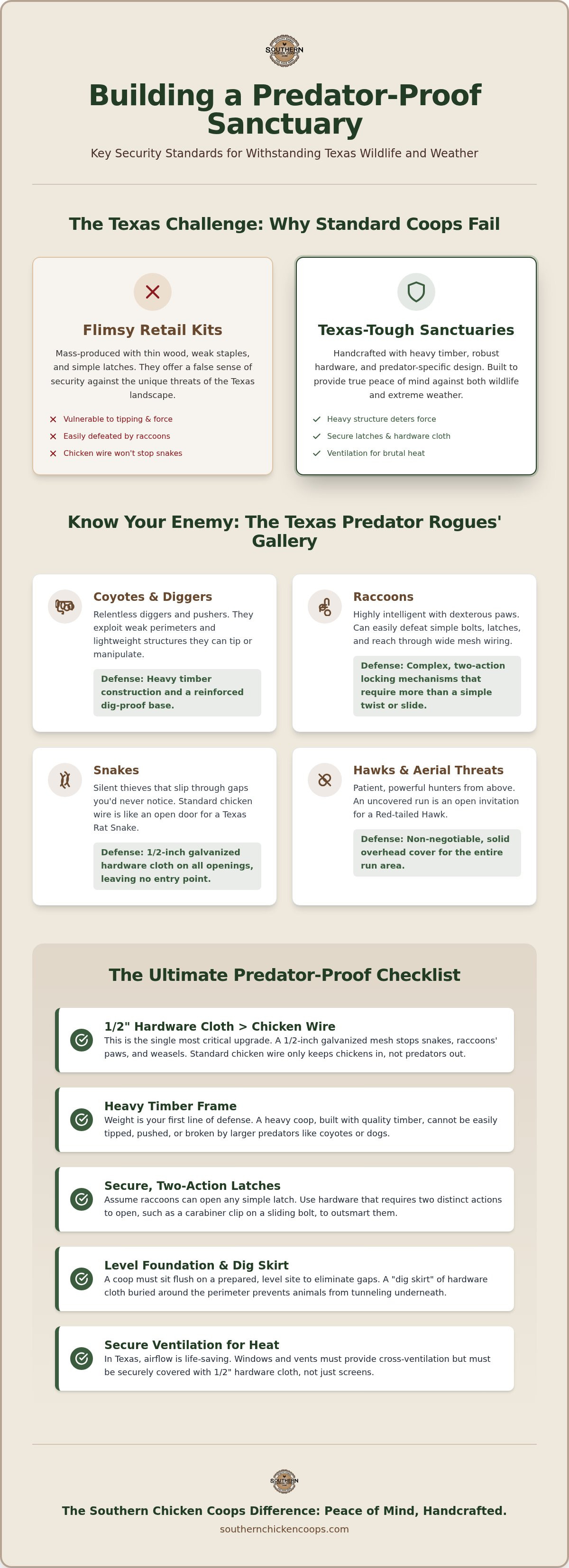
Coyotes are world-class diggers. In Central Texas, they'll spend hours trying to tunnel under a fence if they smell a meal, often returning night after night until they find a weakness. They aren't just looking for a gap; they're looking to create one. The dig-zone is the 12 inches of reinforced perimeter surrounding your coop. We build with heavy, high-quality timber because weight is a natural deterrent. A heavy coop is much harder for a coyote or a neighborhood dog to tip or manipulate.
Raccoons bring a different set of skills to the table. These "masked bandits" have dexterity that rivals human hands. They can slide bolts, turn simple latches, and even reach through wide wire mesh to grab a hen. If a latch doesn't require a complex movement or a secondary lock, a raccoon will eventually figure it out. We've seen many flimsy kits fail because their hardware was more decorative than functional.
The Stealth Threats: Snakes and Hawks
While coyotes are loud, the Texas Rat Snake is a silent thief. These snakes are experts at finding tiny entry points that most folks overlook. They can slip through standard chicken wire without breaking a sweat, often heading straight for the eggs or young chicks. The 1/2-inch rule is our standard for preventing snakes from entering the nesting box. By using 1/2-inch galvanized hardware cloth instead of traditional chicken wire, we create a mesh small enough to stop even the most determined snake.
Up above, Red-tailed Hawks are always watching. They're patient hunters that require non-negotiable overhead cover. In our region, a hawk can strike in the blink of an eye, even in a backyard with human activity nearby. Our designs address both ground and air threats simultaneously. We ensure that every inch of the run is covered, providing a fortress that protects your girls from every possible angle while still allowing them to enjoy the Texas sun.
Structural Essentials: Building a Fortress in McGregor
Building a pest proof chicken coop Texas predators can't topple starts with the very bones of the structure. Many retail kits use thin, lightweight wood that looks nice on a website but fails when a large dog or coyote leans against it. We've seen these flimsy coops tipped over or even splintered during a bad storm or a determined attack. In our McGregor shop, we use heavy, handcrafted timber because weight is your first line of defense. A solid structure stays put, protecting your flock from the physical force of a predator attempt.
A strong frame only works if it sits on a solid foundation. We always emphasize that our coops require delivery to a prepared, level lot. This isn't just about looks. A level site ensures doors swing correctly and latches line up perfectly, leaving no gaps for a hungry raccoon. It also helps with Predator Management by making it much harder for animals to find a soft spot to tunnel under the base. When the coop is flush with the ground, you eliminate the easy entry points that burrowing pests love to exploit.
The Frame: Why Handcrafted Timber Wins
Our 6'x12' Polka model is our signature answer to the Texas elements. It's built to withstand our high winds and the prying paws of a bobcat. Unlike mass-produced kits held together with staples and hope, our coops are built one at a time with a focus on longevity. This craftsmanship means the joints won't pull apart after a single season of heat and humidity. If you're looking for custom chicken coops Texas families can rely on for years, the frame's integrity is where you should never compromise. We believe a coop should be a permanent part of your homestead, not a temporary fix.
Hardware and Fasteners: The Details Matter
When we design a pest proof chicken coop Texas families can trust, we don't cut corners on the small stuff. We use heavy-duty screws and industrial staples rather than light nails or glue. Raccoons are remarkably strong, and they'll pull at wire mesh until it gives way if it's not fastened securely. Every door, window, and nesting box lid needs a locking mechanism that requires more than a simple flick to open. We use carabiners or complex latches because if it's easy for a human, it's probably easy for a raccoon.
The nesting box lid is often the "forgotten" entry point. Predators know that this is a direct path to eggs and sleeping hens. We secure our lids with heavy hinges and locking latches that won't budge even if a skunk tries to pry them up from the corner. If you're ready to upgrade to a fortress, our handcrafted coops are built to keep your girls safe and sound through every season.
The Texas Twist: Balancing Security with Ventilation
In our years of building in McGregor, we've noticed a dangerous trend in common coop designs. Many guides suggest that a "fortress" needs solid, thick walls to be secure. While that might work in the North, it's a life-or-death mistake under the Texas sun. When the temperature climbs toward 105 degrees, a sealed coop quickly becomes a furnace. We believe that a safe pest proof chicken coop Texas hens thrive in must breathe as well as it protects, balancing impenetrable security with the airflow your flock needs to survive.
To create a pest proof chicken coop Texas wildlife can't enter, we focus on ventilated security. This means replacing solid wall panels with large openings protected by high-quality, 1/2-inch galvanized hardware cloth. This setup allows for constant cross-breezes that pull heat away from the nesting area while keeping the perimeter tight against intruders. It's a structural engineering challenge that we take very personally because we know how much your flock means to your family. We don't just build coops; we build sanctuaries that respect the reality of our climate.
Cross-Ventilation Strategies
The secret to effective cooling is positioning. We place our vents high on the frame, well above the reach of curious paws or prying noses. By using a 6x12 footprint in our signature Polka model, we provide significantly more air circulation than you'll find in cramped, mass-produced models. This extra volume of air stays cooler longer and prevents the buildup of moisture and ammonia. A safe coop must breathe as well as it protects, ensuring your girls have fresh air all night long without being exposed to the elements.
Shade and Siting for Safety
Strategic placement is another layer of protection. When we deliver your handcrafted coop to your prepared, level lot, we often suggest tucking it under the canopy of a Texas Live Oak or Cedar Elm. Natural shade acts as a primary cooling system, reducing heat stress and keeping your hens alert. A bird struggling with the heat is less likely to notice a threat, so keeping them cool is actually a vital part of your security plan. For more detailed tips on managing the peak of the season, feel free to read our guide on keeping chickens cool in Texas summer. By combining smart siting with our breathable designs, you're giving your flock the best chance to thrive in our unique climate.
Step-by-Step: The Ultimate Predator-Proof Checklist
Taking the leap into homesteading in Central Texas is a rewarding journey, but it requires a proactive spirit to keep your flock safe. We've seen many families start with high hopes only to be discouraged by a preventable loss. To help you build a truly pest proof chicken coop Texas wildlife can't exploit, we've put together this practical checklist. These steps aren't just suggestions; they're the standards we live by in our McGregor shop to ensure every hen is protected by more than just luck.
- Step 1: Inspect the perimeter. Walk the edge of your coop weekly looking for disturbed soil or small holes. These are the calling cards of a predator testing your defenses.
- Step 2: Replace all chicken wire. If your current setup uses traditional chicken wire, replace it immediately with 1/2-inch galvanized hardware cloth. It's the only mesh small enough to stop snakes and strong enough to stop raccoons.
- Step 3: Upgrade your latches. Swap out simple sliding bolts for two-step locking carabiners. If a five-year-old can't open it easily, a raccoon probably can't either.
- Step 4: Secure the floor. Use the hardware cloth apron technique to stop diggers in their tracks before they ever get under the frame.
- Step 5: Establish a nightly lockdown. Even the best fortress fails if the door is left open. Make the sunset rounds a non-negotiable part of your day.
Installing a Predator Apron
Stopping a hungry coyote doesn't always require digging a deep trench. In fact, we recommend a 12-inch horizontal skirt, or "apron," made of hardware cloth that extends outward from the base of the coop along the ground. When a predator approaches the wall and tries to dig, they hit the wire and don't have the logic to back up and start further away. For this to work effectively, your coop must be placed on a prepared, level lot so there are no gaps between the frame and the apron. You can pin the wire down with landscape staples and let the grass grow through it, making it nearly invisible over time.
Daily Vigilance and Observation
Your best tool is your own eyes. Learn to read the signs around your Polka model, such as unusual scat, paw prints in the dust, or matted grass where a bobcat might have been lurking. These clues tell you exactly where you might need to tighten your perimeter. The evening lockup ritual is more than just a chore; it's a moment of connection with your flock and a final check of your security. If you're tired of worrying every time the sun goes down, it might be time to invest in a professional solution. We invite you to view our custom chicken coops and see how we build peace of mind into every structure.
The Southern Chicken Coops Difference: Peace of Mind Delivered
We've spent years in our McGregor shop perfecting a design that balances beauty with the rugged durability our climate demands. For Bill and Tina Drivdahl, building a pest proof chicken coop Texas families can rely on isn't just a job; it's a calling rooted in stewardship and integrity. We take professional pride in every board we cut and every screw we drive, knowing that our work protects the birds you've raised with such care. This neighborly sincerity is at the heart of everything we do, and we treat every project as if it were for our own backyard.
Our signature Polka model is the culmination of that dedication. This 6x12 fortress is specifically designed to house 10-12 hens comfortably while providing the structural stability needed to withstand Central Texas storms and persistent wildlife. We don't believe in mass production because your flock isn't just a hobby, and their home shouldn't be a generic product. Every coop is handcrafted one at a time to ensure it meets our high standards for resilience and aesthetic harmony, giving you a beautiful structure that serves a vital purpose.
Why We Don’t Do Kits
You've likely seen the "coop-in-a-box" options at national retail stores. While they're easy to ship, they often suffer from structural failures when faced with a real predator attack or a heavy Texas wind. These kits are typically made from thin, soft wood that can't hold up to years of sun and rain. Our philosophy is different. We build for longevity because we want your investment to last for a generation. By choosing a handcrafted build instead of a flimsy kit, you're securing a truly pest proof chicken coop Texas owners can trust to stay standing through every season.
Getting Your Custom Coop Started
We're here to be your trusted guides through the entire process. Whether you need semi-custom security features or specific aesthetic touches, we're eager to collaborate with you to protect your lifestyle. Once your design is ready, our professional delivery team will bring your new coop directly to your prepared, level lot. We handle the heavy lifting so you can focus on the joy of raising your flock without the stress of assembly or structural worries. If you're ready to see the difference that local craftsmanship makes, you can view our handcrafted 6x12 chicken coops for sale today. Let's work together to build a home where your hens can thrive and you can finally find true peace of mind.
Your Journey Toward a Safer Texas Homestead
Protecting your flock in the Lone Star State is about more than just building a box; it's about creating a sanctuary that stands up to clever raccoons and our relentless summer heat. By prioritizing 1/2-inch hardware cloth and structural weight, you ensure your hens remain safe through every season. We know the peace of mind that comes when you don't have to worry about the night shift of predators testing your fences. It's a special kind of quiet that every keeper deserves.
Our family at Southern Chicken Coops is here to help you cross the finish line. Each of our structures is hand-built in McGregor, TX, with a focus on durability and regional awareness. Whether you choose our signature Polka 6x12 model or a custom design, we provide expert delivery to your prepared, level lot. You've done the hard work of raising your birds, so let us provide the fortress they deserve. It is time to invest in a pest proof chicken coop Texas wildlife simply can't outsmart. Browse our handcrafted, predator-proof Texas coops and take the first step toward a worry-free backyard. We look forward to helping you protect your slice of the country.
Frequently Asked Questions
Is chicken wire enough to keep predators out in Texas?
Chicken wire is never enough to keep hungry predators out. It's designed to keep chickens in, but it's too thin to stop a determined raccoon or fox from tearing through. For a truly pest proof chicken coop Texas wildlife can't destroy, you must use 1/2-inch galvanized hardware cloth. This mesh is strong enough to withstand prying paws and small enough to keep out snakes, providing the security your flock deserves.
How deep should I bury wire to stop coyotes from digging under my coop?
We recommend a 12-inch horizontal "apron" of hardware cloth rather than deep vertical burying. When a coyote or dog tries to dig at the base of the coop, they hit the flat wire and don't understand they need to back up to get under it. This method is highly effective for stopping diggers without the intense labor of trenching through our rocky Central Texas soil.
What is the best latch to keep raccoons out of a chicken coop?
The best latch is a two-step locking mechanism, such as a spring-loaded bolt paired with a locking carabiner. Raccoons have incredible dexterity and can easily slide a simple bolt or turn a wooden latch. If the mechanism requires two distinct movements that require human-like logic or strength, it'll keep those clever "masked bandits" from prying their way into your hens' sleeping quarters at night.
Can snakes get through 1/2 inch hardware cloth?
No, most common Texas snakes cannot get through 1/2-inch hardware cloth. While a tiny hatchling might find a way, adult rat snakes and bullsnakes are blocked by the small mesh size. This is why we use 1/2-inch cloth on our windows and vents. It provides the perfect balance of airflow for our hot climate while acting as a reliable shield against the silent threats that slide through larger gaps.
How do I predator-proof my coop while still keeping it cool?
You can achieve both by using large ventilation windows covered with 1/2-inch hardware cloth instead of solid walls. We place these vents high on the frame to encourage cross-breezes while keeping the openings out of reach for ground predators. This design ensures your hens stay cool during 100-degree days without leaving them vulnerable to attacks. It's a structural engineering challenge we've mastered in our McGregor shop.
Does Southern Chicken Coops offer predator-proof flooring options?
We design our coops to be secure from the ground up using heavy timber and the hardware cloth apron technique. Our signature Polka model is built to sit flush on your prepared, level lot, which is a requirement for all our deliveries. This solid foundation, combined with a perimeter skirt, effectively blocks burrowing pests. Our professional builds provide a complete, set-and-forget security setup for your birds to ensure total peace of mind.
What are the most common chicken predators in Central Texas?
Central Texas is home to a wide range of threats including coyotes, raccoons, bobcats, and gray foxes. You also have to watch for aerial hunters like Red-tailed Hawks and Great Horned Owls. Don't forget the smaller, stealthier pests like opossums, skunks, and various rat snakes. Each of these requires a specific defensive strategy, which is why we build our coops to be multi-layered fortresses against both land and air attacks.
Should I use an automatic door for predator protection?
An automatic door can be a helpful tool, but it isn't a substitute for a secure pest proof chicken coop Texas birds need. These doors ensure your hens are locked up right at dusk, which is when many predators become active. However, the door must be high-quality and properly installed within a sturdy frame. We often help neighbors integrate these into their semi-custom builds to add an extra layer of nightly security.


