

What if the best way to grow your flock is to wait before adding another bird? It’s natural to picture a larger flock and more fresh eggs, but planning for future flock growth means first checking what your space, budget, and daily routine can comfortably support. A crowded coop or a sudden jump in chores can make a happy hobby harder to manage.
You don’t have to choose between staying small forever and adding a whole group at once. A steady plan can help you decide when to expand, how many birds to add, and what to prepare so their care stays manageable. This guide covers flock goals, housing, outdoor space, equipment, timing, and the everyday work that comes with more chickens.
Your plans can also shape the coop you choose today. Southern Chicken Coops is a family-owned business in McGregor, Texas. We handcraft coops one at a time, including semi-custom designs tailored to customer needs. Whether you’re considering a gradual addition or a larger flock down the road, thinking ahead can help you find a sound fit for your birds and your property.
Key Takeaways
- Set a flock goal that fits your available time, property, and resources, not just the number of birds you’d like to keep.
- Planning for future flock growth starts with checking housing, outdoor space, feed and water arrangements, and the daily work involved.
- Compare gradual additions, a single planned expansion, and keeping your flock as it is to find a pace that suits your household.
- Prepare the site and essential equipment before bringing in more birds, then review how the setup and routine are working.
- Use your projected flock size and property needs to guide coop selection, including whether a semi-custom design may suit your plans.
Planning for Future Flock Growth Starts with Your Goals
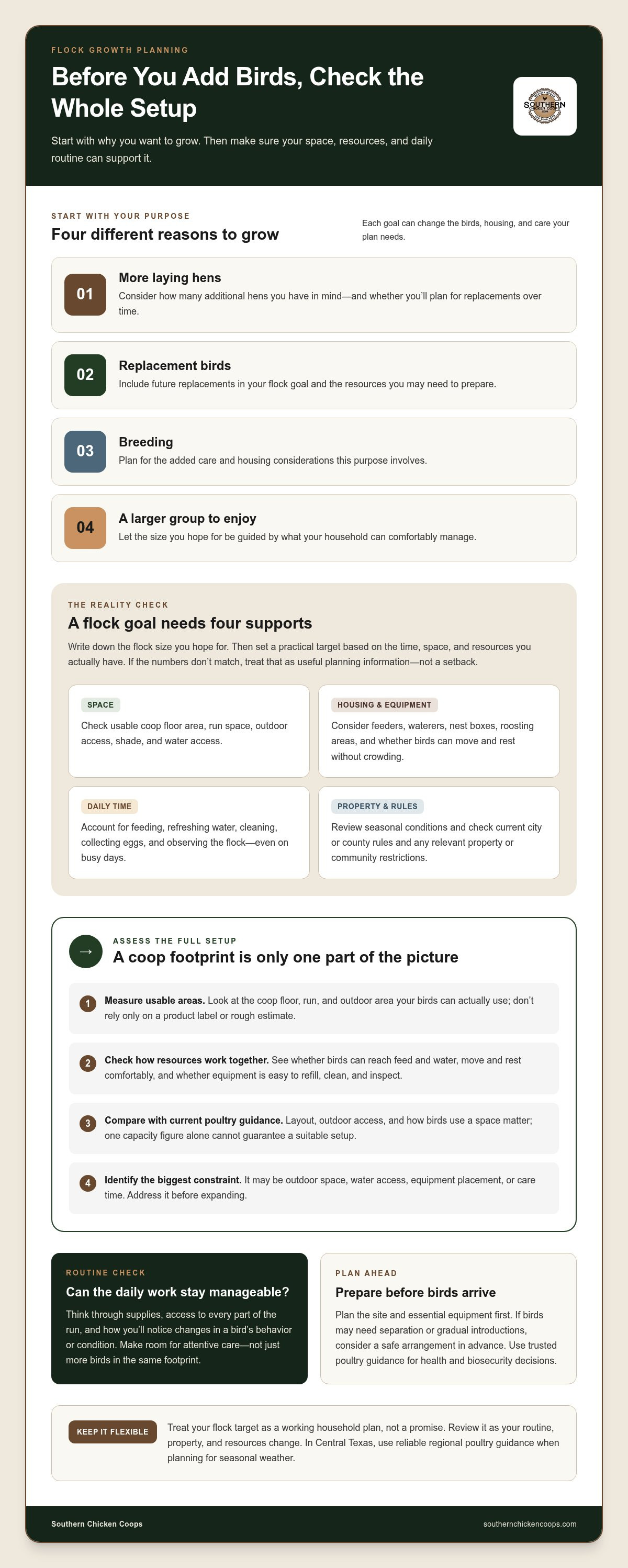
Before deciding how many chickens to add, decide what you want a larger flock to do for your household. Keeping more laying hens, raising replacement birds, breeding, and simply enjoying a larger group are different goals. Each can affect the birds you plan for, the housing they’ll need, and the time you can give them. A clear purpose helps you avoid choosing a flock size just because more birds sound appealing.
Flock growth planning means estimating how many birds you may keep, what care they’ll need, and what housing and resources to prepare before you add chickens. Treat it as a working household plan, not a promise to reach a particular number. General background on poultry farming practices describes different kinds of flocks and housing systems. Your own plan should reflect your property and day-to-day routine.
Set a realistic flock goal before choosing a timeline
Start with the reason you want to grow. If you want a more reliable supply of eggs, consider how many additional laying hens you have in mind and whether you’ll also need to plan for replacements over time. If you’re interested in breeding, include the added care and housing considerations that purpose involves. Then look honestly at the routine you can maintain. Feeding, refreshing water, observing the flock, and keeping its home in order take time, even on a busy day.
Write down your hoped-for flock size, then set a practical target based on your available time, space, and resources. If the two numbers differ, that’s useful information, not a setback. Treat your target as a plan to review as circumstances change, rather than an instruction to keep adding birds regardless of what your setup can support.
List the constraints that shape growth in Texas
Walk your property and note where the coop and outdoor area sit, how much usable room is available, and whether the birds have access to shade and water. Consider how the space works across different seasons, not only on a mild day. In Central Texas, use reliable regional poultry guidance to plan for seasonal weather. The right setup depends on the property and flock, so avoid assuming one arrangement will suit every situation.
Include housing and household routines in the same assessment. A larger flock may require changes to how you organize feed, water, cleaning, and daily checks. If you’re considering a new coop, your projected needs can guide that choice. Southern Chicken Coops handcrafts coops in McGregor, including semi-custom designs tailored to customer needs. Thinking about your future flock before choosing housing helps you assess what may fit your plans.
Check current city or county sources for rules that apply to your address, and review any relevant property or community restrictions. Local requirements can vary, so don’t assume a neighbor’s situation applies to yours. Your purpose, routine, property, and local rules together provide a grounded starting point for planning for future flock growth.
How to Assess Whether Your Chicken Setup Can Support Growth
A hopeful flock target is only useful if the whole setup can support it. Look beyond the coop’s outside measurements: usable floor area, the run, equipment placement, water access, and the time required for care all matter. A coop’s footprint is only one part of the setup, not a complete measure of the space and resources chickens need.
Measure the areas your birds can actually use instead of relying on a product label or rough estimate. Then compare those measurements and your planned flock with current guidance from a reliable poultry authority. Don’t treat a single capacity figure as a guarantee of suitability. Layout, outdoor access, and how birds use the space can all affect whether a setup works. Our chicken coop sizing guide offers a closer look at how to think about coop dimensions.
Review housing, run space, and essential resources
Walk through the coop and run as if you were checking them during an ordinary day. Notice where birds can move and rest, and whether they can reach equipment without crowding one another. Check that feeders and waterers can serve your planned flock while remaining easy to refill and clean. Consider whether nest boxes and roosting areas suit your birds and are accessible for inspection. Penn State Extension’s laying flock management guidance discusses housing and resource considerations for egg-laying flocks.
Check whether the routine remains manageable
Space can look adequate on paper while the daily routine becomes inconvenient. Think through feeding, refreshing water, cleaning, collecting eggs, and taking time to observe the flock. Would added birds make these tasks harder to complete consistently, or could a change in equipment placement keep the work orderly? A manageable plan should leave room for attentive care, not just fit more birds into the same footprint.
Make a simple task list and consider how each job would change if the flock grew. Include practical details such as carrying supplies, reaching every part of the run, and noticing changes in a bird’s behavior or condition. If new birds may need to be separated or introduced gradually, plan a safe arrangement in advance. For health and biosecurity decisions, use current chicken-specific advice from a poultry veterinarian or a trusted extension resource rather than relying on assumptions.
Use your assessment to identify the setup’s main constraint. It might be outdoor space, water access, equipment placement, or time for care. Address that constraint before expanding. If housing is the issue, Southern Chicken Coops handcrafts coops and semi-custom designs tailored to customer needs. Explore handcrafted chicken coop options as you consider what may suit your property and future flock.
Compare Growth Paths Before Expanding Your Texas Flock
There isn’t one right pace for every backyard flock. A keeper with suitable space and a clear care routine may be ready to plan a larger group. Someone still working out the demands of the current setup may be better off waiting. Compare your options against your purpose, property, available time, and applicable local rules. The aim isn’t to grow as quickly as possible. It’s to choose a pace you can support responsibly.
Gradual additions versus a planned larger flock
Adding birds in stages gives you opportunities to review the routine before making another change. Notice whether feeding, cleaning, egg collection, and observation remain manageable, and reassess space and equipment as the flock changes. A slower pace provides useful checkpoints, but it doesn’t guarantee that health or management challenges won’t arise.
Planning for a larger flock early can shape housing decisions from the start. You can assess whether the coop and outdoor area suit your longer-term goal rather than choosing only for the birds you have today. That may mean comparing a different housing arrangement with your current one. A larger plan still needs to fit your property and care capacity. A future target by itself doesn’t make a setup suitable.
| Growth path | Pace | Preparation | Care demands | Potential housing implications |
|---|---|---|---|---|
| Gradual additions | Changes in stages | Review the setup and routine between changes | Adjust as the flock grows | May call for updates as needs become clearer |
| Planned single expansion | One coordinated change | Prepare housing, equipment, and routines for the target | Be ready for the planned flock size at once | May influence coop and run choices in advance |
| Keep the current flock | No expansion for now | Maintain the existing setup and address any gaps | Continue with the current care routine | Use present housing while you reassess future needs |
When keeping the flock as-is is the sensible choice
Waiting can be a thoughtful decision, not a failure to make progress. If the current setup is already difficult to keep clean, water access is awkward, outdoor space is limited, or daily care is regularly squeezed by other commitments, address those constraints first. A move, property limitation, or unresolved local requirement may also make expansion impractical for now.
Wanting more birds and being ready to care for them are different things. Keeping the flock as-is gives you time to improve the setup, build a steadier routine, or clarify your plans without adding pressure. Use this guide to Texas backyard coop preparation as you consider whether your property is ready. The best path is the one that serves your goals while keeping the flock’s needs at the center.
Build a Step-by-Step Flock Growth Plan for Central Texas
A written plan turns a general intention into decisions you can check before birds arrive. Keep the steps simple: set a target, assess what your flock and property can support, prepare the site, add birds only when ready, and review how the change is working. At each stage, pause if your circumstances or the flock’s needs have changed.
- Set a target: Record the flock size you’re considering and why you want to grow.
- Assess capacity: Review housing, outdoor area, equipment, resources, and the care routine against reliable poultry guidance.
- Prepare the site: Make sure the planned coop location and access are ready before delivery or setup.
- Add birds: Follow chicken-specific guidance for bringing birds into an established flock.
- Review: Note what’s working and adjust the plan before considering another change.
For Central Texas weather planning, use current regional poultry guidance on heat and severe-weather preparation rather than relying on broad advice that may not suit your location. Properties and conditions differ. Recheck current city or county poultry rules and any applicable property restrictions before changing flock size. Don’t assume a rule that applied to your previous flock still covers a new plan.
Prepare the property and coop before birds arrive
Check that the intended location is accessible for daily care and that the ground is prepared, level, and suitable for the coop. Consider drainage, shade, water access, and exposure to local weather. Also think about how you’ll reach the space to refill supplies and observe the birds. These details affect routine care and how well the setup fits your property.
Site preparation matters when a coop is delivered. Southern Chicken Coops delivers completed coops to customers’ prepared, level lots. Planning the location in advance helps you prepare for placement and access before delivery.
Track progress and adjust the plan
Keep a brief record of flock size, changes to the routine, and observations about the birds’ condition and access to food, water, and housing. Review the plan after a change, once the new routine has become familiar, rather than assuming your original plan will always fit. Notes can help you spot practical issues, such as tasks taking longer or resources becoming harder to reach.
If you have concerns about flock health, consult a poultry veterinarian or current extension guidance rather than trying to diagnose a problem from a checklist. Thoughtful planning for future flock growth includes knowing when to pause, seek reliable advice, or revise your target. If a new coop is part of your plan, explore handcrafted coop options tailored to your needs.
Choose Chicken Housing That Fits Your Future Flock
Coop choice is one part of a wider decision. Your realistic flock target, the usable property around the coop, the time you can give daily care, and local weather conditions all shape what housing may suit your birds. A design that fits your current flock may not suit a future plan. On the other hand, choosing for an unchecked maximum can leave you with a setup larger than your household needs. Let your plan guide the decision, with the birds’ welfare at the center.
Consider how you’ll reach the coop for regular care, where the birds will use outdoor space, and how the site responds to local conditions. In Central Texas, account for seasonal weather using reliable regional poultry guidance instead of assuming one solution works on every property. Compare housing options with poultry-specific recommendations too. Dimensions alone can’t establish how many birds a coop can appropriately support.
Match today’s coop decision to a realistic future plan
Use a considered flock target, not the largest number you can imagine keeping. Pair it with your routine and property assessment, then think through how a future change could affect coop and run needs. This helps you avoid choosing housing only for today’s birds or for an expansion that may not fit your circumstances.
Southern Chicken Coops’ Polka model measures 6 by 12 feet. That dimension gives you a specific model to consider, not a universal capacity recommendation or a fit for every property. Review the 6-by-12-foot coop overview, then weigh its footprint alongside your planned flock, outdoor area, and care routine.
Explore a handcrafted or semi-custom approach
Southern Chicken Coops is a family-owned coop maker based in McGregor, Texas. We handcraft coops one at a time, and our semi-custom designs can be tailored to customer needs. If your property or future flock plans call for a particular approach, a semi-custom design can help connect your housing decision to your circumstances without assuming one standard layout suits every keeper.
Before delivery, prepare a level lot for the completed coop. Planning the site alongside your housing choice helps you think through access and placement in advance. Thoughtful planning for future flock growth brings the decisions together: the birds you expect to keep, the care you can provide, and a well-built home suited to your plans.
Explore handcrafted Texas chicken coops to see options for your flock. We build coops with care, including semi-custom designs tailored to customer needs.
Let Your Flock Plan Grow With You
Your flock plan doesn’t have to be fixed forever. As your household routines, property, or goals change, reassess what feels manageable and make room for a different path if needed. That steady attention is the heart of planning for future flock growth: choosing what serves your birds and your home now while leaving thoughtful options for later.
If choosing a coop is your next step, consider how a carefully built home can support the flock you have in mind. Bill and Tina Drivdahl bring a family’s care to coops handcrafted one at a time in McGregor, Texas. Southern Chicken Coops also offers semi-custom designs tailored to customer needs.
Explore handcrafted chicken coops for your flock and take the next step with a housing plan shaped around your needs.
Frequently Asked Questions
How many chickens should I plan for if I expect my flock to grow?
Choose a realistic target based on why you want more birds and what your property and routine can support. When planning for future flock growth, distinguish the number you hope to keep from the number you can care for consistently. For example, if you want eggs for a larger household, consider that goal alongside the flock’s ages and future replacements. Compare your setup with current chicken-specific poultry guidance before settling on a number.
Is it better to add chickens gradually or plan for a larger flock at once?
Either approach can work if you prepare for the birds’ needs and your daily routine. Gradual additions give you a chance to assess whether your space, equipment, and schedule are working before making another change. A larger planned expansion may help you make housing decisions with a longer view. In either case, plan how you’ll introduce birds and monitor the flock. Seek chicken-specific health guidance if concerns arise.
Can my existing chicken coop support more birds?
Dimensions alone won’t tell you. Look at how birds move through the coop and outdoor area, whether resources are easy to reach, and whether the setup lets you observe the flock. Watch the birds at busy moments, such as feeding time, and note any crowding or blocked access. Compare usable space and equipment with current poultry guidance, and address any bottleneck before adding birds.
What should I prepare before expanding a backyard flock in Texas?
Prepare the site and routine for local conditions before bringing home additional birds. Check drainage after rain, confirm water is accessible, and consider how shade and weather exposure change across your property. Use current regional poultry guidance for heat and severe-weather planning. Also check current city or county poultry rules and any applicable HOA or deed restrictions, since requirements can vary by location and property.
How can I tell whether I have enough time to care for more chickens?
Track how long your current flock takes to feed, water, clean, collect eggs, and observe. Consider both a typical day and a busier one, then ask whether added tasks would still fit when work, travel, or family commitments change your schedule. If care is already being delayed or rushed, improve the routine first. A plan that depends on every day going perfectly may be difficult to sustain.
Should I choose a chicken coop based on my future flock size?
Yes, include a realistic future flock goal, but don’t use that estimate alone to judge whether a coop is suitable. Consider the whole setup, including usable outdoor space, resource access, your care routine, and local weather exposure, then compare it with chicken-specific guidance. Southern Chicken Coops offers handcrafted and semi-custom housing tailored to customer needs. Choose a coop that makes sense for your property and the flock you can responsibly support.


