

How does a plan for a few hens turn into daydreams about one more colorful egg layer, then another? If you’ve ever laughed and thought, “chicken math the struggle is real,” you’re in good company. Each bird has its own character, and a growing flock can make keeping chickens even more rewarding.
That enthusiasm deserves room to grow, but it also calls for planning. More chickens need suitable coop and run space, daily care, and room in your household budget. Local rules can limit flock size, too, so understand the requirements for your address before bringing home new birds. A thoughtful plan helps keep chicken math fun without compromising your flock’s comfort or stretching your routine too thin.
In this guide, we’ll look at why chicken keepers add birds, how to weigh each addition against space, time, and ongoing costs, and when it makes sense to plan housing around the flock you realistically hope to keep. The goal isn’t to take the joy out of growing your flock. It’s to help you make each addition with care, so your birds have a suitable home from the start.
Key Takeaways
- Chicken math the struggle is real, but understanding what draws you to new birds can help turn an expanding wish list into a thoughtful flock plan.
- Compare your current and proposed flock with the space and care capacity you actually have before bringing home more hens.
- Use a pause-and-plan routine to decide whether another addition fits your comfortable flock size and everyday routine.
- Plan coop housing around the flock you hope to keep, while remembering that the coop, run, and wider outdoor space serve different purposes.
- Explore how a handcrafted coop, such as the 6-by-12-foot Polka model, can offer one example of housing planned with flock growth in mind.
Chicken Math: What the Joke Means for a Growing Backyard Flock
You start with a modest plan: a few hens, fresh eggs, and a coop that seems just right. Then you spot a breed with striking feathers, hear someone describe a favorite hen’s personality, or wonder what eggs in another shade might look like in your basket. Before long, “maybe just one more” has entered the conversation. If chicken math the struggle is real, you’re in familiar company.
The phrase playfully describes how chicken keepers find reasons to imagine a larger flock. It isn’t a literal calculation, a recommended growth formula, or a fixed number of birds. One keeper may be happy with a small group; another may gradually add hens as interests and circumstances change. Either choice can work when it suits the keeper and the birds.
Why does chicken math feel so familiar to chicken keepers?
Each new discovery can make another bird seem appealing. Learning about breeds may spark curiosity about feather patterns, egg colors, or different temperaments. A conversation about someone’s lively hen might prompt you to picture a similarly engaging bird in your own yard. These possibilities are part of the fun, but they don’t guarantee a particular egg supply or personality.
Chicken keeping also connects people with a wider tradition of caring for poultry in different settings. For background on that history and range of approaches, explore poultry farming practices. Every flock and keeper’s circumstances are different, so use what you learn as context rather than a template for your own setup.
The joke lands because it’s affectionate. Sharing breed ideas or admiring another keeper’s flock can be enjoyable even if you never add a hen. Chicken math is a familiar bit of humor, not a rule that every backyard flock must keep growing.
When does a funny idea become a real flock decision?
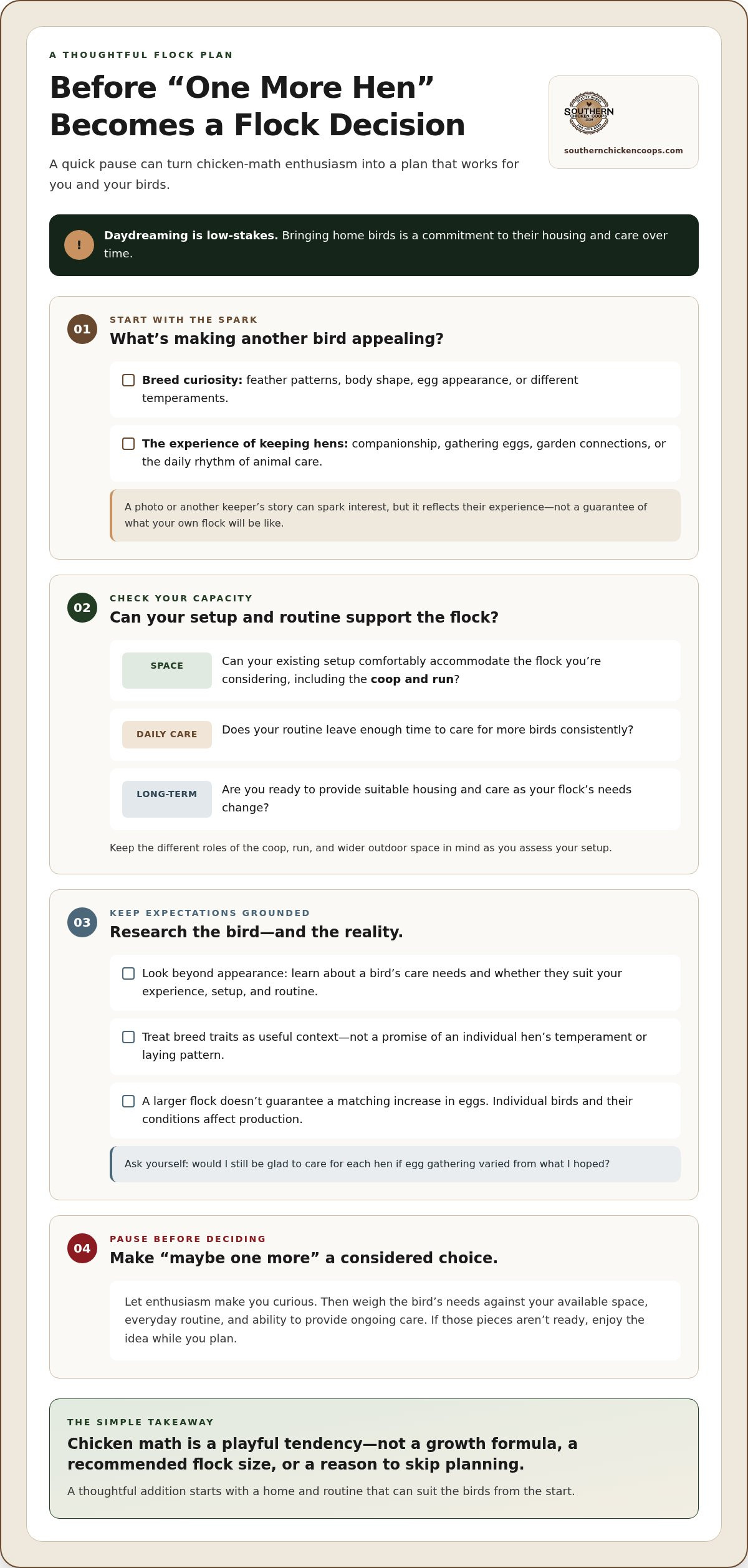
Daydreaming is low-stakes; bringing home birds is a commitment. A useful definition is: Chicken math is the humorous tendency to imagine adding more chickens than you first planned, not a reason to skip the planning. Once an idea becomes a possible purchase, pause and consider what the birds will need over time.
Start with three practical questions:
- Space: Can your existing setup comfortably accommodate the flock you’re considering, including the coop and run?
- Daily care: Does your routine leave enough time to care for more birds consistently?
- Long-term responsibility: Are you prepared to provide suitable housing and care as your flock’s needs change?
These questions don’t take the delight out of imagining new hens. They help turn enthusiasm into a decision rooted in care. Beginners can enjoy the joke, learn about the birds that catch their eye, and wait until their space and routine are ready. Thoughtful growth starts with remembering that “one more” is a real bird, not just a cheerful line in the conversation.
Why Chicken Math Happens: Breeds, Eggs, and the Joy of Keeping Hens
A flock may begin with a practical goal, such as having fresh eggs, then become a hobby with more interests to explore. You might see a hen with unusual feathering, hear someone talk about the pleasure of tending their birds, or come across photos that make you curious about a new breed. For anyone thinking “chicken math the struggle is real,” that growing wish list can feel familiar.
People keep hens for different reasons. Some enjoy watching the flock; others value eggs, garden connections, or the daily rhythm of caring for animals. Often, the appeal is a mix. Visits with other chicken keepers, photos, and community conversations can spark ideas, but they’re invitations to learn, not instructions to add birds.
How breed curiosity can expand a flock wish list
Breed descriptions and photographs may draw your eye to differences in feather color, body shape, or egg appearance. A beginner who first pictured a small, uniform flock may start imagining a mix instead. That curiosity can be part of the pleasure of keeping chickens, but appearance alone doesn’t tell you whether a bird’s needs suit your experience, setup, and routine.
Before choosing, look beyond the picture. Research the care a bird may need and consider whether you can provide it. Breed traits offer useful context, but they don’t guarantee an individual hen’s temperament or laying pattern.
Notice where an idea came from, too. A friend’s delightful story or a striking photo shows one keeper’s experience, not a guarantee of what your own flock will be like. Let inspiration make you curious, then use research and your circumstances to decide whether a particular bird belongs in your plan.
Why eggs and everyday chicken companionship both matter
Fresh eggs may be part of the appeal, but companionship can matter just as much. Some keepers enjoy recognizing each hen’s habits and personality; others primarily appreciate gathering eggs or caring for birds as part of a homestead routine. There’s no single right reason to keep chickens. Your priorities can help you decide what kind of flock feels rewarding.
A larger flock doesn’t guarantee a matching increase in eggs. Individual birds and their conditions affect production, so don’t treat head count as a dependable egg forecast. Consider whether you’d still be glad to care for each hen if egg gathering varied from what you hoped.
If your growing wish list has you thinking about housing as well as birds, explore custom chicken coop options as one part of planning for the flock you want to keep.
Before Adding Hens: Compare Your Space, Time, and Flock Plans
Before a new bird comes home, compare your current setup with what the larger flock would need. “Chicken math the struggle is real” may describe the temptation, but a practical check of space and daily capacity can show whether adding hens makes sense. Look beyond the coop’s footprint: the run, feed storage, fresh water, cleaning routine, and protection from predators all matter.
Use this table as a starting point. Fill it in with details about your own setup rather than relying on a general bird-count guess.
| Planning point | Current flock | Proposed flock |
|---|---|---|
| Birds | How many hens do you care for now? | How many would you have after adding birds? |
| Usable space | How does the coop and run work today? | Would the layout still allow comfortable access and movement? |
| Care capacity | What feeding, watering, and cleaning routine works now? | Can you sustain those tasks for the larger flock? |
Assess the whole arrangement, not just a coop’s listed capacity. Store feed where it stays protected and accessible, make sure water can be checked and refreshed, and consider whether cleaning remains manageable. Think about predator protection and whether the layout lets you observe your birds and reach all areas that need attention.
Site preparation is part of the assessment. The Texas chicken coop preparation guide can help you consider the ground and placement before a coop is set in place.
Is your coop and run ready for a larger flock?
Assess usable space and layout instead of assuming a certain number of birds will fit. A crowded setup can make it harder for hens to move comfortably and for you to manage the flock. Consider access to the run, how birds use the available area, and whether you can reach places that need regular attention.
A 6-by-12-foot chicken coop can help you picture one housing option, but no single footprint suits every flock or yard. Include the run and wider outdoor space in your plan.
Can your daily routine support more chickens?
Picture an ordinary week, not just a calm day. Can you keep up with feeding, checking fresh water, cleaning, and observing the birds? Who will care for them if you’re away? In Central Texas, seasonal weather may also affect how you tend the flock, so build flexibility into your routine rather than counting on ideal conditions.
If the proposed flock makes the answers uncertain, pause and adjust the plan. A realistic comparison helps you choose a flock size that fits both your space and the care you can provide consistently.
How to Keep Chicken Math Fun Without Outgrowing Your Setup
Adding hens can be a happy part of chicken keeping when the decision fits your home and routine. A pause before acting helps keep the fun in the hobby and the birds’ needs at the center. Instead of asking only, “Would another hen be lovely?” consider why you want to expand and what that choice would ask of you.
Try this three-step check before bringing home additional birds:
- 1. Name the reason. Are you interested in a particular breed, hoping for a different kind of egg, or simply enjoying the idea of a larger flock? Knowing what appeals to you can help distinguish a lasting plan from a passing impulse.
- 2. Revisit your real-life capacity. Consider usable coop and run space, your regular care routine, and any household changes on the horizon. Ask whether your setup can comfortably serve the flock you have in mind, not just whether another bird can physically fit.
- 3. Make a clear decision. If the birds would outpace your space or care capacity, wait and adjust your plan first. If your setup and routine can support the change, move forward with a clear understanding of the commitment.
It can also help to define a comfortable flock size before excitement takes over. Choose a number that reflects what you can care for consistently, with enough space for the birds and flexibility in your day. That number isn’t a test or a permanent ceiling. It’s a guide for making additions deliberately.
A simple pause-and-plan checklist before adding birds
Keep your answers somewhere easy to revisit: why you want more hens, what would change in your space and routine, and whether your current setup can support those changes comfortably. A clear “not yet” is a responsible decision, not a failure to enjoy chicken keeping. Waiting gives you time to prepare instead of asking the flock to adapt to a setup that has fallen behind your plans.
What to do when your flock plan changes
Plans shift. Your household routine may change, outdoor space may become less available, or your interests may grow. Review your flock plan when circumstances change, and avoid additions that outpace your ability to provide steady care. Growing gradually is better than discovering later that housing and routine no longer feel manageable.
If your future flock calls for a different housing plan, explore the custom chicken coop guide. Thoughtful planning can make room for enthusiasm while keeping comfort, care, and a suitable home in view. For a coop shaped around the flock you hope to keep, explore custom chicken coops.
Plan a Chicken Coop Around the Flock You Hope to Keep
When chicken math the struggle is real, it’s tempting to choose housing for the birds you have today and sort out the future later. A steadier approach is to picture the flock you realistically hope to keep, then use that goal to inform your coop plans. This doesn’t mean building for every possibility. It means thinking beyond the first few hens and choosing a home that suits your intended flock and available property.
A coop and a run serve related but different purposes. The coop provides sheltered housing, while the run and any wider outdoor space give birds room beyond it. Consider the whole setup together: a coop that seems appropriate on its own may not make a comfortable arrangement if the surrounding space is limited or difficult to use.
What should a future-minded coop plan account for?
Start with the flock size you expect to care for, not only the number of birds you’re bringing home first. Then think through practical details: can you reach areas that need cleaning, does the layout allow for good airflow, and can you tend the birds without awkward obstacles? The lot matters, too. Placement, access, and the space around the coop all shape how well the setup works day to day.
There isn’t one coop size that fits every flock. Bird count alone can’t account for the property’s layout, the run, or how you’ll use the space. Treat model dimensions as a starting point for evaluating a housing option, not as a promise about how many birds it will suit.
When a handcrafted or semi-custom coop fits the plan
A tailored design can respond to particular housing needs, including the layout and flock goals you’re planning around. Southern Chicken Coops’ handcrafted Polka model measures 6 by 12 feet. It’s one concrete housing example, not a universal recommendation or a stated capacity for every flock.
Southern Chicken Coops handcrafts coops one at a time in McGregor, Texas, and offers semi-custom designs tailored to customer needs. Consider a coop’s dimensions and placement alongside the run and surrounding outdoor space, rather than treating the coop as the entire home your birds need.
A thoughtful housing plan can leave room for your flock to grow without losing sight of comfort, access, and everyday care. If you’re weighing options for the flock you hope to keep, explore handcrafted chicken coop options and consider how a well-made coop could fit your plans.
Give Your Flock’s Next Chapter a Thoughtful Start
Chicken math the struggle is real, but your next step doesn’t have to be rushed. Let the flock you can care for comfortably guide your plans, and grow at a pace that works for both your birds and your household. A well-planned home can make that next chapter feel less like an impulse and more like a decision you’re ready to make.
At Southern Chicken Coops, Bill and Tina Drivdahl bring a family-owned approach to creating chicken housing. Completed coops are professionally delivered to prepared, level lots and positioned for use. Whether you’re shaping a new setup or thinking ahead, choose housing that fits your property and supports the flock you intend to keep.
Explore handcrafted chicken coop options as you picture what could work for your flock. With patience and thoughtful planning, you can make room for your enthusiasm while keeping your hens’ comfort at the heart of every decision.
Frequently Asked Questions
What does chicken math mean?
Chicken math is a humorous name for how a chicken keeper’s original flock plan can expand as new birds catch their interest. It isn’t a formula or a target number. Someone might begin with a few hens and later consider another breed, while a neighbor may be content with the flock they already have. The phrase captures the temptation, not an obligation to keep adding birds.
Why do people say chicken math is real?
People say it because interest in chickens can grow with experience. A visit to another flock, a striking breed photo, or the pleasure of watching hens may inspire new ideas. That’s why “chicken math the struggle is real” feels familiar to some keepers, even though not everyone expands their flock. The joke works as a lighthearted way to talk about enthusiasm, not as a substitute for planning.
Can you keep adding chickens to an existing flock?
Yes, but additions need to suit your space, routine, and the birds already in your care. Before introducing newcomers, plan how you’ll manage the transition and whether you have a way to keep new birds separate temporarily. Watch how the flock responds rather than assuming they’ll settle together immediately. In Texas, check the rules that apply to your address before expanding, since local requirements can differ.
How many chickens should a beginner start with?
There isn’t one beginner number that works for every home. Choose a starting flock that fits your available housing, time, and local rules, then make sure you can provide consistent care before bringing birds home. For example, someone with limited yard space and a busy routine may choose a more modest start than a household with more room and time. Check city, county, and HOA requirements in Texas.
What happens if my chicken flock grows too large for its coop?
A crowded coop can make it harder for birds to move comfortably and for you to keep the space clean and orderly. Routine tasks, such as reaching the birds or checking the interior, may also become more difficult. If the flock has outgrown the setup, avoid adding more hens and reassess the housing and outdoor area before making further changes.
Does chicken math mean I need a bigger chicken coop?
No. Wanting more chickens doesn’t automatically mean your coop needs to be larger. First consider whether your existing housing and the surrounding run work for the flock you intend to keep. If you’re planning a change, look at the whole setup, including how you’ll access the coop and care for the birds. A custom or semi-custom coop can be a practical option when your housing needs call for a different arrangement.
Is chicken math a good reason to buy more hens?
It can be a fun reason to start researching, but enthusiasm alone isn’t a good reason to bring home more hens. Think through the commitment first: can you house and care for them, and does the plan fit your household? If the answer is no or uncertain, waiting is a responsible choice. Let curiosity guide your learning, then decide based on what you can provide for the birds.


