

So, is a TSC Producer's Pride coop good for Texas heat? The brand name alone can’t answer that. In a Texas summer, what matters is whether the specific model allows hot air to escape, provides shade where hens rest, and has enough room for your flock and its setting.
Before bringing a coop home, assess the exact model you’re considering. Look at its openings, dimensions, and intended flock capacity, then consider how its placement and your daily care plan will affect the birds in hot weather.
A locally handcrafted option gives you another point of comparison. Southern Chicken Coops builds coops one at a time in McGregor, including the 6-by-12-foot Polka and semi-custom designs, with delivery to a prepared, level lot. Compare the footprint and design with your flock, property, and Texas conditions.
Key Takeaways
- Whether is a TSC Producer's Pride coop good for Texas heat depends on the exact model, your flock, the coop’s location, and how you manage hot-weather care.
- Look beyond the label: assess shade, openings, airflow, and how the coop sits in your yard before deciding it’s ready for summer.
- Compare details such as dimensions, materials, and intended flock size. Don’t assume every Producer’s Pride model has the same features.
- Check the setup during the hottest part of the day to spot potential heat and airflow concerns.
- For a local handcrafted comparison, Southern Chicken Coops builds in McGregor, including the 6-by-12-foot Polka and semi-custom designs.
Is a TSC Producer’s Pride coop good for Texas heat? Start with the real question
The answer depends on the exact model and your setup. To decide whether is a TSC Producer's Pride coop good for Texas heat applies to your flock, consider the birds you keep, the coop’s location, and how you’ll manage hot weather. A coop provides shelter, but its label alone can’t tell you how comfortable it will be in your yard on a hot afternoon.
Assess the structure and the care around it separately. Shade and placement affect how much direct sun reaches the coop. Open, unobstructed routes for air exchange can help prevent stale, trapped air. Accessible water and attentive care matter, too. Texas A&M AgriLife Extension and poultry veterinarians offer guidance on recognizing and managing heat stress. Use their advice alongside a practical assessment of the housing, rather than treating any coop as a complete heat-management plan.
What does “good for Texas heat” mean for a chicken coop?
Think of comfort as a combination of shelter, shade, airflow, usable space, and daily flock care. A coop in full afternoon sun faces different conditions from the same structure placed in a naturally shaded spot. Openings support air exchange only when they’re unobstructed and the surrounding setup allows air to move.
Watch your birds in hot weather and make sure water remains accessible. Panting, unusual lethargy, or other concerning changes call for prompt attention and veterinary guidance. A product name, intended use, or price doesn’t establish heat suitability. The conditions around the coop and the flock’s response matter.
Which Producer’s Pride coop is the question about?
Tractor Supply sells Producer’s Pride coops under distinct model names, including the Sentinel, Bungalow, and Hill Country. The phrase “Producer’s Pride coop” doesn’t identify a specific model, and details can vary between models or change as listings are updated. Find the current Tractor Supply listing for the exact model you’re considering.
Use the listing to record its dimensions, construction materials, openings, and intended flock capacity. Treat these as model-specific details, not features shared across the whole brand. If a specification isn’t stated, don’t assume it’s included. A capacity label alone doesn’t show how much usable room your adult birds will have or whether the openings and placement will support suitable airflow in your setup.
Assess the structure and its surroundings together. Check whether the coop gets shade during the hottest part of the day, whether its openings remain clear, and whether your birds have enough room to use the housing comfortably. The following sections look more closely at these design and setup factors. Make a careful, model-by-model decision with your hens’ welfare at the center, rather than judging a retail coop by its name alone.
The coop features that matter most during a Texas summer
A coop’s ability to shelter hens is only part of the picture. Its location, airflow, usable space, and connection to a shaded outdoor area all affect how the flock experiences hot weather. Assess these factors together instead of expecting one design feature to keep birds comfortable on its own.
Shade, airflow, and placement in a hot climate
Check the proposed site at different times of day, especially in the afternoon. A spot that’s shaded in the morning may be exposed later as the sun moves. Nearby trees or structures can provide shade, but check that they don’t block the coop’s openings or restrict air movement. Aim to reduce direct sun on the housing without placing it in a closed-in, stagnant corner.
Next, trace the visible airflow path. Are there openings on different sides or at different heights? Can air enter and leave without an obstacle immediately blocking it? These are useful observations, not proof that temperatures inside will stay safe. Opening a door or window may change air movement, but no single opening guarantees a particular result. Check current recommendations from Texas A&M AgriLife Extension or a poultry veterinarian for guidance suited to your flock and conditions.
Hot-weather comfort depends on a shaded site, clear air exchange, enough usable space, and attentive daily care working together.
Space, shelter, and the flock’s daily needs
Consider how much sheltered floor and roosting space your adult hens can actually use, rather than relying only on an advertised flock capacity. Body size, breed, and how much time birds spend inside affect whether the available area works for them. Crowding can make it harder for hens to spread out, so compare the stated dimensions with your flock’s needs and the interior layout.
Assess the run or other outdoor area as part of the setup. Hens need access to shade and fresh water in hot weather, not just a roof over the coop. Check whether shade covers a useful part of the area where birds spend time and whether water will remain accessible. Shade that shifts through the day may leave birds exposed when they need it most.
Housing design and heat-stress care are related, but they aren’t interchangeable. A well-placed coop cannot replace monitoring your flock, keeping water available, or responding when birds show signs of distress. Learn the warning signs and follow veterinary or extension guidance if a hen appears unwell. For severe or concerning symptoms, seek veterinary help promptly.
When assessing whether is a TSC Producer's Pride coop good for Texas heat for your situation, remember that the same model can perform differently depending on its location, flock, and daily management. If you’re comparing a retail unit with a locally crafted design, custom chicken coop options offer another way to consider the housing and setting together.
How to compare a TSC Producer’s Pride coop with a Texas-built option
Start with details you can verify, not assumptions about retail or handcrafted construction. Identify the exact Producer’s Pride model and record the specifications from its current Tractor Supply listing. Then compare those details with your flock, available space, intended site, and the information Southern Chicken Coops provides about its options. If a listing doesn’t state a feature, mark it as unknown rather than assuming it’s included.
A fair checklist for evaluating the exact retail model
Keep the model name with your notes so details from different listings don’t get mixed together. Compare the dimensions with the area available on your property, and consider whether the stated capacity leaves enough usable space for your birds. Manufacturer information describes the product. Poultry-care guidance from a trusted extension service or veterinarian can help you judge what your flock needs in hot weather.
| Comparison detail | Producer’s Pride model | Southern Chicken Coops |
|---|---|---|
| Model or option | Record the exact name from the current TSC listing; details are model-dependent. | Polka model; semi-custom coop designs are also available. |
| Dimensions | Use the current listing for the specific model. | Polka is 6 by 12 feet. |
| Materials and openings | Record only what the model’s listing states; don’t assume details. | Compare the details provided for the selected design; don’t infer heat features. |
| Shade and site fit | Assess the proposed placement separately from the coop itself. | Consider how the chosen coop will fit your prepared site and flock. |
| Intended flock size | Note the listing’s capacity, then assess usable space for your birds. | Consider the flock and project needs when evaluating a semi-custom design. |
| Build and delivery format | Retail model; review the current listing for purchase and setup details. | Handcrafted one at a time in McGregor, Texas, with delivery to a prepared, level lot. |
What a locally handcrafted alternative changes
Southern Chicken Coops is a family-owned business based in McGregor, Texas, building coops one at a time. The Polka’s dimensions give you a concrete footprint to compare with your property, while semi-custom designs offer another way to consider your flock and setting together. These details describe the craftsmanship, size, and format, not a particular level of heat performance. Assess shade, airflow, and care needs on their own merits for either option.
The question is a TSC Producer's Pride coop good for Texas heat is easier to answer when you compare the available details with your actual setup. For more context on a locally built option, look for the article titled “6x12 Chicken Coop for Sale: Handcrafted Quality in Central Texas (2026),” and explore “Custom Chicken Coops Texas: Handcrafted Housing for Your Backyard Flock” for an overview of the handcrafted approach.
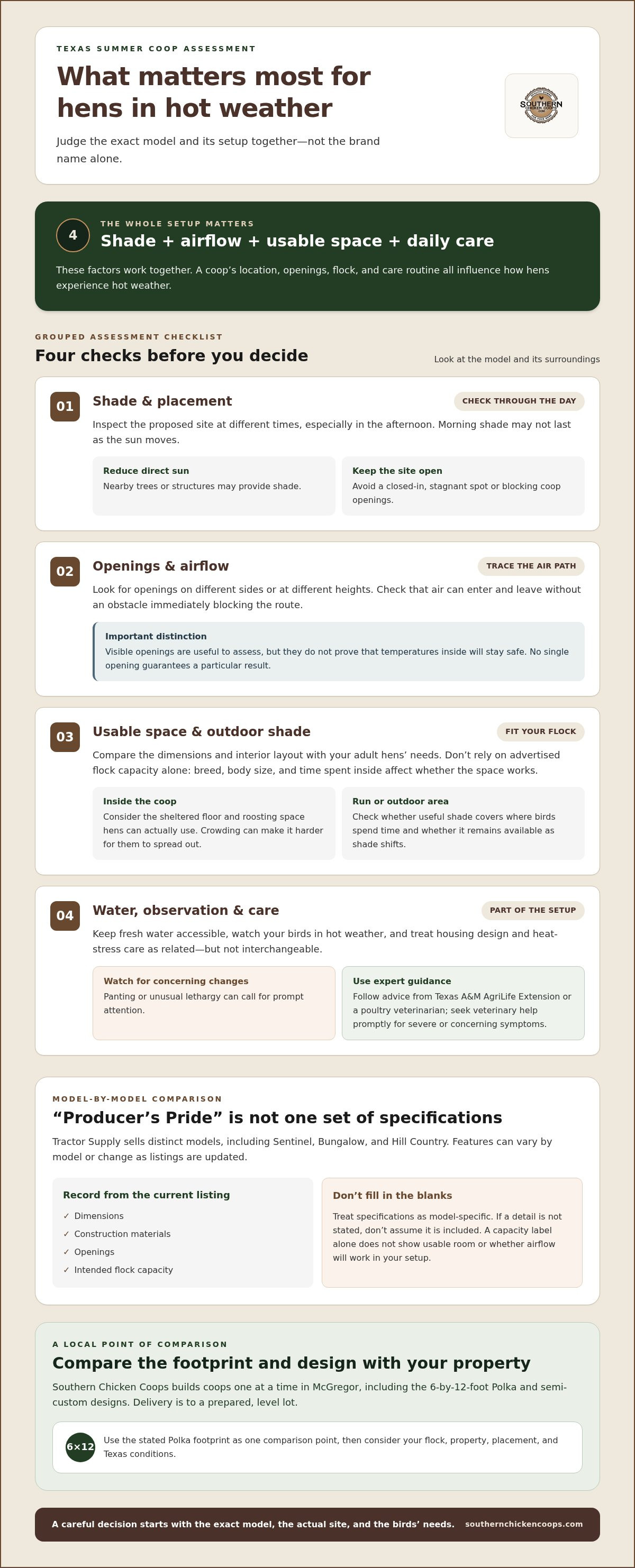
A practical Texas-heat assessment before you buy or set up a coop
A structured assessment turns a broad question into a decision you can apply to your flock. Work through these checks before choosing, then repeat your site observations once the coop is in place. A morning inspection alone can miss how sun and shade shift later in the day.
Five checks to make before choosing a coop
- Identify the exact model. Write down its full name and compare your notes with the current manufacturer or retailer listing. Record the published dimensions, openings, materials, and intended flock capacity. Don’t assume specifications carry over from another model.
- Assess the site. Walk the proposed location at different times of day. Note afternoon sun, nearby shade, drainage, and whether you can reach the coop easily to tend birds, refill water, and inspect the housing.
- Consider airflow. Look for openings that allow air to move through the structure, and note anything that could block them. Treat visible openings as one design detail, not a guarantee of safe interior conditions.
- Match space to your flock. Compare verified usable space with your birds’ size and needs. An advertised capacity is a starting point, not a substitute for checking whether your hens can move and rest comfortably.
- Plan daily care. Decide how you’ll provide shade and fresh water, monitor the flock, and respond if hot weather affects the birds. Use current Texas A&M AgriLife Extension or veterinary guidance to shape your care plan.
After setup: observe conditions and respond to heat
Once the coop is set up, check it during the hottest part of the day. Observe where shade falls, whether openings remain clear, and how air moves through the space. If the coop or nearby area is exposed to direct sun, consider whether you can provide shade without blocking airflow. These observations help you assess the actual setup instead of relying only on a listing.
Keep fresh water accessible and follow trusted poultry-care advice for hot weather. Watch your hens’ behavior, too. Panting, marked lethargy, weakness, or unusual distress can signal a serious welfare concern, though these symptoms can have different causes. Don’t diagnose a bird from one sign alone. Seek prompt veterinary advice if a hen appears unwell, and follow a veterinarian’s direction for urgent symptoms.
For a broader preparation routine, use the considerations in “Backyard Chicken Coop Prep: A Texas Homestead Guide” alongside model-specific specifications and professional poultry guidance. If your assessment points you toward a locally handcrafted design, explore custom chicken coop options built one at a time in McGregor, Texas. Checking the setup under real afternoon conditions is a practical final step, whether you choose a retail model or a handcrafted alternative.
A locally handcrafted alternative for Texas chicken keepers
Comparing retail and handcrafted housing is less about choosing a label and more about finding a structure that fits your flock, property, and priorities. A retail coop may suit you if its current specifications meet your needs and its design works for your prepared location. A locally made option gives you a defined model and semi-custom designs to consider as part of the comparison.
What Southern Chicken Coops offers
Southern Chicken Coops is a family-owned business based in McGregor, Texas. We handcraft coops one at a time, with care given to building a lasting home for a backyard flock. The Polka model measures six by twelve feet, giving you a specific footprint to compare with your available space. Semi-custom designs offer another option for your project and flock.
We deliver completed coops to a prepared, level lot. Include site preparation in your plans: consider where the coop will sit, how the space will be used, and whether the footprint fits the area you’ve readied. These details describe the model dimensions, handcrafted approach, and delivery format. They don’t establish particular ventilation, shade, insulation, or heat-control features, so assess those needs separately for any coop you’re considering.
Choose based on your flock, site, and priorities
A verified retail model may be a sensible fit if its listed dimensions and construction suit your intended use, the available space works for your birds, and the completed setup fits your site. Keep the current model details in hand as you make that judgment. Capacity claims and product descriptions are useful reference points, but your flock and placement matter, too.
A locally handcrafted, semi-custom option may be worth considering if you want to compare a McGregor-built coop with a retail unit or weigh a particular footprint against your property. The Polka’s six-by-twelve-foot dimensions make that comparison concrete, and semi-custom designs provide another option to explore. Neither handcrafted construction nor local origin alone proves heat performance. Review the features and setup you need, then choose based on evidence rather than assumptions.
If you’re asking, “is a TSC Producer's Pride coop good for Texas heat,” the answer still comes down to the specific model and the conditions you create around it. Once you’ve weighed those details, you can explore handcrafted chicken coops as another option for your flock and property.
Choose a coop with your flock’s future in mind
The question “is a TSC Producer's Pride coop good for Texas heat” is best answered by looking at the specific model and the conditions you can provide around it. Before deciding, think beyond this summer: consider how your flock may change, how much room you can dedicate to housing, and whether the setup will remain practical to care for as seasons shift.
Take time to compare options against your hens’ needs and the realities of your property. If a handcrafted approach feels like a better fit, review the available designs and consider which one suits your plans.
Explore handcrafted chicken coops from Southern Chicken Coops, and take the next step toward a home that feels right for your flock.
Frequently Asked Questions
Is a TSC Producer’s Pride coop good for Texas heat?
It may be, but the answer depends on the specific model and setup. To answer “is a TSC Producer's Pride coop good for Texas heat” for your flock, compare the current listing with your birds’ needs and the conditions at your chosen site. A model that fits your flock on paper may still need a different location if afternoon sun falls directly on it. Keep the listing handy and assess the complete setup, not the brand name alone.
Can chickens stay in a coop during a Texas heatwave?
They can use a coop during hot weather if the setup and conditions are suitable, but a coop isn’t automatically a safe refuge in every heatwave. Consider where the birds can find shade, whether air can move through the housing, and whether fresh water stays accessible. Check on your flock during the hottest hours, not only at dawn. If a bird seems distressed, contact a veterinarian promptly and follow trusted poultry-care guidance.
What should I look for in a chicken coop for hot weather?
Look for a setup that fits your flock and lets you provide shade, fresh water, and appropriate airflow. Compare the usable interior with the size and number of your hens, then consider whether the proposed site leaves room for a shaded area nearby. Read model-specific specifications rather than relying on general marketing language. Use current Texas A&M AgriLife Extension or veterinary guidance to inform care decisions during hot weather.
Does a Producer’s Pride coop need extra shade in Texas?
That depends on the model and its location. Check where direct sun reaches the coop and run as the day progresses. Morning shade may not last through the afternoon. If the birds’ area is exposed, consider a safe way to add shade without obstructing airflow or access. Reassess the coverage after adding shade, since it can shift. Use poultry-care guidance to decide what’s suitable for your birds and site.
How can I tell if my chickens are too hot?
Concerning changes can include panting, unusual weakness, marked lethargy, or behavior that seems out of character. These signs aren’t a diagnosis, so consult a veterinarian or reputable poultry-health resource for guidance. Make sure the flock can reach fresh water and suitable shade, and observe the birds rather than assuming the coop itself will prevent heat stress. If symptoms worry you or a bird appears seriously unwell, seek veterinary advice promptly.
Is a handcrafted chicken coop better than a retail coop for Texas?
Neither option is automatically better for every Texas flock. A retail model may suit you if its current specifications fit your birds and property. A handcrafted or semi-custom design may be worth considering if you want to weigh a locally made structure against your site and flock needs. Compare concrete details and delivery format, then evaluate shade and airflow as part of your setup. Choose based on practical fit, not category alone.
What should I prepare before a delivered chicken coop arrives?
Prepare a level lot with enough room for the coop and practical access for daily care. Before delivery, consider where afternoon sun falls, how water will reach the birds, and whether the ground drains appropriately. Southern Chicken Coops delivers completed coops to the customer’s prepared, level lot. A clear route and ready placement area can help avoid last-minute site changes. Include sun, shade, and access in your preparation plan for your Texas property.


