

Last August, a neighbor near McGregor shared a story that stayed with us: she walked out to her backyard only to find her favorite hens had succumbed to the 107-degree heat inside a flimsy coop she'd bought online just months before. It's a devastating reality many of us face when searching for chicken coops Central Texas weather won't destroy. We know your hens are more than just egg-producers; they're a vital part of your homestead. You want to feel certain they're safe when the sun is scorching and the local predators are on the prowl.
In this guide, we'll show you how to identify a truly durable, heat-resistant home that offers your hens a "forever" sanctuary. We'll walk through the essential features of predator-proofing and ventilation that separate a master-crafted structure from a mass-produced kit. You'll learn what to look for in a professional build that stands up to the unique challenges of our region. By the end, you'll have the peace of mind that comes from knowing your girls are protected by a home built with local expertise and a neighbor's care.
Key Takeaways
- Learn why specialized ventilation and predator-proof hardware are non-negotiable for keeping your hens safe during intense Texas summers.
- Discover how the 6x12 Polka model provides the ideal balance of space and airflow for a healthy flock of 10 to 12 birds.
- Understand why investing in handcrafted chicken coops Central Texas builders design stands up to the sun far better than mass-produced kits.
- Get practical tips on siting your coop under natural shade and preparing a level lot for professional delivery and long-term stability.
Why Central Texas Requires a Different Kind of Chicken Coop
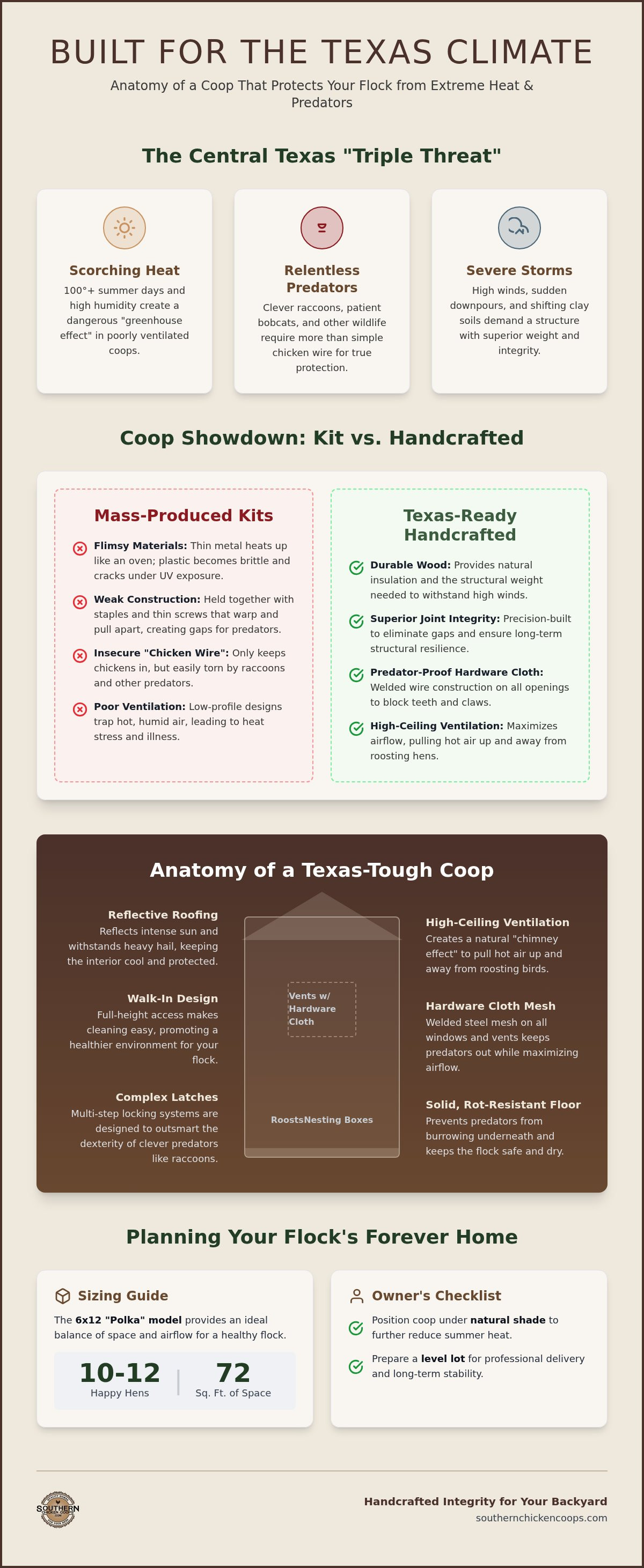
Living in the heart of the Lone Star State brings a unique set of joys, but it also presents a "Triple Threat" to anyone raising a backyard flock. We've seen too many folks try to make do with a standard garden shed or a flimsy kit, only to realize that chicken coops Central Texas requires must be built with a different philosophy. A Texas-specific coop isn't just a box. It's a structure designed specifically for extreme airflow, unwavering predator defense, and the kind of structural longevity that survives our shifting clay soils and sudden spring storms.
When we build a home for your hens in McGregor, we view it as an act of stewardship. Your girls rely on you for their safety, and we take our role in that partnership seriously. A handcrafted home is a long-term investment in their lives, built one at a time with the integrity that mass-produced options simply can't match. We don't just build sheds; we build sanctuaries that honor the life of the animal and the dedication of the keeper.
Beating the 100-Degree Central Texas Summers
Standard insulation often fails us here because our high humidity during heatwaves creates a "greenhouse effect" inside poorly designed coops. We focus on high-ceiling designs that naturally pull hot air up and away from your roosting hens. While we look at various Poultry housing designs for inspiration, the Central Texas climate demands we prioritize massive ventilation. We must balance that airflow with protection from our sideways-blowing thunderstorms. It's a delicate dance between keeping them cool in July and dry in a May downpour.
Predator Defense in the Waco and McGregor Area
Whether you're in the suburbs of Waco or out on a few acres in McGregor, the local predators are relentless. Raccoons are clever, bobcats are patient, and even the neighbor's friendly dog can become a threat in an instant. Many people start with "chicken wire," but we've learned the hard way that it only keeps chickens in; it doesn't keep predators out. Hardware cloth is the industry standard for predator-proof Texas coops because its welded construction resists the teeth and claws of our most determined local wildlife. We use it exclusively to ensure your peace of mind is as solid as the coop itself.
Essential Features for Longevity in the Lone Star State
Building a home that lasts in our region requires a deep respect for the elements. While big-box stores offer plastic or thin metal options, those materials rarely survive three seasons of intense UV exposure. Plastic becomes brittle and cracks, while metal coops can quickly become ovens for your birds. We prioritize handcrafted wood because it provides natural insulation and the structural weight needed to stay grounded during high winds. Choosing the right materials is the first step in honoring the Texas 'Right to Farm' laws, which protect your ability to raise a flock as long as you provide responsible, high-quality housing.
Owner comfort is just as vital for the long-term success of your homestead. We design our structures as walk-in units because we know that if a coop is hard to clean, it won't get cleaned as often. A walk-in design allows you to stand comfortably while refreshing bedding, ensuring your hens always have a pristine environment. Above your head, the roofing must do double duty. We use materials that reflect the scorching afternoon sun while remaining tough enough to withstand the sudden, heavy hail that frequently rolls through Central Texas in the spring. Inside, we position the roosts to catch every summer breeze without exposing your girls to the biting "northers" that arrive in January.
The Anatomy of a Predator-Proof Design
A secure home is about more than just walls. It's about outsmarting the clever raccoons and bobcats common in the McGregor area. We use complex latching systems that require more dexterity than a predator possesses. Below the birds, we build solid, rot-resistant floors. Unlike dirt floors that allow predators to burrow underneath, a solid floor keeps your flock safe and dry. Every vent and window is screened with heavy-duty hardware cloth to keep the air moving while keeping the critters out. If you're ready to see how these features come together, you can explore our custom chicken coops designed for local safety.
Handcrafted Quality vs. Mass Production
Building one coop at a time in our McGregor shop allows us to focus on joint integrity and precision that mass production simply can't replicate. Cheap kits are often held together with staples or thin screws that eventually pull out as the wood warps in the Texas heat. These small gaps are all a predator needs to gain entry. When we build, we ensure every piece of lumber is chosen for its resilience. You can read more about our building philosophy in our Texas Chicken Coops: 2026 Handcrafted Quality Guide. Investing in craftsmanship now prevents the heartbreak of a predator breach or a structural collapse later.
Pre-built vs. DIY: Choosing a Forever Home for Your Hens
We often talk with folks who are weighing the idea of building their own coop. There’s a certain pride in building something with your own hands, and we truly respect that spirit of self-reliance. However, the reality of building chicken coops Central Texas summers won't warp is often more complex than a few tutorials suggest. Between the specialized tools required and the inevitable material waste, a simple project can quickly become a burden. Amateur builds often struggle with the structural engineering needed to handle our high winds and shifting clay soils, which can lead to structural failure just when your hens need protection most.
Our Polka model stands in stark contrast to the thin-walled retail options you might find at a big-box store. Those mass-produced units are designed for easy shipping, not for the longevity required by the Texas climate. We build for the long haul, ensuring every joint is secure and every wall is sturdy. When you choose a professional build from our McGregor shop, you aren't just buying a product; you're gaining the peace of mind that comes from master craftsmanship and a design that’s been tested against our local elements. It's about more than just four walls; it's about a sanctuary that stands firm for years.
The True Cost of a DIY Project
Many folks are surprised when they price out the raw materials for a high-quality build. For a medium flock of 8 to 12 chickens, material costs in 2026 can range between $900 and $1,800 just for the basics. When you add in the cost of premium, predator-proof hardware cloth and rot-resistant lumber, the savings often start to vanish. You also have to consider your time. How many weekends is your flock’s safety worth while you're working in the sun? For a deeper look at the financial side, you can explore our guide on How Much Does a Custom Chicken Coop Cost in Texas? (2026 Pricing Guide).
Why We Don’t Sell Kits
We’ve made a conscious decision not to sell DIY kits or offer nationwide shipping. Our commitment to integrity means that if we don’t build it ourselves, we can’t guarantee the safety of your hens. Shipping a coop in pieces requires compromises in joint design and structural weight that we aren't willing to make. Every coop that leaves our shop is fully assembled and move-in ready, ensuring the structural integrity remains intact from our hands to your yard. We prefer to keep our craftsmanship local, focusing on serving our neighbors with a finished home that’s built to last a lifetime.
Sizing and Placement: Planning Your Central Texas Coop
Choosing the right spot for your coop is just as important as the quality of the build itself. We've walked many properties across the region, and we've found that the best placement for chicken coops Central Texas weather won't wear down involves working with the land, not against it. We often recommend our 6x12 Polka model as the "sweet spot" for a typical family flock of 10 to 12 hens. It offers enough room for the girls to thrive without taking up your entire backyard. When you're scouting your land, try to utilize the natural canopy of Texas Oaks or Cedar Elms. These native trees provide essential shade that can drop the temperature by several degrees during those long August afternoons.
Positioning also plays a vital role in managing our prevailing winds. You'll want to face the primary ventilation toward the south to catch the summer breezes that keep the air moving. However, you also need to ensure you can protect the flock when a cold "norther" blows in during the winter months. For a complete checklist on getting your property ready, take a look at our Backyard Chicken Coop Prep: A Texas Homestead Guide. Proper planning now ensures your hens stay comfortable through every season our climate throws at them.
Preparing Your Lot for Delivery
We take great pride in our professional delivery service, but we do need a little help from you to ensure a smooth setup. A level lot is a strict necessity. If the ground isn't flat, the doors won't swing correctly and the structure can't settle properly over time. You might consider a level concrete pad, a packed gravel base, or simply leveling the existing soil. Also, remember that our delivery truck and trailer need clear, wide access to reach your prepared site. We want to make sure your new coop is tucked into its "forever" home without any hiccups on delivery day.
Calculating Space for Your Flock
Inside space is vital, but the walk-in height of our designs is a real game-changer for you too. It makes gathering eggs and cleaning the coop a much simpler task that doesn't strain your back. A 6x12 coop provides 72 total square feet, which allows for a generous 6 to 7 square feet of combined living space per bird for a flock of 10 to 12 hens. In cities like Austin or Leander, regulations often require coops to be 30 to 50 feet away from a neighbor's house, so keep those distances in mind during your planning. If you're ready to select the right model for your hens, you can order your custom chicken coop delivery and let us handle the heavy lifting.
Southern Chicken Coops: Handcrafted Integrity for Your Backyard
We believe that building chicken coops Central Texas families can trust is more than just a business; it's a calling. Our journey started at Bird and Bee Farm, where Bill and Tina Drivdahl first discovered the deep satisfaction of homesteading and the quiet joy of raising a healthy flock. We realized early on that the safety and well-being of our animals was a sacred trust, and that realization led us to craft structures that reflect our commitment to stewardship. We strive to follow the guidance of 1 Corinthians 10:31, doing all things for the glory of God. This means we don't cut corners. Every screw, every piece of lumber, and every latch is chosen with the same care we'd use for our own family's birds.
While we take great pride in our signature designs, we also enjoy the semi-custom process. We know every homestead is unique, so we're happy to tailor our designs to meet your specific needs. Whether you need a specific orientation for a tricky lot or a few extra features to help your hens thrive, we're here to collaborate with you. We want to ensure your coop feels like a natural extension of your home and a beautiful addition to your land. Our work is rooted in the intersection of form and function, creating a resilient space that honors the animals it protects.
The Polka: Features Your Hens Will Love
The Polka model is our signature for a reason. Its 6x12 footprint is designed to provide ample room for 10 to 12 hens while remaining easy to manage. We build these with handcrafted durability that can weather the toughest Texas seasons, from scorching droughts to sudden storms. You'll find walk-in access as a standard feature, making your daily chores a joy rather than a struggle. We also include heavy-duty, predator-proof hardware cloth on every unit to keep your girls safe from the cleverest local wildlife. You can see how these details come together in our guide on Custom Chicken Coops Texas: Handcrafted Housing for Your Backyard Flock.
Starting Your Journey with Us
We'd love to start a conversation about your future coop. Our process is simple and personal. Once we've discussed your needs, we build your structure one at a time in our McGregor shop. When it's ready, we handle the professional delivery directly to your prepared, level site. We invite you to visit us in McGregor to see the craftsmanship firsthand. There’s something special about seeing the wood and feeling the weight of the doors that helps you understand the difference a handcrafted home makes. We're not just builders; we're your neighbors, and we're invested in the success and happiness of your backyard flock.
Protecting Your Flock with Handcrafted Integrity
Choosing a home for your hens is a commitment to their safety and your peace of mind. We've explored why specialized ventilation and predator-proof hardware are essential for surviving the unique challenges of our region. Every detail matters. From the structural strength needed for shifting soils to the relief of a walk-in design, a high-quality build is the foundation of a healthy flock. When we build for you in McGregor, we're creating a sanctuary based on stewardship that stands up to the chicken coops Central Texas sun requires.
As a family-owned and operated business, Bill and Tina Drivdahl take pride in every joint and latch that leaves our shop. We build each unit one at a time, ensuring they are truly built for Texas heat and predators. We would be honored to partner with you in this journey of homesteading and animal care. You're invited to View Our Handcrafted Coops and Start Your Order Today. We look forward to helping you provide a beautiful, resilient home where your girls can truly thrive under the Texas sky.
Frequently Asked Questions
How many chickens can comfortably live in a 6x12 chicken coop?
A 6x12 footprint comfortably houses a flock of 10 to 12 hens. This size provides about 6 to 7 square feet of total space per bird, ensuring they have room to move without overcrowding. We've found this "sweet spot" prevents stress and bullying within the flock. It also makes managing the coop easier for you, as the birds aren't constantly competing for floor space or roosting spots.
What is the best way to predator-proof a chicken coop in Central Texas?
The most effective defense involves using heavy-duty hardware cloth and secure, raccoon-proof latches. Unlike standard wire, hardware cloth is welded and cannot be easily torn by bobcats or raccoons. We also recommend a solid, rot-resistant floor to prevent predators from digging underneath the structure. These features create a fortress for your hens, giving you peace of mind when local wildlife is on the prowl at night.
Do I need a permit for a chicken coop in Waco or McGregor?
You generally don't need a permit for a small residential flock in Waco or McGregor, but you should always check your specific city ordinances and HOA rules. Texas state law provides "Right to Farm" protections that prevent cities from banning a minimum of six hens on residential lots. However, setback requirements often apply, meaning your coop must stay a certain distance from neighboring homes to remain compliant.
How do I keep my chickens cool during a Texas heatwave?
High-ceiling designs and massive ventilation are the best ways to combat the 100-degree heat. We position our vents to catch southern breezes and use roofing that reflects heat rather than absorbing it. Placing your chicken coops Central Texas location under a natural canopy of oak or elm trees also helps significantly. Fresh, cool water and frozen treats can provide extra relief during those intense July and August heatwaves.
Why do you only offer delivery to a prepared, level lot?
We require a level lot because a flat foundation is essential for the long-term structural integrity of the coop. If the site is uneven, the frame can twist over time, causing doors to stick and latches to misalign. A prepared site, whether it's gravel, concrete, or leveled soil, ensures that your handcrafted home settles correctly and remains a sturdy, safe environment for your birds for years to come.
Can I customize the colors or features of my Southern Chicken Coop?
We love working with our neighbors on semi-custom designs to ensure the coop fits your specific homestead. While our 6x12 Polka is our signature model, we can discuss various colors and functional features that match your property’s aesthetic and your flock's needs. We build every coop one at a time in our McGregor shop, which allows us to maintain a personal touch and ensure every detail meets our high standards.
What is the difference between chicken wire and hardware cloth?
Chicken wire is designed to keep chickens in, but it does almost nothing to keep predators out. Raccoons and dogs can easily tear through thin hexagonal wire. Hardware cloth is a much heavier, welded mesh that resists teeth, claws, and even the most determined bobcats. We use hardware cloth as a standard on all our builds because we believe your hens' safety is worth the extra investment in quality materials.
How long does a handcrafted wooden coop typically last in the Texas sun?
A handcrafted wooden coop built with premium lumber can last for 15 to 20 years or more when properly maintained. We choose wood specifically for its resilience against the intense UV rays that cause plastic and thin metal to fail after just a few seasons. By using rot-resistant materials and solid construction techniques, we ensure your investment stands firm against the elements, providing a "forever home" for generations of hens.


